+91-124-4807600
 contact@supershine.in
Why Barrier Washer Extractors Are Non-Negotiable for Hospital Laundry Facilities

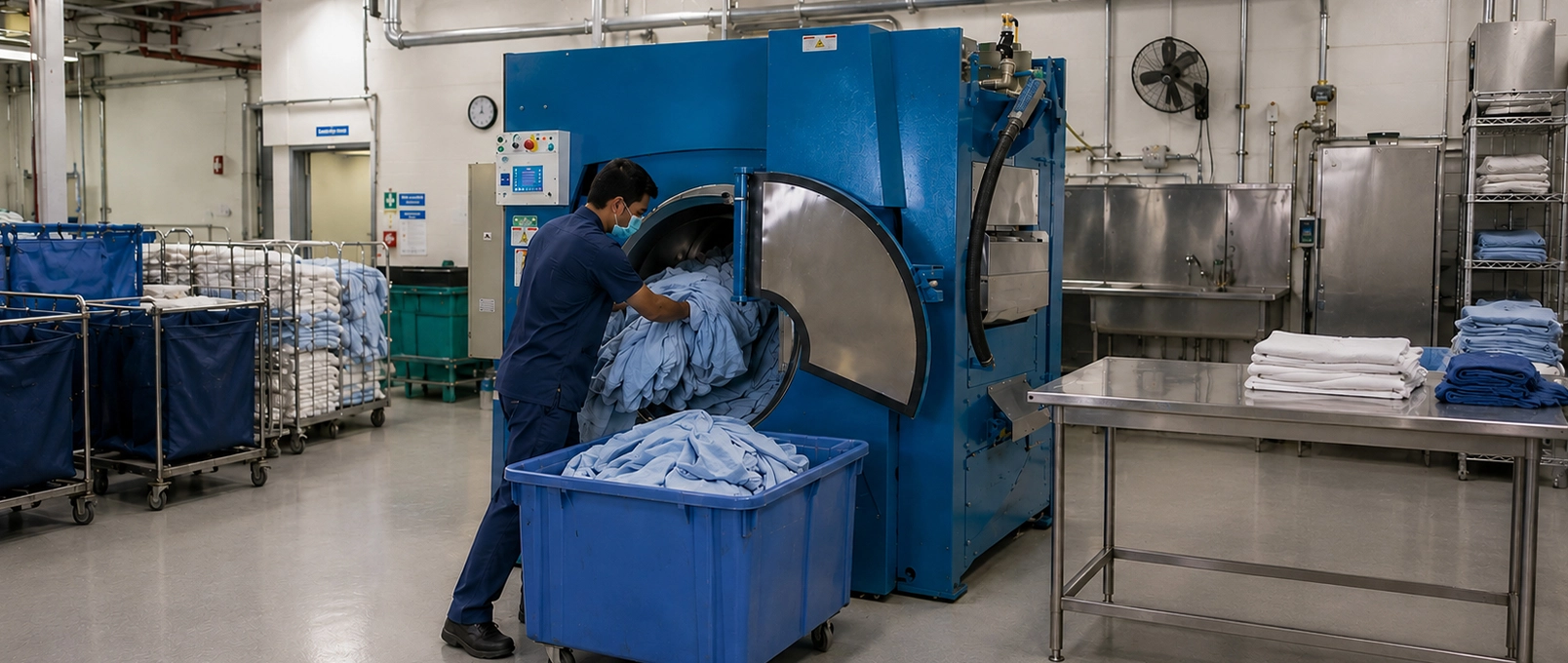
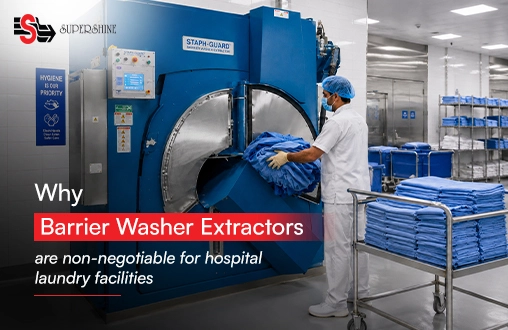
Walk into any hospital basement where the laundry happens, and you'll notice something most patients never think about. There's a wall. Sometimes literal, sometimes just a marked line on the floor, but it's there for a reason. On one side, soiled linen comes in. On the other, clean linen goes out. And the machine sitting right in the middle of that wall? That's doing more work than almost anything else in the building.
That machine is a barrier washer extractor, and honestly, if you're running a hospital laundry without one, you're playing a game you really don't want to lose.
Let's Talk About What "Clean" Actually Means in a Hospital
Here's the thing. Clean for your home laundry and clean for a hospital washing machine are two completely different standards. At home, if a sock comes out smelling fresh, you're done. In a hospital, "clean" means pathogen-free. It means linen that came in contact with infected patients goes through a process that physically and procedurally prevents cross-contamination with the clean side.
A regular industrial washer and dryer setup just doesn't have a mechanism for that. You load dirty linen and unload clean linen from the same door. Even with the best detergents and the hottest water cycles, there's still a moment where dirty and clean exist in the same space, handled by the same people, breathed by the same air.
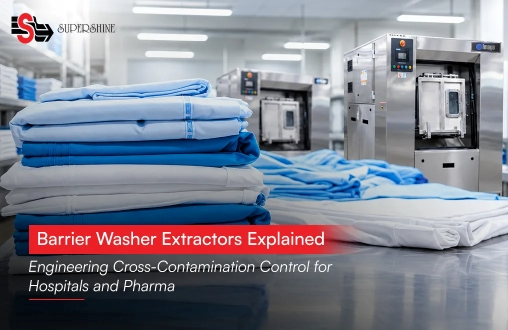
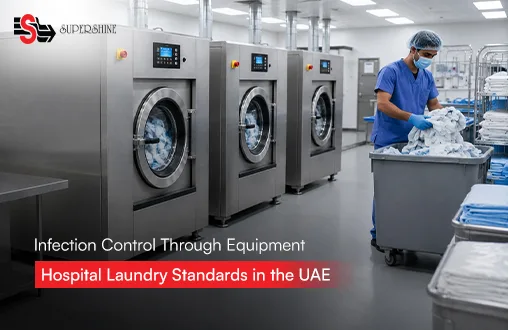
A barrier washer extractor solves this with a simple but brilliant design. The machine is built into a wall. Soiled linen goes in from the "dirty" side. Once the wash cycle is complete, the machine itself rotates or the drum opens only on the clean side, and the linen comes out into an entirely separate room. No human ever touches both sides. No air from the soiled area mixes with the clean area. It's basically an airlock for laundry.
The Infection Control Angle Nobody Can Afford to Ignore
I'll be blunt here. Hospital-acquired infections are not a small problem. And linen handling is one of those quiet, behind-the-scenes risk factors that doesn't make headlines until something goes wrong. Then suddenly it's all anyone talks about.
This is why hygienic barrier washers have become the standard, not the upgrade, for serious hospital laundry systems. We're not exaggerating when we say non-negotiable in the title. Accreditation bodies, infection control audits, and increasingly, insurance providers are all looking for this separation as a baseline requirement, not a nice-to-have.
If you're sourcing a mid-size facility, something like the 100 kg STAPH-GUARD® Washer-Extractor from Milnor is built specifically around this need, with the name pretty much telling you what it's there to do. For larger operations processing higher volumes, the 204 Kg STAPH-GUARD Barrier Washer-Extractor handles the scale without compromising on the separation principle.
It's Not Just About Infection. It's About Workflow Too
Here's something that surprises people when they first look into hospital laundry machines. Barrier washers don't just protect against pathogens. They also make the entire laundry operation run more smoothly.
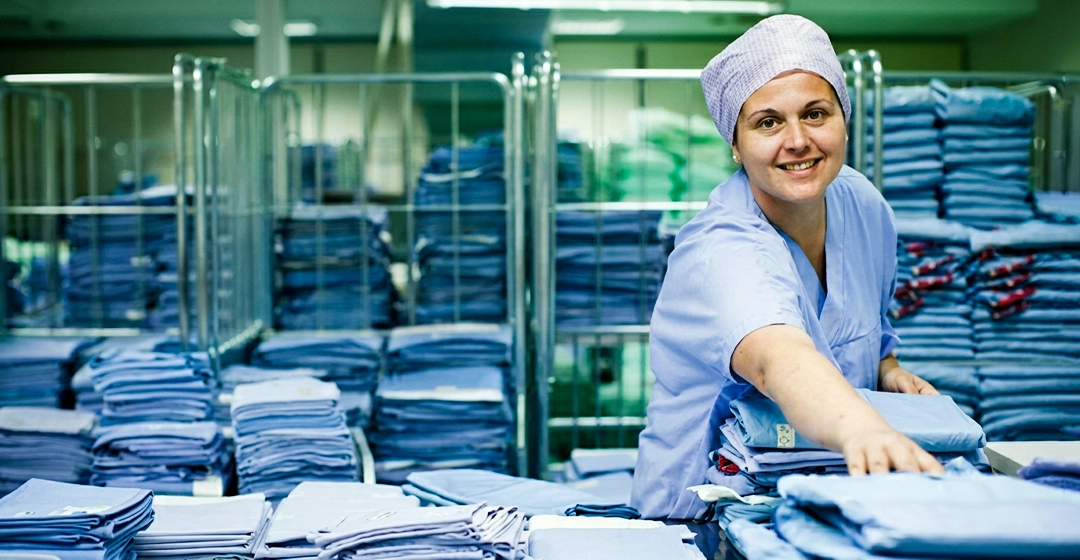
Think about it from a staffing perspective. With a barrier system, you can have one team dedicated to soiled linen handling and another dedicated to clean linen folding and distribution. They never need to cross paths. This reduces training overlap, reduces the risk of someone accidentally mixing carts, and makes supervision easier. You know exactly where contamination risk could occur, because there's only one point where it could, and that point is the machine itself.
This is also why, when facilities are comparing a heavy-duty industrial washing machine setup, the conversation always circles back to whether it can be configured as a barrier unit. A regular machine, no matter how powerful, just can't replicate this workflow advantage.
Choosing the Right Capacity Without Overcomplicating It
Now, I know capacity planning can feel like a maths problem nobody assigned you. But for hospital laundry, it's actually a bit more straightforward than for, say, a hotel.
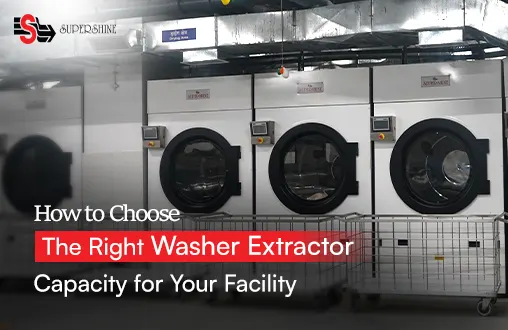
Hospitals have fairly predictable linen turnover. Bed sheets, gowns, surgical drapes, and towels. Based on bed count and average daily linen weight per patient (most facilities work with somewhere between 4 and 6 kg per bed per day as a rough planning number), you can back into a capacity that makes sense.
For smaller hospitals or specific departments like ICUs or maternity wards that need dedicated barrier processing, something like the Aseptic 45 kg Barrier Washer Extractor or the Aseptic 60 lb Barrier Washer Extractor often fits well without taking up too much floor space.
Mid-size facilities tend to land in the Aseptic 70 kg Barrier Washer Extractor or Aseptic 90 kg Barrier Washer Extractor range, which gives enough headroom for daily fluctuations without leaving an expensive machine running half-empty most of the time.
And honestly, that last point matters more than people realise. An oversized commercial washing machine sitting at 40% capacity all day is not saving you anything. It's just an expensive way to use more water and electricity than necessary. Right-sizing isn't just a budgeting exercise. It's an operational one too.
What About Larger Networks or Continuous Processing?
If you're working at a scale where individual barrier loads aren't cutting it anymore (think large multi-specialty hospitals or central laundry facilities serving multiple branches), it's worth looking at continuous batch tunnel washers. These aren't barrier machines in the same loading sense, but they bring an industrial washer and dryer process into a fully automated, segregated flow.
Milnor's Milnor PBW 92048 Pulse Flow Batch Washer and the Milnor CBW 92048 Pulse Flow Batch Washer are designed for exactly this kind of continuous high-volume operation, where linen moves through compartmentalised washing stages in one direction only. It's a different approach to the same fundamental goal, keeping soiled and clean linen permanently apart.
A Quick (Slightly Cheeky) Reality Check
If your facility's current setup involves someone carrying a basket of dirty linen and a basket of clean towels through the same corridor, possibly bumping into each other near the coffee machine, that's not a workflow. That's a hazard of wearing workflow clothes.
Barrier washers exist because hospitals figured out, sometimes the hard way, that good intentions and careful staff aren't a substitute for physical separation. The machine does the boring, repetitive, never-gets-tired job of keeping two worlds apart, so your team can focus on, well, actually running a hospital.
Wrapping This Up
If there's one takeaway here, it's this. When you're evaluating hospital laundry machines, don't think of barrier washer extractors as a premium add-on. Think of them as the foundation on which everything else gets built. Capacity planning, workflow design, staffing, and even your infection control audit scores all depend on getting this piece right first.
And the good news is, whether you're outfitting a small clinic or a large hospital network, there's a configuration that fits. From compact units to high-capacity systems, the range exists so you're not stuck choosing between doing it right and doing it affordably.
If you're not sure where your facility falls on that spectrum, that's a conversation worth having before the equipment list, not after.