+91-124-4807600
 contact@supershine.in
Flatwork Ironers vs. Chest Ironers: Choosing the Right Finishing Equipment for Hotels

You know what nobody tells you when you're setting up a hotel laundry room? The ironer you pick will quietly decide how stressed your housekeeping team is for the next ten years. We're not joking. We've seen facility managers agonise over thread count for bedsheets and then just grab whatever ironer the vendor had in stock. Big mistake.
So let's actually talk about this. Flatwork ironers versus chest ironers. Two technologies, both designed to do the same basic job (press linen flat and hot), but they go about it in completely different ways. And for a hotel, picking the wrong one isn't just inconvenient. It affects your turnaround time, your energy bills, and, honestly, how crisp your sheets look when a guest walks into the room.
Wait, What's the Actual Difference?
Okay, quick refresher because not everyone spends their evenings reading about laundry machines (you should try it sometime, very calming).
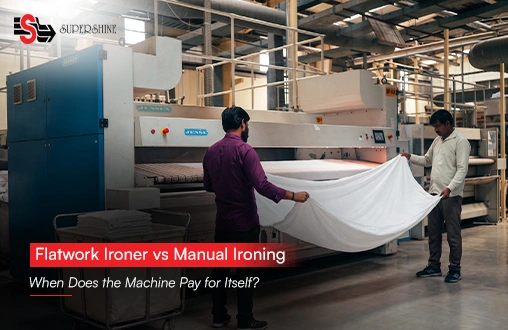
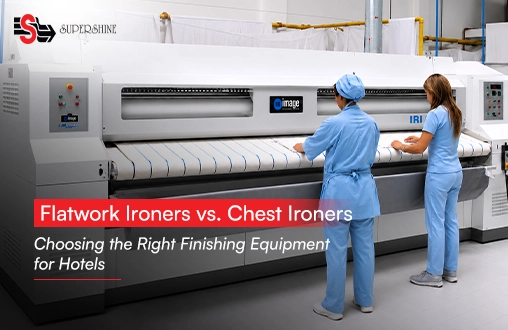
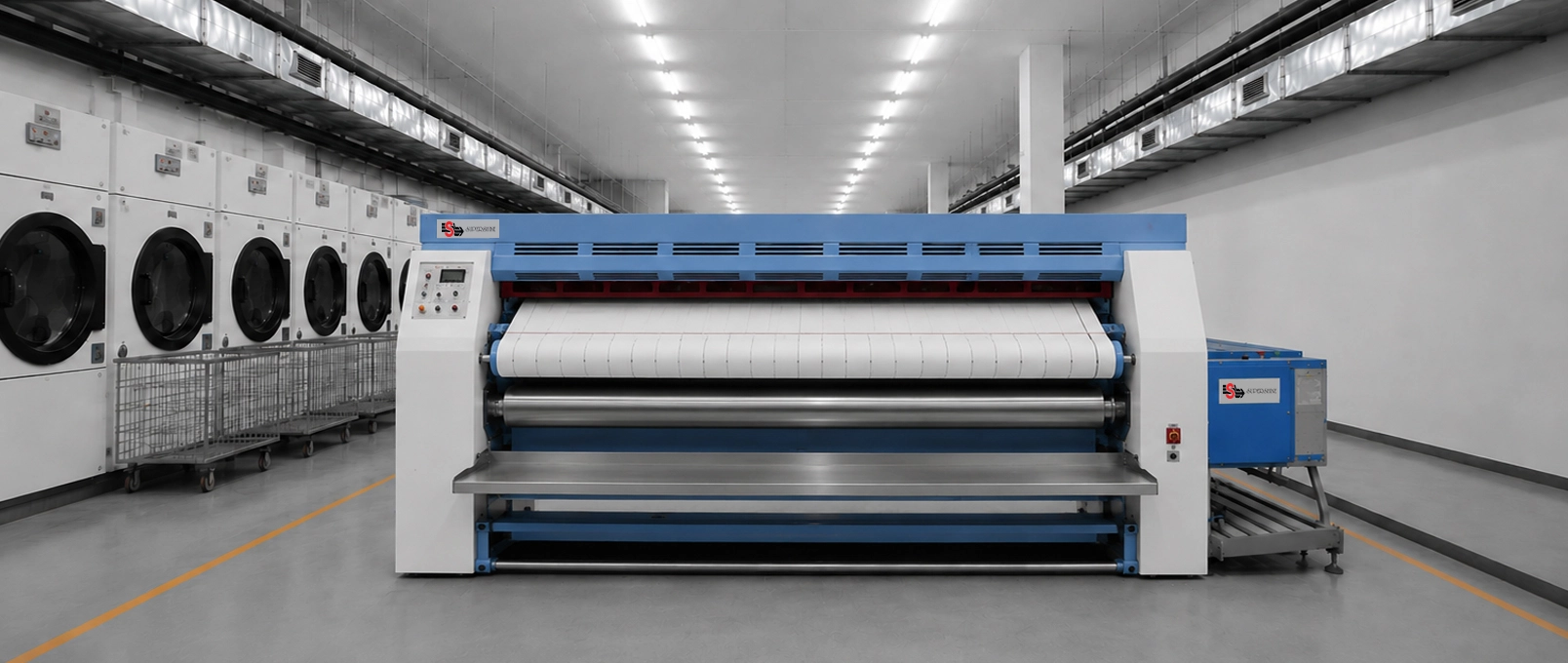
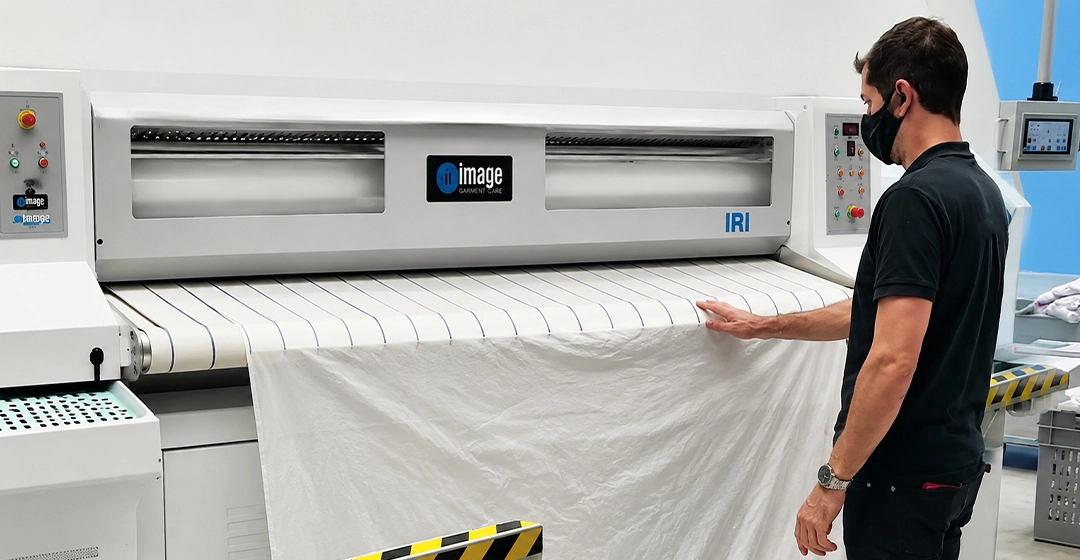
A flatwork ironer, also called a roller ironer, uses a heated roller or multiple rollers that linen passes through and around, almost like a giant rolling pin pressing fabric against a heated chest. The linen feeds in, wraps around the heated cylinder, and comes out the other side pressed and dry, often in one continuous motion. This is the workhorse of high-volume hotel laundry machines.
A chest ironer, on the other hand, relies more on a flat heated surface (the "chest") that the roller presses the fabric against as it moves through. Some chest ironers are deep-chest designs, meaning they have a larger surface contact area, which can mean better heat transfer for thicker fabrics.
Both get the job done. But "getting the job done" and "getting it done efficiently for a 150-room hotel" are two very different conversations.
For High Volume Hotels, Roller Heated Flatwork Ironers Usually Win
If your hotel is processing a serious volume of sheets, pillowcases, and duvet covers every single day (which, let's be honest, most hotels are), roller heated flatwork ironers tend to be the practical choice. They're built for continuous feed operations. You're not stopping and starting constantly. Linen goes in one end, comes out pressed and folded-ready on the other.
Take something like the 2 Rolls X 1200mm Dia High-Output Flatwork Ironer from Image. Two rolls means double the processing capacity compared to a single roll setup, and the 1200mm diameter gives you a wider feed for larger linen items like king-size duvet covers. For a property running a busy banquet schedule alongside daily room turnovers, this kind of capacity isn't a luxury; it's survival.
Actually, speaking of busy banquet schedules, this is exactly the kind of scenario we see with event-heavy clients like SKIL Events. When you're dealing with large-scale corporate events and back-to-back functions, your linen requirements spike massively on certain days. Having flatwork ironers that can keep pace with that volume without becoming a bottleneck makes a real operational difference.
If you're running a smaller boutique property, though, something like the 1 Roll X 800mm Dia Professional Flatwork Ironer might be more than sufficient, and it won't sit there underutilised, eating up floor space.
So, Where Do Chest Ironers Actually Make Sense?
Here's where it gets interesting (and where some hotels get this wrong in both directions).
Chest heated ironers, particularly deep chest models, tend to handle thicker or heavier fabrics with a bit more finesse. Think table linen for fine dining restaurants, heavier curtains, or specialty fabrics that need a slower, more deliberate pressing rather than a fast roll-through.
The 1 Roll x 800mm Dia Industrial Deep Chest Flatwork Ironer is a good example here. The deep chest design gives more surface contact, which matters when you're trying to get a crisp finish on something with more body to it, like banquet tablecloths.
For hotels with a strong F&B operation (restaurants, banquet halls, that whole side of the business), having a dedicated chest ironer alongside your main flatwork line for guest room linen can actually save you a lot of headaches. You're not trying to force one machine to do two very different jobs well.
The Honest Truth About "Which One Is Better"
I'll be straight with you. There isn't a single right answer here, and if anyone tells you there is, they're probably trying to sell you something (ironic, we know, given what we do for a living).
What actually matters is matching the machine to your volume and your linen mix. A 300-room property with three restaurants has a completely different laundry profile than a 40-room boutique hotel. The first one probably needs multiple roller heated flatwork ironers running in parallel, maybe something in the range of the 2 Rolls X 1200mm Dia Dual-Roll Flatwork Ironer, plus a chest ironer for specialty linen. The second one might do perfectly fine with a single 1 Roll X 600mm Dia Professional Flatwork Ironer.
Don't Forget What Comes Before and After
This is the part people forget. An ironer doesn't work in isolation. If you're not feeding it efficiently, even the best flatwork ironer becomes a bottleneck. Pairing your ironer with a proper feeder, like a Manual Vacuum Feeder, helps maintain a steady, even feed so the linen goes through smoothly without wrinkling or jamming.
And on the other end, once linen comes out pressed, what happens next? If your team is manually folding hundreds of sheets a day, you're losing time and consistency. An Automatic Towel Folder or a proper folding unit can take that pressed linen straight into a folded, stack-ready state. It sounds like a small thing until you calculate how many labour hours it saves over a month.
A Quick Word on Energy and Running Costs
Roller flatwork ironers, especially larger-diameter ones, generally offer better thermal efficiency during continuous operation because the heat remains consistent over a longer processing run. Chest ironers, depending on the model, can take a bit longer to reach optimal temperature and may run less efficiently if used intermittently.
This matters more than people think when you're calculating your hotel's industrial washing machines and finishing equipment operating costs over a year. A slightly higher upfront investment in a more efficient roller ironer can pay for itself through reduced energy consumption, especially if your laundry runs near continuous cycles throughout the day.
So, Which One Should You Pick?
For most hotels handling standard guest room linen at any meaningful volume, roller-heated flatwork ironers remain the primary workhorse. Chest ironers earn their place as a complementary solution for specialty fabrics and F&B linen rather than serving as the main ironing system.
The key is not treating this as an either-or decision. For many medium to large hospitality properties, the ideal setup combines both technologies along with the right feeding and folding equipment. This approach helps laundry operations run more efficiently, improves linen quality, and reduces operational bottlenecks.
At Supershine Laundry, we help hotels and commercial laundries choose the right combination of ironing and finishing equipment based on their volume, fabric types, and operational goals. With the right solution in place, your laundry facility can achieve higher productivity, consistent finishing quality, and smoother day-to-day operations.