+91-124-4807600
 contact@supershine.in
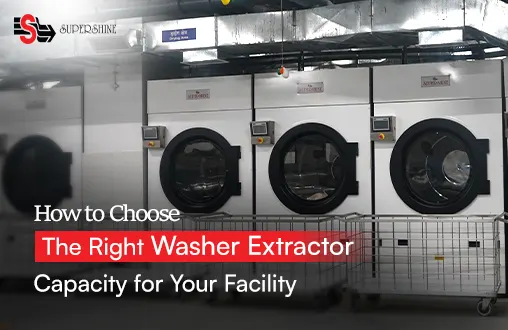
How to Choose the Right Washer Extractor Capacity for Your Facility

Let's be honest for a second. Nobody wakes up excited to think about washer extractor capacities. It's not exactly dinner party conversation. But if you're running a laundry operation, big or small, this one decision can quietly make or break your daily workflow for the next decade. And yes, a decade, because these machines are built to last that long (sometimes longer, if you treat them well).
So grab a coffee, because we're going to walk through this the way we'd explain it to a friend who just texted us "hey, how big a commercial washing machine do I actually need?"
Why Capacity Isn't Just About "Bigger Is Better"
Here's the thing most people get wrong. They assume buying the biggest commercial washer and dryer available is some kind of future-proofing strategy. It's not, really. An oversized machine running half-empty wastes water, energy, and detergent every single cycle. On the flip side, an undersized one running flat out all day will wear down faster than expected, and your staff will be stuck doing extra loads just to keep up.
The goal is matching the machine to your actual, real-world laundry volume, not your "on a really busy day" volume or your "what if we expand someday" volume. Those scenarios matter too, but they come later in the conversation.
Step One: Figure Out Your Daily Linen Load
This sounds obvious, but a surprising number of facilities skip this step entirely. Before you even look at a single product page, weigh (or estimate) how much laundry you're processing per day. Hotels, hospitals, gyms, and restaurants all have wildly different patterns.
A small boutique hotel might process 80 to 150 kg of linen daily. A mid-size hospital ward could easily be looking at 300 to 600 kg, sometimes more, depending on bed count and turnover.
Once you know your daily load, divide it by the number of wash cycles you can realistically run in a day. That gives you your "per cycle" target weight, and that's the number you actually shop with.
Step Two: Match That Number to a Machine Category
Here's where things get a bit more interesting. Industrial washer and dryer units generally fall into a few broad categories, and each one suits a different kind of facility.
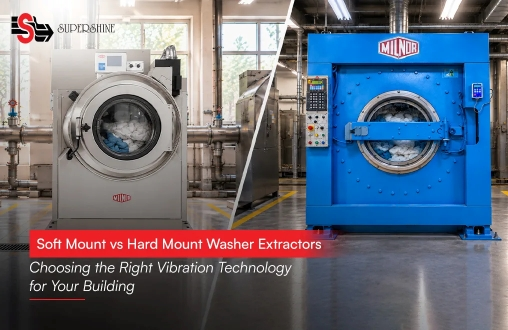
Hard mount washer extractors are the workhorses for small to mid-size operations. They're rigid, simple, and budget-friendly. If your daily volume is on the lower side, something like an 18 kg mid-range industrial washer or a 27 kg reliable economy washer might cover you comfortably. For slightly heavier needs, the 36 kg heavy-duty economy washer or 45 kg high-capacity economy washer step things up without jumping into a totally different machine class.
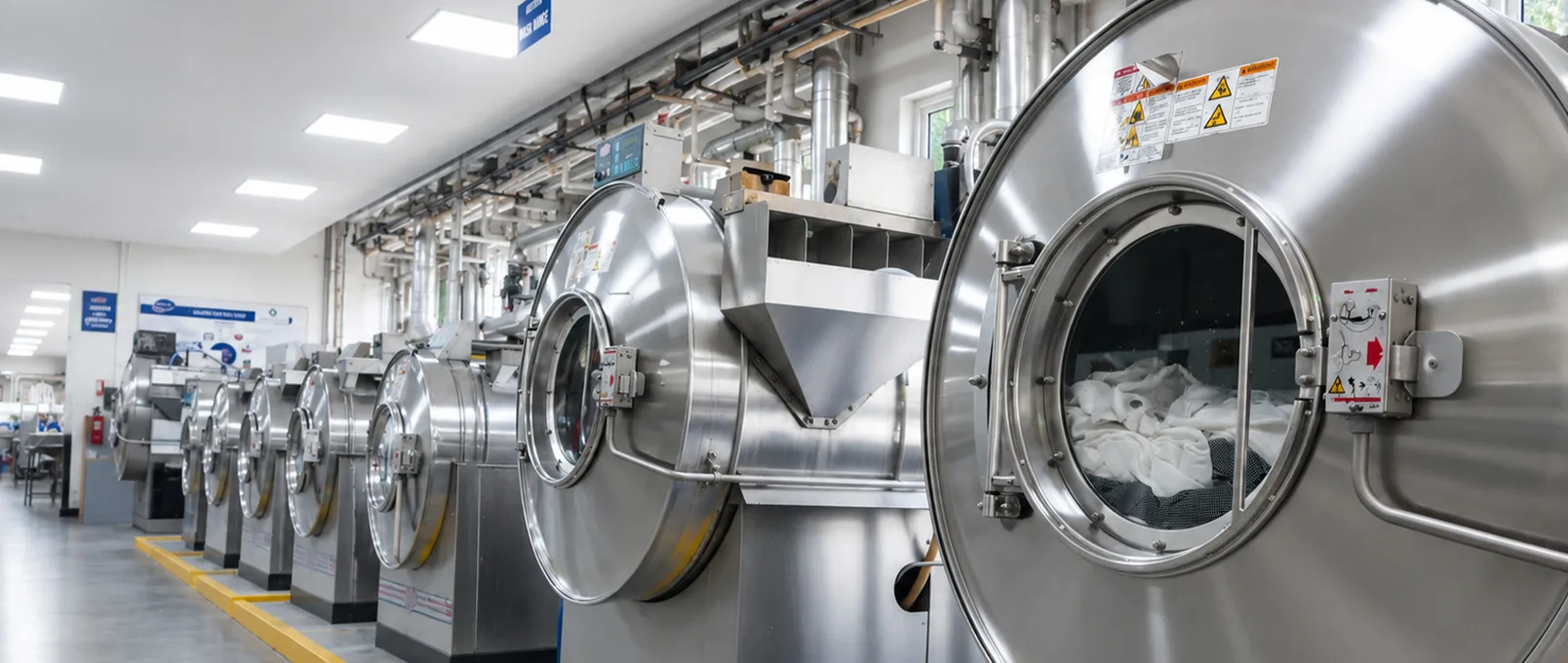
Soft mount washer extractors are where things get a bit more premium. These machines extract at much higher speeds (which means less drying time, which means lower energy bills down the line), and they're suspended on a base that absorbs vibration. This makes them suitable even for upper floors of buildings where a hard mount machine might literally shake the place apart. For facilities looking at moderate daily volumes, options like the 27 kg mid-range suspended washer-extractor or the 45 kg suspended washer-extractor are popular starting points. If your operation is bigger, say a hotel chain or a busy commercial laundry service, you'd want to look further up the range, towards the 77 kg suspended washer-extractors with touch screen control or even the 125 kg high-capacity washer-extractors with color touch screen.
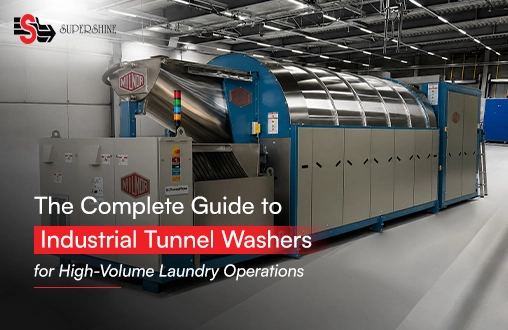
For facilities that genuinely run at industrial scale, places processing several tonnes of linen daily, you start looking at tunnel washers. These aren't your typical heavy duty industrial washing machine, they're entire systems. Something like the Milnor PBW 92048 PulseFlow CBW batch washer processes linen continuously through multiple modules, drastically cutting water and labour costs per kg compared to running dozens of standalone machines.
Step Three: Don't Forget About Hygiene Requirements
If you're in healthcare, or honestly any facility dealing with biohazard linen, soiled garments, or anything that needs strict cross-contamination control, capacity isn't your only concern. You also need to think about barrier washing.
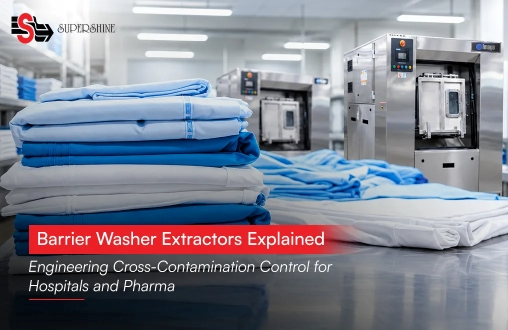
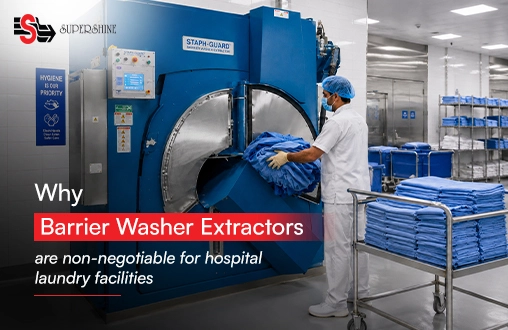
Barrier washers are designed with two separate doors, one for loading soiled linen and another for unloading clean linen, on opposite sides of the wall. This physically separates the "dirty side" from the "clean side" of your facility, which is a big deal for infection control. Depending on your daily volume, options range from the 18 kg compact barrier washers with separate load/unload doors all the way up to the 220 kg maximum-capacity barrier washer for large hospitals. For smaller clinics, something in the middle, like the 45 kg standard-capacity barrier washer, often hits the sweet spot.
A Quick (Slightly Annoying) Truth About "Future Proofing"
We mentioned earlier that future expansion plans matter, just not as the primary deciding factor. Here's the nuance. If you're a growing business and you genuinely expect to double your laundry volume within two to three years, it might make sense to size up by one category now rather than buying twice. But if "growth" is more of a hopeful someday thing without real numbers behind it, don't let that hope dictate a purchase that costs lakhs more upfront and burns extra utilities every single day until that growth (maybe) happens.
Buy for where you are, plus a reasonable, realistic buffer. Not for where you dream of being.
Bringing It All Together
So, to recap (because honestly, this got a bit long, and we appreciate you sticking around):
Start with your real daily linen weight. Match that to a machine category: hard mount for budget-friendly simplicity, soft mount for higher efficiency and gentler operation, tunnel systems for true industrial scale. Add hygiene requirements into the mix if you're dealing with healthcare or biohazard linen. And keep your future plans realistic rather than aspirational.
Choosing the right commercial washing machine capacity isn't glamorous, but getting it right means smoother operations, lower bills, and a lot fewer headaches for whoever's running your laundry room day to day. And honestly, that person deserves a break.
If you're still unsure which size fits your facility, it genuinely helps to talk it through with someone who's seen a few hundred laundry rooms in action. Sometimes a quick conversation saves a very expensive mistake.