+91-124-4807600
 contact@supershine.in
The Complete Guide to Industrial Tunnel Washers for High-Volume Laundry Operations

Picture this. It's 6 am, the laundry manager at a 400-bed hospital is staring at a mountain of soiled linen that arrived overnight, and the regular washer-extractors are already running back-to-back with no end in sight. Sound familiar? If you've ever managed a laundry operation that processes thousands of kilograms a day, you've probably had this exact moment. And honestly, this is usually the point where someone finally says the words "tunnel washer" out loud.
So let's talk about what these machines actually are, why high-volume facilities swear by them, and how to figure out if your operation has reached that tipping point.
What Exactly Is a Tunnel Washer
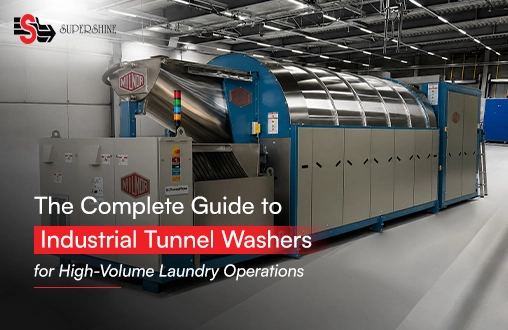
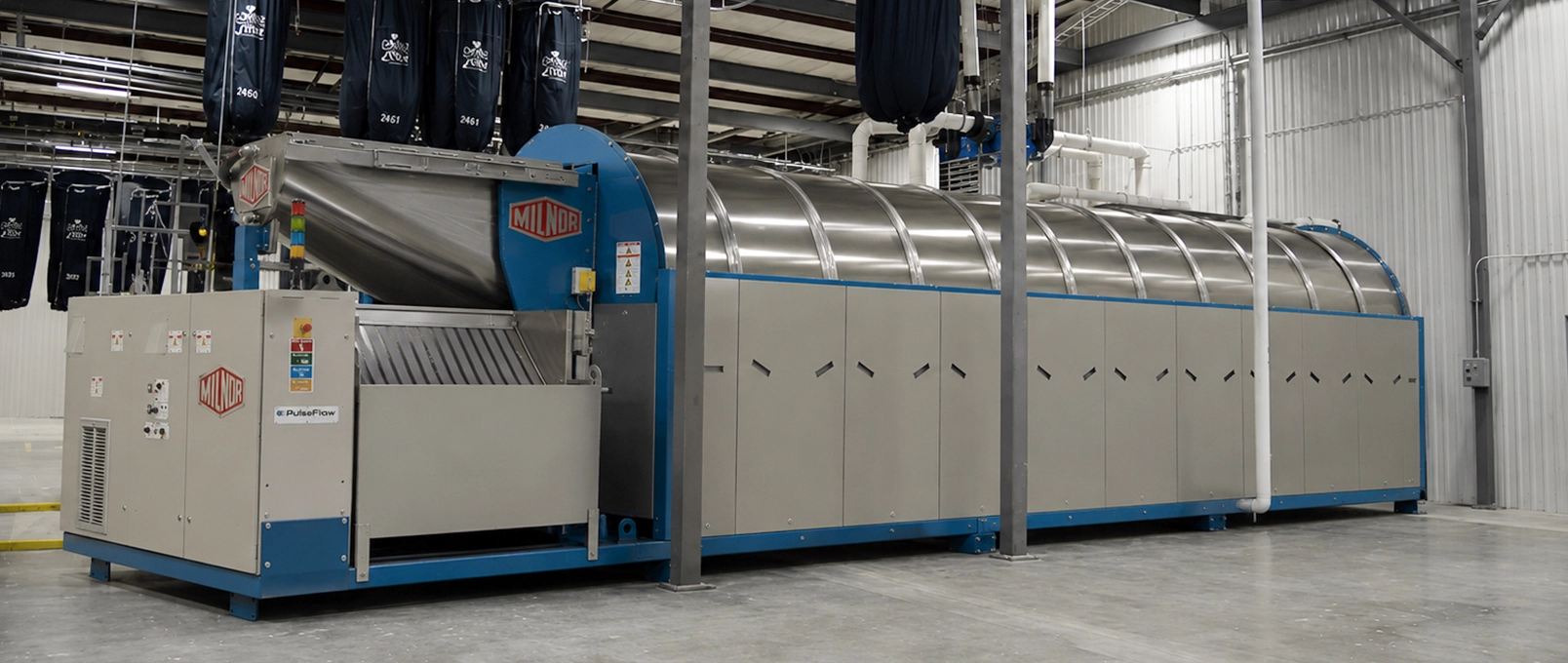
A tunnel washer, also called a continuous batch washer, is essentially a long horizontal drum divided into multiple compartments or modules. Linen enters at one end, moves progressively through different wash, rinse, and extraction stages, and comes out the other end ready for drying. Unlike a standard washer-extractor that runs one complete cycle for one load, a tunnel washer processes several batches simultaneously, each at a different stage of the wash program.
Think of it like an assembly line for laundry. While one batch is being rinsed in module three, another batch is getting its main wash in module two, and a fresh batch is just being loaded into module one. The result is a continuous flow of clean linen at a scale that individual industrial washer and dryer setups simply can't match.
Who Actually Needs One
Here's the honest truth. Not every laundry operation needs a tunnel washer, and that's okay. If your facility processes somewhere in the range of a few hundred kilograms a day, a well-chosen commercial washing machine or a set of soft mount washer extractors will probably serve you better, both in terms of cost and flexibility.
But once you're crossing into the territory of multiple tonnes per day, things change. Hospitals with large bed counts, hotel chains with high occupancy, and industrial laundry plants serving multiple clients tend to be the operations where tunnel washers genuinely make sense. At that scale, the labour savings, water efficiency, and consistency a tunnel washer offers start to outweigh the upfront investment pretty quickly.
The Technology Behind Modern Tunnel Washers
This is where it gets a little nerdy, but bear with me because it actually matters for your water bill.
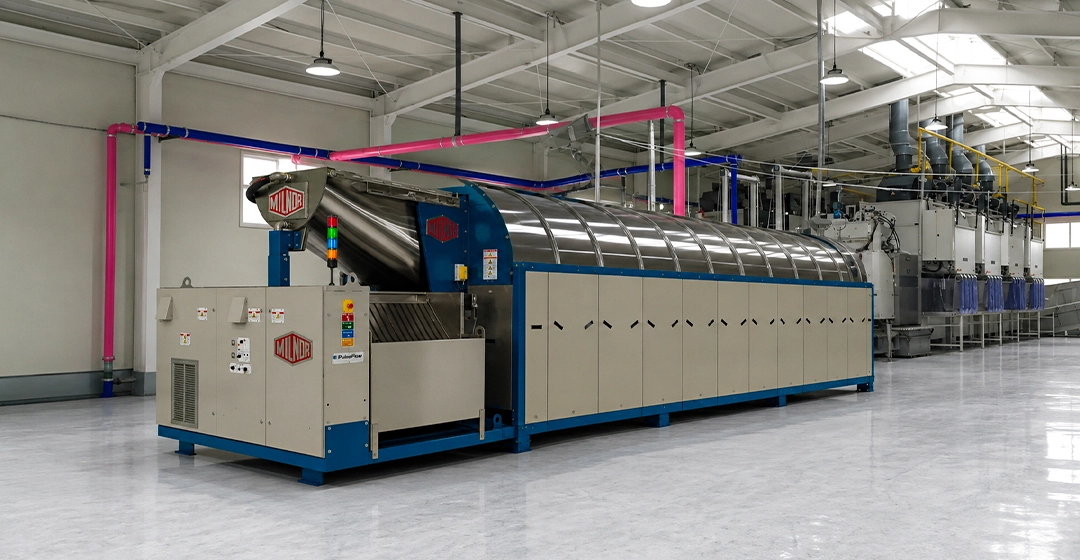
Older conventional tunnel washers (and to be fair, some still in use today) rely on a counterflow system, where water moves backward through the modules as linen moves forward. It works, and it's been the industry standard for decades. The Milnor CBW 76039 Pulse Flow Batch Washer and the Milnor CBW 92048 Pulse Flow Batch Washer are solid examples of this proven, conventional approach, built for facilities that want reliability above all else.
Then there's PulseFlow technology, which is honestly one of those innovations that makes you wonder why nobody thought of it sooner. Instead of continuous counterflow, PulseFlow uses intermittent, high-velocity bursts of water at precisely timed intervals. The result is significantly lower water consumption without sacrificing wash quality. Machines like the Milnor PBW 76039 Pulse Flow Batch Washer and the larger Milnor PBW 92048 Pulse Flow Batch Washer are built around this principle, and for facilities watching their water usage (which, let's be real, should be everyone at this point), this technology can make a noticeable dent in operating costs over a year.
If you're starting smaller but still want the continuous batch washing format, the Milnor 76028 Pulse Flow Batch Washer is a more compact entry point into this category, ideal for facilities that are growing into higher volumes but aren't quite ready for the full-scale setups.
Image's X-Power Tunnel Washers
Milnor isn't the only name worth knowing here. The Image X-Power range offers tunnel washers across a few different capacity tiers, and they're worth a look if you're comparing options. The Image 40 Kg Continuous Batch Washer sits at the smaller end, while the Image 60 Kg Continuous Batch Washer and Image 90 Kg Continuous Batch Washer scale up for larger operations. These give you a different price point and module configuration to consider, which is useful when you're trying to match the machine to your facility's footprint and budget rather than the other way around.
Capacity Planning: The Part Everyone Gets Wrong
This is probably the most common mistake I see (and yes, I'll use "I" here because this genuinely comes up a lot). Facilities tend to size their tunnel washer based on their current daily volume, without accounting for growth, seasonal spikes, or downtime for maintenance.
A good rule of thumb is to calculate your peak daily processing requirement, not your average, and then build in a buffer of at least 15 to 20 percent. Tunnel washers are a long-term investment. Buying one that's just barely enough today means you'll be back in the market in three years, and replacing a tunnel washer is a lot more involved than swapping out a heavy duty industrial washing machine.
Hygiene-Sensitive Operations
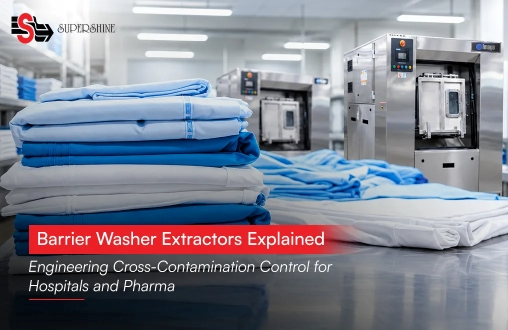
If your facility handles isolation linen, surgical gowns, or anything requiring strict cross-contamination control, it's worth pairing your tunnel washer conversation with a look at barrier washer-extractors as well. Even with a tunnel washer handling your general linen volume, having dedicated barrier capacity for high-risk items, like Supershine's range of 60 kg Barrier Washer Extractor units, keeps your infection control protocols airtight without slowing down your main wash line.
Maintenance and Space Considerations
One thing that often gets overlooked during planning is the sheer footprint of a tunnel washer. These machines are long, and depending on the module count, you might be looking at a unit that's anywhere from 6 to 15 metres in length. Before you fall in love with a particular model, walk your facility floor with a tape measure. Seriously. It sounds basic, but I've seen plans fall apart at the final stage because nobody checked if the machine would actually fit through the loading bay door.
Maintenance access is the other often-forgotten factor. Tunnel washers have multiple modules, each with its own valves, seals, and drainage points, so you'll want clearance on at least one side of the machine for routine servicing.
Wrapping It Up
Choosing a tunnel washer isn't just about picking the biggest machine with the most impressive spec sheet. It's about matching technology, capacity, and footprint to what your facility actually needs, both now and a few years down the line. Whether that means a PulseFlow system for water savings, a conventional CBW for proven reliability, or an Image X-Power unit for a different budget fit, the right choice comes down to understanding your daily volume, your growth plans, and honestly, just walking the floor and measuring things properly.
If you're somewhere in between, still running multiple industrial machine washing units but eyeing that next step up, it might be worth having a conversation with a laundry equipment specialist before committing. Sometimes the right answer isn't a tunnel washer at all, and sometimes it's exactly what you didn't know you needed.