+91-124-4807600
 contact@supershine.in
Stackable Washer and Dryer for Space-Constrained Commercial Laundries: Is It Worth It?

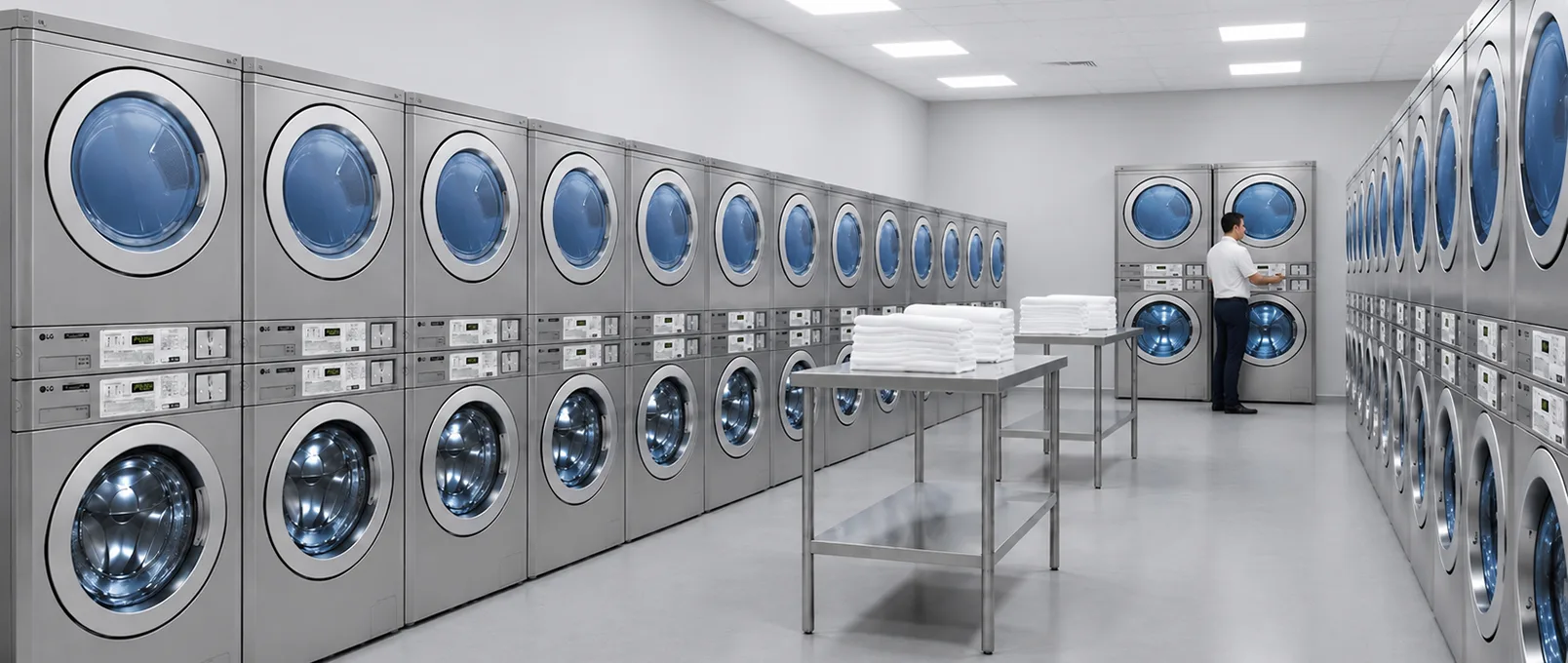
You know that moment when you're walking through a laundry room and you think — there has to be a better way to use this space?
Maybe you're setting up a new facility. Maybe you're expanding and there's just no room to add more machines side by side. Or maybe someone on your team mentioned a stackable washer and dryer and you're not quite sure if that's a serious option for a commercial setup or just something meant for apartments.
Fair question. Let's talk through it properly.
First Things First: What Even Is a Commercial Stackable Washer and Dryer?
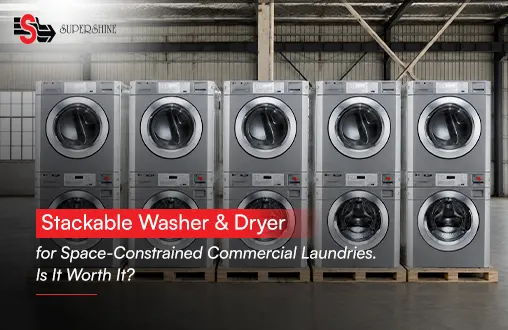
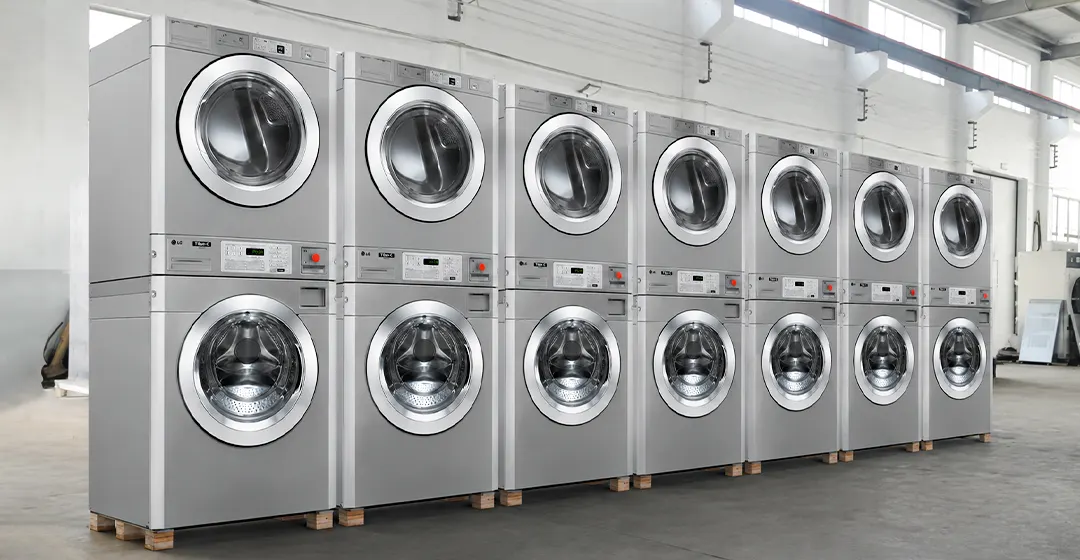
A commercial stackable washer and dryer is exactly what it sounds like. A washer and dryer unit stacked vertically, one on top of the other, designed specifically for commercial laundry environments. Not the domestic kind you see in housing complexes. These are built for continuous use, higher capacities, and the kind of daily punishment that comes with running a hotel, hospital, or service laundry.
The idea is simple. You get the same washing and drying output but use roughly half the floor space compared to placing the same machines side by side.
For facilities where space is genuinely limited, this is not a compromise. It is a legitimate operational solution.
Where Does a Stackable Setup Actually Make Sense?
Not every laundry needs a stacked configuration. But there are situations where it makes a lot of sense.
- Small to mid-size hotels with limited back-of-house space
- Hospitals with multiple satellite laundry points across floors
- Boutique properties where the laundry room was clearly an afterthought in the building plan
- Gyms, spas, and wellness centres that need on-site laundry without a dedicated laundry block
- Multi-floor facilities where running a centralised laundry is not practical
If you're in any of these situations, a commercial washer and dryer in a stacked format deserves serious consideration.
The Real Advantages Nobody Talks About Enough
Space savings are obvious. The operational benefits are not.
Yes, stacking saves floor space. That's the headline. But here's what actually matters in day-to-day operations.
Faster turnaround in compact setups. When your washer and dryer are literally one unit, linen moves from wash to dry with minimal handling. In a small team operation, that means less time moving loads around and more time getting things done.
Lower installation footprint. Fewer machines taking up floor space means easier movement of linen carts, better workflow, and a cleaner, safer laundry environment.
Flexibility in placement. A stacked commercial washer and dryer can fit into spaces that a standard side-by-side layout simply cannot. Corner spaces, narrow rooms, converted storage areas. You have more options.
Consistent output in smaller volumes. If your daily linen volume doesn't justify a large centralised setup, stacking lets you match capacity to actual need without over-investing in equipment or space.
What About the LG Stacker? Is It Right for Commercial Use?
The LG stacker is one of the more commonly asked-about options when people start researching stackable units. And understandably so. LG has strong brand recognition and their domestic stacked units are genuinely well-made.
But here's the honest answer.
The LG stacker range is primarily built for residential and light commercial use. If you're running a small guesthouse, a salon, or processing light volumes daily, it may hold up reasonably well. But for a facility running multiple cycles a day, every day, you need machines rated for continuous commercial use.
The duty cycle on a residential or semi-commercial unit is simply not built for that kind of load. What looks like a cost saving upfront often becomes an expensive repair or replacement situation within two to three years.
At Supershine Laundry, we always recommend matching the machine to the actual duty requirement. A proper commercial stackable washer and dryer from a commercial-grade brand will outperform and outlast a residential stacker in a commercial environment, every single time.
What Is Included in Industrial Laundry Machine Installation and Commissioning?
This is probably the most underestimated part of setting up any laundry, stacked or otherwise. People focus on the machine price and forget that industrial laundry machine installation and commissioning is a significant part of getting things right from day one.
Here is what a proper installation and commissioning process should include.
Site Assessment and Planning
Before anything arrives, a qualified team should assess your space. This includes checking floor load capacity, drainage points, water inlet positions, electrical supply specifications, and ventilation requirements for dryer exhaust. For a stacked unit, the structural support and wall clearances are especially important.
Equipment Delivery and Positioning
Industrial laundry machine installation involves more than just placing the machine. Proper levelling, securing the stacked unit safely, and ensuring anti-vibration measures are in place are all part of this stage. A stacked unit that isn't properly secured is a safety risk.
Utility Connections
This covers hot and cold water connections, drainage setup, electrical connections to the correct voltage and phase specifications, and steam connections if applicable. Every connection needs to be checked against the machine's technical requirements.
Commissioning and Test Runs
Once connected, the machine should be commissioned properly. This means running test cycles, verifying water inlet and drain performance, checking extraction speeds, and confirming that all programs are working as intended. Any errors at this stage are far easier to fix than after the machine has been in use for a month.
Operator Training
Good commissioning includes training your team. Your laundry staff should know how to operate the machine correctly, how to handle basic error codes, and what daily maintenance looks like. This alone extends machine life significantly.
Documentation Handover
You should receive the full technical documentation, warranty information, and a maintenance schedule at the end of commissioning. If your supplier is not providing this, ask for it.
At Supershine Laundry, industrial laundry machine installation and commissioning is not an afterthought. It is part of how we set our clients up for long-term reliability.
The Honest Drawbacks of a Stackable Setup
No solution is perfect. Here is what you should know before deciding.
- Capacity per unit is lower: A stacked unit typically handles smaller loads than a large standalone machine. If your volume is high, you may need multiple stacked units.
- Servicing can be trickier: Accessing the dryer mounted on top requires more care during maintenance. Make sure your service team is familiar with the configuration.
- Not suitable for all linen types: Heavy items like duvets, mattress protectors, or large tablecloths may be better suited to higher-capacity standalone machines.
- Drum access height: Loading and unloading the dryer at height can be less comfortable for staff over a full shift.
These are real considerations. But for the right facility, none of them are dealbreakers.
So, Is It Worth It?
For the right facility, absolutely yes.
A stackable washer and dryer in a commercial setting is not a workaround. It is a smart, space-efficient configuration that many well-run laundries rely on. The key is choosing the right machine for the job, getting the installation done properly, and having a maintenance plan in place from the start.
If you are working within space constraints and wondering how to make your laundry setup work harder, Supershine Laundry can help you figure out the right configuration for your specific situation.
Reach out to us. No sales pitch, just a straightforward conversation about what will actually work for you.