+91-124-4807600
 sales@supershinelaundry.ae
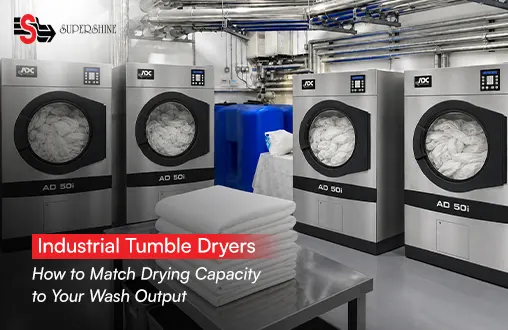
Industrial Tumble Dryers: How to Match Drying Capacity to Your Wash Output

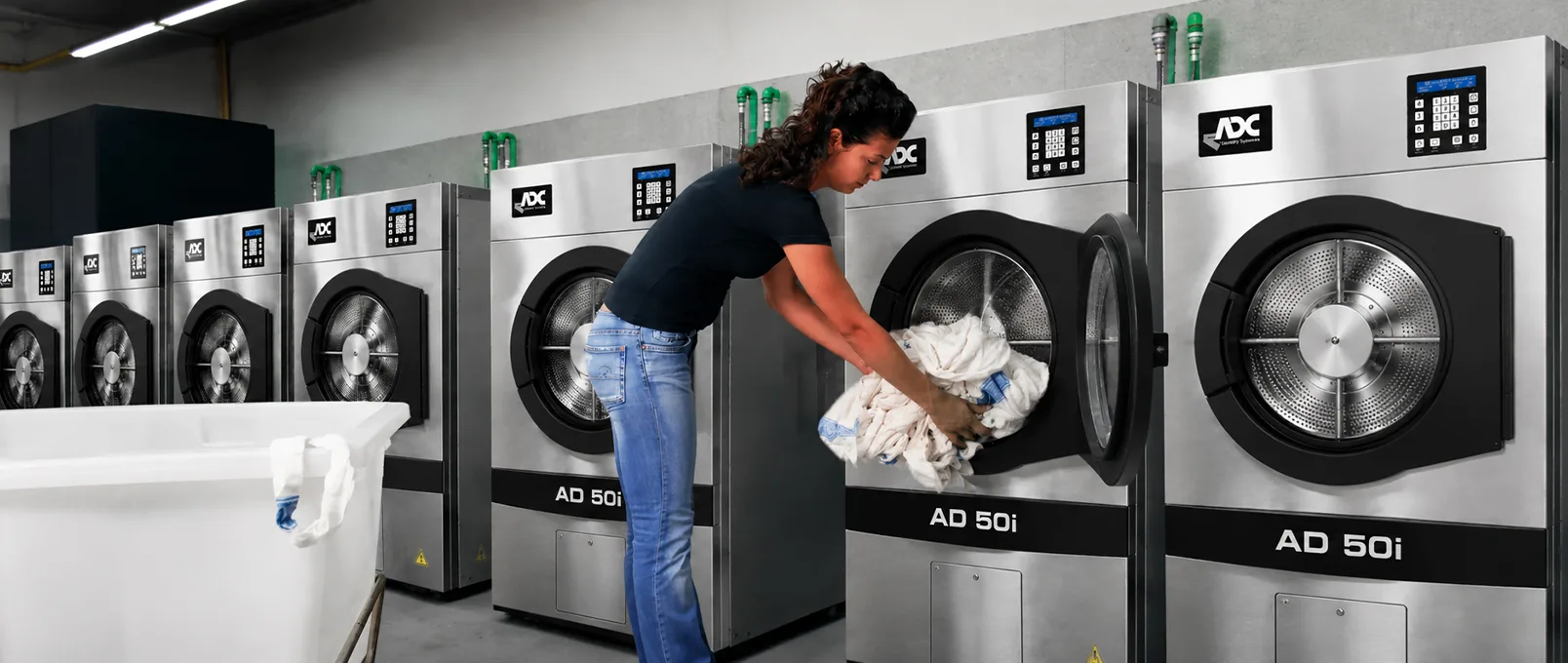
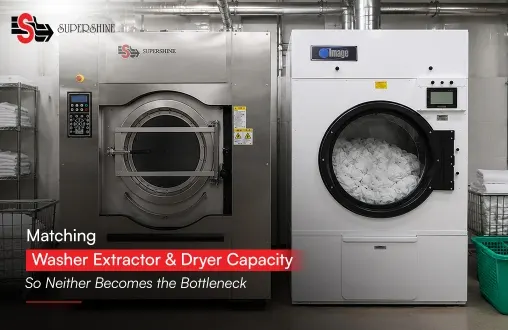
Here's a scenario we've seen play out more times than we can count at Supershine. A facility invests in a shiny new washer extractor, doubles its wash capacity, feels great about it for about two weeks, and then someone finally notices that the drying room has become a bottleneck nobody planned for. Suddenly, there's a mountain of wet linen sitting in carts, the commercial laundry dryers are running back to back with barely a gap, and the laundry manager is quietly wondering if anyone actually did the math before signing off on the purchase order.
This happens way more often than people admit. Everyone gets excited about washing capacity because that's the "exciting" part of the laundry, but drying is treated like an afterthought. And that's a mistake, because industrial tumble dryers aren't just a supporting act. They're the second half of a system, and if that system is out of balance, you're either wasting machine time or creating a backlog that ruins your whole turnaround schedule.
So let's actually talk about how to get this right.
The Basic Math Nobody Wants to Do
We get it, math isn't fun. But here's the good news: the calculation for matching commercial laundry dryer capacity to wash output is honestly not complicated. The general rule of thumb is that your drying capacity should be roughly 1.5 to 2 times your wash capacity, depending on the fabric type and how much water extraction your washer is achieving.
Why the gap? Because a wash load doesn't come out of the extractor at the same weight it went in. Wet linen retains moisture, sometimes quite a bit, depending on the fabric and the spin speed of your extractor. So a 100 kg wash load might effectively need industrial tumble dryer machine capacity closer to 130 to 150 kg once you factor in retained water weight and the fact that drying simply takes longer than washing.
If your facility runs, say, a Supershine 60 kg High-Capacity Industrial Drying Tumbler but your washer is processing 100 kg loads regularly, you're going to feel that mismatch by lunchtime. The commercial clothes dryer machine becomes the slowest link in the chain, and everything backs up behind it.
Why "Just Buy a Bigger Dryer" Isn't Always the Answer
Now, we know what some of you are thinking. Just buy the biggest commercial laundry dryer available and call it a day, right? Well, sort of, but not really.
Oversizing has its own problems. Drying small loads in a massive drum wastes energy, takes longer (yes, longer, because the tumbling action becomes less efficient with too much empty space), and puts unnecessary wear on the industrial tumble dryer machine over time. A Supershine 120 kg Heavy-Duty Industrial Drying Tumbler running half-empty most of the day isn't efficient; it's just an expensive way to dry towels.
The sweet spot is matching your commercial clothes dryer machine capacity to your typical load size, not your maximum possible load size. If your wash cycles average around 50 kg most days with occasional spikes to 80 kg, a Supershine 30 kg Mid-Capacity Industrial Drying Tumbler paired with a second unit for overflow often makes more sense than a single oversized machine that's mostly running on autopilot at low capacity.
The Multiple Dryer Strategy (And Why It's Smarter Than You Think)
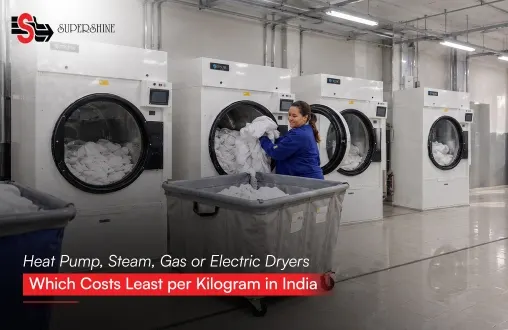
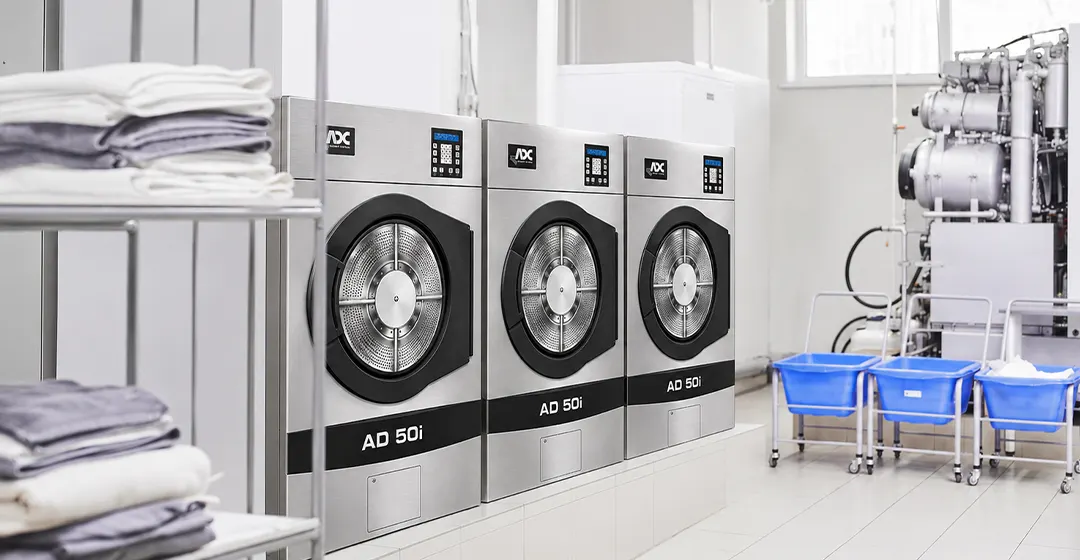
Here's something that surprised us when we first started looking into this properly at Supershine. A lot of well-run facilities don't rely on one giant industrial tumble dryer to match their washer output. They run two or three smaller commercial laundry dryer units in parallel instead.
Why does this work better? A few reasons. First, if one commercial clothes dryer machine goes down for maintenance, you're not left completely stranded. Second, you can run different cycles simultaneously, lighter fabrics in one dryer, heavier linens in another, without compromise. Third, and honestly, this is underrated, smaller industrial tumble dryer machines tend to have shorter cycle times for typical loads, which means your overall throughput per hour can actually be higher with multiple mid-sized units compared to one large one running fewer, longer cycles.
For facilities scaling up, something like a Supershine 15 kg Front-Loading Industrial Drying Tumbler as a secondary unit alongside a larger primary commercial laundry dryer gives you that flexibility without a massive footprint increase.
Real-World Math: A Quick Example
Let's say you're running a hospitality laundry operation processing around 300 kg of linen per day. Your washer extractor handles this in batches of about 75 kg, four cycles a day. After extraction, each load retains roughly 60% of its dry weight in moisture (this varies, but it's a reasonable planning number for mixed cotton linens).
That means each 75 kg dry load comes out of the washer at roughly 120 kg wet. If your industrial tumble dryer machine takes about 45 to 50 minutes per cycle for a load this size, and you've got four loads a day, you're looking at roughly 3 to 3.5 hours of drying time per day for that load alone, assuming everything runs smoothly with zero downtime (which, let's be honest, never happens).
Don't Forget Fabric Type
One thing that trips people up is treating all linens the same when calculating commercial laundry dryer needs. Towels and heavier cottons hold significantly more moisture than bed sheets or pillowcases. If your facility processes a mix, your average retained moisture percentage needs to reflect that mix, not just the lightest or heaviest item in rotation.
This is also where gas-heated options become relevant for larger operations. A gas-heated industrial tumble dryer from Supershine's range typically reaches operating temperature faster and maintains it more consistently across heavy, moisture-retentive loads compared to electric units of similar size, which can shave meaningful time off each cycle when you're running back-to-back.
A Quick Word on Future-Proofing
We'll admit, it's tempting to size your Supershine commercial clothes dryer machine for exactly where you are today. But laundry volumes rarely stay flat. Hotels add rooms, hospitals add beds, events get bigger. If you're already running close to capacity on both washing and drying, you're one busy season away from a serious bottleneck.
A modest buffer, somewhere around 15 to 20% above your current average need, gives you breathing room without massively overspending on industrial tumble dryer equipment that sits idle most of the time.
Wrapping Up
At the end of the day, matching your Supershine industrial tumble dryer machine to your wash output isn't glamorous work. Nobody's going to throw a party because you got the capacity ratio right. But you'll know it's working when the drying room stops being the place where everything piles up, and starts being just another step in a process that flows the way it's supposed to.
And honestly, that's the goal with most commercial laundry dryer decisions, isn't it? Not excitement. Just things working quietly, the way they should, day after day. That's exactly what Supershine Laundry has been building toward for over 35 years.