+91-124-4807600
 sales@supershinelaundry.ae
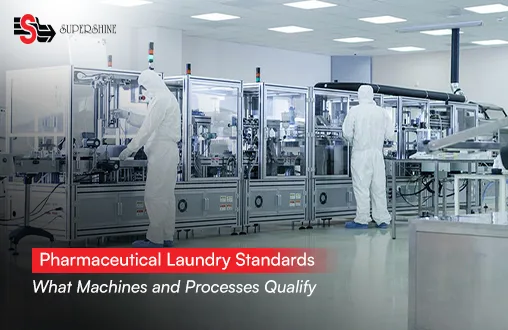
Pharmaceutical Laundry Standards: What Machines and Processes Qualify

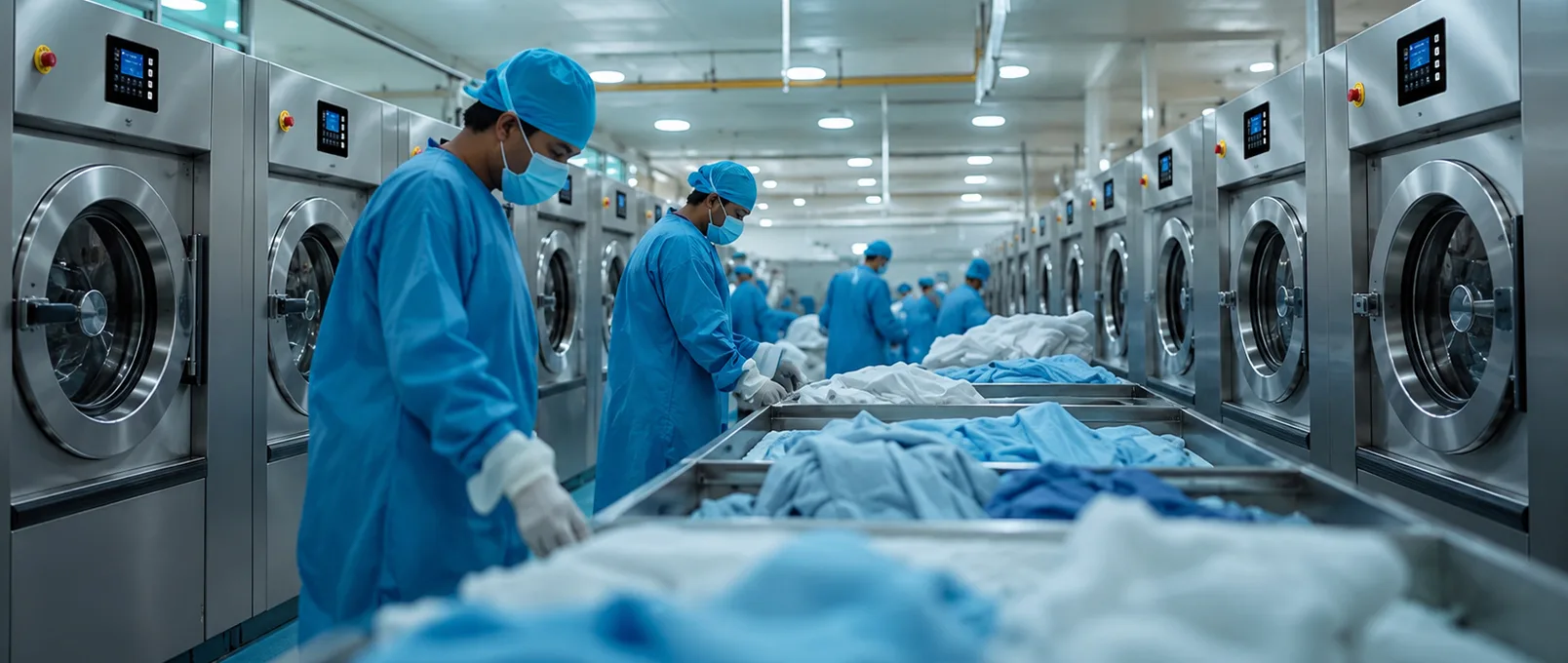
We'll admit, when someone first asked us about "pharmaceutical laundry standards," my brain went straight to images of scientists in white coats stirring beakers. Turns out, the real story is way less dramatic and way more interesting. It's about washing machines. Specifically, washing machines that have to behave like scientific instruments rather than appliances.
If you've ever wondered why a pharma facility can't just walk into a showroom and buy whatever commercial washing machine for pharmaceutical use looks shiny and powerful, well, grab a coffee. This one's worth unpacking.
Why Pharma Laundry Isn't Just "Laundry Plus"
Here's the thing that surprised us the most while digging into this. In a hospital, the goal of laundry is hygiene. In a pharmaceutical facility, the goal is validation. That word changes everything.
Validation means every wash cycle needs to be repeatable, documentable, and provable. If a batch of cleanroom garments comes out of a wash cycle today, the exact same process (same water temperature, same chemical dosing, same spin profile, same time) needs to happen tomorrow, and the facility needs records to prove it. This isn't bureaucracy for the sake of it. A single inconsistency in how gowns are washed can affect particulate counts in a cleanroom, which can affect drug quality. Suddenly, the stakes of "did the laundry guy run the right cycle" are a lot higher than they sound.
This is exactly where laundry machines for pharma stop being a commodity purchase and start being part of the quality system.
The Hard Mount Advantage Nobody Talks About
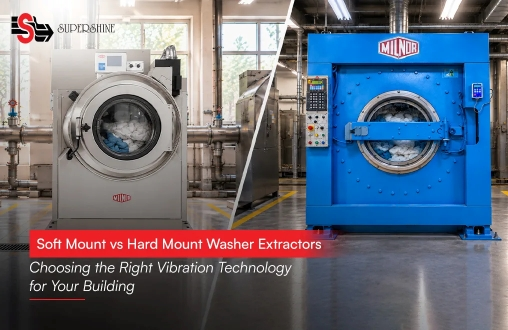
Most people in the industrial laundry world obsess over soft mount washer-extractors because of their high extraction speeds and lower vibration. And look, those are great machines for hotels and hospitals where throughput matters most.
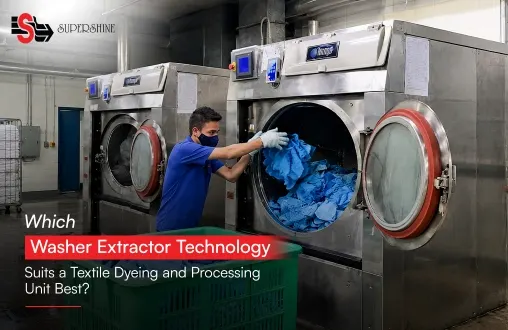
But pharma is a bit of an oddball here. Hard mount washer-extractors, the kind that bolt directly to the floor without suspension, tend to be preferred in many pharma and cleanroom garment processing setups. Why? Because their cycles are mechanically simpler and more consistent batch to batch, which makes them easier to validate. There's less variability introduced by suspension dynamics.
If you're looking at this category, machines like the 27 kg Washer-Extractors with Programmable Control or the 36 kg Washer-Extractor with Touch Screen Control are worth a serious look. Programmable controls aren't a nice-to-have here; they're basically the backbone of your documentation trail. Every parameter you set becomes a record you can pull up during an audit.
For slightly larger operations, the 45 kg Washer-Extractors with Touch Screen Control give you that same programmable rigor with more capacity, which matters when you're processing gowns, hoods, and boot covers across multiple shifts.
Barrier Washers: Not Just a Hospital Thing
Okay, real talk. When most people hear "barrier washer," they think hospitals, infection control, that whole world. And fair enough, that's where the technology got its reputation.
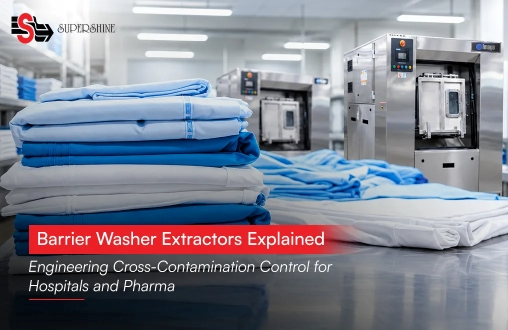
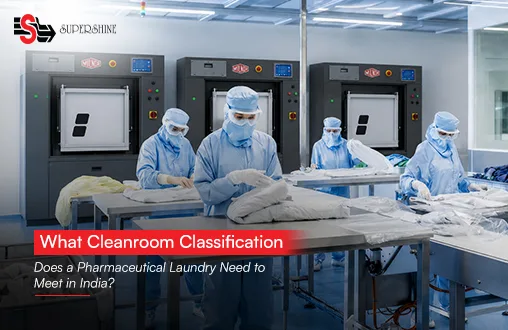
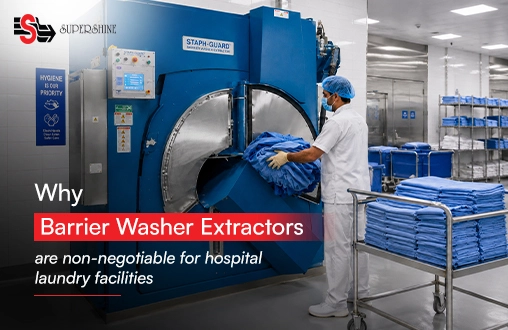
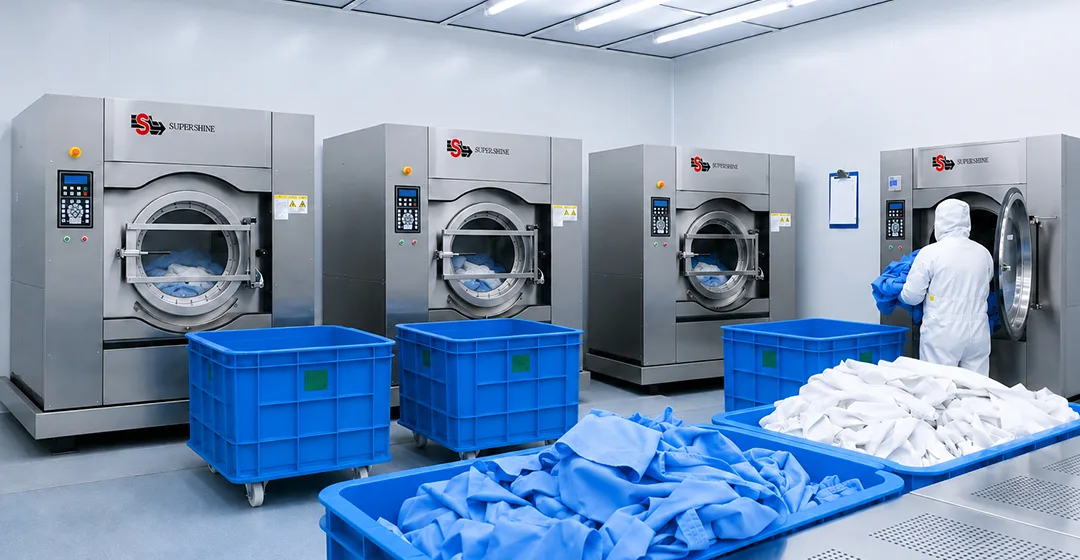
But here's a fun fact that we genuinely didn't expect. Barrier washers solve a problem that pharma facilities have too, just framed differently. Instead of "keeping infections out," it's "keeping contamination out and particulates controlled." The physical separation between the soiled side and the clean side of a barrier washer means contaminated garments never share air or surfaces with processed ones. For a cleanroom garment laundering operation, that's not optional. That's basically the whole point.
If you're scaling up, something like the 70 kg Heavy-Duty Barrier Washer or the Aseptic 70 kg Barrier Washer Extractor gives you that physical segregation along with the consistency a pharma-grade industrial laundry equipment list demands. And for bigger pharma operations processing higher volumes of cleanroom garments daily, the 136 kg Industrial-Grade Barrier Washer or even the 220 kg Maximum-Capacity Barrier Washer starts making sense.
The Drying Side Matters More Than People Think
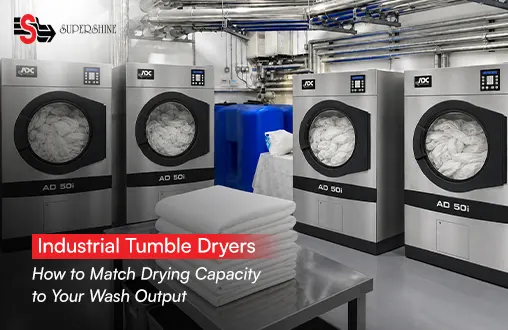
Here's something we genuinely didn't appreciate before. Drying isn't just "make it dry faster." For pharma garments, especially anything used in cleanrooms, residual moisture and lint generation during drying directly impact particulate counts. A dryer that thrashes garments around too aggressively can actually generate more lint, which is the exact opposite of what a cleanroom wants.
This is where low-lint, controlled drying becomes part of the spec sheet conversation. Machines like the 30 kg Mid-Capacity Industrial Drying Tumbler or the 60 kg High-Capacity Industrial Drying Tumbler with programmable cycle controls give facilities the ability to set and document drying parameters just as rigorously as wash parameters.
What About Finishing?
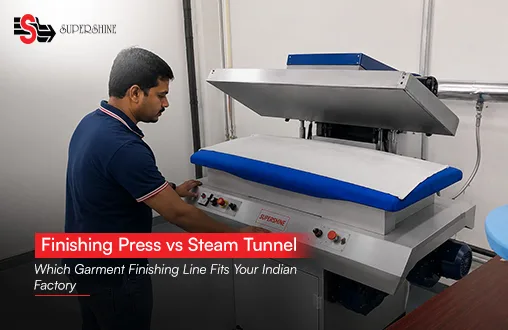
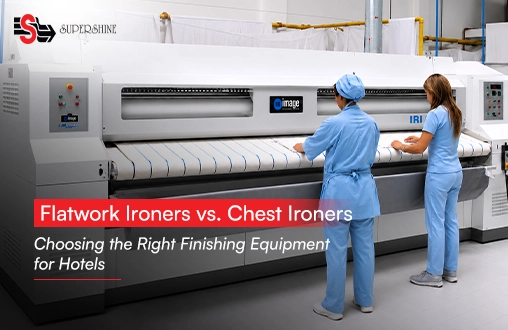
We know, we know, finishing feels like the "and also" part of every laundry conversation. But for pharma, particularly for lab coats and certain controlled-environment garments, finishing matters because wrinkled or improperly pressed garments can trap particles in folds and creases.
This is one area where general-purpose finishing equipment, like the LAV-R1 Rectangular Lab Coat Press, actually has a direct line to pharma applications. The name kind of gives it away, doesn't it? A press designed specifically around lab coat geometry isn't a coincidence. It's a recognition that pharma and lab environments have very specific garment shapes that generic presses don't handle as cleanly.
So, What Actually "Qualifies"?
If we had to boil this down to one sentence over that coffee we mentioned earlier, it would be this: Pharmaceutical-grade laundry isn't about having the most powerful machine—it's about having the most controllable and documentable one.
Programmable controls over high horsepower. Barrier separation over speed. Validated repeatability over flashy features. It's a different mindset compared to, say, choosing equipment for a hotel laundry, where throughput and turnaround often top the list.
And honestly, once you see it through this lens, the whole "pharmaceutical-grade laundry solutions" conversation stops feeling like jargon and starts feeling like common sense. You wouldn't want a critical lab result to depend on equipment that behaves a little differently every Tuesday. Why would you want your garment processing to be any different?
If you're in the process of speccing out a facility, a practical place to start is with your validation and documentation requirements first, and let the machine selection follow from there. The equipment exists. The question is really about matching it to a process that can stand up to an audit, not just a wash cycle.
At Supershine Laundry, we understand that pharmaceutical laundry solutions require far more than effective cleaning. They demand precision, consistency, traceability, and compliance with strict industry standards. By focusing on validated processes and reliable equipment, we help businesses build laundry operations that are audit-ready, efficient, and designed to meet the rigorous expectations of pharmaceutical and healthcare environments.