+91-124-4807600
 contact@supershine.in
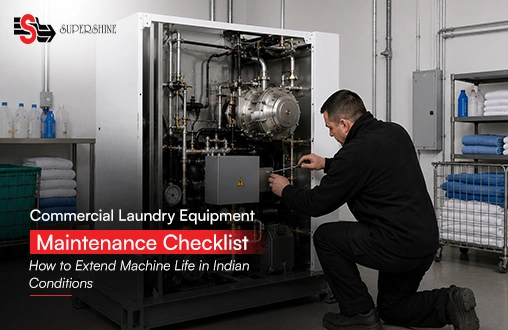
Commercial Laundry Equipment Maintenance Checklist: How to Extend Machine Life in Indian Conditions

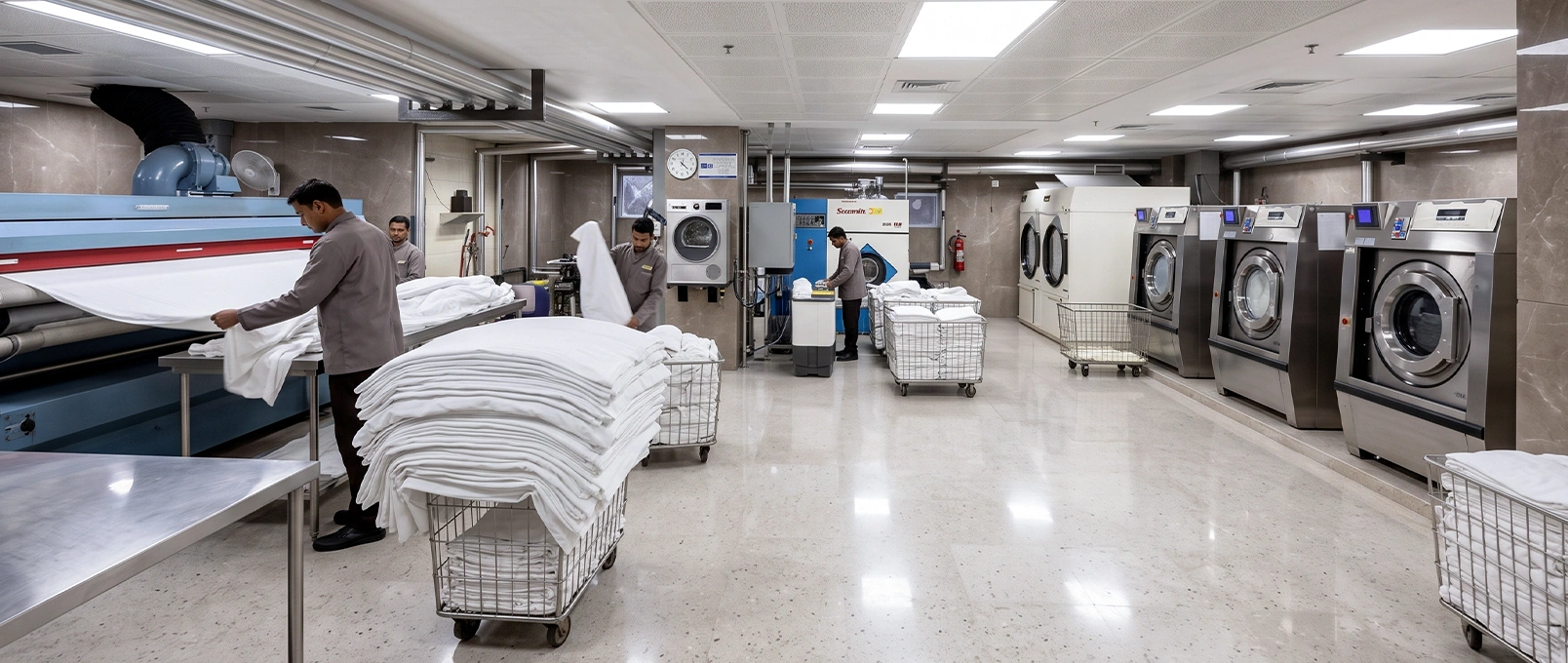
Nobody buys a washer extractor thinking about maintenance schedules, they're thinking about capacity, price, and how fast it can turn around today's linen load. Then two years in, something breaks at the worst possible time, usually a weekend with a full occupancy hotel or a hospital mid-shift, and suddenly keeping your commercial laundry services running becomes the only thing anyone can talk about.
Here's the thing though, most of these breakdowns are preventable, and the checklist to prevent them isn't complicated. It's just rarely followed consistently.
Why Indian Operating Conditions Make This Even More Important
Hard water in a lot of Indian cities, inconsistent power quality, higher ambient humidity in coastal regions, dust in industrial zones, all of this puts extra strain on machines compared to how they'd perform in more controlled environments. A washer extractor maintenance routine that might be considered thorough elsewhere sometimes needs to be tightened up here, particularly around water softening systems and electrical component checks, which is exactly why several commercial washing machine providers india now build extended service visits directly into their contracts.
Daily Checks, the Stuff Your Staff Should Just Do
This is the layer that costs nothing but attention, and it's usually skipped first when things get busy. Door interlocks need a quick functional check, the machine should never start with the door open, and it shouldn't be possible to open the door mid-cycle. Sounds basic, but a faulty interlock is a genuine safety issue, not just an inconvenience.
Doors should be left open between cycles too, this lets moisture evaporate and stops mold and mildew building up inside the drum, which is a bigger problem in humid climates than people expect. Lint traps and filters need clearing daily as well, a clogged filter doesn't just reduce efficiency, it makes the dryer work harder and burn more gas or electricity for the same result.
Weekly Maintenance That Actually Prevents Bigger Problems
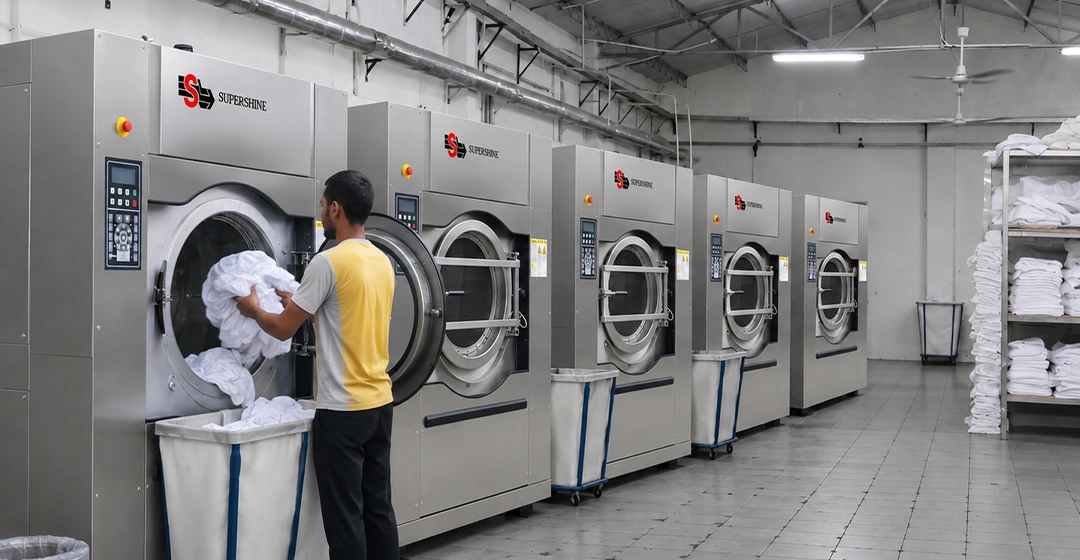
A cleaning cycle using a proper washer cleaner, or even a mild vinegar solution in a pinch, clears out detergent buildup and the odors that come with it. Door seals and gaskets need a visual inspection too, cracked or worn seals reduce heat retention and quietly increase your energy costs long before anyone notices the machine "isn't drying as fast as it used to."
Quarterly and Annual Work, Where the Real Lifespan Gets Decided
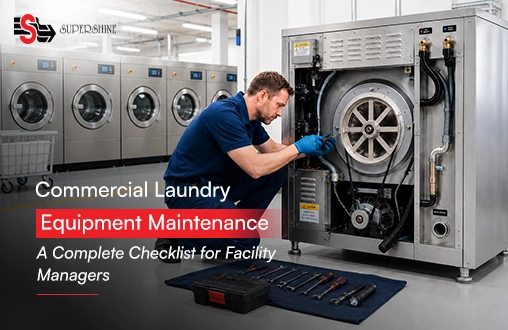
This is the tier that most facilities skip until something fails, and it's exactly the tier that determines whether your commercial laundry services stay dependable for eight years or fifteen. Bearings and moving parts need lubrication as per manufacturer schedule. Safety switches and emergency shutoffs need actual testing, not just a visual glance. Belts, hoses, and filters that show wear need replacing before they fail mid-cycle, not after. And a professional technician should be inspecting the full washer and dryer setup at least once a year, checking calibration on control settings, because a slightly miscalibrated machine burns more water and power without ever throwing an obvious error.
We see this pattern constantly at Supershine Laundry, clients who maintained religiously on the daily and weekly layer but skipped the annual technician visit, and ended up with a machine that was technically "working" while quietly costing 20 to 30 percent more in utilities than it should have.
Documentation Matters More Than People Think
Keep records. Safety inspections, interlock tests, emergency stop checks, all of it should be documented and retained, generally for a minimum of three years. This isn't just about compliance for facilities that need it, hospitals in particular, it's genuinely useful for spotting patterns. If the same component keeps failing every eight months, that's a signal something upstream, water quality, load balancing, operator habits, needs fixing, not just the part.
What Happens When Maintenance Gets Skipped
The failure pattern is fairly predictable. First, drying times creep up slightly, barely noticeable. Then energy bills tick upward without an obvious cause. Then a bearing or seal fails outright, usually during peak load, and you're now paying for an emergency service call plus the lost throughput from a machine down mid-shift. The maintenance you skipped to save an hour a week ends up costing several days of reduced capacity later.
Building a Maintenance Culture, Not Just a Checklist
A checklist on a wall doesn't maintain anything by itself, someone has to actually own it. The facilities that get the longest life out of their equipment are the ones where a specific person is responsible for daily and weekly checks, with sign-off, and where the annual technician visit is scheduled in advance rather than reacted to after a breakdown. Supershine Laundry works with a lot of clients on exactly this, setting up a maintenance calendar aligned to their specific machine models and usage intensity, rather than a generic one-size-fits-all schedule pulled off the internet.
The Bottom Line
A washer extractor or dryer is a significant capital investment, and many operators now lean on commercial laundry equipment financing to spread that cost, but the difference between getting eight years out of it versus fifteen usually isn't the brand, it's whether someone actually followed through on the boring, repetitive maintenance work every single week. It's not glamorous, but it's genuinely the single biggest lever you have over your equipment's total lifetime cost.