+91-124-4807600
 contact@supershine.in
Gas vs Electric Heating in Industrial Laundry Equipment: Which Works Better in India?

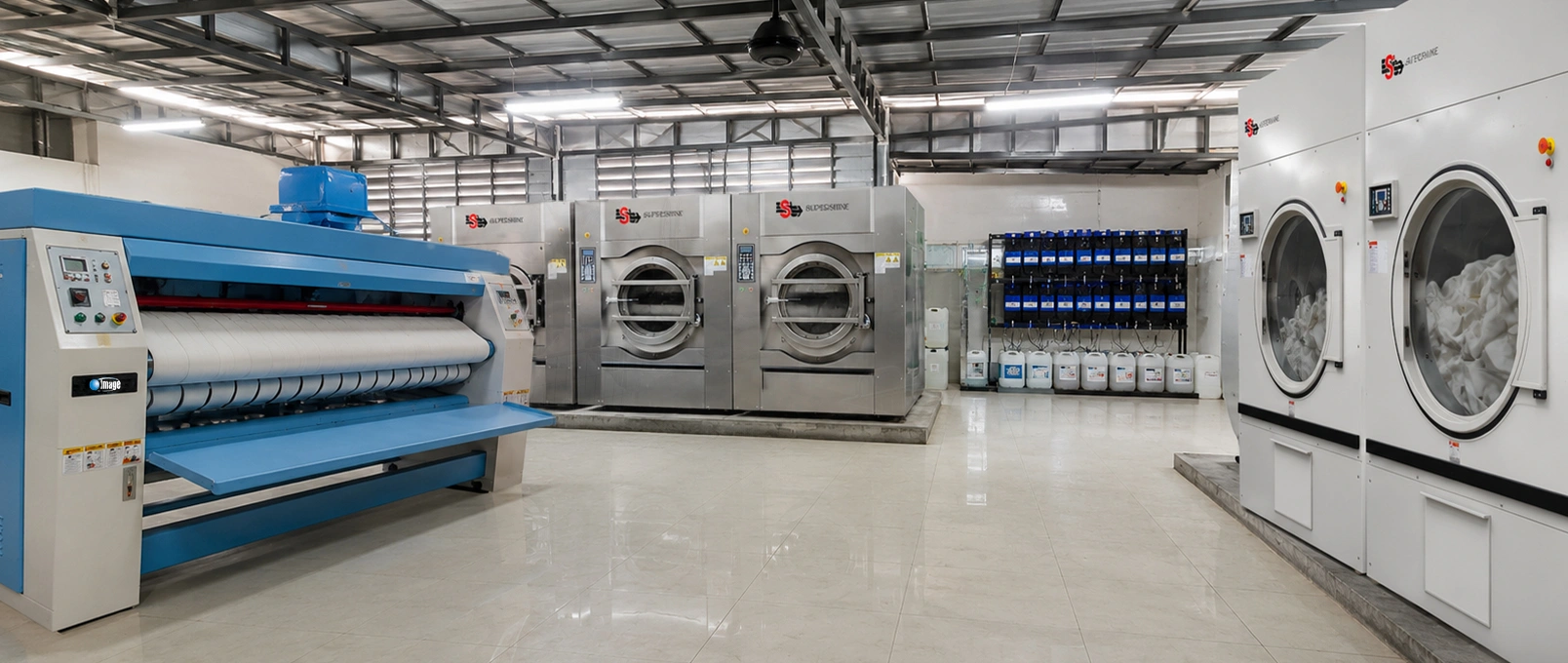
This question comes up in almost every industrial laundry equipment planning conversation, and it deserves more than the usual one-line answer. Gas vs electric heating for dryers and ironers isn't a matter of one being universally better, it genuinely depends on your volume, infrastructure, and what you're already working with. Let's actually get into the numbers instead of the generic pros and cons list.
The Cost Difference Is Real, and It's Not Small
Gas-heated dryers typically cost 15 to 25 cents equivalent per load to dry, while electric dryers can run 30 to 40 cents per load for the same output. That's roughly double, and when you're running multiple dryers across extended daily shifts in a hotel or hospital laundry, that gap compounds fast. A typical 100 kg gas-heated tumble dryer consumes around 6 cubic meters of natural gas per hour of operation, and depending on your local gas pricing, that consistently works out cheaper than the electrical equivalent for the same drying output.
Why Electric Isn't Automatically the Loser Here
Electric heating has one genuine advantage worth taking seriously, it's close to 100 percent efficient at the point of use. Every unit of electricity going into the heating element becomes heat, no combustion losses. Gas burners, by comparison, run at 80 to 92 percent efficiency depending on equipment design, so some energy is lost regardless.
The catch is what electric heating demands from your infrastructure. A 100 kg capacity electric tumble dryer can draw over 40 kW, and once you're running a full day's operation across multiple machines at commercial throughput, your electrical load can approach or exceed 300 kW. That's a serious ask for your electrical service, and upgrading power infrastructure to support that load is a real capital cost that often gets left out of the initial comparison.
Where Gas Has a Structural Advantage
Gas-heated industrial laundry machine units don't need a shared boiler plant, pressurized pipework, or a licensed boiler operator, which makes gas heating genuinely more accessible for medium-sized operations. You get the energy economics benefit of combustion heating without the capital investment and operational complexity that comes with running a full steam system. For a mid-sized hotel or hospital laundry that doesn't already have steam infrastructure in place, this can be the deciding factor over electric or steam alternatives.
There's also a speed factor worth mentioning. Gas dryers typically dry a load in roughly half the time compared to electric, since gas heating delivers higher heat output. For high-throughput operations where dryer cycle time directly limits how much linen you can process in a day, this matters more than the per-load cost comparison alone.
The Ironer Consideration Most People Miss
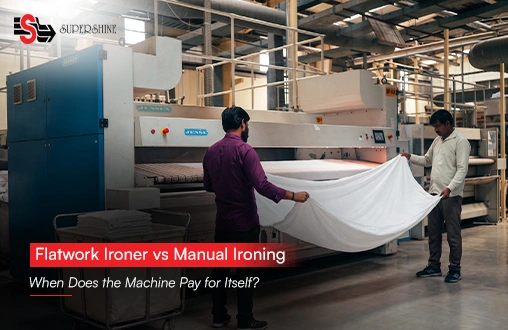
Here's something that catches buyers off guard during equipment selection. High-capacity flatwork ironer configurations generally aren't available in electric heating variants. If you're processing large volumes of sheets, pillowcases, and tablecloths, you'll hit a hard ceiling on what electric ironing capacity can realistically deliver. Operations planning for serious flatwork volume usually need to think of gas or steam from the outset, not as a later upgrade.
So Which Should You Actually Choose?
Honestly, it depends on three things. First, your existing infrastructure, if you've already got reliable gas supply and no steam boiler, gas heating is usually the more capital-efficient path. Second, your electrical capacity, if your site already has strong three-phase power and upgrading isn't a major cost, electricity becomes more competitive, especially at a smaller scale. Third, your volume, high-throughput operations processing large ironing volumes will find gas or steam heating structurally necessary rather than optional.
We walk through exactly this decision tree with clients at Supershine Laundry regularly, because getting it wrong isn't a minor inconvenience, it's a multi-year commitment to a higher operating cost or an infrastructure upgrade that could have been avoided with better planning upfront. A hospital that installs electric heating without accounting for the load on their existing transformer capacity ends up either restricting operating hours or facing an expensive electrical upgrade within the first year.
What This Means for Your Utility Bill Long-Term
Over a machine's typical operating life, this decision compounds significantly. A gas-heated setup running at the lower 15 to 25 cent per load range versus electric's 30 to 40 cents adds up to a meaningfully different total cost of ownership over ten-plus years, even before accounting for the potential infrastructure upgrade cost on the electric side. That said, if your operation is smaller and gas supply isn't reliably available at your location, electric heating with a properly sized power connection can still make solid operational sense.
The Practical Takeaway
Don't pick the heating type based on what your neighbor's hotel installed. Look at your actual gas availability, your electrical infrastructure headroom, and your realistic daily volume, particularly for ironing if that's a significant part of your operation. At Supershine Laundry, this is one of the first conversations in any new industrial laundry equipment planning process, because it shapes almost every other decision that follows, from boiler requirements to electrical panel sizing.