+91-124-4807600
 contact@supershine.in
How to Start a Commercial Laundry Business in India: Equipment, Investment, and What No One Tells You

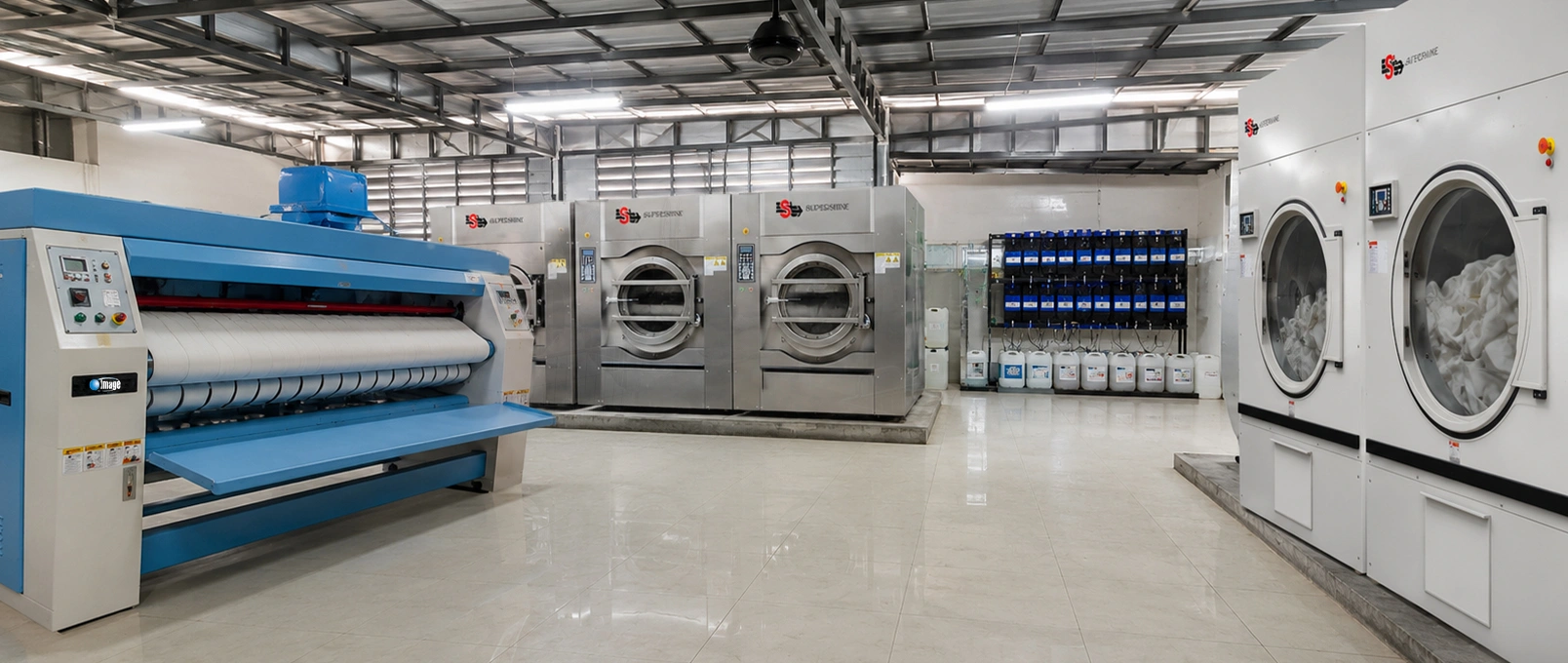
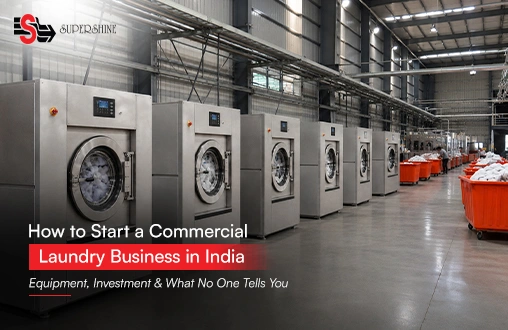
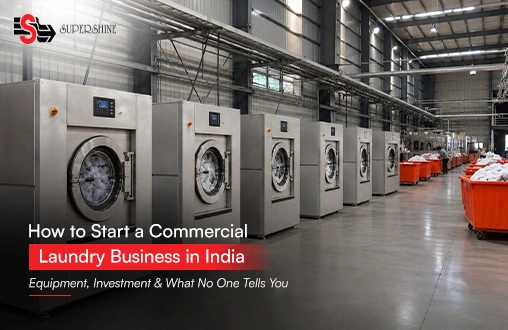
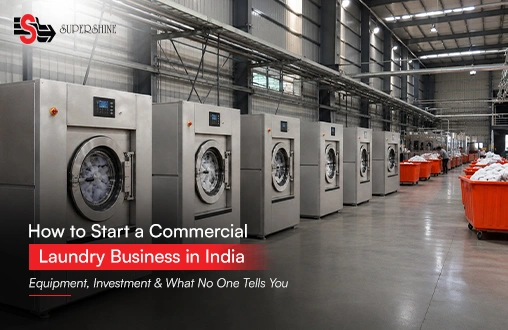
Starting a commercial laundry business in India, built around the right commercial laundry machine, looks deceptively simple from the outside. Buy some machines, rent a space, take in linen, done. Then you actually get into it and realize there's licensing, water infrastructure, sizing decisions, and a whole list of things nobody mentioned in the YouTube video that convinced you this was a good idea. It is a good idea, by the way, laundry is one of those businesses with genuinely reliable, repeat demand. It just needs to be set up properly.
Let's walk through what actually matters.
Business Registration, the Boring Part You Can't Skip
You've got three real options here. A sole proprietorship is the cheapest and simplest, fine for a very small operation. A partnership firm works if you've got co-founders splitting the investment. A private limited company is generally the better call if you're planning to scale, bring in investors later, or land larger B2B contracts with hotels and hospitals, since corporate clients tend to prefer contracting with a proper registered entity.
The Licenses You'll Actually Need
This is where a lot of new entrants get caught off guard. You'll need a Shop and Establishment License for basic commercial operation, GST registration once your turnover crosses ₹40 lakh (₹20 lakh in some states), and a Trade License from your local municipal corporation. Because laundry operations use significant water and discharge effluent, you also need Consent to Establish and Consent to Operate from your State Pollution Control Board, this one gets skipped by a surprising number of new operators and causes real problems later. Professional tax registration and MSME/Udyog Aadhaar registration round out the list, and the MSME registration specifically opens up access to government incentives worth having.
What the Equipment Investment Actually Looks Like
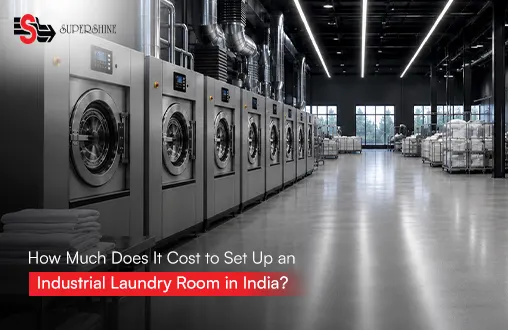
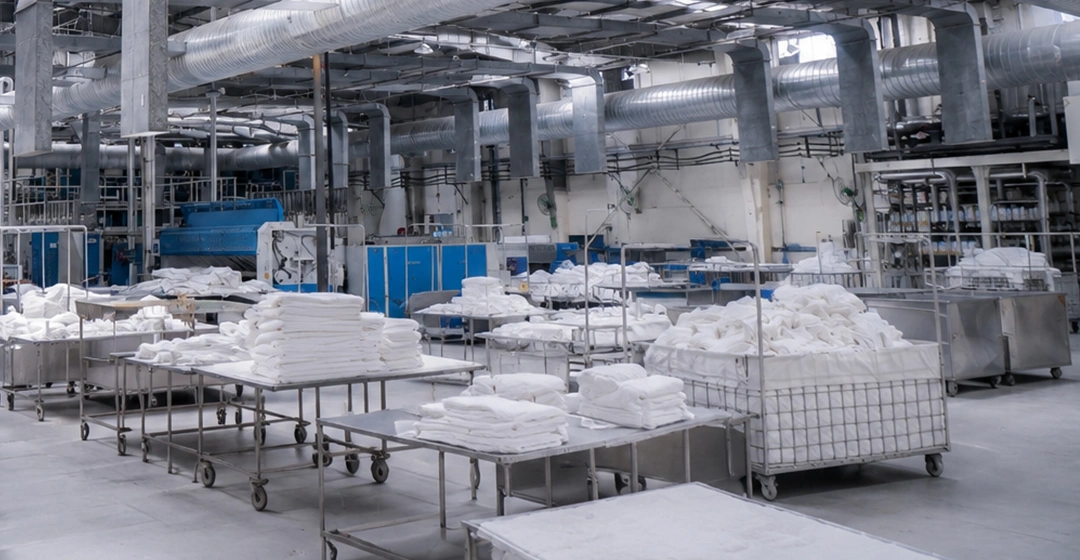
For a small shop setup built around basic commercial laundry equipment, budget ₹7 lakh to ₹20 lakh total. A mid-scale operation, like a larger retail-facing laundry or a small B2B processing unit serving local businesses, typically runs ₹20 lakh to ₹60 lakh.
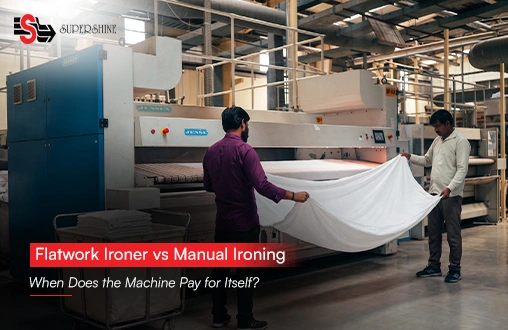
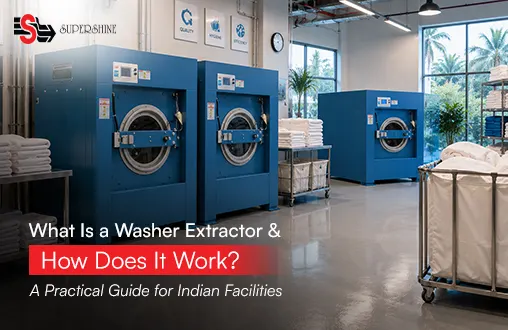
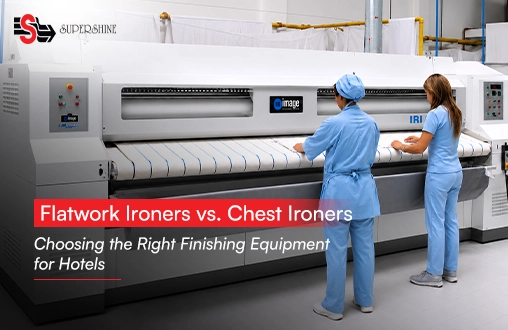
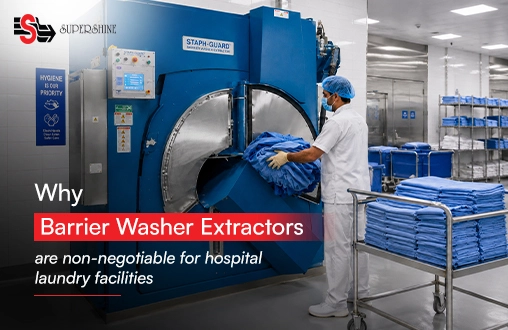
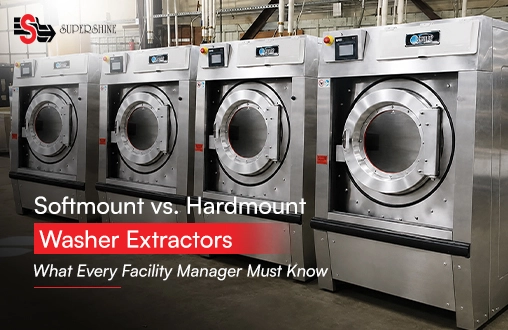
Breaking that down: commercial laundry washing machines in the 8-15 kg range cost ₹1.5 lakh to ₹4 lakh per unit. Dryers for a small shop run ₹1.5 lakh to ₹4 lakh as well. For ironing and finishing, budget ₹50,000 to ₹2 lakh for steam irons, boards, and a basic steam press or flatwork ironer if your volume justifies it early on.
That total investment breakdown isn't just machines, though. Rent, interior setup, chemicals and consumables, and working capital to cover the first few months of operation before revenue stabilizes all need to be part of your planning. A lot of first-time operators budget machines and forget working capital, then run into cash flow trouble in month two, not because the business model is wrong, but because they didn't plan for the ramp-up period.
Choosing Your Business Model
This decision shapes everything downstream. A retail-facing laundromat serving individual customers has different volume patterns and equipment needs compared to a B2B model offering commercial laundry services to hotels, hospitals, or garment units. A collection-and-delivery model, where you take orders locally but process at a central facility, needs far less upfront equipment capital, closer to ₹7 lakh to ₹15 lakh, since your main investment is in sorting tables, trolleys, and a point-of-sale system rather than heavy machinery.
We've seen new entrepreneurs at Supershine Laundry go both directions successfully, but the ones who struggle are usually the ones who picked a model without honestly assessing their local demand pattern first. A B2B laundry serving three mid-sized hotels needs completely different capacity planning than a neighborhood laundromat.
Profitability and Timeline, Realistically
Standard laundry shops generally see a payback period of 12 to 18 months, with gross margins around 75 percent once operations stabilize. That's a genuinely strong margin profile compared to a lot of small business categories, but it assumes your capacity utilization is reasonable, a laundry running at 30 percent capacity isn't hitting those numbers regardless of how good the margin looks on paper.
What No One Tells You Upfront
A few things that catch new operators off guard consistently. Water quality matters enormously, hard water in many Indian cities means you'll likely need a water softening system from day one, not as a later upgrade, or you'll be fighting scale buildup and inconsistent wash quality constantly. Power backup matters too, laundry equipment doesn't tolerate power cuts mid-cycle gracefully, and a generator or inverter backup should be budgeted in from the start, not treated as optional.
And perhaps the biggest one, machine sizing based on your actual projected volume, not your hoped-for volume. Buying oversized capacity "for future growth" ties up capital that could have gone toward marketing or working capital, while undersized capacity means you're turning away business or running excessive overtime shifts within the first year.
Where to Get This Right From the Start
This is genuinely where working with an established equipment partner pays off. At Supershine Laundry, the conversation with new laundry entrepreneurs starts with realistic volume projections, local water quality, and business model, retail, B2B, or hybrid, before any machine gets recommended. Getting this sequencing right at the start saves a lot of expensive correction later.
Starting a commercial laundry business in India, backed by the right commercial laundry machine choices, is a solid, dependable business if you get the fundamentals right, registration, licensing, realistic sizing, and working capital planning. The businesses that struggle usually didn't skip the idea, they skipped the planning.