+91-124-4807600
 contact@supershine.in
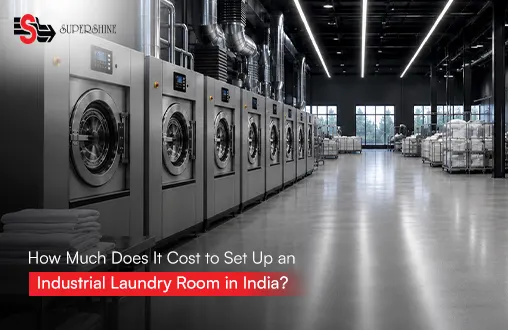
How Much Does It Cost to Set Up an Industrial Laundry Room in India?

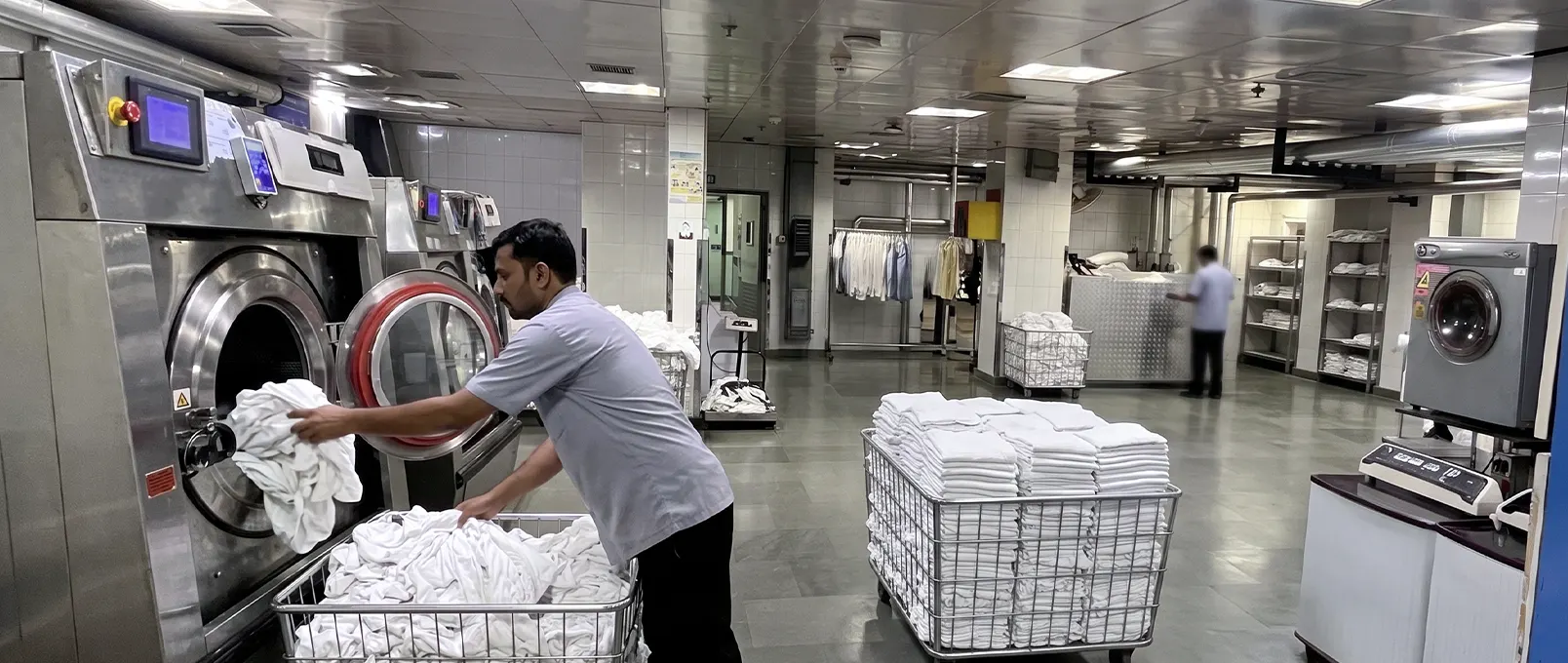
If you've been quietly Googling prices for industrial laundry machines at 11 pm after another conversation with your GM about outsourcing bills, you're not alone. It's one of the first questions every hotel owner, hospital administrator, or laundry entrepreneur asks, and honestly, it's a fair one. Setting up an industrial laundry room isn't cheap. But it's also not the black hole of expense that a lot of vendors make it sound like, and once you break the numbers down, the picture gets a lot clearer.
Let's talk about real figures first, then get into where the money actually goes.
So, What's the Real Number?
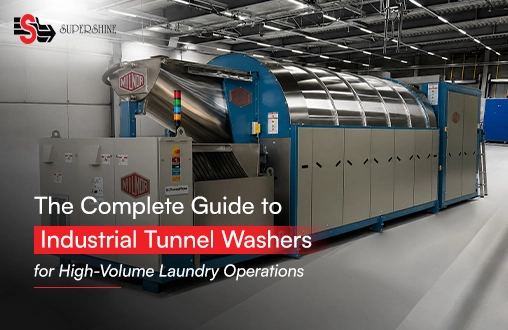
For a full-fledged commercial laundry setup in India, built around dependable industrial laundry machines, most operators end up spending somewhere between ₹15 lakh and ₹35 lakh. That range covers a proper 15-20 kg washer extractor, a matching tumble dryer, a small steam boiler or heating unit, basic flatwork ironers, and enough finishing equipment to run a decent daily volume. If you're building something more compact, say a collection-and-delivery model where the heavy processing happens elsewhere, you could get away with ₹7 lakh to ₹15 lakh since you're mostly investing in sorting tables, trolleys, and a point-of-sale system rather than machinery.
Hotels tend to sit at the higher end of this range, usually ₹12 lakh to ₹35 lakh, because the plant size, premises, and delivery logistics all scale up with occupancy. A 200-room property just needs more throughput than a 40-room boutique hotel, and that changes everything from drum size to how many dryers you need running in parallel.
Breaking Down Where the Money Goes
Here's the thing nobody tells you upfront: the washer isn't even the biggest line item, it just feels like it because it's the first thing you buy.
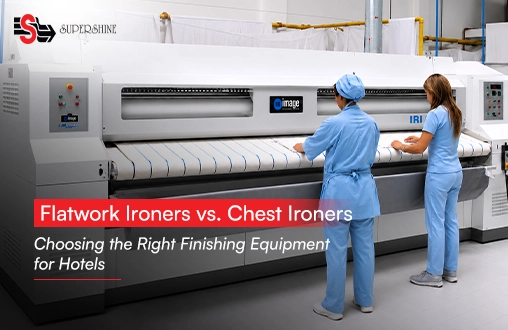
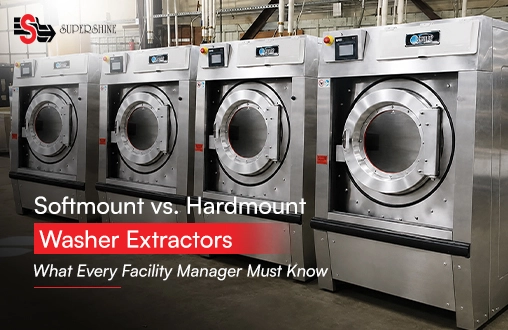
Washer extractors with 8-15 kg capacity typically run ₹1.5 lakh to ₹4 lakh per unit, and if you're processing at hospital or large-hotel scale (think 65-100 lb loads), you're looking at ₹5.65 lakh to over ₹14 lakh for a single machine. Dryers follow a similar curve, roughly ₹1.5 lakh to ₹5 lakh depending on capacity. Then there's the stuff that quietly adds up: flatwork ironers, hydro extractors, water softening systems, steam boilers, linen trolleys, folding stations. None of these are optional if you want a laundry room built around solid industrial laundry machines that actually functions instead of just looking impressive on day one.
We've seen this play out repeatedly with clients at Supershine Laundry who came in expecting to spend on "just the washer and dryer" and were surprised that water treatment and finishing equipment made up nearly a third of their final budget. It's not a hidden cost, it's just one people forget to plan for until they're standing in the room realizing there's nowhere to fold anything.
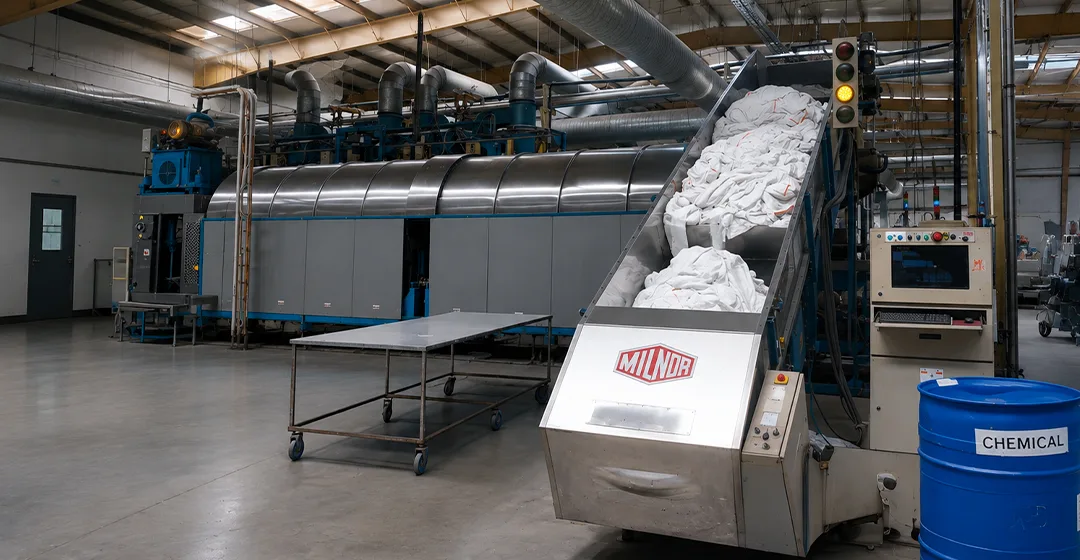
Is It Actually Worth It?
Short answer, yes, if your volume justifies it. The payback period for a well-run commercial laundry setup usually lands between 12 and 18 months, and gross margins can sit around 75% once you're past the initial capital outlay. That's a genuinely good business case, especially if you're currently paying a third-party laundry company in india per kilo and watching those costs creep up every quarter with zero control over quality or turnaround time.
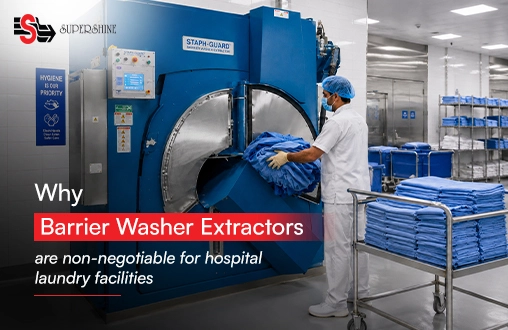
The bigger question isn't really "can I afford this," it's "what happens if I don't." Outsourced laundry means depending on someone else's timelines, someone else's water quality, someone else's damage rates on your linen. For hospitals in particular, where infection control isn't negotiable, owning your process removes a whole category of risk.
What Actually Drives the Cost Up or Down
A few honest factors that swing your total investment more than people expect:
First, your daily linen volume. This decides everything else, machine capacity, number of units, boiler size. Second, whether you need steam heating or can run on gas or electric, which changes both equipment cost and your utility infrastructure. Third, whether you're retrofitting an existing space or building fresh, because plumbing and drainage modifications for industrial laundry machines can cost more than people budget for. And fourth, brand and build quality. Cheaper imported machines look tempting on paper but tend to cost more in downtime and part replacement over a five-year window than a slightly pricier, properly supported unit would have.
This is really where working with an established name matters. At Supershine Laundry, the conversation with a new client rarely starts with "which machine do you want," it starts with "what's your daily kg load, what's your water source, what's your power situation." Getting the sizing right at the planning stage is what keeps the actual delivered cost close to the estimate, instead of ballooning six months in because someone underestimated drying capacity.
A Realistic Way to Plan Your Budget
If you're at the planning stage right now, here's a genuinely useful way to think about it. Don't start with machine prices. Start with your daily kg output requirement, then work backward. A hospital processing 500 kg a day has completely different needs than a 60-room hotel doing 150 kg. Once that number is clear, get quotes that include installation, commissioning, and at least a year of service support, not just the sticker price of the machine. A washer that's ₹50,000 cheaper but comes with a weak service network in your city can cost you far more in downtime than you saved upfront.
Setting up an industrial laundry room in India, done properly, is one of those investments that pays for itself quietly in the background, month after month, once it's running. The trick is getting the sizing and equipment selection right the first time, because retrofitting a laundry room a second time is a lot more expensive than doing it right from day one.