+91-124-4807600
 contact@supershine.in
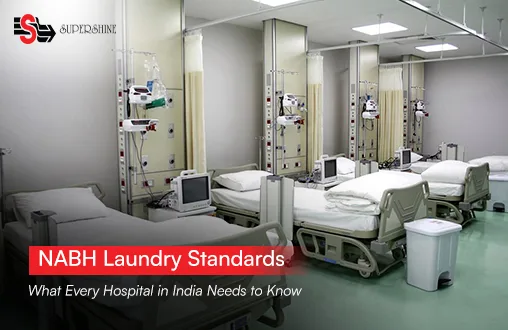
NABH Laundry Standards: What Every Hospital in India Needs to Know

If you're preparing for accreditation, chances are someone on your team has already said the words "NABH laundry standards" in a slightly panicked tone during a meeting. It's a fair reaction, honestly, because linen and laundry management sits right inside NABH's infection control requirements, and it's one of those areas assessors actually walk through in person, not just check on paper.
Let's go through what this actually involves, without the jargon overload.
Why Laundry Gets This Much Attention
Linen touches every single patient, every single day, sheets, gowns, towels, surgical drapes. If it's not handled correctly between "used" and "clean," it becomes a direct transmission route for infection. That's the entire reason a properly designed hospital laundry system exists in the first place, and why NABH treats this as a systematic process requirement rather than a housekeeping afterthought. Accreditation isn't just checking whether your linen looks clean, it's checking whether your entire process, from collection to storage, prevents cross-contamination at every single step.
The Core Infrastructure Requirements
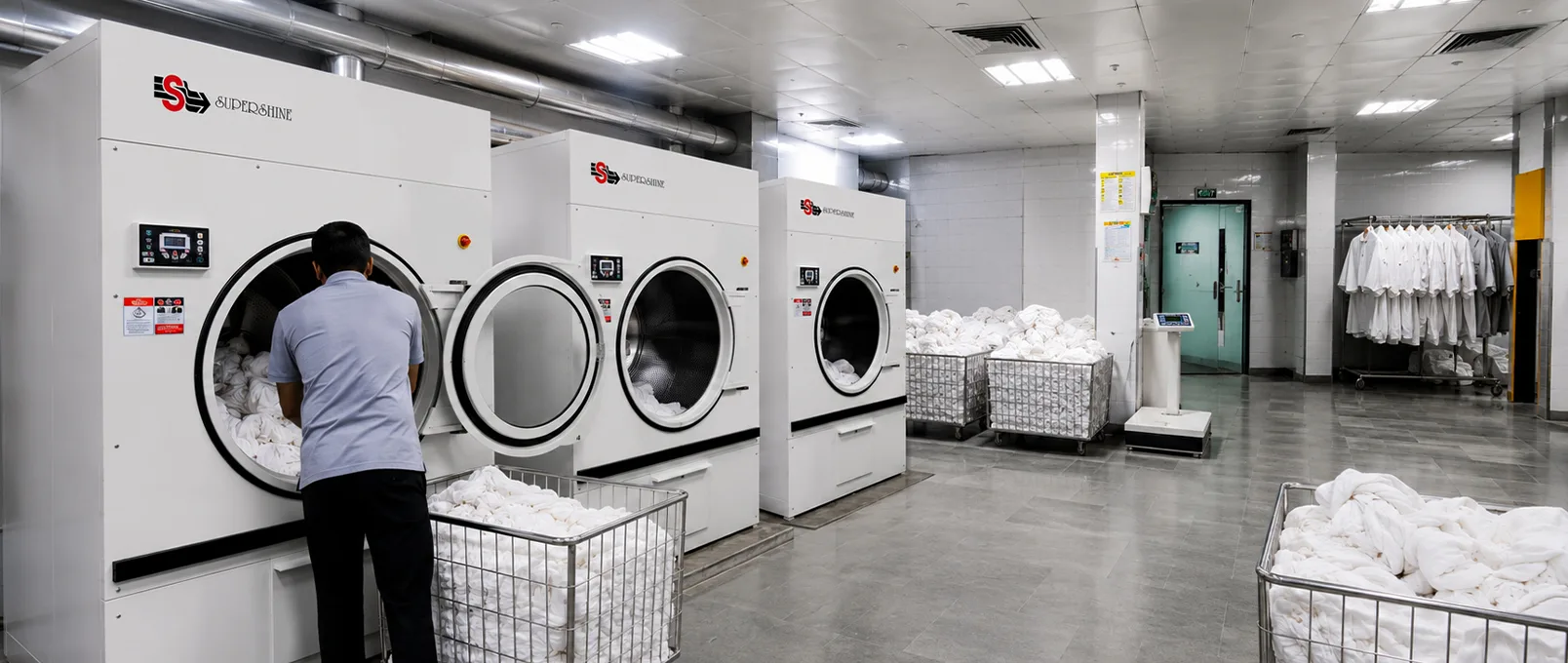
This is where most hospitals either pass comfortably or scramble at the last minute. NABH expects physical separation between soiled and clean linen areas, and this isn't a suggestion, it's structural. You need distinct zones, proper ventilation to prevent airborne pathogen transmission, and engineering controls that keep negative air pressure flowing from clean areas toward dirty ones, never the other way around.
Practically, this means your laundry layout needs a clear one-way flow. Soiled linen comes in through one entry point, moves through washing, and clean linen exits through a completely separate route. If your soiled and clean linen staff are crossing paths in the same corridor, that's a finding waiting to happen during assessment.
Linen Handling, Step by Step
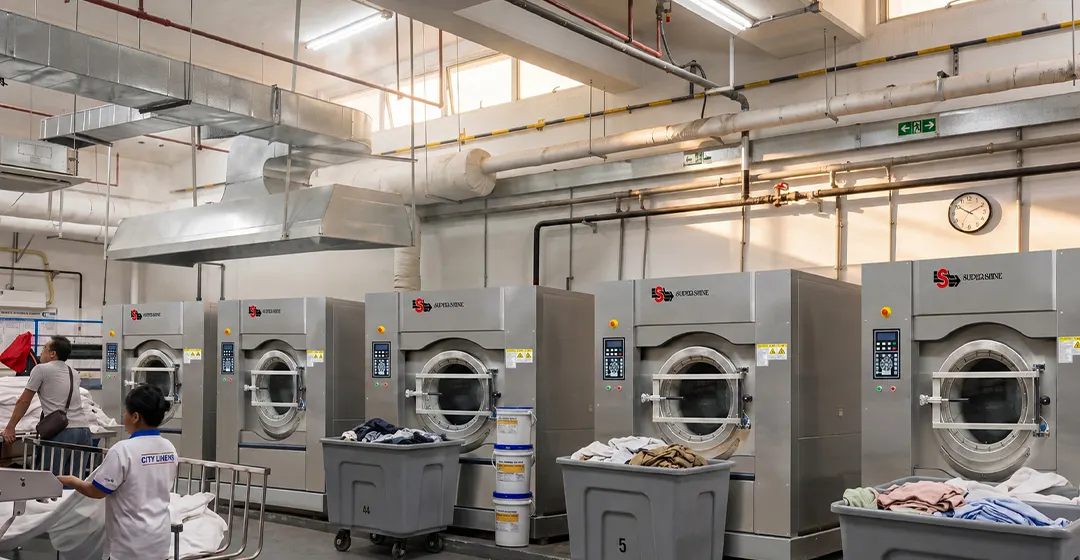
Soiled linen has to be transported in separate, clearly marked bags, never mixed with clean linen in transit. Trolleys carrying clean linen need washable or disposable covers, no exceptions, because an uncovered trolley moving through hospital corridors is exactly the kind of exposure NABH assessors are trained to spot.
Staff training matters just as much as the physical setup. Everyone touching linen, from collection to folding, needs documented training in infection prevention principles, and this training needs to be refreshed periodically, not done once during onboarding and forgotten.
Special Units Need Extra Layers
If your hospital has an oncology ward, transplant unit, or neonatal ICU, the bar goes up considerably. These units deal with immunocompromised patients, so NABH expects additional protective measures, sometimes double wash cycles, additional disinfection steps, and for certain items, full terminal sterilization. Microbiological monitoring also needs to happen more frequently in these areas compared to general wards.
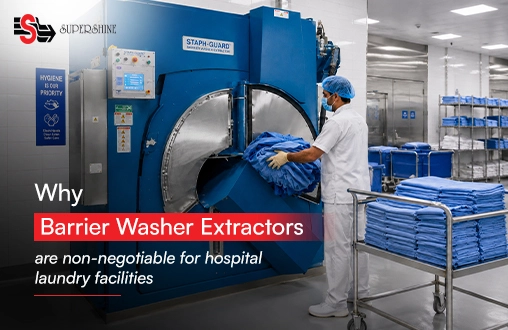
This is honestly where a lot of hospitals underestimate the equipment requirement. A standard hospital commercial washing machine that's perfectly adequate for general ward linen may not have the temperature control or cycle flexibility needed to run a validated disinfection cycle for an ICU. Getting this wrong doesn't just risk a compliance finding, it risks patient safety.
Where Supershine Fits Into This
At Supershine Laundry, this is genuinely one of the more detailed conversations we have with hospital clients, because NABH accreditation isn't just about buying a hospital washing machine and calling it done. It's about designing the entire workflow, machine placement, water treatment, disinfection cycle capability, and the physical zoning of soiled versus clean areas, so the equipment actually supports what the assessors are going to check.
We've walked hospitals through this from scratch, helping plan layout so the soiled entry and clean exit are genuinely separated, recommending machine cycles that can validate disinfection temperatures for high-risk units, and making sure water quality and softening systems don't become a hidden compliance gap nobody thought to check.
Documentation Is Not Optional
Here's something that catches teams off guard even when the physical setup is solid: NABH wants records. Environmental monitoring logs, staff training records, cycle temperature validations, all of it needs to exist on paper or digitally, and needs to go back far enough to show a consistent pattern, not just a clean snapshot from last week. Retention of these records for a meaningful period, generally a few years, is part of demonstrating a systematic process rather than a one-time cleanup before an audit.
A Realistic Way to Approach Compliance
Don't treat this as a checklist exercise two months before your assessment date. Linen and laundry compliance is genuinely easier to build in from the start, correct machine placement, correct water and disinfection capability, and correct staff training routines, than to retrofit under time pressure. If you're mid-renovation or setting up a new facility, this is the moment to get your laundry workflow and equipment specification right, because moving walls and re-routing plumbing after the fact is a lot more expensive than planning it correctly the first time.
Hospitals that treat linen management as core infrastructure, not a support function, tend to sail through this part of NABH assessment. The ones that treat it as an afterthought are usually the ones re-doing corridors and buying new machines three weeks before the assessor arrives.