+91-124-4807600
 contact@supershine.in
What Is a Washer Extractor and How Does It Work? A Practical Guide for Indian Facilities

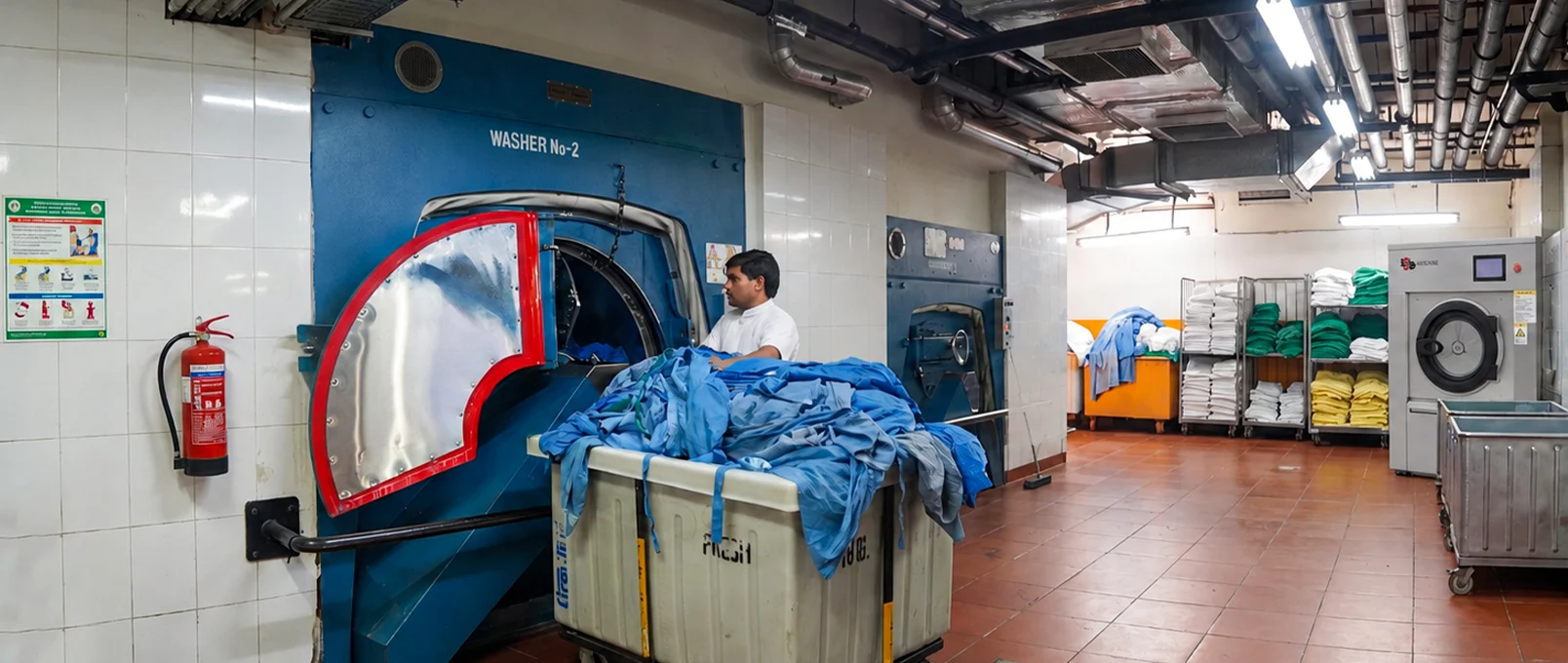
Ask ten people in a hotel or hospital what an extractor washing machine actually does, and most will say "it washes clothes." True, but that's only half the story, and honestly, the half that matters more, the extraction part, is the bit almost nobody understands until they're the one paying the electricity bill for the dryer running twice as long as it should.
So let's actually unpack this properly.
The Two Jobs in One Machine
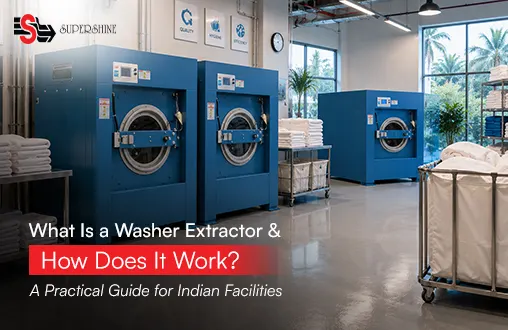
A washer extractor is called that for a reason, it does two distinct jobs inside a single drum. First, it washes. Water fills the cylinder, detergent and mechanical tumbling do their work, and the fabric gets clean the way you'd expect. Second, and this is the part people gloss over, it extracts. Instead of pulling the wet load out and running it through a separate spin dryer like a lot of older setups do, the same drum spins at high speed and flings the water out through centrifugal force. One machine, two functions, and that combination is exactly why commercial washing machine setups have replaced separate wash-and-spin lines almost everywhere.
Where G-Force Comes Into the Picture
Here's where it gets genuinely interesting, and where Supershine's engineers spend a lot of their client conversations. The spinning isn't just "fast" in a vague sense, it's measured in G-force, the same unit you'd use to describe gravitational pull. During the actual wash and rinse cycle, the drum spins at just under 1G, gentle enough that the laundry keeps tumbling and falling inside the cylinder, which is exactly what you want for good mechanical cleaning action. Then, once washing is done, the speed ramps up dramatically, and the load gets pinned against the cylinder wall as the machine extracts water.
Residential machines usually manage somewhere around 100 to 200 G during this phase. Commercial extractor washing machines go much higher, typically 200 to 400 G, and some high-speed models push toward the top of that range. What does that actually mean for you in practical terms? At 300 to 400 G, you can remove 50 to 60 percent of the residual moisture before the load ever reaches the dryer. That's not a small detail, that's the difference between a 40-minute drying cycle and an 80-minute one.
Why This Matters More Than Most Buyers Realize
Here's the part that changes how facility managers think about their utility bills. Spinning water out mechanically takes far less energy than evaporating it with heat. So a machine with strong extraction capability doesn't just save time, it directly cuts your gas or electricity consumption on the drying side. We've had clients at Supershine Laundry upgrade purely for the extraction improvement and see their drying costs drop noticeably within the first billing cycle, without changing a single thing about their dryer.
This is genuinely one of those specs that's easy to overlook on a quote sheet, sandwiched between capacity and price, but it quietly determines your operating cost for the next ten-plus years of the machine's life.
The Basic Anatomy, Simplified
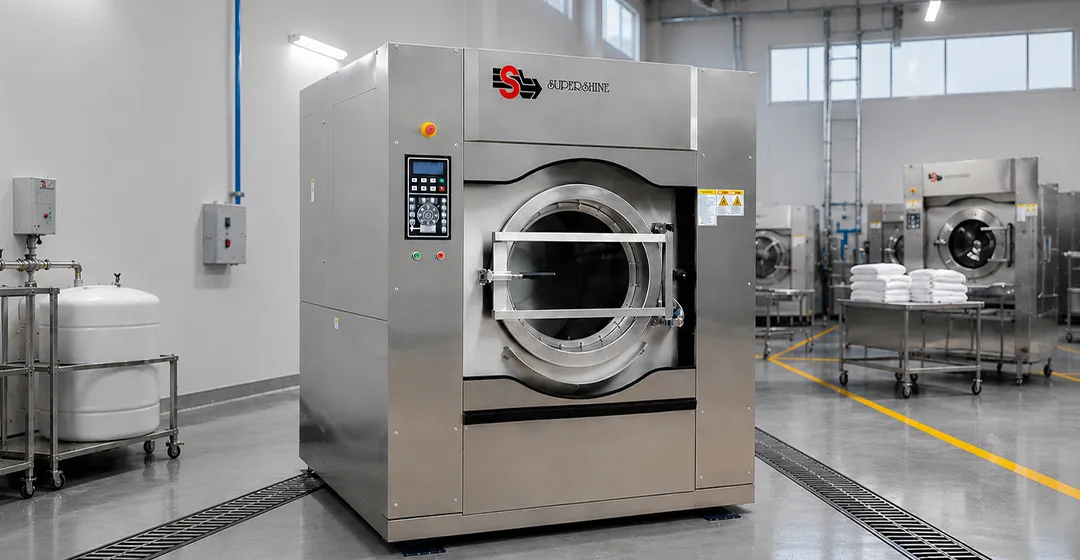
Without turning this into an engineering manual, an extractor washing machine has an outer shell that holds water, and an inner perforated cylinder that holds the laundry and spins. Water passes through the perforations during wash, and gets flung out through them during extraction. A motor drives the rotation, and modern units use variable-speed drives so the machine can move gently during wash and aggressively during extraction, all within one program cycle. There's also a balance system, because an unevenly loaded drum spinning at 300+ G is not something you want wobbling unchecked, and most commercial units now handle this automatically through sensors and load redistribution.
Choosing the Right One for Your Facility
This is where sizing actually matters more than brand name. A boutique hotel doing 150 kg a day has very different needs from a 300-bed hospital running multiple shifts. Get the capacity wrong, undersized, and you'll be running extra cycles daily, burning more water, power, and staff time than you should. Oversized, and you're paying for capacity you don't use, plus running half-empty loads that waste both water and detergent.
At Supershine Laundry, this conversation usually starts with daily kg volume, peak-hour demand, and the type of fabric being processed, since bedsheets, towels, and surgical linen all behave differently under extraction. From there, matching commercial washing machine capacity to actual need becomes a much simpler exercise than picking from a catalog blind.
A Quick Word on Maintenance
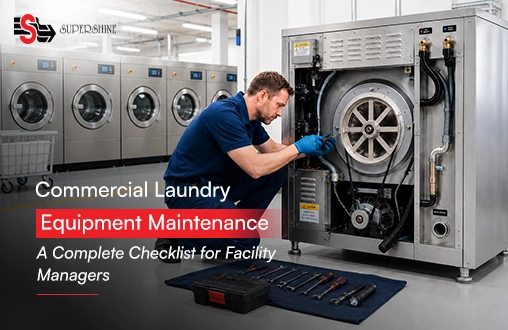
Consistent commercial extractor maintenance is what earns a washer extractor its keep, covering the bearings and seals that handle repeated high-G cycles, so this isn't a "set it and forget it" machine. Door seals wear from thousands of open-close cycles, bearings need lubrication on schedule, and the balance sensors need periodic calibration checks. Skip this, and you'll notice reduced extraction efficiency long before the machine actually breaks down, which usually shows up first as longer drying times and higher utility bills, quietly, before anyone connects the dots.
Understanding what's actually happening inside that drum changes how you evaluate machines, negotiate quotes, and plan your utility budget. It's not just a box that washes clothes, it's a piece of engineering doing two very different mechanical jobs, and getting that second job, extraction, right is where the real savings live.