+91-124-4807600
 contact@supershine.in
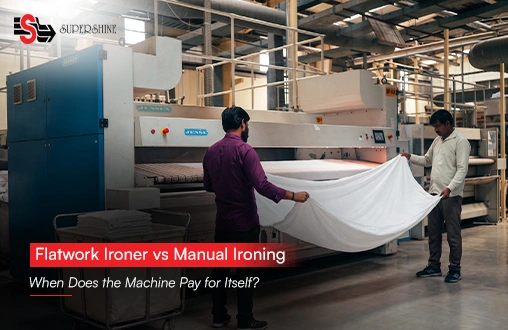
Flatwork Ironer vs Manual Ironing: When Does the Machine Pay for Itself?

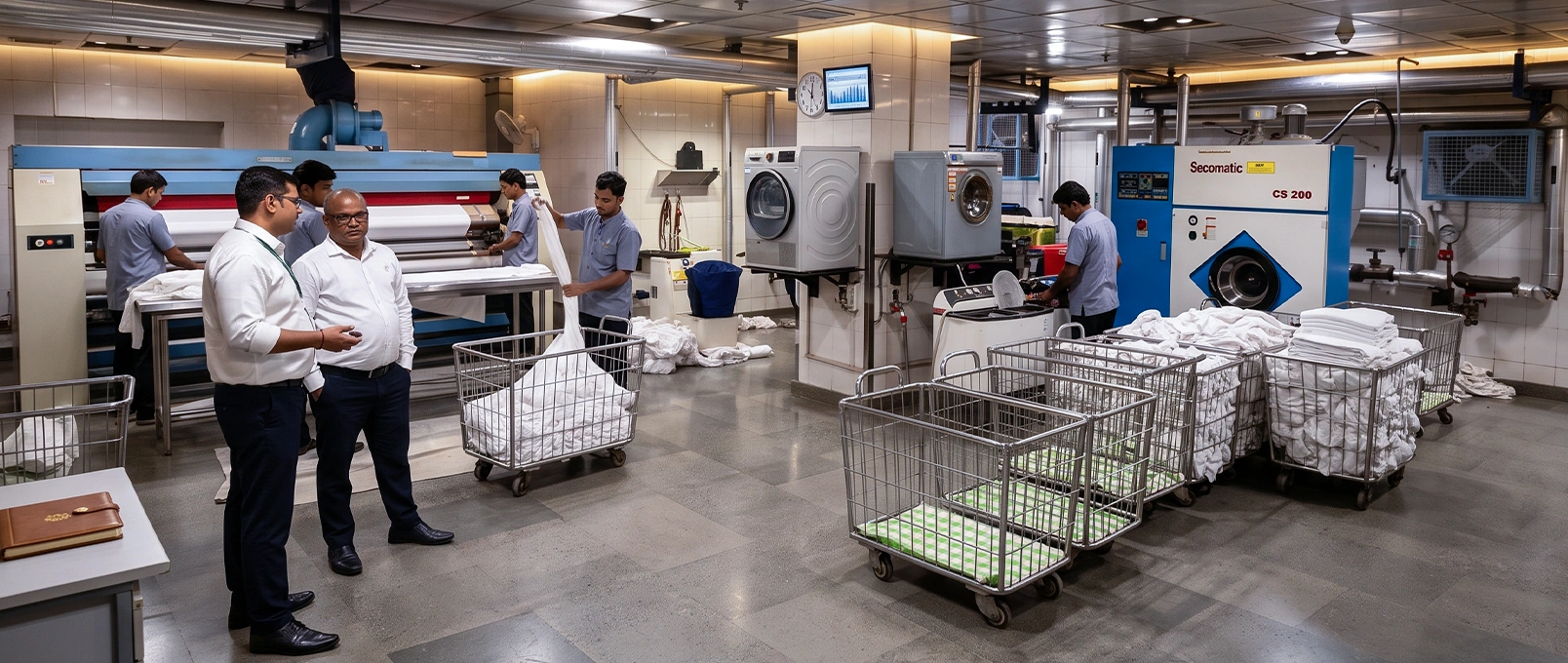
Every hotel laundry manager has had this exact conversation at some point. Someone on the finance side asks why you need a flatwork ironer, one more commercial laundry machine on the floor, when you've got staff who can iron sheets by hand for a fraction of the "cost." It's a reasonable question on the surface, and honestly, it deserves a proper answer with numbers, not just "trust me, we need it."
So let's actually work through it.
The Output Gap Is Bigger Than People Expect
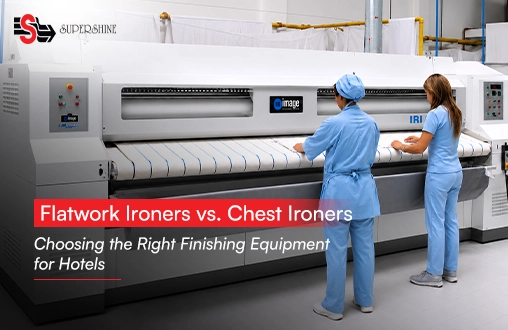
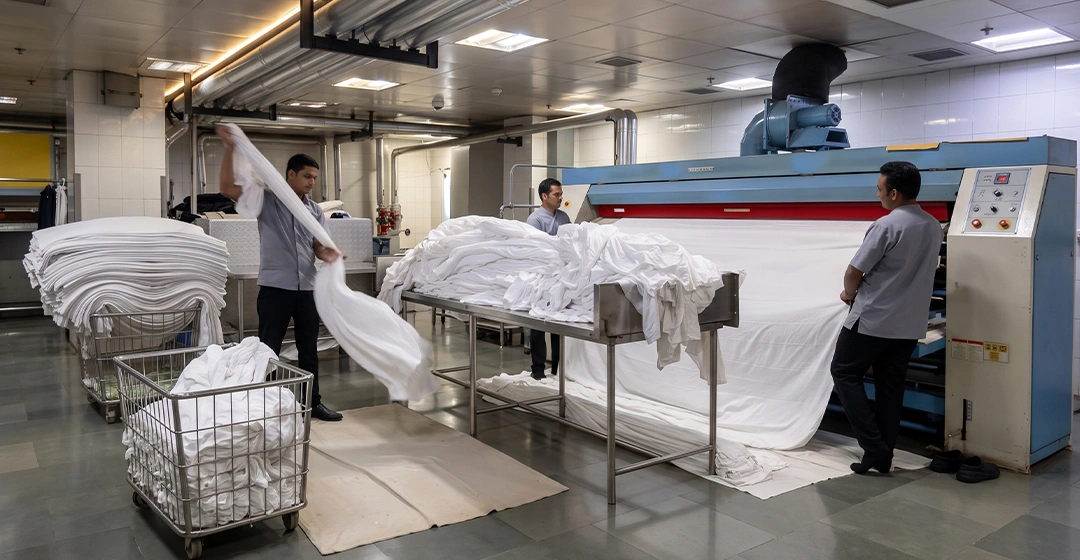
A single operator running a flatwork ironer can process hundreds of pieces an hour. Manual ironing, even with a skilled staff member, tops out at maybe a few dozen pieces in that same hour. Put differently, one operator on a flatwork ironer typically replaces the output of three to five manual ironing staff. That's not a small efficiency gain, that's a fundamental shift in your labor model.
Modern flatwork ironer lines can push through up to 1,200 meters of linen per hour depending on configuration. For a mid-sized hotel processing several hundred sheets and pillowcases daily, the math isn't close. Manual ironing simply cannot keep pace once your linen volume crosses a certain threshold, and most properties above 40-50 rooms hit that threshold faster than they expect.
The Actual Payback Period
Here's the number that matters to whoever's approving the budget: payback on this kind of commercial laundry machine typically lands within 12 to 24 months through labor savings alone. For mid-to-large hotels, this often lands on the faster end of that range because the labor cost being replaced is higher relative to the machine's throughput. Some operations, when the ironer is properly utilized and not just running at half capacity, see meaningfully faster returns than that.
And this is the part that's easy to underestimate, once that payback period is done, the machine keeps running. Many facilities operate the same flatwork ironer for 25 to 30 years or more with proper maintenance, which means the cost per piece over its lifetime drops to genuinely negligible levels compared to what you'd be paying in ongoing manual labor year after year after year.
Cost Per Piece, the Number That Actually Tells the Story
Once a flatwork ironer is installed and running at reasonable capacity, cost per piece drops to a matter of a few paise in utility and consumable cost. Manual ironing, once you account for staff wages, time, and the opportunity cost of that labor doing something else, costs substantially more per piece, even before factoring in inconsistent quality between different staff members' ironing technique.
That consistency point matters more than people initially think. A flatwork ironer produces the same finish every single time. Manual ironing quality varies by who's doing it, how tired they are, and how rushed the shift is. For a hotel brand trying to maintain a consistent guest experience, that variability is a real, if less obvious, cost.
Beyond the Direct Numbers
There's a human side to this too, worth mentioning honestly. Manual ironing is repetitive, physically taxing work, and it shows up in staff fatigue and turnover in laundry departments. Facilities that automate this function tend to see lower turnover in that role and fewer repetitive-strain related issues, which has its own quiet cost benefit even if it doesn't show up as a clean line item on a spreadsheet. Properties running a flatwork ironer alongside a dry cleaning washing machine for guest garments often find the combined finishing line changes the entire linen turnaround economics, not just the bedsheet side of things.
Newer flatwork ironer models have also gotten considerably more efficient on the utility side. Advanced steam management, heat recovery units, and variable-speed drives can cut energy consumption by up to 30 percent compared to older models, which changes the ROI calculation further in the machine's favor if you're comparing against an ironer bought a decade ago versus a current one.
Where the Real Decision Point Is
Here's the honest answer, if your daily flatwork volume is small, say a boutique property with 20-30 rooms, manual ironing might genuinely make sense for a while longer. But once volume climbs past that point, and for most properties it does within a couple of years of opening, the math flips decisively toward the machine. The mistake we see most often at Supershine Laundry is properties waiting too long to make this switch, running an overworked manual ironing team well past the point where a flatwork ironer would have already paid for itself twice over.
Getting the Sizing Right
Not every flatwork ironer is the same, and this is where a lot of buyers underspend or overspend on their broader industrial laundry washing machine setup. Roll diameter, working width, and speed all need to match your actual daily volume and the type of linen you're processing. A machine sized for a 300-room hotel sitting in a 60-room property is wasted capital, while an undersized unit in a high-volume operation just becomes a new bottleneck, functionally not much better than the manual process it replaced.
At Supershine Laundry, this conversation always starts with actual daily piece counts, not guesswork, because getting this number wrong in either direction undermines the entire ROI case that makes a flatwork ironer worth buying in the first place.