+91-124-4807600
 sales@supershinelaundry.ae
What Cleanroom Classification Does a Pharmaceutical Laundry Need to Meet in India?

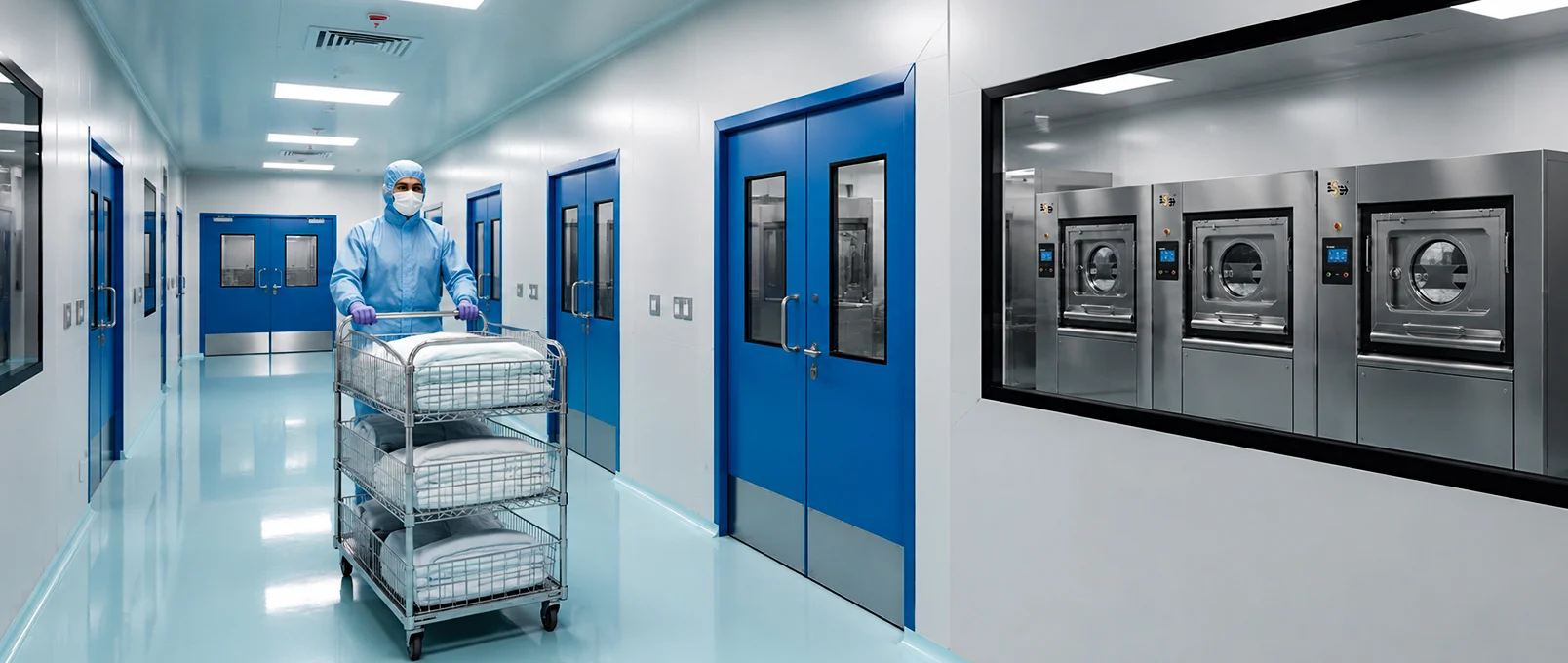
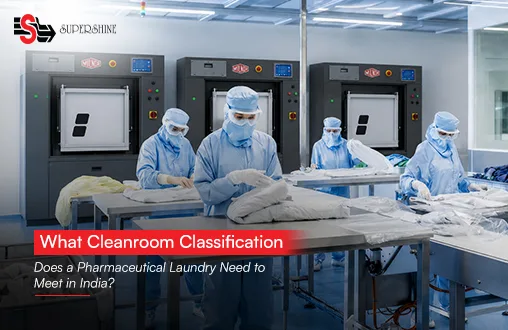
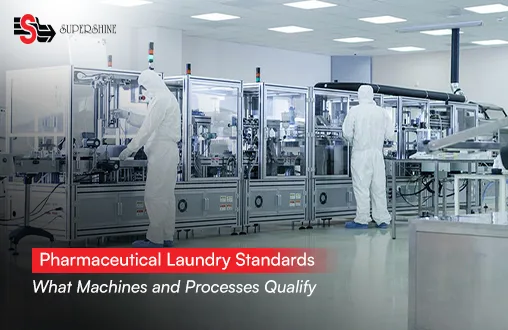
A pharmaceutical laundry in India typically needs to process cleanroom garments to meet Grade C or Grade D standards under EU GMP Annex 1 classification (mapped against ISO 14644-1 cleanroom classes), depending on the end-use environment the garments are destined for, with barrier washer systems and HEPA-filtered drying used to prevent cross-contamination between dirty and clean processing zones. If that sounds technical, it is, a bit, but the underlying logic is actually pretty intuitive once you walk through it.
If you're evaluating what qualifies as the best infection-control laundry equipment for a pharmaceutical facility, cleanroom garment processing is really where the rubber meets the road. Get this wrong and you're not just failing an audit, you're potentially introducing contamination risk into sterile manufacturing environments. Get it right and it becomes a quiet but critical part of your quality system.
Understanding EU GMP Annex 1 Grades and What They Mean for Laundry
EU GMP Annex 1 classifies cleanroom environments into Grade A, B, C, and D, with Grade A being the most critical, fully sterile zones (think aseptic filling lines), and Grade D being the least stringent, though still controlled. These grades map roughly onto ISO 14644-1 cleanroom classes, giving manufacturers a shared framework for talking about air cleanliness, particulate control, and microbial limits.
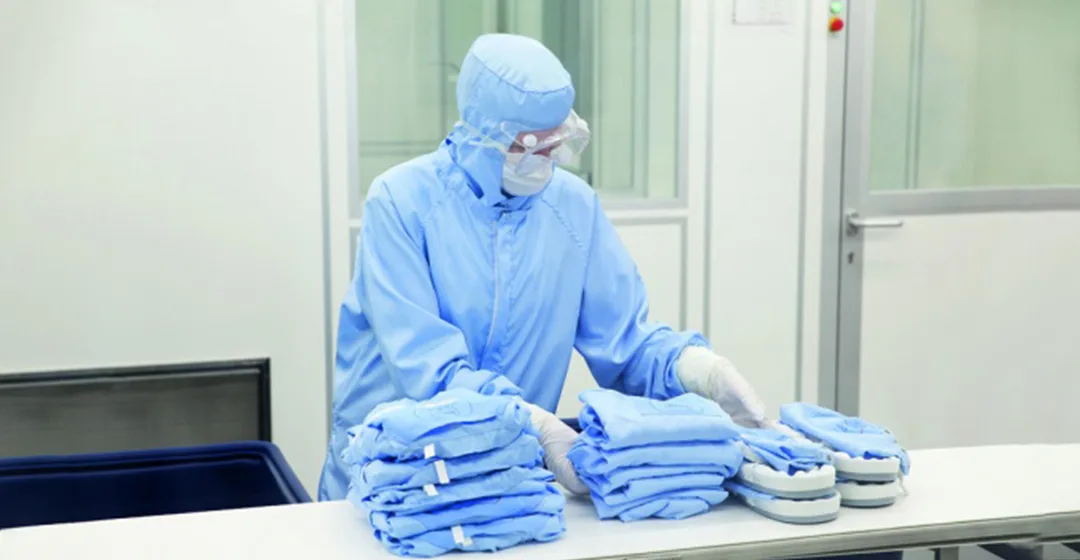
For laundry purposes specifically, garments worn in Grade A and B zones need processing that meets the corresponding Grade B/C cleanliness standards for the laundered output, while garments from less critical zones typically need to meet Grade C or D processing standards. The exact classification your laundry needs to hit depends entirely on what environment the garments will re-enter after washing. A garment headed back into an aseptic filling suite has fundamentally different requirements than one used in a general packaging area.
India's Regulatory Direction: Schedule M and Global Alignment
India's Schedule M, the section of the Drugs and Cosmetics Rules governing pharmaceutical manufacturing practices, has been revised with a phased rollout running from 2023 through 2025. The updated Schedule M brings Indian pharmaceutical manufacturing standards much closer in line with WHO Technical Report Series 986 and EU GMP requirements.
What this means practically for pharma manufacturers in India is that cleanroom garment laundering can no longer be treated as an afterthought. If your facility is aiming for export markets or working with international partners, meeting EU GMP-aligned Grade C/D processing standards for your laundry operation isn't optional anymore, it's becoming the baseline expectation, not a differentiator.
Why Barrier Washers Are Central to Pharma Laundry Compliance
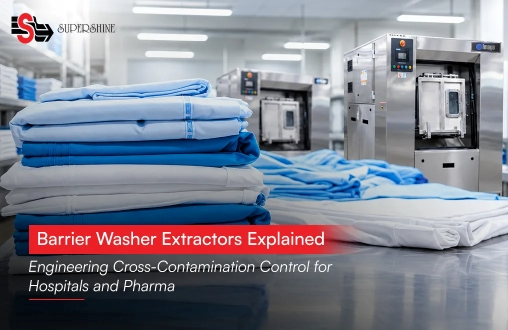
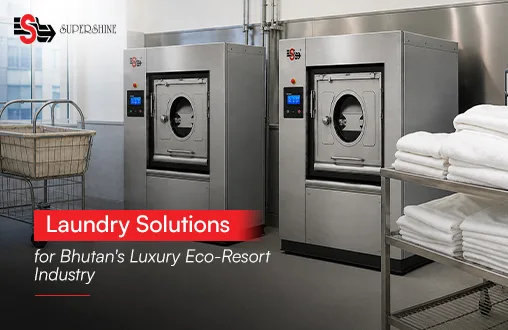
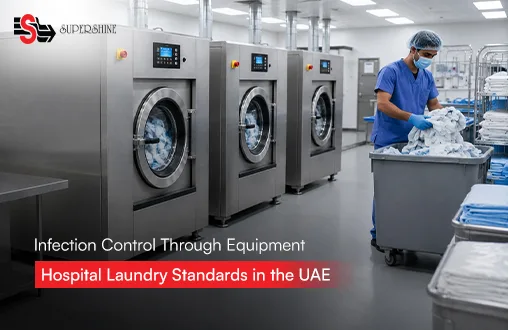
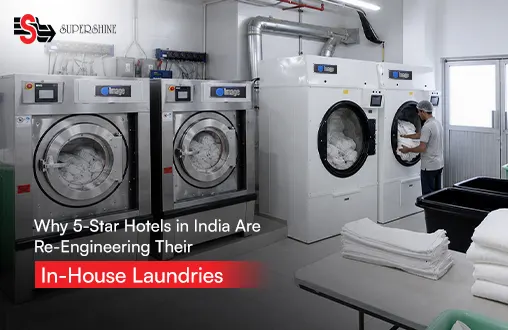
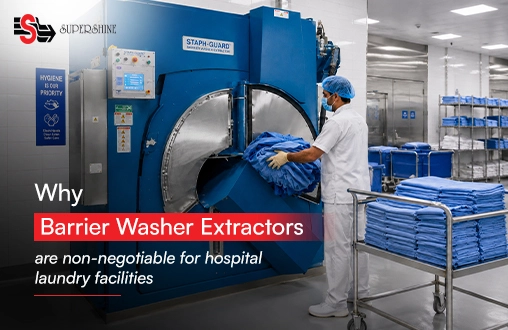
Here's the core engineering principle behind pharmaceutical laundry compliance: physical separation between "dirty" and "clean" sides of the washing process. Barrier washers are built with a wall passing straight through the machine, garments load in from the contaminated side and come out, fully washed, on the clean side, with zero opportunity for cross-contamination between the two zones. No staff crossing back and forth carrying contamination with them.
This is genuinely one of the best infection-control laundry equipment solutions available for pharma and healthcare applications, and it's become close to a standard requirement rather than a nice-to-have for facilities serious about cleanroom compliance. Combined with a wash temperature around 60°C (a commonly referenced industry parameter for effective microbial reduction) and HEPA-filtered drying environments that prevent airborne particulate recontamination after washing, barrier washer systems form the backbone of a compliant pharma laundry operation.
Choosing Pharmaceutical Grade Laundry Solutions
When a pharmaceutical manufacturer is evaluating equipment, the conversation needs to go well beyond basic wash and dry capability. Proper pharmaceutical grade laundry solutions need to account for validated wash cycles with documented temperature and chemical dosing, barrier construction to physically separate contaminated and clean processing, and HEPA filtration integrated into the drying stage, not bolted on as an afterthought.
The right laundry machines for pharma applications also need to support the kind of documentation and traceability that pharma quality audits demand. Auditors want to see validated cycle parameters, not just a machine that "seems to get things clean." A properly specified commercial washing machine for pharma cleanroom use is really a validated process control point in your quality system, not just an appliance.
Documentation and Validation: The Part Auditors Actually Check
It's worth spending a moment on what a GMP auditor actually looks for during a facility inspection, because it's rarely just "is the garment visibly clean." Auditors want documented evidence of wash cycle validation, meaning records showing that a specific combination of temperature, chemical dosing, and cycle duration was consistently followed and periodically re-verified. They'll also want to see maintenance logs for barrier washers and HEPA filtration systems, since a barrier washer with a failed seal or a HEPA system overdue for filter replacement defeats the entire point of the equipment. Facilities that treat this documentation as an ongoing operational habit, rather than something assembled hastily before an audit, tend to have a much smoother inspection experience.
How Supershine Laundry Supports Pharma and Healthcare Compliance
Supershine Laundry has spent 35 years working across healthcare and industrial laundry applications, and understands what pharmaceutical and healthcare compliance officers actually need from their laundry equipment, not just clean garments, but a documented, validated, cross-contamination-controlled process that holds up under regulatory scrutiny. With barrier washer systems and equipment configurations designed around infection control principles, Supershine has supported institutional clients navigating exactly this kind of compliance requirement.
For pharmaceutical facilities working through Schedule M alignment or preparing for GMP audits, having an equipment partner who understands both the engineering and the compliance context matters quite a bit. It's not something you want to figure out for the first time during an audit finding.
Getting Compliance Right From the Ground Up
Pharmaceutical laundry compliance isn't a box to tick once and forget, it's an ongoing part of your quality system that needs the right equipment foundation from day one. If your facility is navigating Schedule M alignment or planning a cleanroom garment processing setup, it's worth talking to Supershine Laundry about what a properly validated, infection-control-focused laundry operation actually requires for your specific classification needs.