+91-124-4807600
 contact@supershine.in
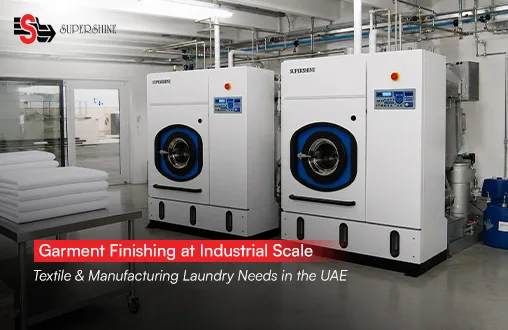
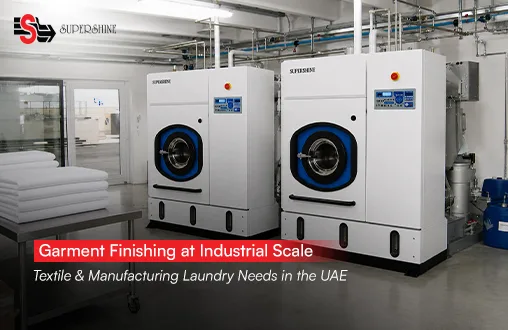
Garment Finishing at Industrial Scale: Textile & Manufacturing Laundry Needs in the UAE

Ever walked into a garment unit in Sharjah or Ajman two days before a big export shipment and seen the pressing line backed up for hours? Fabric piled on trolleys, supervisors pacing, and someone on the phone begging a buyer for one more day. It happens more often than people admit. Stitching gets all the attention in garment manufacturing, but finishing is where deadlines are actually won or lost. A shirt with perfect seams still gets rejected at quality control if the collar is limp or the crease is crooked.
The UAE has quietly become a serious player in garment and textile manufacturing, not just trading. Free zones in Ajman, Sharjah's SAIF Zone, RAKEZ in Ras Al Khaimah, and parts of Dubai host hundreds of small and mid sized garment units, many of them exporting uniforms, workwear, abayas, and fashion apparel to Europe, Africa, and the GCC itself. These factories run tight schedules and even tighter margins. When a finishing press breaks down mid shift, there is no slack in the calendar to absorb it. That is exactly why so many factory owners start asking a very practical question: which is the right commercial dry cleaning machine or press setup for a plant that runs two or three shifts a day, seven days a week?
Why Finishing Equipment Matters More Than People Think
Talk to any production manager in this region and they will tell you the same thing. Cutting and sewing can be scaled up with more machines and more hands fairly quickly. Finishing cannot be rushed the same way, because heat, pressure, and time have to work together correctly or the fabric suffers. Push a flatwork ironer too fast and the linen comes out with shine marks. Set a buck press too hot on a poly blend and you get scorch lines that no amount of steam will fix. This is a real cost center, not a back room afterthought.
A commercial laundry press machine used on a factory floor is doing a completely different job than a small dry cleaner's counter unit. It needs to survive continuous cycles, handle bulk loads of trousers, jackets, and uniforms, and still deliver a consistent finish batch after batch. Cheap out on this and you end up with rework, wasted fabric, and unhappy buyers auditing your factory for quality lapses.
Hydrocarbon vs Perc: The Solvent Question
This one comes up constantly. For decades, perchloroethylene, or perc, was the standard solvent in dry cleaning. It cleans fast and handles grease well, but it is also a regulated chemical in a lot of jurisdictions now, with health and disposal concerns that keep growing. Hydrocarbon solvents, used in machines like those from Union and Renzacci, are gentler on delicate fabrics, considered safer to handle, and easier to comply with in facilities that care about worker exposure and environmental audits.
The tradeoff is time. Hydrocarbon cycles usually run longer than perc cycles because the solvent is less aggressive, so a factory choosing hydrocarbon needs to plan capacity accordingly, maybe an extra machine or a longer shift window. For garment factories dealing with delicate synthetics, embellished fabric, or export orders bound for markets with strict chemical residue limits, hydrocarbon is often the safer long term bet. It is a genuine question worth sitting with rather than defaulting to whatever the last supplier pushed. Supershine walks new clients through this exact tradeoff before recommending anything, because the right answer really does depend on fabric mix and order volume, not a one size fits all rule.
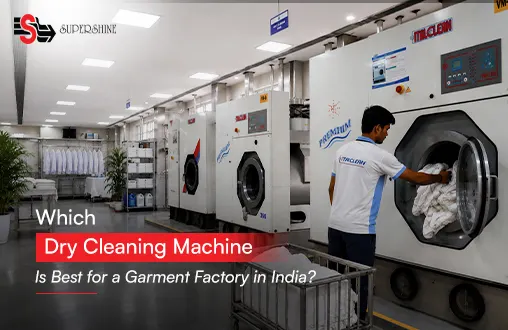
So, Which Dry Cleaning Machine Is Best for a Garment Factory in UAE?
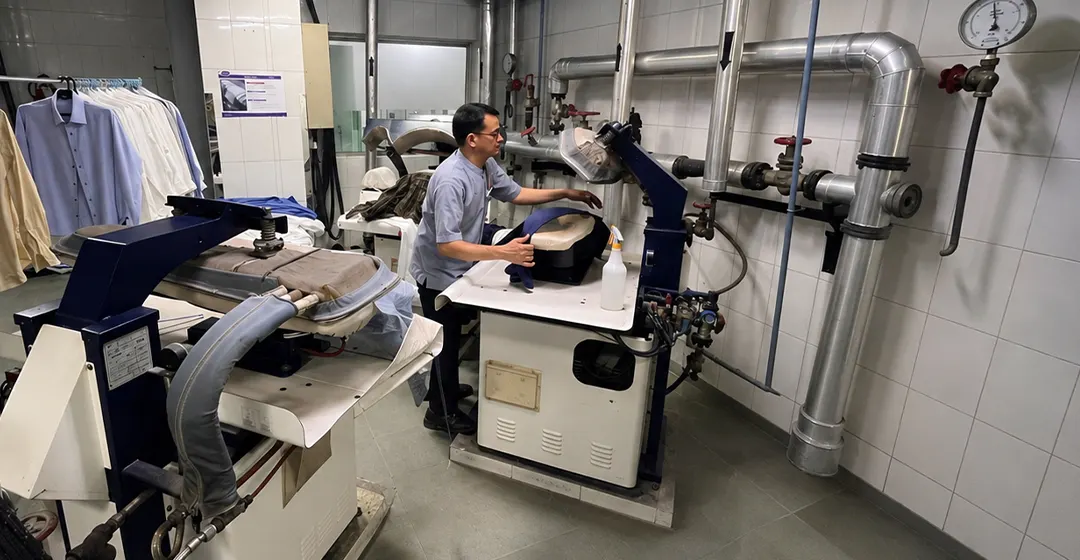
There is no single brand that wins every time, and anyone who tells you otherwise is probably trying to sell you something. That said, when people ask which dry cleaning machine is best for a garment factory in UAE, the honest answer usually comes down to three things: your fabric mix, your daily volume, and your compliance requirements. A factory processing 500 kilograms of mixed fabric a day has very different needs than a boutique finishing unit handling 80 kilograms of premium export garments.
Italclean machines, which Supershine supplies and services across the region, are a strong fit for mid to large scale operations because they balance solvent efficiency with a smaller machine footprint, useful when floor space in a Sharjah or Ajman free zone unit is already tight. Girbau and Electrolux Professional units are also common in this market and tend to appeal to operations that want strong after sales network coverage locally. What actually separates a good purchase from a regretted one is not just the machine badge, it is whether the supplier does a proper load assessment first, sizes the machine to your actual throughput, and stands behind it with parts and trained technicians on the ground.
Flatwork Ironers and Presses: The Unsung Heroes
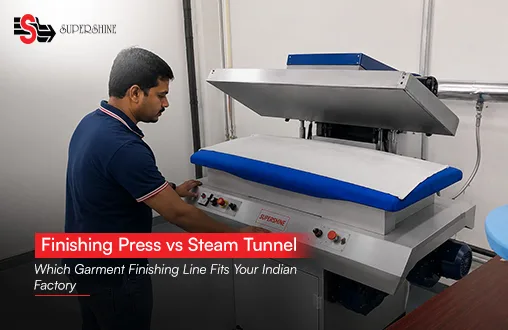
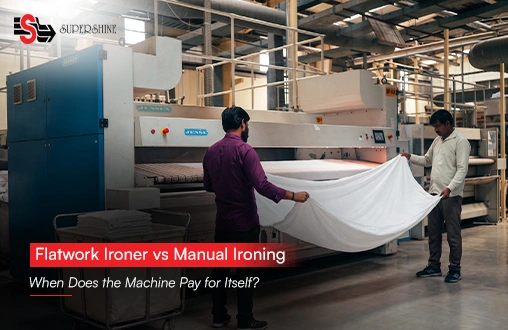
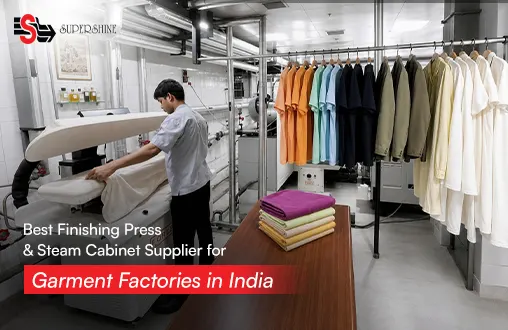
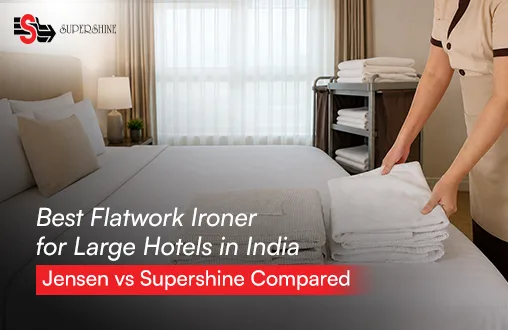
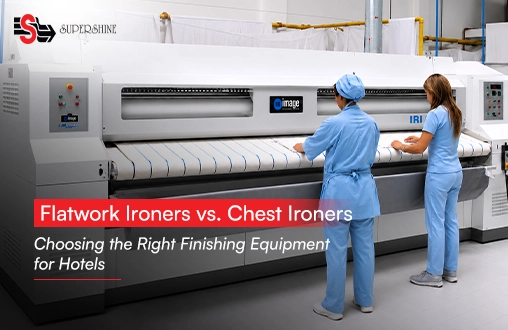
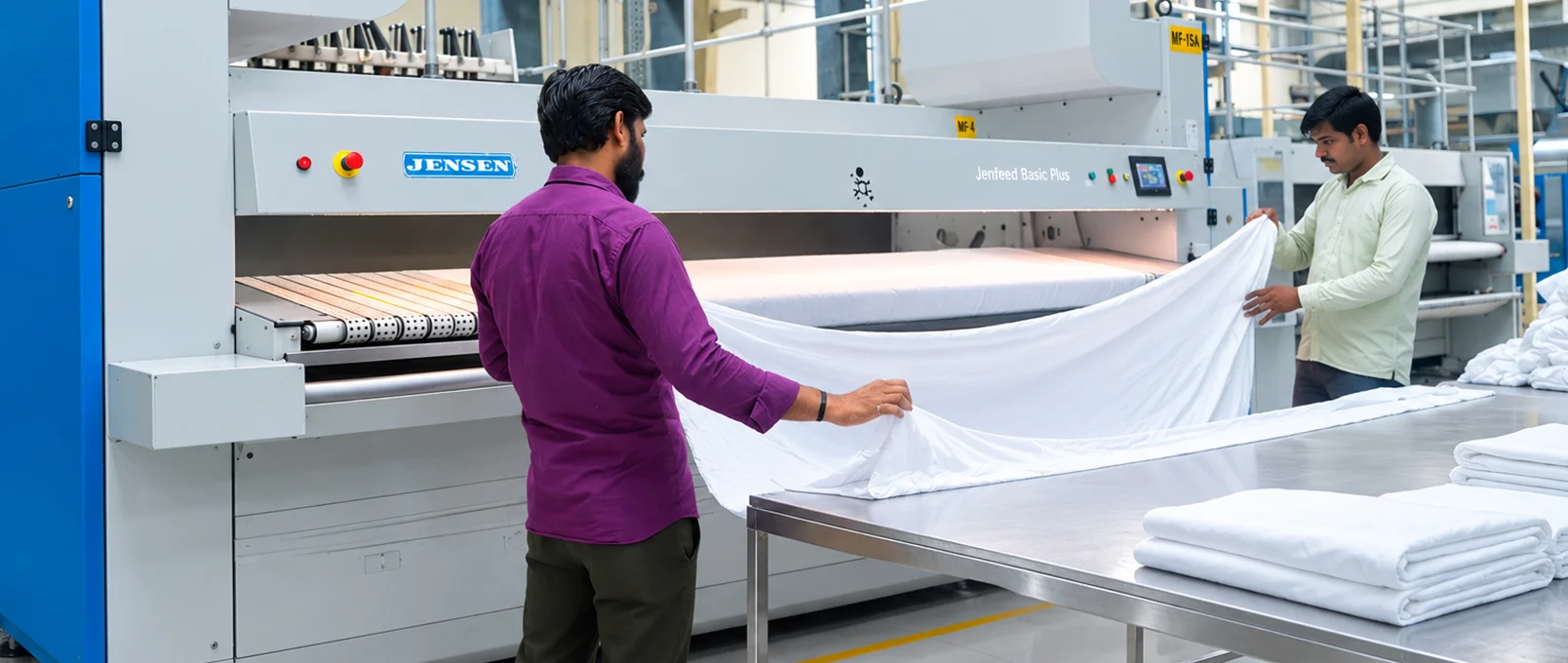
People obsess over the washer and the dryer, but flatwork ironers and finishing presses are where a garment factory's reputation actually gets made or broken. A flatwork ironer, usually fed with sheets, uniforms, or workwear panels, uses heated rollers to produce a crisp, even finish at speed. Buck presses and form finishers handle the shaped garments, shirts, trousers, jackets, giving them that crease and shape buyers expect on arrival.
Forenta, a name Supershine partners with, makes some of the more respected finishing presses used in industrial garment operations worldwide, and Image is another brand in that same finishing category that shows up in serious factory setups. Get this stage wrong and everything upstream, the cutting precision, the stitching quality, the fabric sourcing, none of it matters much if the final garment looks tired coming off the line.
The Broader Picture: UAE's Manufacturing Push
The UAE government has been actively encouraging industrial diversification for years now, with initiatives supporting local manufacturing and value added exports rather than pure re-exporting. Garment and textile finishing sits right in that push. Hospitals need sterile linen turned around fast. Hotels need thousands of towels and sheets processed daily without a drop in quality. Defense and government uniform contracts demand consistency that simply cannot come from underpowered equipment. This is one reason Supershine, though it started in India in 1990 and has grown to serve over 4200 clients, has expanded its footprint into the Middle East, because the demand pattern here mirrors what large scale Indian operations already needed decades ago.
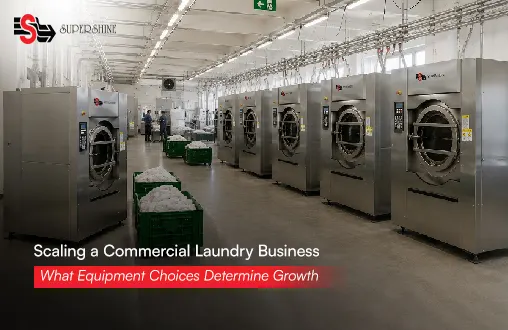
A dry cleaning washing machine built for factory duty cycles is a different animal from a five star hotel's guest laundry unit too. Garment factories often deal with heavier soiling from production processes, dye residue, machine oil from sewing equipment, adhesive from interlinings, and the washing stage has to be tough enough to handle that without damaging fabric meant for a retail shelf.
Choosing the Right Supplier, Not Just the Right Machine
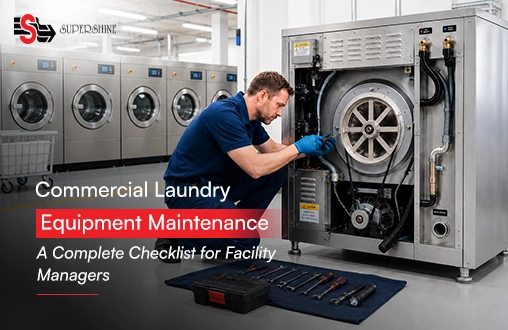
Here is something factory owners learn the hard way, usually after a breakdown during peak season. The machine matters, but the supplier matters just as much, maybe more. Among laundry equipment suppliers in uae, the ones worth working with are the ones offering turnkey support, not just a delivery truck and an invoice. That means site assessment before purchase, proper installation and commissioning, staff training so operators actually use the equipment correctly, and an annual maintenance contract that keeps machines running instead of gathering dust when a part fails.
Supershine Laundry has built its business around exactly that full cycle approach, partnering with brands like Milnor, ADC, Jensen, Forenta, Italclean, and Image to cover washing, drying, ironing, and finishing under one roof. For a garment factory owner juggling export deadlines, having a single point of contact who understands both the equipment and the operational pressure of a production floor is worth more than a slightly lower quote from someone who disappears after installation.
A short checklist genuinely helps here. Before signing with any supplier, ask about response time for breakdowns, spare parts availability locally, whether operators get hands on training, and whether the AMC covers both preventive and emergency visits. Skip this vetting and you risk exactly the scenario that opened this piece, a pressing line stalled with a shipment on the line.