+91-124-4807600
 contact@supershine.in
Laundry Solutions for Labor Camp Accommodations in the UAE

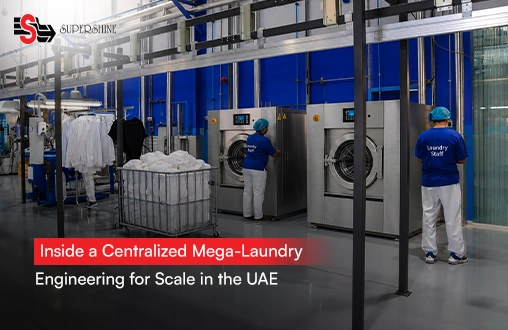
Picture a camp housing 2,000 workers on the outskirts of Dubai or Abu Dhabi. Every single day, that camp generates somewhere between 1,500 and 2,500 kilograms of soiled uniforms, bedsheets, and towels. Now ask yourself: what happens if the washing machine breaks down on a Tuesday and nobody can fix it until Friday? That is not a hypothetical. It is a call we get almost every month from facility managers across the UAE who are stuck between a pile of dirty linen and a maintenance contract that promised more than it delivered.
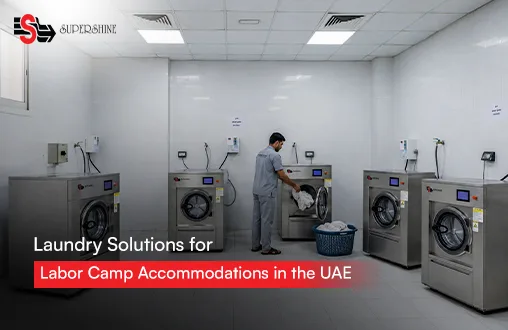
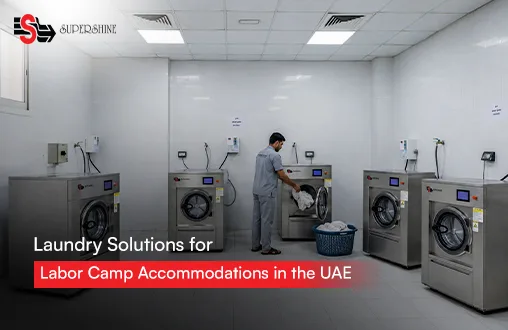
Labor accommodation in the UAE is not the informal setup it was fifteen years ago. Under Ministerial Resolution No. 122 of 2026, MOHRE tightened the rules around worker housing considerably. Operators who don't outsource laundry are now required to run common laundry facilities on the ground floor of the housing block, fitted with hot and cold water, proper ventilation, air conditioning, drainage, and adequate lighting. It sounds like a small detail buried in a regulation, but for anyone actually running a camp, it changes the entire equipment conversation. You can't just plug in a few domestic washing machines and call it done anymore. You need real industrial washing machines built for continuous, heavy use.
Why Labor Camps Need a Different Class of Equipment
Here's the thing people underestimate. A hotel laundry room processes sheets and towels. A labor camp laundry processes uniforms caked in cement dust, grease, sweat, and sometimes chemical residue from construction or industrial sites. That is a fundamentally harder wash load. Domestic-grade or even light-commercial machines simply cannot survive the punishment. We have seen camps burn through cheap washers within eight months because the motors were never designed to run twelve, sometimes sixteen, hours a day.
This is where heavy duty commercial washing machines earn their keep. With the UAE construction workforce sitting around 1.42 million active workers as of early 2026 (the highest headcount since the Expo 2020 build cycle), and a huge share of them living in company-provided accommodation, the demand for properly engineered laundry infrastructure has genuinely never been higher. India remains the largest source of this workforce at roughly 38 percent, followed by Bangladesh, Pakistan, and Nepal, and most of these workers live in camps ranging from a few dozen residents to well over a thousand in a single facility.
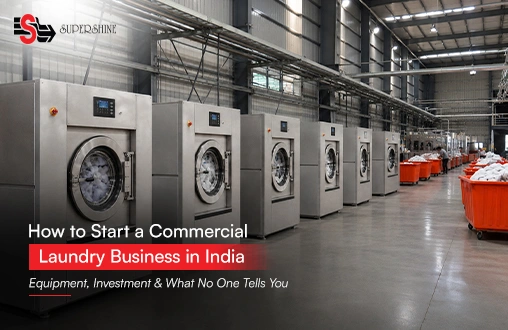
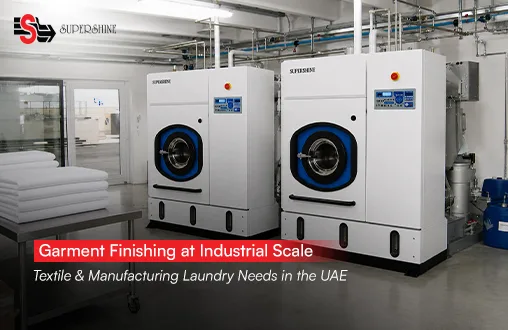
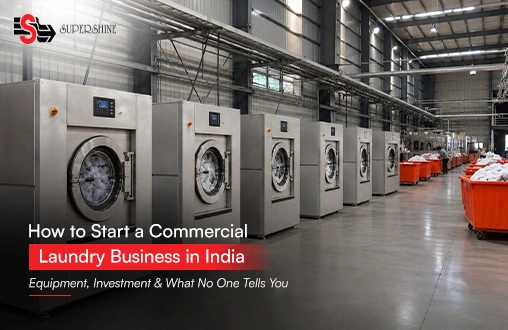
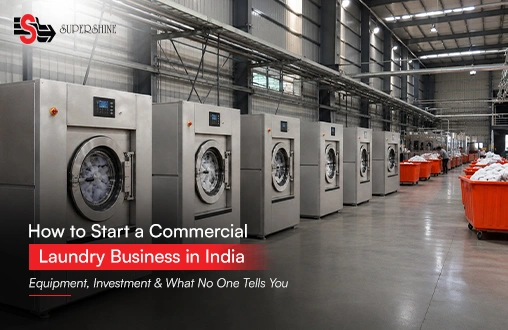
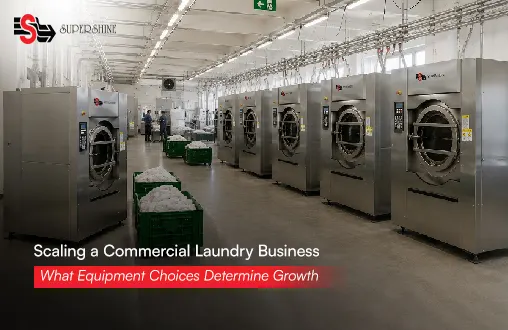
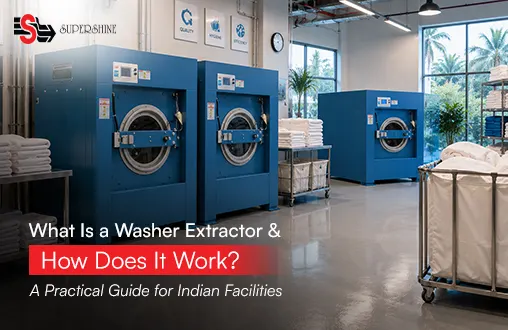
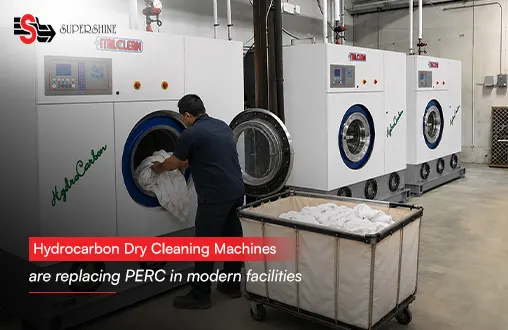
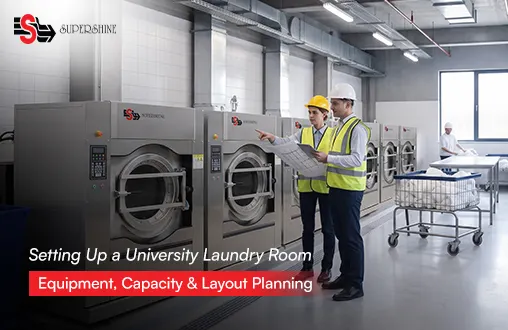
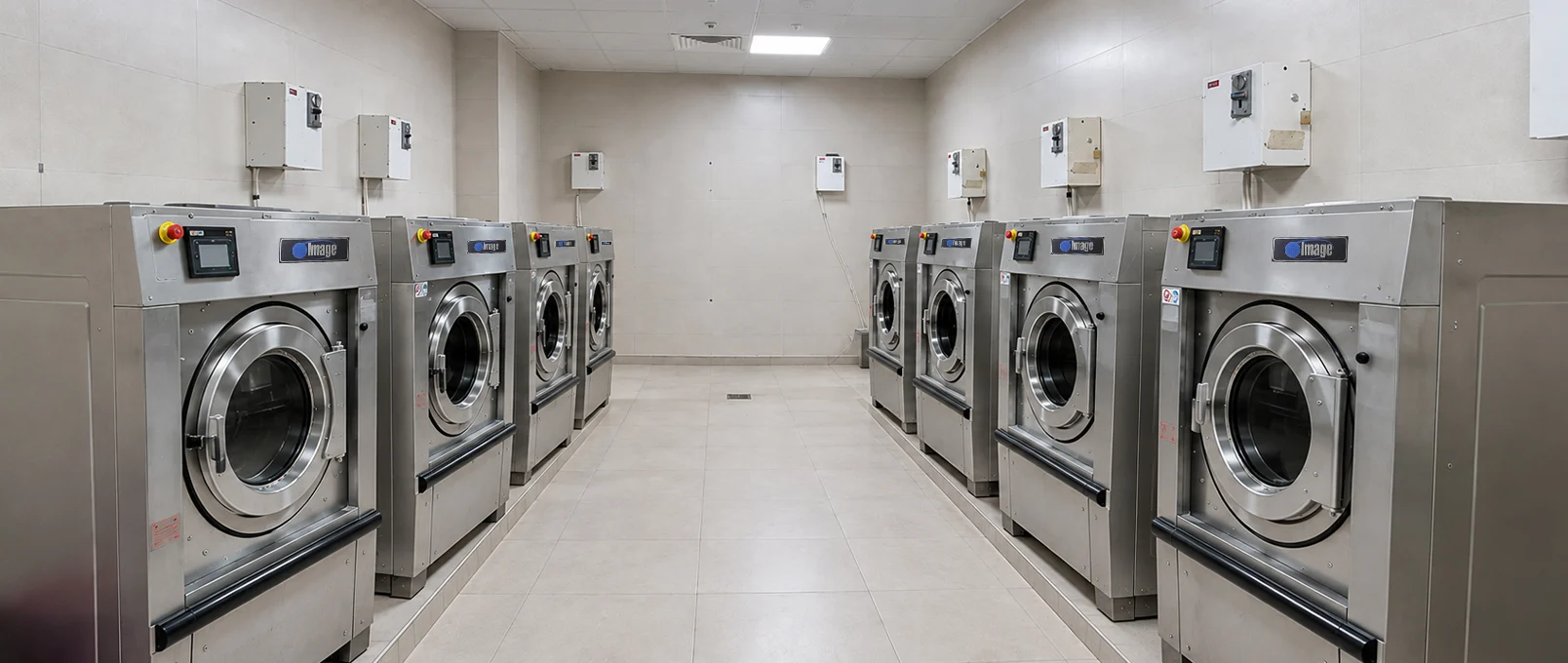
A typical mid-size camp of 500 to 800 workers needs machines that can handle 40 to 100 kg loads per cycle, run multiple cycles back to back without overheating, and use water and energy efficiently because utility costs in bulk housing add up fast. This is exactly the segment where industrial laundry machines from brands like Milnor, ADC, and Jensen make a real difference, and it is exactly the kind of project Supershine has been designing for camps, defense establishments, and large institutional clients since 1990.
What Good Laundry Infrastructure Actually Looks Like
Let's talk specifics, because vague advice doesn't help anyone running a real operation. A well-planned camp laundry setup usually needs the following, and honestly, most operators only figure this out after their first bad experience:
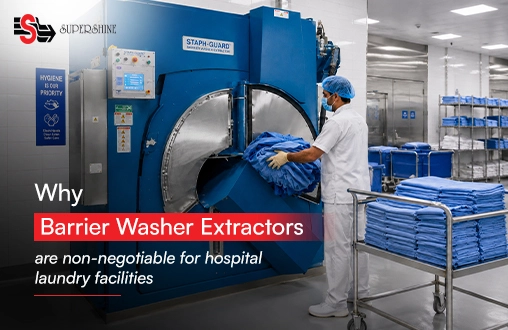
- High-capacity washer-extractors that can handle heavily soiled workwear without needing a pre-soak cycle every time
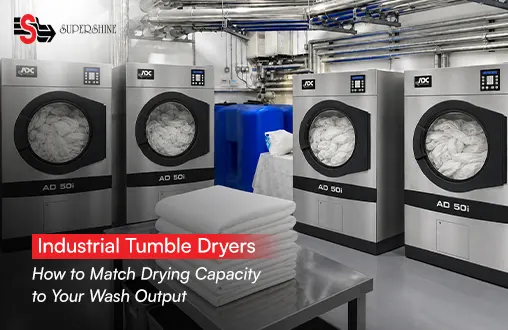
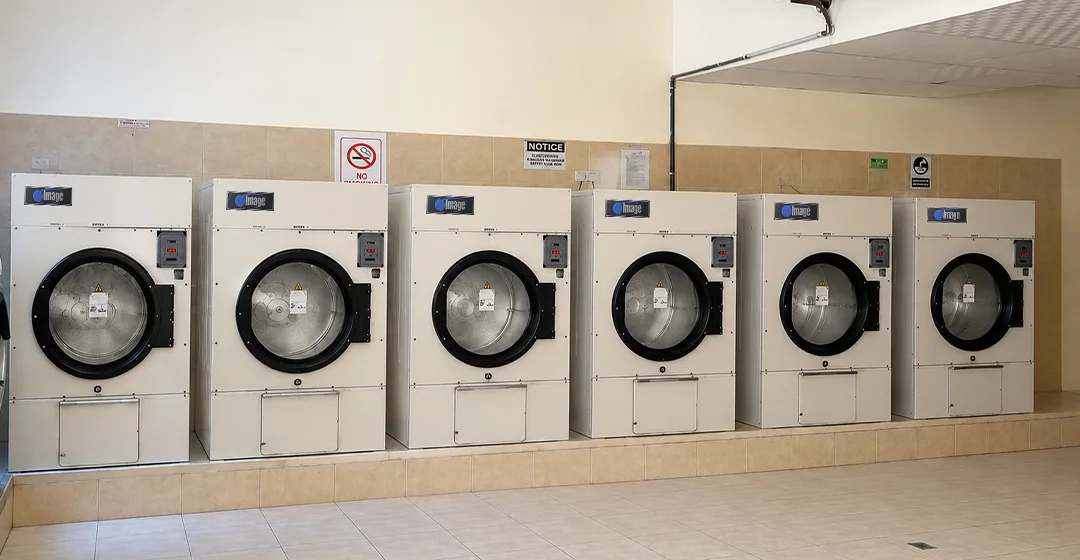
- Tunnel or batch dryers sized to match washer output, so wet linen doesn't pile up waiting
- Water reclamation or at least efficient water use, since bulk housing tariffs can be steep in some emirates
- Backup capacity or rapid-response servicing, because a camp cannot function with dirty uniforms for three days
That last point is really the crux of the whole issue. Equipment quality matters, sure. But even the best commercial laundry solutions fail if there's nobody to service them properly when something goes wrong. And something always eventually goes wrong. Bearings wear out. Belts snap. Heating elements fail. It's mechanical equipment running at industrial intensity, not magic.
Why the AMC Question Matters More Than the Purchase Decision
Ask any facility manager who has been in this business for a while and they'll tell you the machine purchase is actually the easy part. The hard part is what happens in year two, three, four, when things start to age and need attention. Preventive maintenance can cut equipment failure rates by up to 25 percent, and a well-maintained commercial washer that would normally last 10 to 15 years can run for 20 years or more with the right servicing schedule. That is not a small difference when you've invested in a full laundry line.
This is why so many camp operators are actively searching for the best AMC provider for commercial laundry equipment in the UAE rather than just the cheapest machine supplier. An annual maintenance contract isn't paperwork, it's insurance against the exact scenario we opened with: a broken washer and 2,000 workers with nowhere to clean their uniforms. Supershine's AMC packages cover scheduled preventive visits, genuine spare parts, and emergency breakdown response, which matters a lot when a camp is an hour outside the city and every hour of downtime means unhappy residents and compliance headaches.
We've found that camps and institutional clients who sign a proper AMC from day one spend noticeably less over five years than those who wait until something breaks and then scramble for a repair technician. It's a bit like car servicing. Nobody loves paying for it in advance, but it's a lot cheaper than an engine rebuild.
How Supershine Approaches Labor Camp Projects
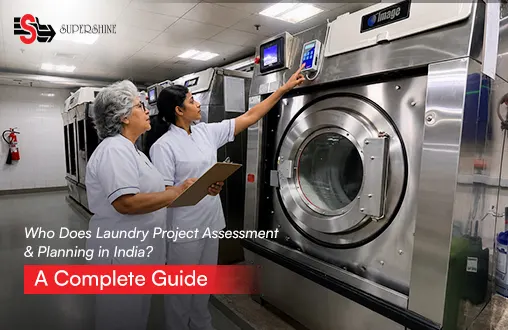
Supershine has been in this business for 35 years now, since 1990, and we've worked with over 4,200 clients across India and the Middle East, including hotels, hospitals, defense establishments, garment manufacturers, and yes, labor accommodation projects. What we've learned is that no two camps are identical. A 300-person camp attached to a garment factory has completely different laundry throughput needs than a 3,000-person camp near a mega construction site. So we start with an actual site assessment, not a catalog pitch.
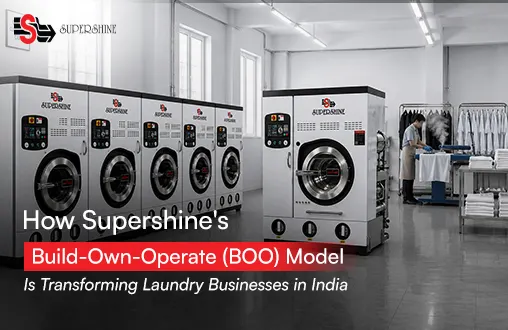
From there, Supershine handles the whole journey: sizing the equipment correctly, sourcing from globally trusted partners like Milnor, ADC, Jensen, Forenta, Italclean, and Image, handling installation and commissioning, training the on-site laundry staff, and then staying on as the AMC partner. Being headquartered in Gurugram with strong Middle East reach means we understand both the regulatory context, like MOHRE's accommodation standards, and the practical realities of running equipment in Gulf heat and dust conditions, which is honestly a bigger factor than people realize. Sand and heat are brutal on filters, motors, and seals.
For camp operators comparing laundry equipment suppliers in UAE, the question worth asking isn't just who sells the machine but who will still answer the phone in year three when a bearing seizes at 6am. That's really the differentiator.
A Quick Word on Compliance and Worker Welfare
It's worth mentioning that clean, functioning laundry facilities aren't just an operational nicety, they're becoming a compliance requirement and, frankly, a basic dignity issue. The updated MOHRE resolution places real emphasis on worker welfare, health, and accessibility in accommodation. Laundry access sits right in the middle of that. A camp with broken washers isn't just an inconvenience, it can become a health and hygiene problem fast, especially in humid coastal conditions where damp, unwashed clothing breeds bacteria and skin infections. Getting the laundry infrastructure right is one of the more overlooked ways an employer demonstrates it takes worker welfare seriously.
Getting Started
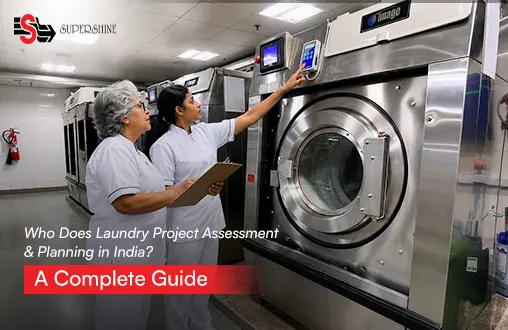
If you're planning a new labor accommodation project, or trying to fix a laundry setup that's been limping along for years, the smartest first step is an honest capacity assessment. How many residents, what's the soil load like, what's your water and power situation, and how far are you from the nearest qualified technician? Once you know those answers, choosing between industrial washing machine models and planning your AMC becomes a lot more straightforward. Supershine Laundry has run this exact process for clients across the region and can usually turn an assessment into a working installation timeline within a few weeks. It's the kind of groundwork that saves headaches for years afterward, and honestly, most of it just comes down to asking the right questions early.