+91-124-4807600
 contact@supershine.in
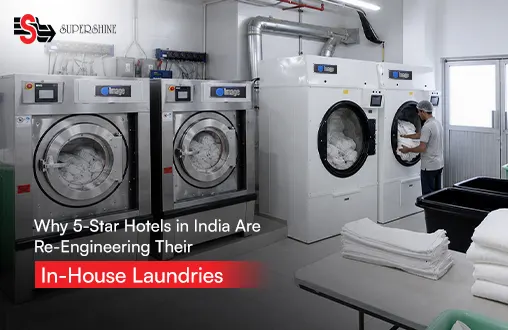
Why 5-Star Hotels in India Are Re-Engineering Their In-House Laundries

Picture this. It is 11 pm at a 300-room hotel in Gurugram. Housekeeping just got a call that four banquet halls need fresh linen by 6 am for a wedding breakfast, and the laundry room downstairs is still running yesterday's backlog. Sound familiar? If you manage a hotel, or you are on the ops team that gets blamed when guests find a stray stain on a pillowcase, you already know this scene. It happens more often than hotel brochures would like to admit, and it is exactly why so many properties across India are tearing out their old laundry setups and starting fresh.
Five-star hotels are not doing this on a whim. India's hospitality market is genuinely booming right now, valued at roughly USD 28 billion in 2026 and expected to nearly double by 2031, according to recent industry estimates. National room demand crossed 133,000 rooms a day in 2025, and occupancy touched 64 percent, the highest in years. More rooms, more guests, more linen. A laundry room designed a decade ago for a smaller occupancy simply cannot keep pace anymore, and that mismatch shows up in exactly the way you would expect: late deliveries, damaged fabric, ballooning water bills, and staff working overtime just to keep the count straight.
The Real Math Behind Hotel Laundry Volume
Here is a number that surprises a lot of general managers. A large hotel property can process well over a million pounds of laundry a year, and a full-service 300-room hotel with a restaurant, banquet operations, and a spa easily lands in that range once you add bedsheets, towels, staff uniforms, tablecloths, and robes together. That is not a side task for a small back room with two washers. It is an industrial operation that needs its own logic.
So if you are wondering exactly how to plan a commercial laundry setup for a 300-room hotel in India, the starting point is always volume, not square footage. Work backwards from occupancy. At near-full occupancy, a 300-room hotel typically generates somewhere between 1,800 and 2,400 kg of soiled linen a day once you count double sheet changes, extra towels, and F&B linen. From there you size washer extractor capacity, dryer capacity, and finishing equipment like flatwork ironers and dryers to match, usually with a buffer of 15 to 20 percent for peak banquet season or festival weekends.
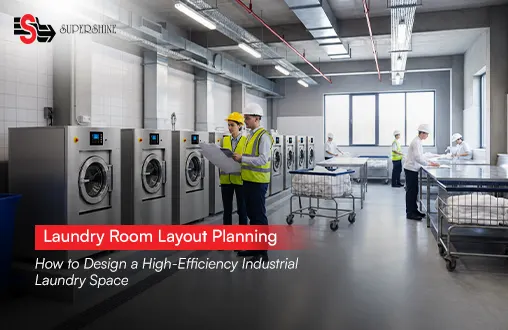
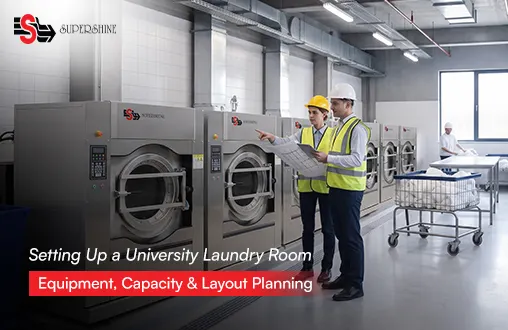
Designers commonly use a rule of thumb of about 1.7 to 2.2 square feet of laundry space for every pound of linen processed per hour. That single ratio, more than anything else, determines whether your laundry room design actually works on day one or turns into a bottleneck within six months. Getting it wrong is expensive to fix later, which is why Supershine spends real time on capacity assessment before recommending a single machine.
Why Turnaround Time Is the Metric That Actually Matters
Ask any executive housekeeper what keeps them up at night and they will not say "energy costs." They will say turnaround time. Guests expect fresh towels fast, banquet teams need tablecloths on a strict clock, and a slow wash-dry-fold cycle cascades into everything else. Most well-run five-star OPLs (on-premise laundries) aim for a full cycle, from soiled pickup to folded and shelved, in under four hours for standard linen, and even tighter for high-turnover items like bath towels.
That kind of speed is impossible with undersized or mismatched hotel laundry machines. It is not just about having a bigger washer. It is about the whole chain, sorting, washing, extraction, drying, and finishing, moving at a matched pace so nothing sits idle waiting on the next station. This is where a lot of older hotel laundries fall apart. They bought equipment piecemeal over the years, added a dryer here, a press there, and now nothing talks to nothing. Re-engineering means treating the laundry as one connected system, not a pile of individual machines.
Water, Energy, and the Sustainability Push
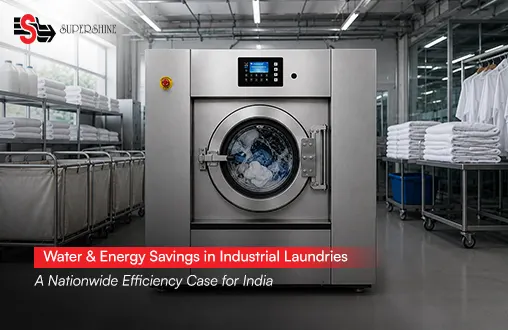
Water is the other big driver behind this re-engineering wave. A typical hotel laundry uses somewhere around 15 to 20 liters of water per kilogram of linen when running older, inefficient equipment. Modern commercial washing machine for hotels setups, with programmable wash chemistry and water reuse systems, can cut that figure significantly, sometimes by close to a third. Brands like Girbau have reported operating cost reductions of up to 68 percent in hospitality laundry applications, with energy use down by roughly 30 percent per cycle when hotels move to modern, tunnel-efficient washer extractors.
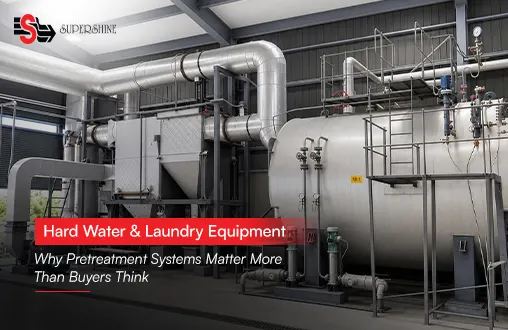
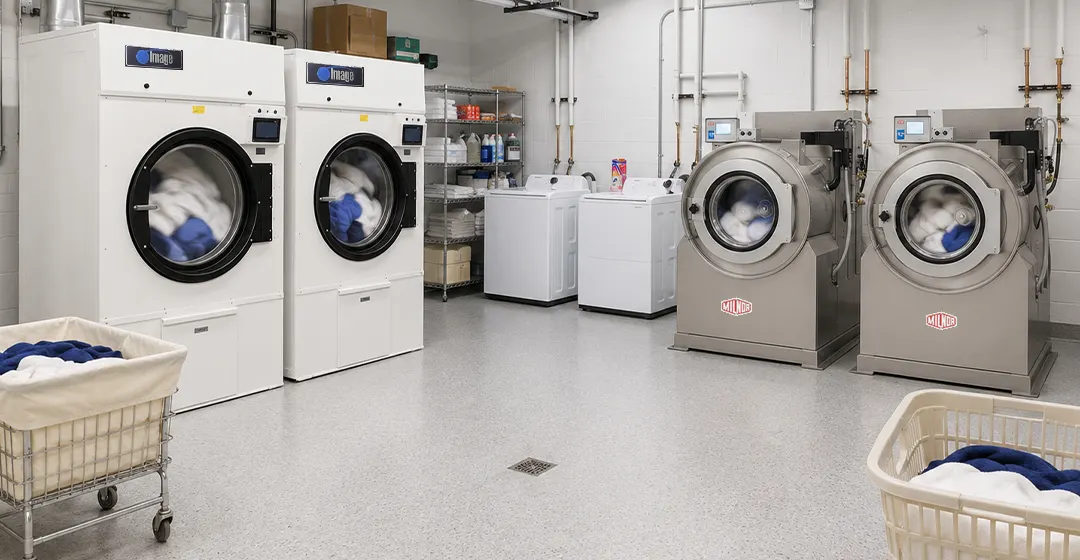
For a hotel chasing sustainability certifications, or simply trying to control utility bills that keep climbing every quarter, this is not a minor detail. It is often the single biggest line item a laundry re-engineering project can improve. Supershine works with clients on exactly this kind of retrofit, pairing high-spin extraction (which pulls more water out mechanically so dryers work less) with heat recovery systems that reuse hot water from one cycle to preheat the next.
Choosing the Right Equipment Partner
India's hospitality laundry market has no shortage of global names. Girbau, Electrolux Professional, Miele Professional, and Jensen all have a strong footprint here, and each brings something different, Jensen for large-scale tunnel systems, Miele for premium finishing quality, Electrolux for its sustainability-first engineering. But equipment alone does not solve the problem. What actually determines whether a laundry re-engineering project succeeds is the planning that happens before any machine arrives on site.
This is the gap Supershine has spent over three decades closing. Founded in 1990 and headquartered in Gurugram, Supershine has worked with more than 4,200 clients across India and the Middle East, including hotels, hospitals, defense establishments, and pharmaceutical facilities, on turnkey laundry projects. That means everything from the initial site assessment and load calculation, through equipment selection from global partners like Milnor, ADC, Jensen, Forenta, Italclean, and Image, to installation, staff training, and ongoing AMC support once the laundry is live.
A lot of hotels underestimate that last part, the maintenance contract. A laundry that runs sixteen hours a day, seven days a week, wears out faster than almost any other equipment in a hotel. Without a proper AMC in place, a single breakdown during a full house weekend can mean scrambling for outsourced laundry service at premium rates, which defeats the entire purpose of having an in-house facility.
What a Modern Setup Actually Looks Like
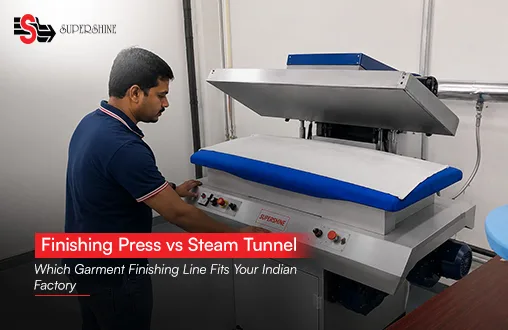
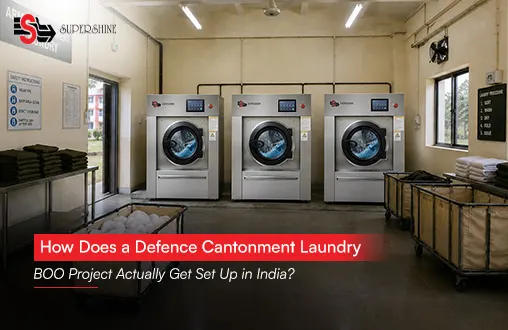
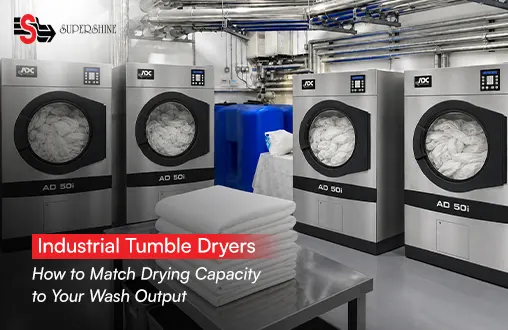
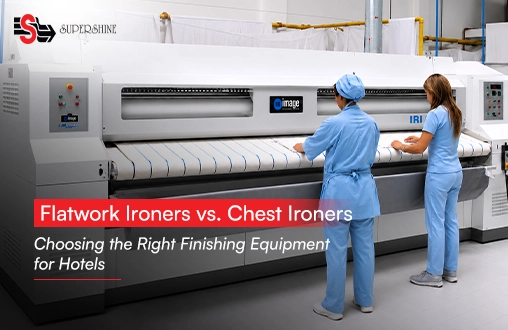
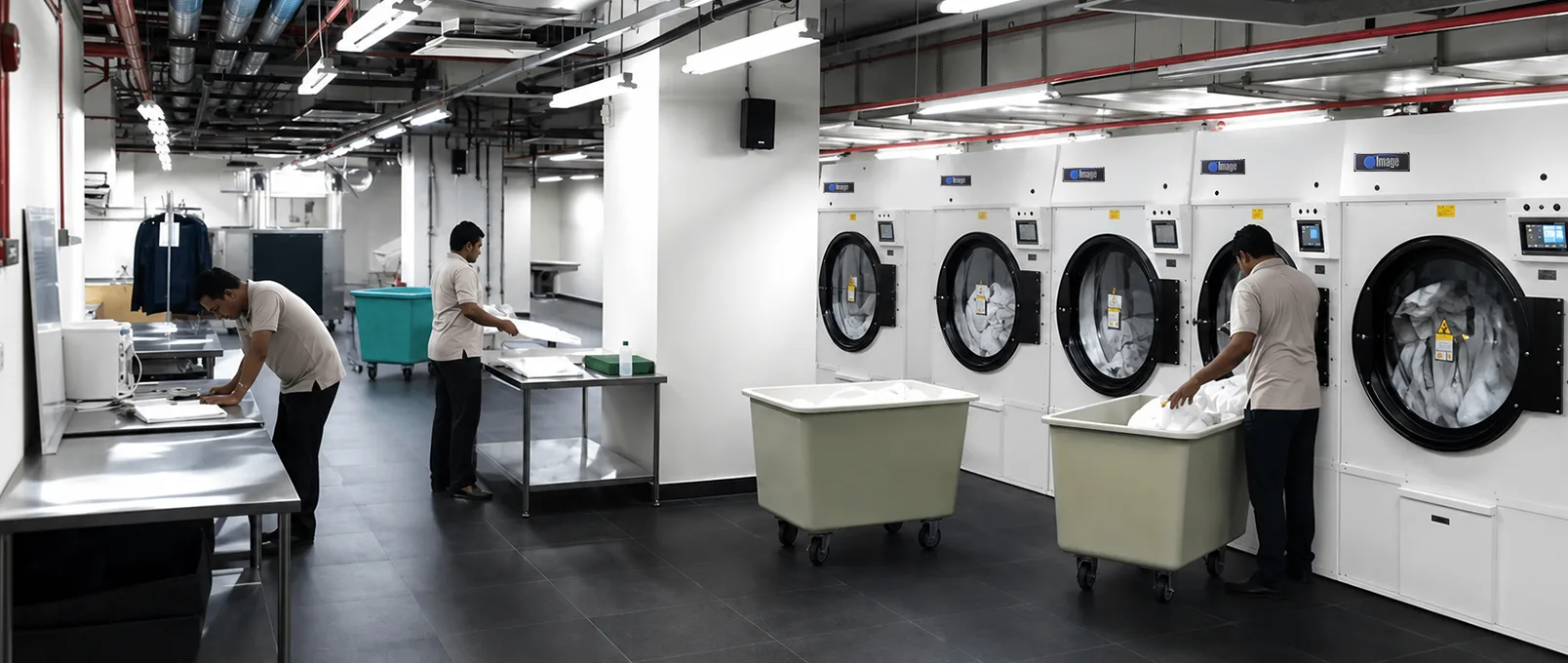
When Supershine designs a laundry for a 300-room property, the plan usually includes a mix of high-capacity washer extractors for bulk linen, separate smaller machines for delicate or colored items like spa robes, a bank of dryers sized to match wash output exactly (not guessed at), a flatwork ironer for sheets and tablecloths, and finishing stations for uniforms. Chemical dosing systems are automated rather than manual, both for consistency and to cut chemical waste. Effluent treatment is planned in from day one, since discharge norms for water reuse are getting stricter across Indian cities.
A short checklist that most successful projects follow looks something like this: confirm daily linen volume at peak occupancy, map turnaround time targets by linen category, size washer and dryer capacity with a buffer, choose equipment that matches your utility infrastructure (steam, electricity, or both), and lock in a maintenance plan before installation, not after the first breakdown.
None of this is exotic. It is disciplined planning applied to a part of hotel operations that rarely gets the attention it deserves. Commercial washing machines for hotels have come a long way in the last ten years, with better sensors, lower water use, and smarter cycle programming, but none of that helps if the underlying system was never sized correctly in the first place.
The Bottom Line
Five-star hotels in India are re-engineering their laundries because the old math no longer works. Occupancy is up, guest expectations are higher, utility costs keep rising, and outdated equipment simply cannot process the volume fast enough or cheap enough. Whether you are opening a new property or fixing a laundry that has been limping along for years, the fundamentals stay the same, get the volume calculations right, match your laundry machines for hotels to actual demand, and build in a maintenance plan from the start. Supershine Laundry has spent 35 years helping hotels and other large institutions get exactly this right, and honestly, the projects that go smoothly are always the ones where planning happened properly before a single machine was ordered.