+91-124-4807600
 sales@supershinelaundry.ae

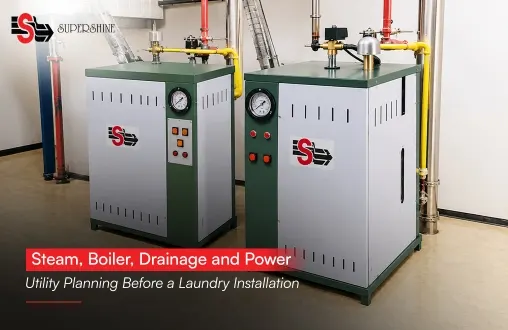
Steam, Boiler, Drainage and Power: Utility Planning Before a Laundry Installation

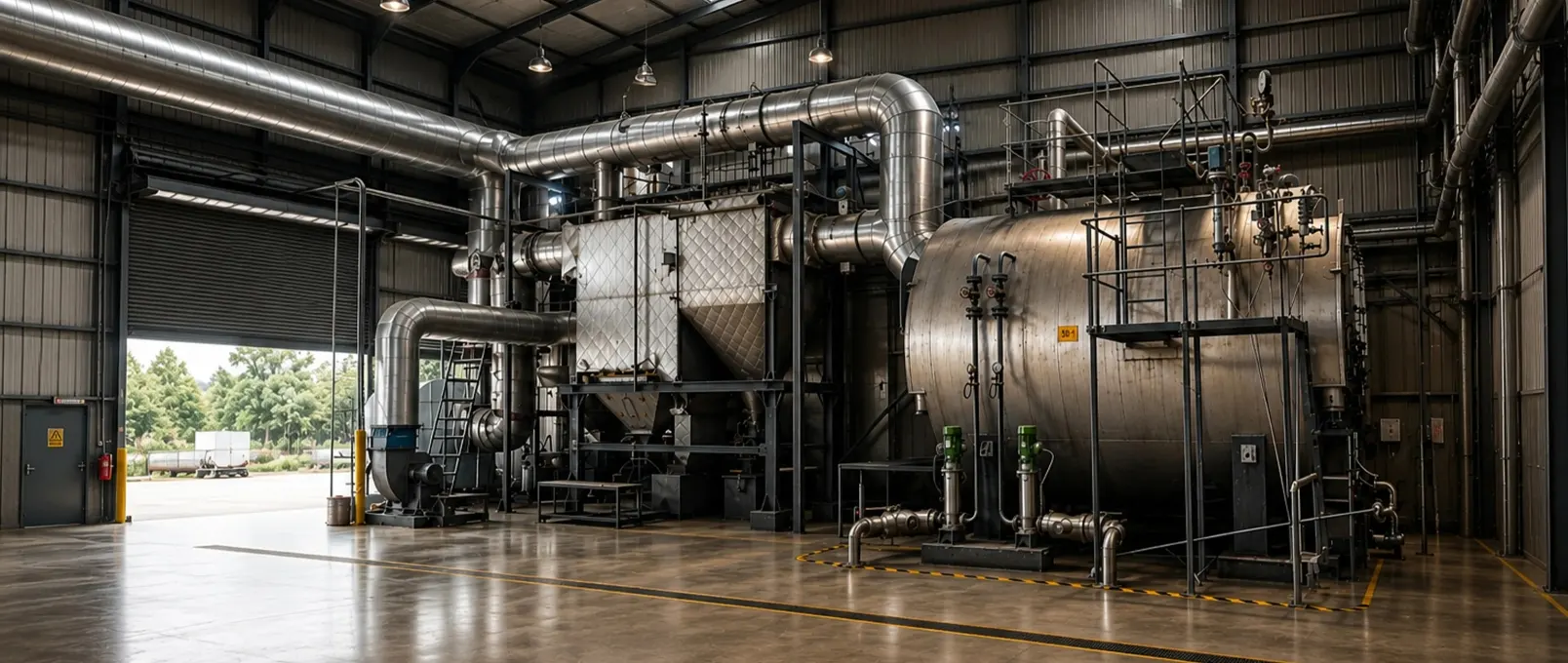
Here is something we learned the hard way over 35 years. Most laundry problems blamed on the machines are actually utility problems. A washer starved of water pressure, a dryer on an undersized exhaust, a drain that backs up on the first full load. The machine is fine. The building was not ready.
So before you finalise any commercial laundry equipment order, spend a week on utilities. It is the cheapest planning you will ever do, and it is exactly what Supershine Laundry's assessment and project planning team walks through with every new site.
Start with the load, then work backwards
Utilities are sized from the machines, and the machines are sized from the linen. So begin with daily kilograms and peak hours. Once you know the washer and dryer line up, you can calculate what each utility must deliver at the same moment, not on average.
That peak point matters. Running three washers filling and two dryers firing at once is when weak infrastructure shows up.
Water: quantity, pressure and quality
Water is the first thing to check.
- Flow and pressure. Large industrial laundry equipment fills quickly. If the supply line cannot deliver, cycles stretch out.
- Storage. An overhead or ground tank with a booster pump often works better than relying on the mains.
- Hardness. Hard water scales heating elements and makes detergents less effective. A softener usually pays for itself.
- Hot water. Decide whether you will heat with steam, gas, electric or a heat recovery system.
Test your water before you design anything. Hardness, iron and TDS all affect wash quality and machine life.
Steam and boiler planning
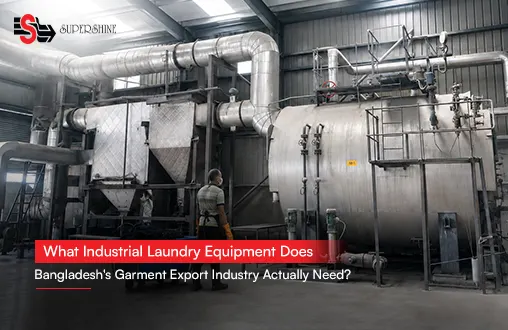
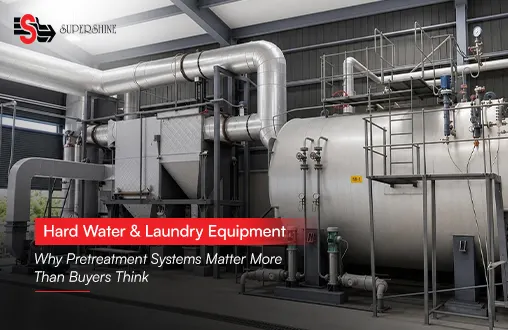
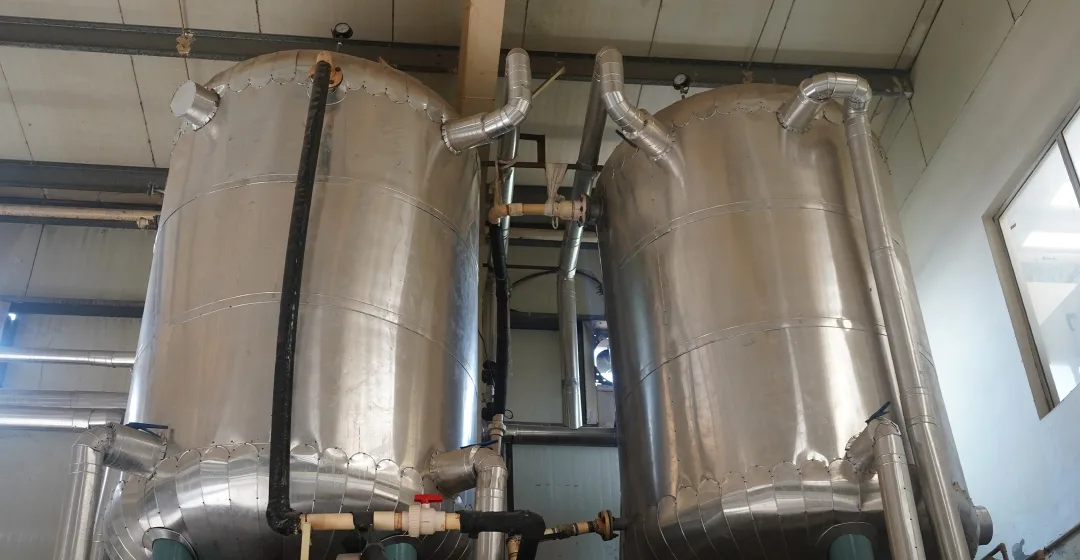
If your plant uses steam for washing, drying or ironing, the boiler is the heart of the building.
- Add up steam demand. Include washers, dryers, ironers and presses, then add margin for simultaneous use.
- Check boiler capacity and pressure. Machines need steady pressure, not just total capacity.
- Plan condensate return. Recovering condensate saves fuel and water.
- Insulate pipework. Bare lines waste heat and make the room hot.
- Think about fuel. Gas, oil, wood or electric boilers have different safety and permitting needs.
If you already have a hospital or hotel boiler with spare capacity, tapping into it can be efficient. If not, a dedicated boiler might be the better call.
Drainage: the forgotten utility
Drains cause more commissioning headaches than almost anything else. A big industrial washing machine can discharge a lot of water in a short burst.
- Use properly sized drain channels or trenches rather than small floor traps.
- Slope floors toward drains and use anti slip finishes.
- Add lint and solids traps so pipes do not clog.
- Cool hot discharge where local rules require it.
- Check municipal or pollution control norms for effluent.
Poor drainage also affects hygiene, because standing water breeds bacteria.
Electrical load and power quality
Add the power requirements of every washer, dryer, ironer, compressor and exhaust fan. Then look at the supply.
- Sanctioned load. Confirm you have enough connected load, or apply for an increase early.
- Starting current. Large motors draw a spike at start up. Inverter drives help, but the supply must handle it.
- Voltage stability. Fluctuations damage control boards, so stabilisers or protection may be needed.
- Backup. A generator or UPS may be needed for critical hospital laundries.
- Earthing. Wet environments demand proper earthing and RCD protection.
Compressed air, ventilation and space
Finishing equipment and some controls rely on compressed air, so plan a clean, dry supply. Dryers and ironers release heat and moisture, which means exhaust ducting, make up air and good ventilation. A laundry without airflow becomes hot, damp and uncomfortable fast.
Finally, leave room. Machines need clearance for door swing, trolleys, service access and future expansion.
Remember that every commercial laundry machine in your commercial laundry equipment schedule brings its own demands, so collect the utility data sheet from each manufacturer early. Ask for water flow, steam consumption, power rating, exhaust volume and drain size per machine, then add them up. It is dull work, but it prevents expensive surprises on commissioning day.
Walk the site together
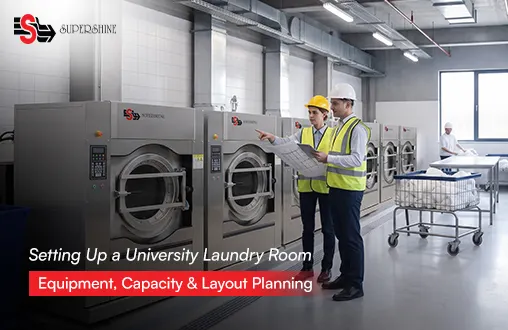
Before any drawing is finalised, walk the site with your plumber, electrician and boiler engineer, along with the equipment supplier. Each person sees different risks. The electrician may spot a weak supply panel, the plumber a drain that is too shallow, and the supplier a door that is too narrow for the machine. Fifteen minutes of walking saves weeks of rework later. At Supershine Laundry, we ask your civil, electrical and plumbing teams to join this site walk.
Take photographs and measurements during the walk, and share them with the supplier. A drawing built on real measurements is far more reliable than one built on assumptions.
A pre installation checklist
- Confirmed daily and peak kilograms
- Water test report and booster plan
- Boiler capacity and steam routing
- Drain design with traps
- Electrical load calculation and approvals
- Exhaust and fresh air routes
- Floor loading and foundation details
- Access path to bring machines in