+91-124-4807600
 contact@supershine.in
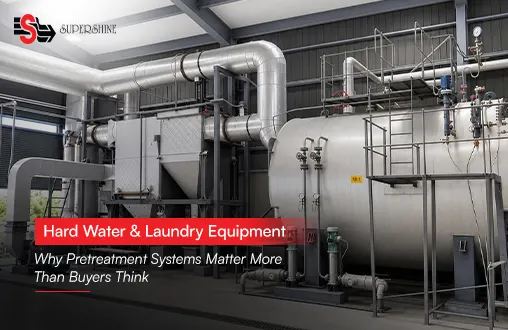
Hard Water and Laundry Equipment: Why Pretreatment Systems Matter More Than Buyers Think

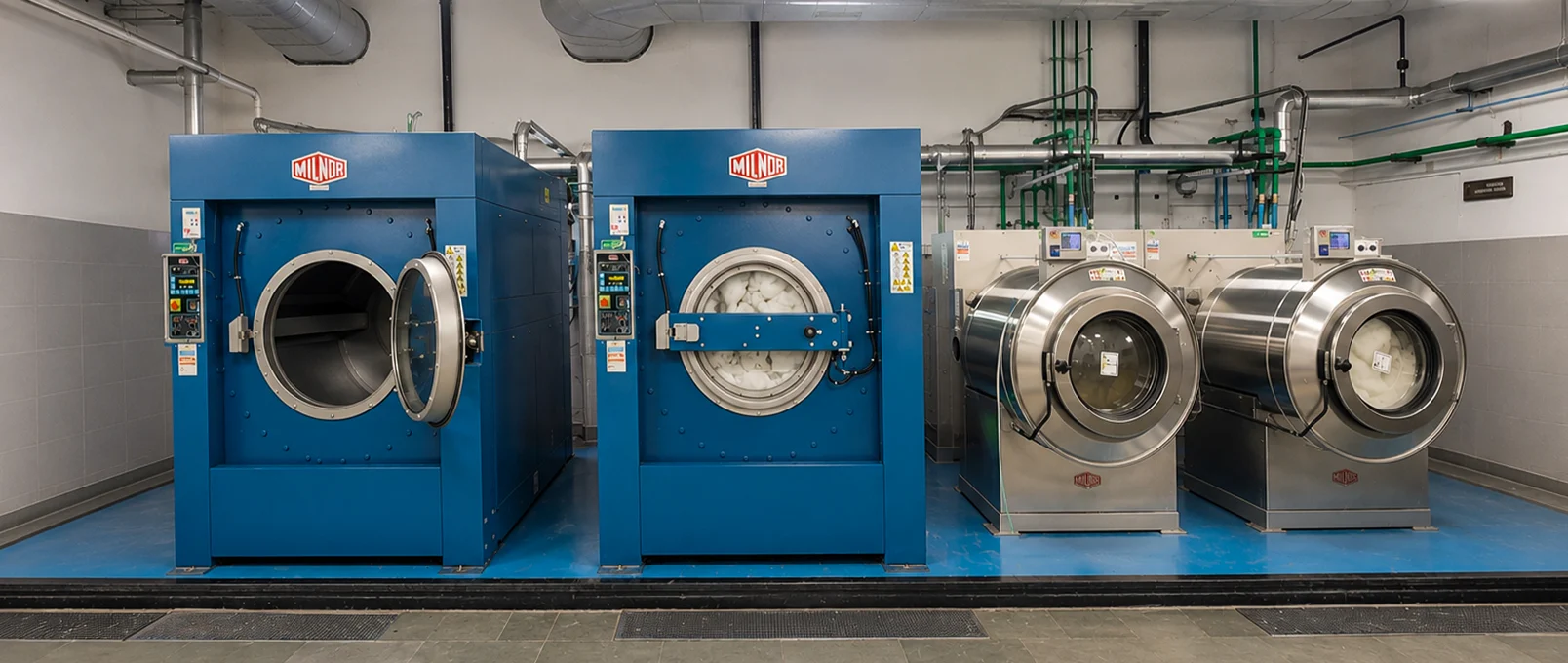
Nobody buys an industrial washing machine thinking about their water supply. They think about drum capacity, load size, maybe the brand name on the door. Water quality barely makes the shortlist of questions, and that’s a genuinely expensive mistake, because hard water doesn’t just affect wash quality, it quietly destroys the machine itself, one cycle at a time.
What Hard Water Actually Does Inside a Machine
Hard water carries dissolved calcium and magnesium. Every wash cycle, some of those minerals precipitate out as limescale, coating the inside of pipes, valves, heating elements, and pump components. It’s slow. It’s invisible for months. And then suddenly your heating element takes twice as long to reach temperature, your water flow drops, and your commercial washing machine starts throwing error codes that seem unrelated to water quality at all. A well-cited Water Quality Research Foundation test ran washing machines through 240 cycles: units fed with hard water needed deliming to remove visible scale, while machines run on soft water looked nearly new at the end of the same test. Same machine, same cycles, wildly different wear.
Why This Matters More for Industrial Volumes Than Household Use
A home washing machine runs maybe five or six loads a week. An industrial laundry washing machine in a hospital or hotel laundry runs dozens of loads daily, sometimes around the clock. Scale up the mineral deposit problem to that frequency and the timeline for damage compresses dramatically. What might take years to show up in a domestic appliance can show up in months on a heavily used commercial unit. Heating elements lose efficiency faster (meaning higher energy bills for the same wash temperature), pump components wear out sooner, and valve seals degrade with mineral buildup, all of which adds up to more service calls and shorter equipment life. For a facility running dozens of cycles a day, that’s real money, not a minor inconvenience.
The Extractor Washing Machine Problem Specifically
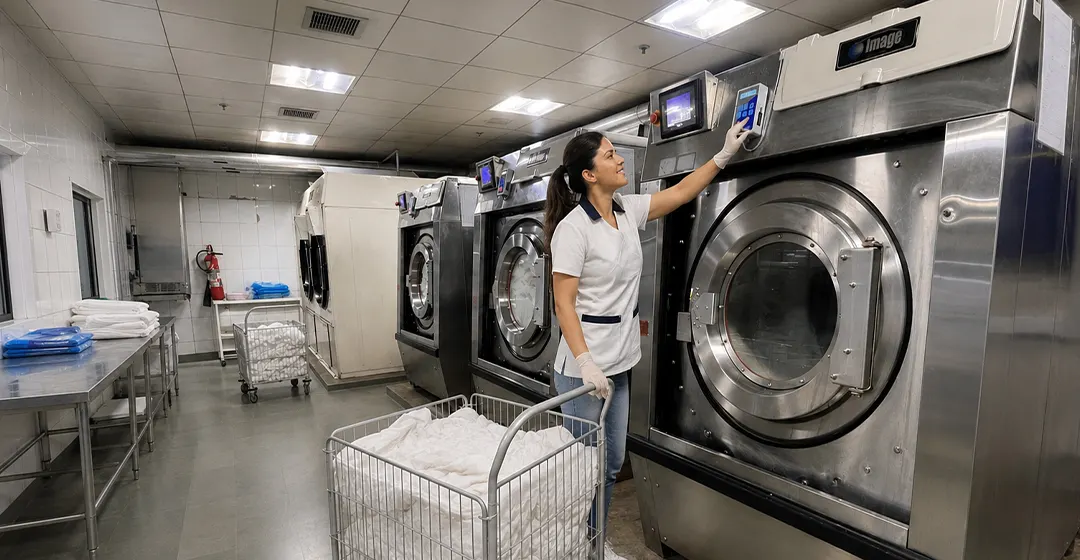
High-speed extractor washing machine units, the kind used to spin excess water out of loads before drying, are particularly vulnerable because they combine high mechanical stress with constant water exposure. Mineral deposits on bearing seals and drum components can accelerate wear on exactly the parts responsible for that high-G spin performance. Lose extraction efficiency and your drying times go up too, which means higher energy costs downstream in your tumble dryers. It’s a chain reaction that starts with water hardness and ends up affecting your entire laundry line’s operating cost, not just the washer.
Fabric Quality Is the Other Half of This Problem
It’s not only the machine. Hard water minerals bind with detergent, reducing its cleaning effectiveness and leaving mineral residue embedded in fabric fibers. Over repeated wash cycles, this causes towels and linens to feel stiffer, colors to fade faster, and whites to grey prematurely, a genuine problem for hotels and hospitals where linen quality directly affects guest or patient perception. So pretreatment isn’t just protecting your capital investment in equipment, it’s protecting the quality of what comes out the other end too.
Why Pretreatment Deserves a Line Item in Your Equipment Budget
Ion-exchange water softening systems, installed ahead of your wash line, remove the calcium, magnesium, and iron responsible for scale before it ever reaches your machines. It’s a relatively modest upfront cost against the total equipment investment, but buyers routinely skip it to save on day-one budget, then pay for it repeatedly in service calls and shortened machine life over the following years. Penny wise, pound foolish, as the saying goes.
This is genuinely one of the most common gaps Supershine Laundry sees when consulting with new clients on equipment planning. Supershine Laundry’s turnkey approach includes assessing local water quality as part of the initial consultation, not as an optional add-on, because recommending the right washer-extractor without addressing water hardness is, frankly, incomplete advice. Supershine has installed pretreatment systems alongside washer-extractors, dryers, and finishing equipment across hotels, hospitals, and industrial laundries where local water hardness would otherwise have shortened machine life considerably.
Buyers often ask why a supplier would even bring up water quality unprompted, since it’s not technically part of the machine sale. The honest answer is that a washer-extractor recommendation made without understanding your local water conditions is really only half an answer, and an experienced equipment partner should be raising the topic before you have to ask. It’s a bit like a car dealer never mentioning what fuel your engine actually needs. Technically not their problem until it very much becomes yours, six months down the line, when the heating element fails during your busiest season.
There’s also a planning angle worth mentioning. If you’re setting up a brand new facility, a water test should happen before you even finalise your floor plan, because pretreatment equipment needs its own footprint, plumbing, and maintenance access. Retrofitting a softening system into a laundry room that wasn’t designed for it is possible, but it’s a more expensive, more disruptive project than building it in from day one. Buyers renovating an existing facility should factor this in early rather than treating it as an afterthought once the washers are already ordered.