+91-124-4807600
 contact@supershine.in
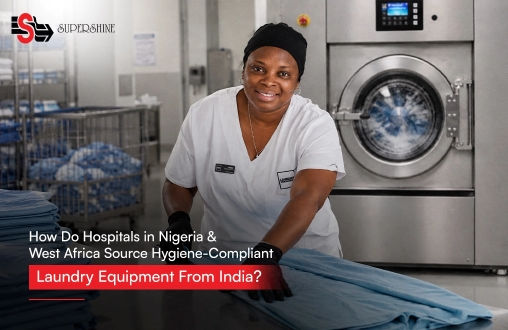
How Do Hospitals in Nigeria and West Africa Source Hygiene-Compliant Laundry Equipment From India?

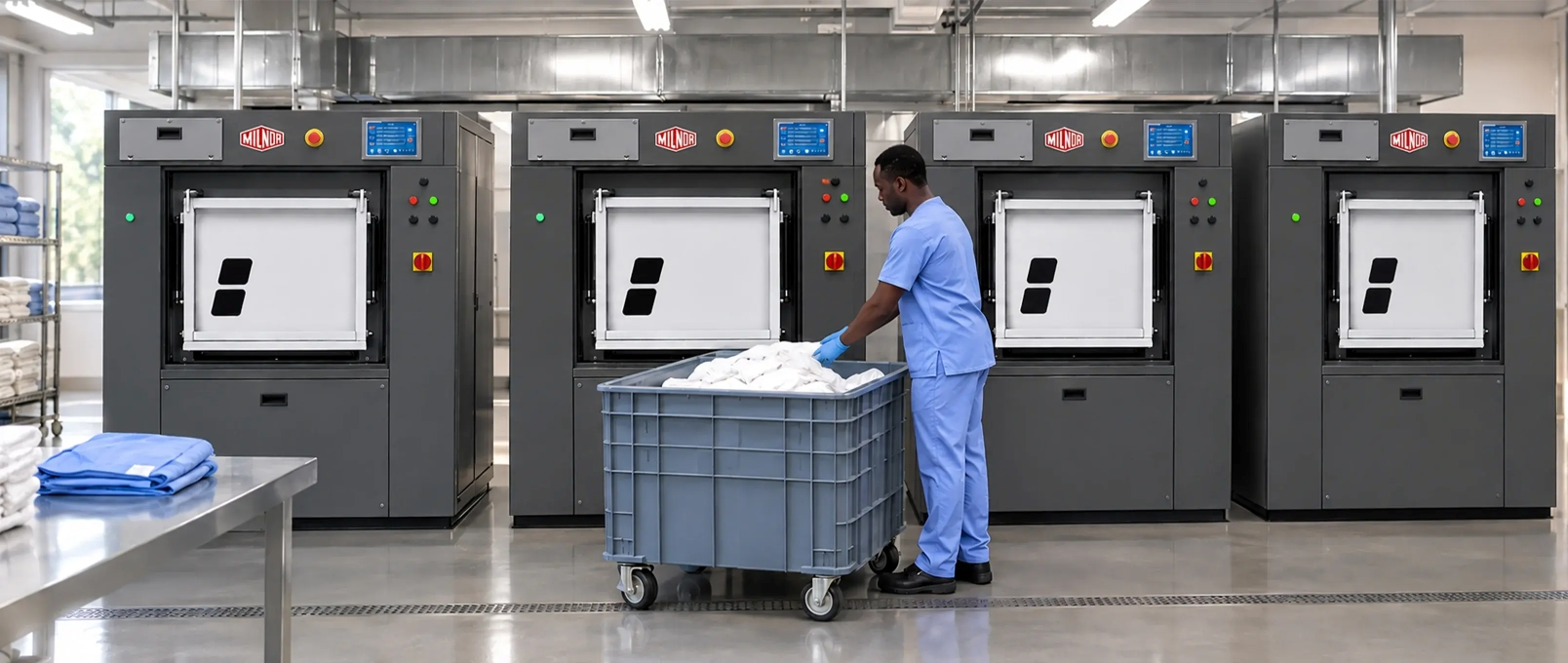
Hospitals across Nigeria and West Africa are increasingly sourcing hygiene-compliant laundry equipment from India because Indian manufacturers combine barrier-washer engineering built to recognised infection-control standards with pricing, spare-parts availability, and tropical-climate reliability that European or American suppliers often can't match at a comparable cost. Companies such as Supershine, which opened a dedicated office in Kano, Nigeria in 2025, now give West African hospital procurement teams a local point of contact for machine selection, installation, and after-sales support instead of a distant, transactional export relationship. That mix of engineering credibility and regional presence is why Indian-built washer extractors and barrier washers have become a practical default for hospital laundries scaling up across the region. Getting the right hospital washing machine in place is the foundation every other infection-control decision in the laundry gets built on. None of this works as a one-off purchase. Hospitals scaling up need a properly planned hospital laundry system, not just a single machine, which means matching hospital laundry machines to actual bed count and linen volume from the outset. Whether a facility is sourcing its first laundry machines for hospital use or expanding an existing plant, choosing a commercial washing machine for hospital duty and the right commercial laundry equipment for hospital environments together, with local service backing, is what keeps the investment reliable for the long run.
Why African Hospital Buyers Are Looking at India
For a long time, hospital administrators in Lagos, Accra, Nairobi or Kano faced a narrow choice: pay a premium for European machines shipped in on long lead times, or settle for unbranded equipment with no real service backing. Neither option worked well for a hospital laundry that has to run every single day, handling contaminated linen, surgical drapes and patient garments that cannot wait for a part to clear customs.
India's commercial laundry manufacturing sector has matured considerably over the past decade. Manufacturers now build to the same core engineering principles used globally, stainless steel drum construction, programmable logic controllers, and validated wash cycles, while keeping capital cost meaningfully lower than Western equivalents. That price gap matters enormously for public and mission hospitals operating on tight capital budgets, and it matters just as much for private hospital groups trying to protect margins while still meeting accreditation requirements.
Engineering that meets recognised infection-control benchmarks
Hospital laundry isn't just "washing clothes at a bigger scale." It's a controlled process governed by specific technical requirements:
- Thermal disinfection cycles that sustain water temperatures high enough (commonly around 71°C for a defined hold time) to inactivate pathogens on linen contaminated with blood, bodily fluids or wound exudate.
- Chemical disinfection options for facilities that can't run high-heat cycles, using validated dosing of disinfectant through automated chemical injection.
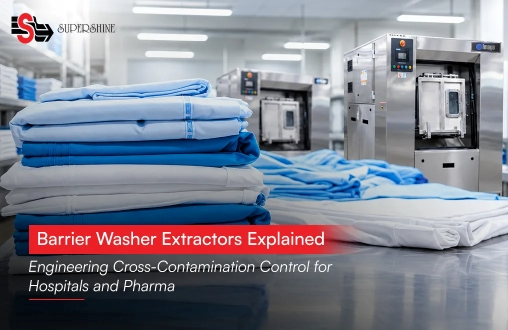
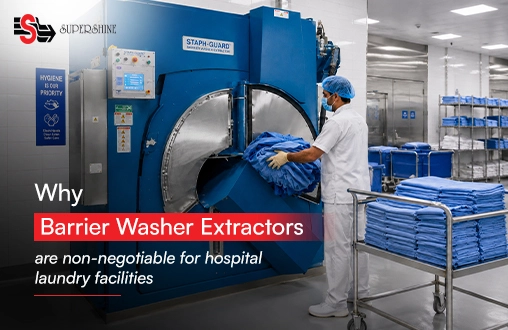
- Physical separation between soiled and clean linen handling to prevent cross-contamination, which is where barrier washer extractors come in.
- Documented, repeatable cycle parameters that infection control committees can audit.
Indian manufacturers producing for export, including brands Supershine represents, build machines with these requirements as a starting point rather than an afterthought, because they've had to compete for hospital contracts domestically in India, a market with its own strict National Accreditation Board for Hospitals (NABH) hygiene expectations.
Built for tropical heat, humidity, and an unreliable grid
This is the part that often gets overlooked when hospital boards compare specs on paper. A washer extractor engineered for a temperate European climate doesn't automatically perform the same way in Kano's dry heat or Lagos's humidity, and it definitely doesn't respond well to the voltage swings that come with an unstable power grid.
Indian manufacturers, by contrast, have decades of experience designing for exactly these conditions, because much of India faces similar heat, dust and power variability. Motors and control panels are frequently specified with wider tolerance for voltage fluctuation, and machines are built with an assumption that generator backup, not seamless grid power, will be part of daily operation. For a hospital in Kano running its laundry off a mix of grid and diesel generator, that difference isn't cosmetic. It's the reason a machine keeps running reliably for eight or ten years instead of failing within eighteen months.
What Supershine's Kano Office Changes for Buyers
Before a regional presence existed, an African hospital sourcing Indian equipment typically dealt with a sales agent, a shipping company, and then silence once the machine arrived. Spare parts meant another shipment, another customs process, another few weeks (sometimes months) of a washer extractor sitting idle.
Supershine's 2025 expansion into Kano changes that equation directly. Having local commercial laundry equipment support means:
- Faster response times for breakdowns, since a technician doesn't need a visa and a long-haul flight to reach the facility.
- Regional spare parts stocking, reducing the downtime between a failed component and a working machine.
- On-the-ground consultation during planning, so machine sizing accounts for actual bed count, linen turnover, and local water quality rather than generic assumptions.
- A relationship, not a transaction, which matters enormously for AMC (annual maintenance contract) arrangements that hospitals rely on to budget predictably.
This kind of footprint is still relatively rare among Indian laundry equipment exporters serving the continent, which is part of why it's worth documenting as its own case: it signals a shift from India as a source of cheaper machines to India as a genuine long-term infrastructure partner for African healthcare.
How the Sourcing Process Typically Works
Hospital procurement teams new to this route generally follow a fairly consistent path:
- Needs assessment: bed count, average daily linen load (often measured in kilograms per bed per day), isolation ward requirements, and water/steam availability.
- Equipment specification: matching washer extractor capacity and barrier configuration to actual throughput rather than buying oversized capacity that sits underutilised.
- Compliance check: confirming the equipment supports the temperature and dosing parameters the hospital's infection control policy requires.
- Installation and commissioning: on-site setup, water and drainage connection, staff training on cycle selection and loading procedures.
- Ongoing service: AMC coverage, spare parts access, and periodic performance verification.
A well-run sourcing process treats the equipment purchase as one part of a broader relationship rather than a one-time transaction, which is exactly the model Supershine Laundry has built its West African operations around.
Logistics and After-Sales Realities Worth Planning For
Shipping heavy laundry equipment from India to West African ports (commonly Lagos or Tema) typically takes several weeks by sea, and inland transport to cities like Kano adds more time. Hospitals should build this lead time into any expansion or renovation timeline rather than treating equipment delivery as an afterthought.
Import duties, VAT, and clearance procedures vary by country, so working with a supplier that has handled West African shipments before, rather than a first-time exporter, saves real money and real time. It's also worth confirming, in writing, what the warranty covers once the machine has cleared customs and been commissioned on-site, since some warranty terms hinge on professional installation being carried out by an authorised technician.