+91-124-4807600
 sales@supershinelaundry.ae

What Is a Tunnel Washer, and When Does a Laundry Need One?

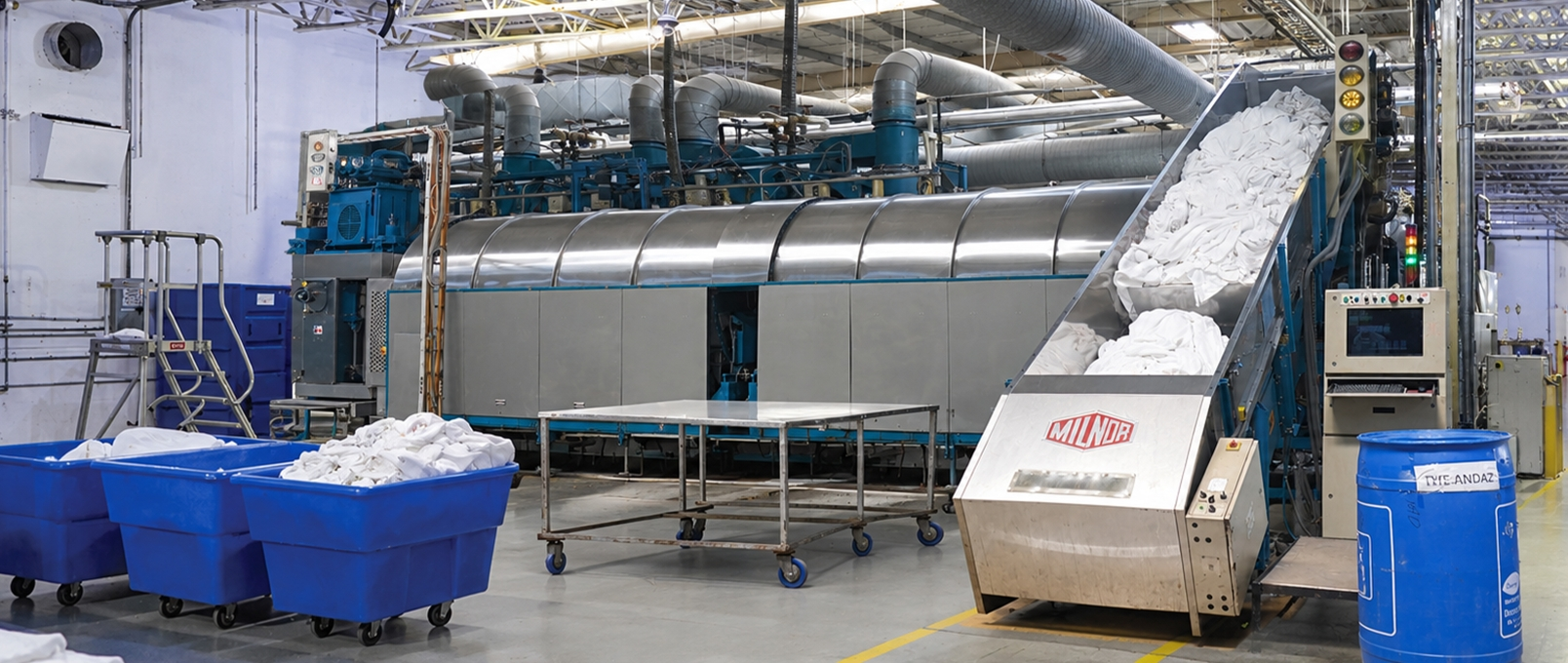
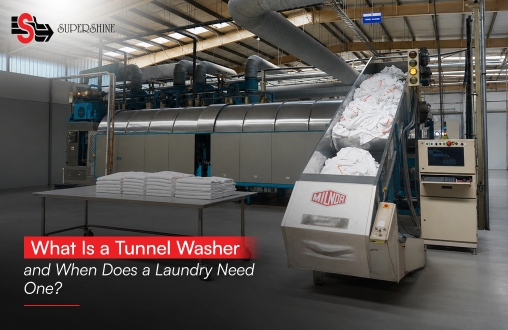
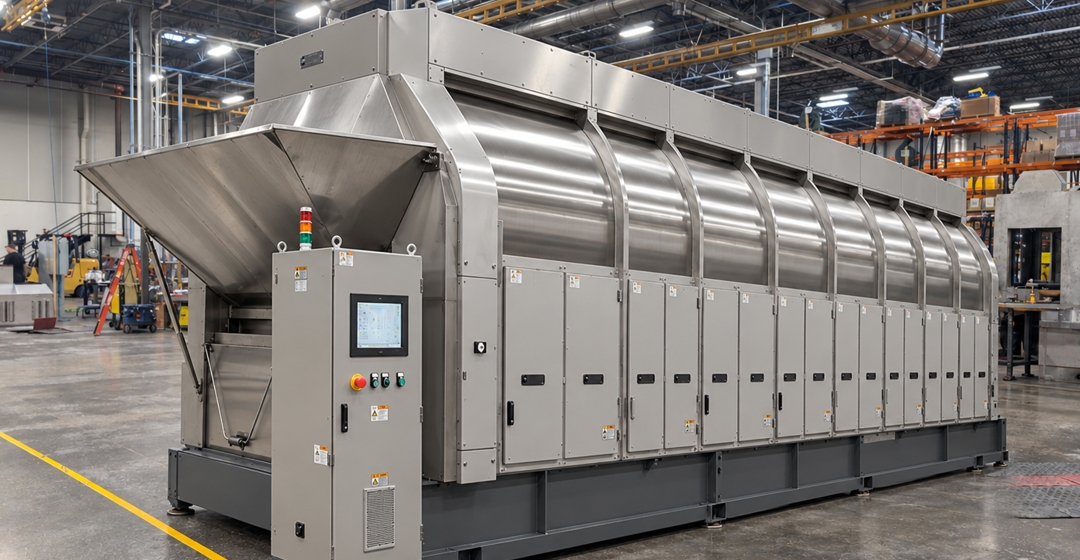
Short answer: A tunnel washer is a continuous batch washing system. Linen moves through a series of connected compartments, each handling a stage such as pre wash, main wash and rinse, then goes to a press or extractor. It suits large, high volume laundries, typically processing a few hundred kilograms an hour or more, where saving water, energy and labour justifies the investment. Hotels often ask about the difference between tunnel washer and stand-alone washer extractor for hotels, and the short version is volume. At Supershine Laundry, we help hotels and hospitals choose between tunnel and batch systems, and this guide follows that decision process.
How a tunnel washer works
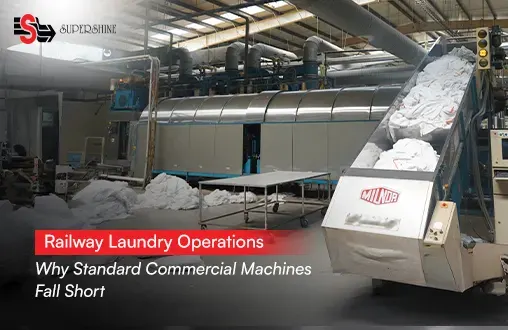
Think of a long, rotating drum divided into chambers. Wet linen enters at one end. Every few minutes the drum turns, passing a batch to the next chamber while a new batch enters behind it.
Key features:
- Counter current rinsing. Clean water enters near the end and flows backward through the system, reusing the same water several times.
- Continuous flow. Loads move on a timer, so output is steady.
- Automatic chemical dosing in each compartment.
- A press or extractor at the exit that removes water before drying.
A good industrial tunnel washer can complete a full wash in well under half the time of a batch machine. Industry sources cite under 18 minutes for some sheets, compared with 45 to 50 minutes in a standard washer extractor.
Difference between tunnel washer and stand-alone washer extractor for hotels
For hotels, the difference between tunnel washer and stand-alone washer extractor comes down to scale, flexibility and cost.
Stand alone washer extractors
- Work in separate loads, one machine at a time
- Flexible: you can run different programmes for different linen
- Lower upfront cost and easier to install
- Suit small to mid sized hotels
- Use more water per kilogram unless recovery is added
Tunnel washers
- Process linen continuously
- Use significantly less water and often less energy per kilogram
- Need less labour per kilogram
- Require more space, utilities and capital
- Work best with steady, large volumes of similar linen
When does a laundry need a tunnel washer?
There is no single rule, but these signs point that way:
- High daily volume. Many American laundry experts suggest stand alone washer extractors suit volumes below roughly 800 pounds an hour, about 360 kg. Beyond that, tunnels become attractive.
- Labour pressure. If staffing the washroom is costly or difficult, a tunnel reduces handling.
- Water limits or high water costs. Industry reports suggest laundries often cut water use by around 75 percent when moving from washer extractors to tunnels, though results vary.
- Steady linen types. Tunnels shine on sheets, towels and uniforms in large batches.
- Centralised laundry plans. Hotel groups or hospital clusters processing linen at a single site.
When a tunnel is not the right choice
- Small or uneven volumes
- Lots of different linen types needing special programmes
- Limited floor space or utilities
- Short term budget limits
If a tunnel is used poorly, it can consume as much water as a batch machine. Operation matters. A smaller industrial washing machine such as a washer extractor is usually the better call in those cases.
What a tunnel system includes
A tunnel washing machine is part of a line, not a standalone machine, so budget for everything around it:
- Loading conveyor or sling system
- The tunnel itself
- Press or extractor
- Shuttle or conveyor to dryers
- Dryers sized for the output
- Finishing equipment, such as an ironer and folder
- Control software
Planning all parts together avoids bottlenecks.
Utilities to plan for
Tunnels need robust supply:
- Water pressure and storage
- Steam or heat source
- Drainage with heat recovery if possible
- Floor loading and layout for the long machine
- Skilled operators and maintenance
Hybrid laundries
Many modern plants use both. A tunnel handles the bulk of towels and sheets, while a few washer extractors take specialty items, uniforms and urgent loads. This gives you efficiency and flexibility.
Run a volume check first
Weigh your linen over two weeks and find your peak hourly load. If the figure sits comfortably within the capacity of a few washer extractors, a tunnel is probably not needed yet. If you are close to the point where several large machines run nonstop, it is time to model a tunnel. Many laundries save themselves an expensive mistake by doing this one calculation honestly. Supershine Laundry engineers run this volume check before suggesting a tunnel.
If the model suggests a tunnel is justified, ask suppliers to show a similar installation and speak to its operators about water, labour and maintenance.
Where Supershine Laundry fits
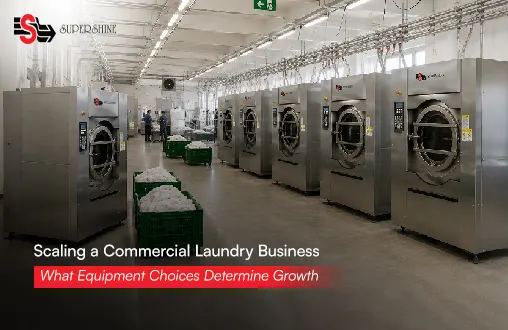
Supershine Laundry has worked on large installations such as Central Linen Park in Bhiwadi, a centralised hospitality laundry using Milnor equipment, as well as many washer extractor based plants. Our team compares tunnel, hybrid and stand alone commercial laundry equipment options based on your volumes, then supports you with installation, training and after sales service. We also supply a full range of industrial laundry equipment and washer extractor machines.