+91-124-4807600
 sales@supershinelaundry.ae

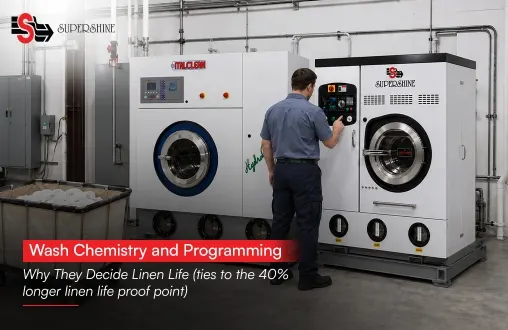
Wash Chemistry and Programming: Why They Decide Linen Life

Linen is expensive. Hotels and hospitals replace it in the lakhs every year, and most people blame guests, staff or the supplier. Honestly, a good chunk of that damage happens in the laundry itself. Wrong chemistry, wrong temperature, wrong timing. The machine does what it was told, and what it was told was too harsh.
That is why the smartest commercial laundry solutions treat wash programming as a lever for linen life, not an afterthought. At Supershine Laundry, projects that tune chemistry and programmes together have seen noticeably longer linen life, and the logic behind that is worth understanding.
The four forces in every wash
Washing works through four things, often called the Sinner circle: time, temperature, chemistry and mechanical action. Change one and the others must adjust.
- Time: how long the linen is exposed
- Temperature: how hot the wash water is
- Chemistry: detergents, alkalis, bleaches and sours
- Mechanical action: drum speed, load size and tumbling
Fabric damage happens when one of these is pushed too far. Too much heat with strong alkali, for example, weakens cotton fibres quickly.
Where linen gets damaged
Most damage is gradual and preventable.
- Overdosed chemicals. More is not cleaner. Excess alkali and bleach attack fibres.
- Overly hot washes. Heat helps, but polycotton and coloured items often need lower temperatures.
- Poor rinsing. Leftover alkali stiffens fabric and irritates skin.
- Overloaded drums. Linen rubs against itself harder when the drum is packed.
- Underloaded drums. Fabric tumbles harshly with too little cushioning.
- Rough extraction. Spinning at too high a speed with tangled linen can tear.
What good programming looks like
Every commercial washing machine programme should be built for a specific linen type and soil level. A single one size fits all cycle will either under wash or over wash something.
A well designed programme usually includes:
- Pre wash or flush to remove loose soil
- Main wash at the right temperature for the fabric
- Bleach or disinfection stage only when needed
- Multiple rinses to bring pH back to neutral
- Sour or softener where appropriate
- Controlled extraction matched to the load
For hospitals, thermal disinfection standards such as 71 degrees Celsius for 3 minutes, or 65 degrees for 10 minutes, set a floor for temperature and time. Within those limits you can still tune chemistry and action to protect the fabric.
Chemistry that pays back
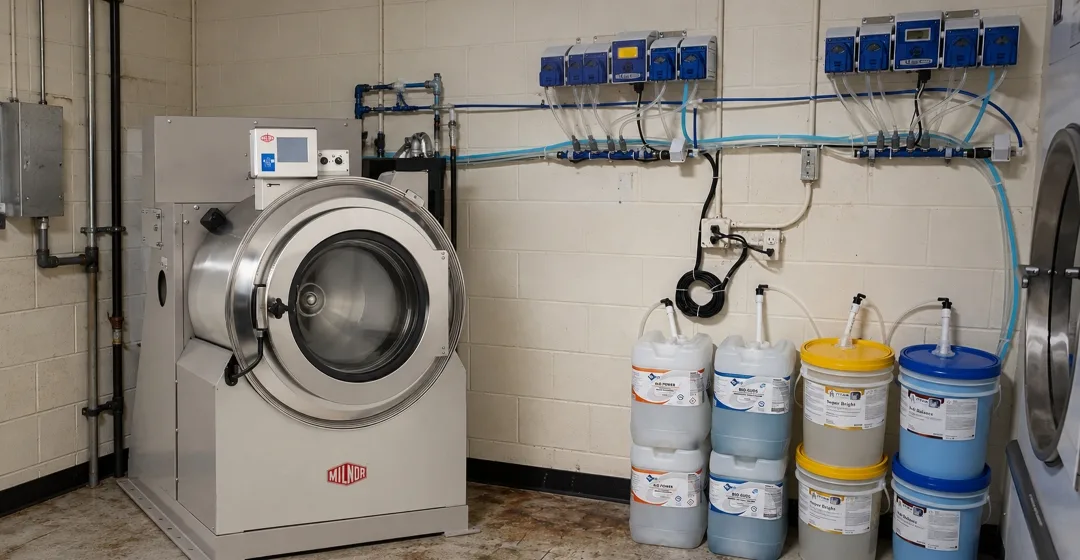
Good dosing is as much about accuracy as selection. Supershine Laundry works alongside your chemical supplier to match dosing to machine and linen type.
- Use automatic dosing pumps instead of manual pouring
- Calibrate dosing regularly
- Match chemicals to water hardness
- Test final rinse pH, ideally near neutral
- Keep different linen types separate, such as towels, sheets and uniforms
Your chemical supplier is a partner here, not just a vendor. Ask them to audit your formulas every few months.
Mechanical action and load
A commercial laundry washing machine works best when loaded to its rated capacity. Too little linen means rough tumbling, while too much prevents proper wash and rinse. Check load weight with a scale. Guessing leads to damage.
How to measure linen life
Track it. Without data, you cannot show improvement.
- Count linen items scrapped each month and note the reason
- Log wash cycles per item where possible
- Compare tensile strength or tear rates on sample items
- Track replacement spend per kilogram processed
Even a simple monthly scrap count tells you a lot.
Train the people, not just the programme
Programmes only work if people follow them. Operators who "help" by adding a bit more bleach or choosing a hotter cycle for stubborn stains undo careful engineering. Lock programmes where the controller allows it, display the correct cycle for each linen type on the machine, and run short refreshers every quarter. We have seen scrap rates fall simply because a team understood why the sour stage matters. Good commercial laundry solutions include the people.
A trial worth running
Pick one linen type, say bath towels, and run a three month trial on a single machine. Change one variable at a time, such as the alkali level or the final rinse count. Record scrap rate, rewash rate and tear tests at the end of each month. Keep the other machines unchanged as a control. You will learn more from one disciplined trial than from a dozen opinions.
Share the results with your chemical supplier and equipment partner, so the changes are built into the permanent programme sheet rather than forgotten.
The machine matters too
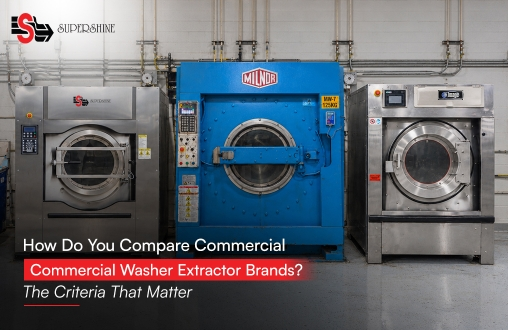
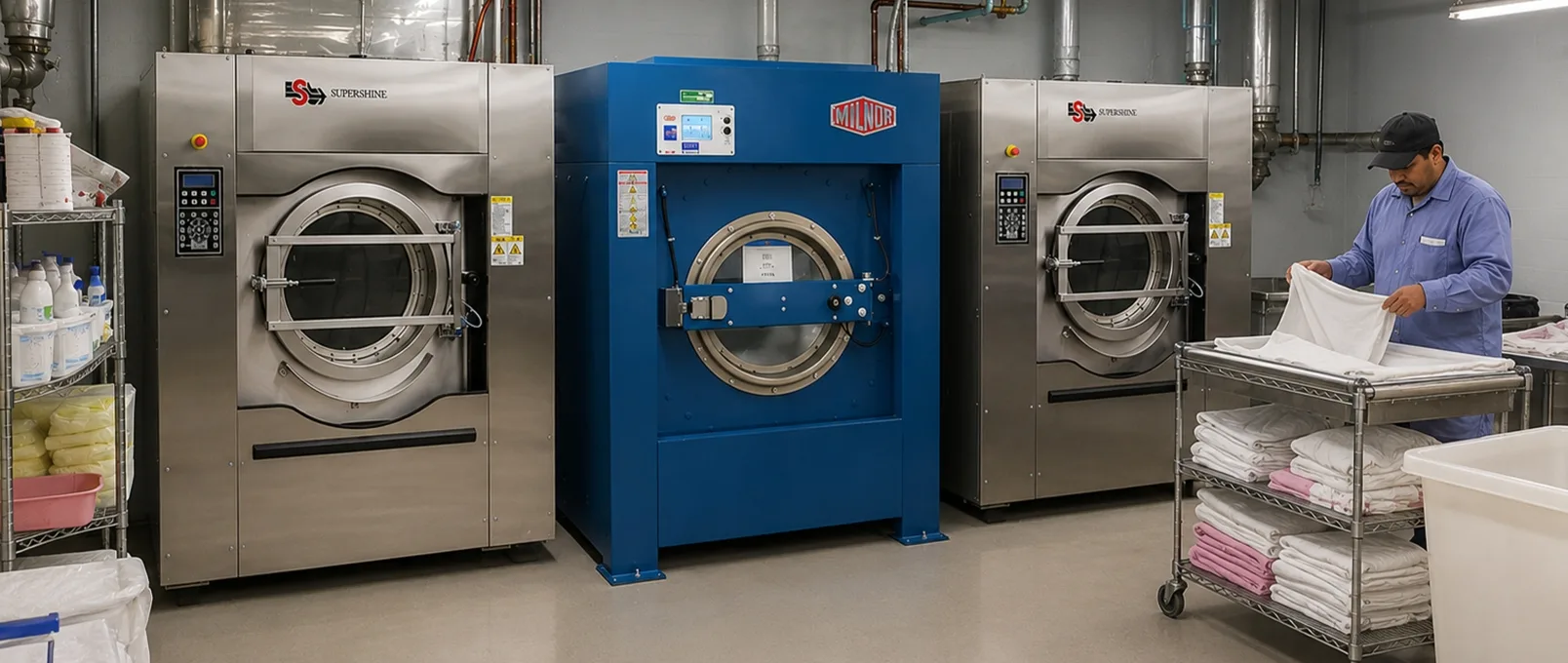
Modern controllers allow precise temperature ramps, water level control and extraction profiles. A basic commercial laundry washer with limited programming ability gives you fewer options. Programmable machines from partners like Milnor and Image let engineers fine tune every stage.
Supershine Laundry helps with this at commissioning, where our team sets up programmes with your chemical supplier and trains your operators. We also review programmes during AMC visits, because formulas drift over time.