+91-124-4807600
 contact@supershine.in
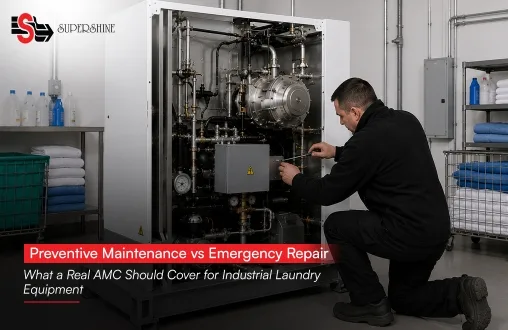
Preventive Maintenance vs Emergency Repair: What a Real AMC Should Cover for Industrial Laundry Equipment

The AMC that looks cheap on paper and expensive in practice
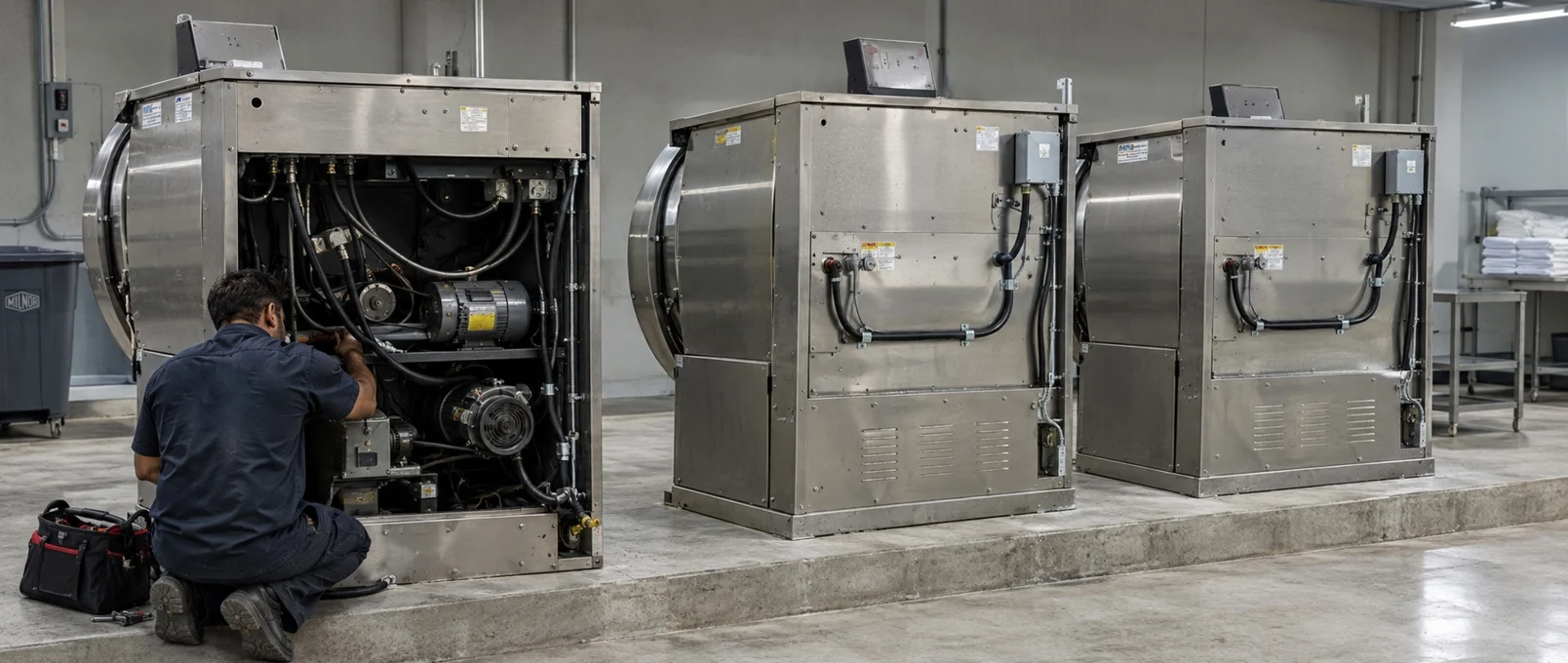
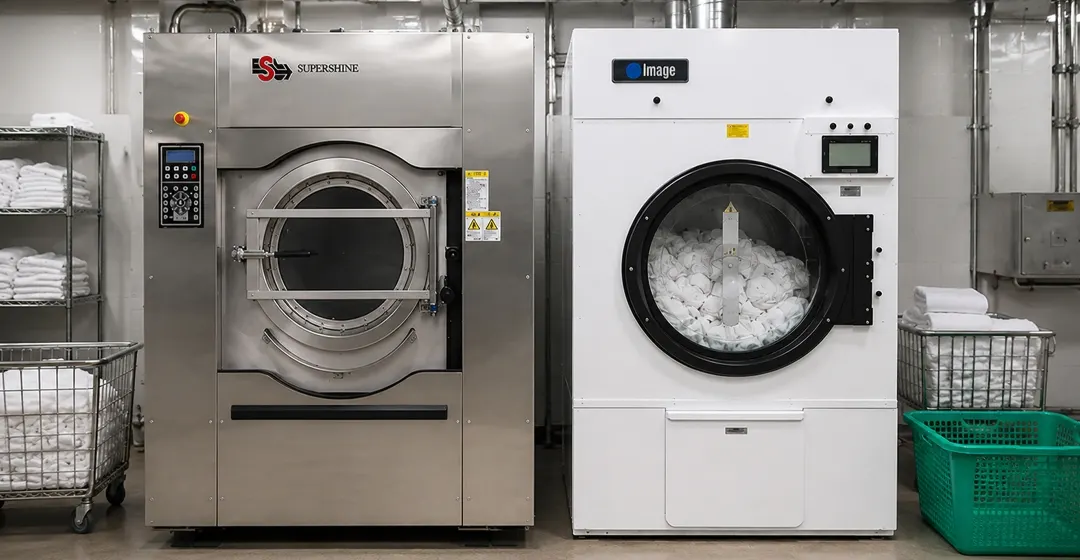
Every facility manager negotiating a service contract eventually hits the same decision point: a lower quarterly fee with parts billed separately, or a higher fixed fee that includes everything. On a spreadsheet, the cheaper option always wins. In an actual laundry running three shifts, it often doesn't. That gap between a cheap-looking contract and real protection is exactly why disciplined commercial extractor maintenance has to be part of the conversation from day one. A strong AMC should never stop at the washer extractor either. Routine descaling with the right commercial washing machine cleaner, scheduled checks across your wider industrial laundry equipment, and consistent servicing of every industrial washing machine and commercial laundry machine on the floor all belong in the same contract. The same discipline applies downstream: an industrial dryer machine or commercial laundry dryer running a blocked duct or a failing thermostat is just as much a fire and downtime risk as a neglected washer extractor, so a real AMC covers the entire line, not just the machine that gets the most attention.
An AMC for industrial laundry equipment is only as good as what it actually covers when a bearing seizes at 11pm on a Saturday with 400 kg of hotel linen sitting in the sorting bins. That's the real test, not the monthly invoice. This piece walks through what preventive maintenance and emergency repair should each cover, how comprehensive and non-comprehensive contracts actually differ, and the specific clauses worth reading twice before you sign.
Preventive maintenance is not the same thing as an AMC
This distinction trips up a lot of buyers. Preventive maintenance is a set of scheduled tasks. An AMC is the commercial contract that determines who does those tasks, how often, and what happens when something breaks anyway. You can have excellent preventive maintenance and a terrible AMC, or vice versa.
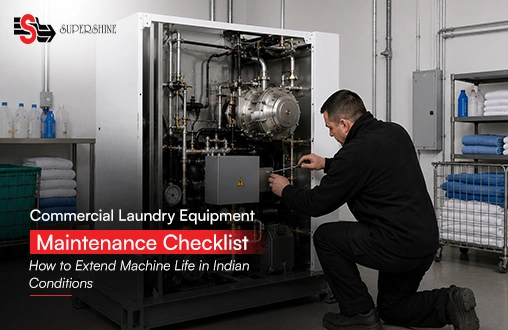
A properly run preventive maintenance program on a commercial washer extractor typically includes:
- Daily: door seal and gasket inspection for leaks, lint screen and drain sump clearing, and a quick listen for abnormal vibration during the spin cycle, which is often the earliest sign of bearing wear.
- Weekly: water hardness testing (softened water should read under roughly 1 grain per gallon), chemical dosing line inspection for cracks or blockages, and drive belt tension checks.
- Monthly: anchor bolt torque checks (a machine running at high extraction speeds will work bolts loose over time), spare parts stock audit, and boiler blowdown if you're running steam.
- Quarterly: dryer duct and exhaust cleaning, since a partially blocked duct doesn't just slow drying, it's a genuine fire risk.
- Annually: drain valve diaphragm replacement, shock absorber inspection on washer extractors, felt pad and wax roll replacement on flatwork ironers (typically every 2,000 operating hours), and thermal imaging of electrical panels to catch loose connections before they become a breaker trip or worse.
None of this is glamorous work. But it's where the money leaks out if it's skipped, and it's exactly the part of an AMC that gets quietly diluted when a vendor is competing purely on price.
Why this matters more than most facility managers assume
One washer extractor going down mid-shift doesn't just stop that machine. It stalls the entire batch flow behind it, sorting, drying, finishing, all of it. Industry estimates put the cost of unplanned laundry equipment failure at several times the cost of the preventive work that would have caught it early. A facility relying purely on reactive, break-fix service can end up spending significantly more per year in emergency callouts and lost throughput than it would have spent on a disciplined maintenance schedule.
Comprehensive vs non-comprehensive: what the difference actually means
This is the single most consequential decision in any laundry AMC negotiation, and it's worth being precise about it.
Comprehensive AMC: labor and spare parts are both included in the fixed annual or quarterly fee. Budget certainty is the whole point. You know your maintenance cost for the year regardless of what fails.
Non-comprehensive AMC: labor and scheduled visits are included, but parts are billed separately at the time of failure. The upfront fee looks lower, but you're carrying the financial risk of parts pricing and availability.
A few practical rules for deciding which fits your facility:
- Machine age matters. Equipment under 3 to 4 years old, still largely under original warranty coverage on major components, often does fine on non-comprehensive terms. Machines past 5 to 7 years, especially ones running multiple shifts, generate failures often enough that comprehensive coverage usually works out cheaper and far more predictable.
- Fleet size and mix matters. A single hospital laundry with two washer extractors and one flatwork ironer has less exposure than a large commercial laundry running a dozen machines across multiple brands. Bigger, older, more mixed fleets favor comprehensive contracts.
- Cash flow predictability matters to your finance team, even if it doesn't matter to you directly. A comprehensive AMC converts an unpredictable repair budget into a fixed line item, which procurement and finance teams generally prefer, even at a premium.
The clause that matters more than the price: response time
A comprehensive AMC with a 72-hour response time is, in practical terms, worse than a non-comprehensive AMC with a 4-hour response time, if your laundry can't function with a machine down for three days. Get the service level agreement in writing, specifically:
- Guaranteed response time for a breakdown call (not "same day if possible")
- Whether response time is measured from call logged or engineer dispatched
- Escalation path if the first response doesn't resolve the issue
- Whether a loaner or backup unit is available for extended repairs
What a real AMC checklist should include
When you're comparing AMC proposals from different vendors, look for explicit line items, not vague coverage language. A solid contract spells out:
- Exact list of covered equipment by make, model, and serial number
- Number of scheduled preventive maintenance visits per year, and what each visit covers
- Spare parts coverage: which parts are included, which are excluded (consumables like belts and gaskets are sometimes billed separately even in "comprehensive" contracts, so read the fine print)
- Guaranteed response time for emergency calls, in writing
- Escalation and penalty clauses if response time SLAs are missed
- Whether the AMC includes water treatment and boiler systems, or only the wash and dry equipment itself
- Renewal terms and price escalation caps
Emergency repair: what should never be a surprise
Even the best preventive maintenance program won't eliminate emergency repairs entirely, bearings fail, control boards fail, things break. What separates a good AMC from a weak one is how the emergency process actually works.
A well-structured AMC defines exactly what happens the moment a breakdown call is logged: who gets notified, what the guaranteed response window is, and whether genuine OEM spare parts are stocked locally or need to be ordered in. For facilities running Milnor, Image, or Italclean equipment through Supershine, this matters because these are engineered machines with specific components, not generic parts you can source from any hardware supplier down the road.
Ask any vendor proposing an AMC a direct question: where are your spare parts stocked, and how fast can they reach my site? A vendor with a regional parts warehouse and trained technicians nearby will beat a vendor offering a lower price but a two-week part lead time, every time it actually matters.
Making the AMC decision that fits your facility
There's no universally "right" AMC type. A newer facility with modern, warrantied equipment might do fine on a lighter, non-comprehensive contract for the first few years. An aging plant running near capacity, where downtime directly threatens guest service or patient care, generally justifies the premium of a comprehensive contract with tight SLAs.
Supershine Laundry structures AMC proposals around actual equipment age, duty cycle, and criticality rather than offering one template to every client, because a hospital laundry running 18 hours a day has fundamentally different risk exposure than a boutique hotel doing one shift. The right conversation with your vendor isn't "what's your AMC cost", it's "what happens, specifically, on the day a machine goes down."