+91-124-4807600
 sales@supershinelaundry.ae

What Is the Difference Between a Commercial and an Industrial Washing Machine?

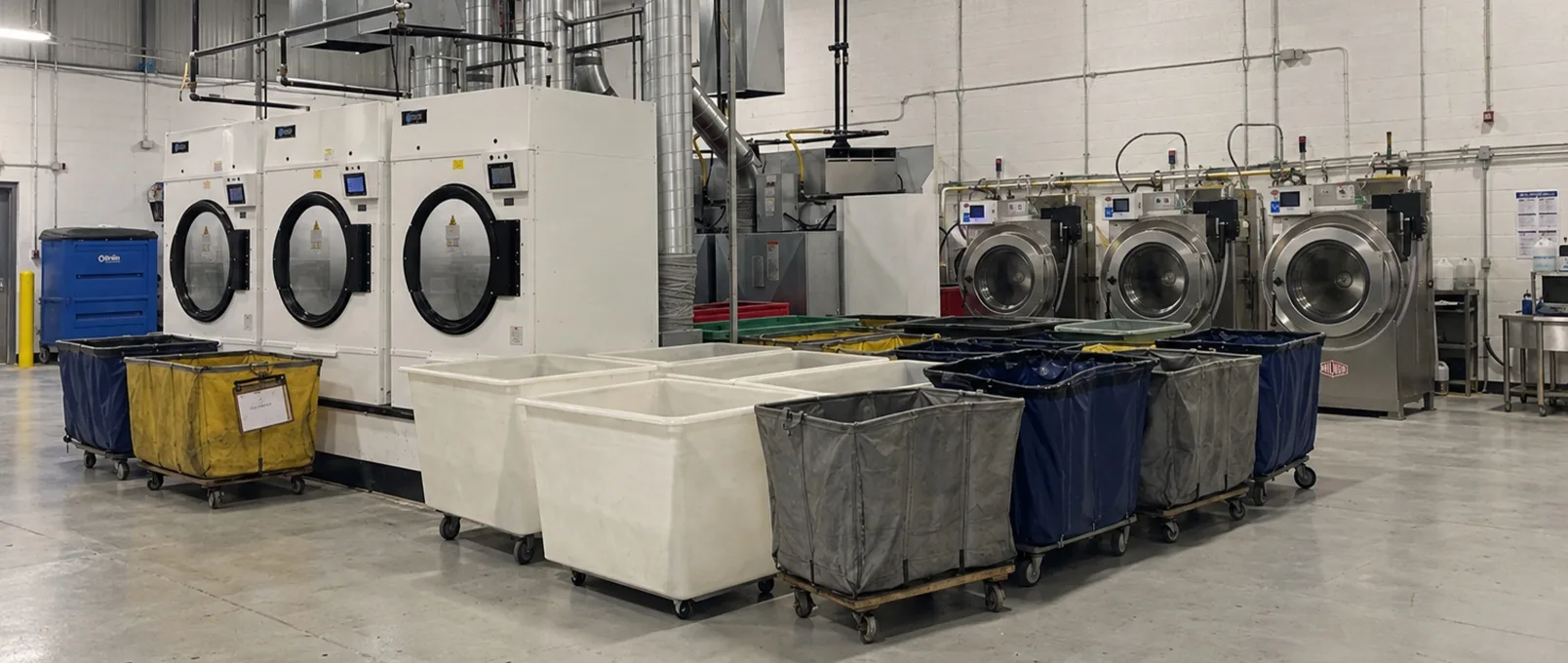
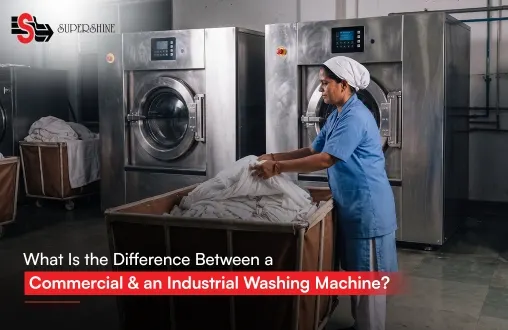
Short answer: A commercial washing machine is built for businesses that run laundry daily, such as small hotels, salons, laundromats and clinics. An industrial washing machine is built for continuous, heavy duty work in hospitals, large hotels, railways and central laundries, with bigger drums, stronger frames and higher extraction speeds. Both are far tougher than a home washer.
Along with the difference, we explain what is a washer extractor and how does it work in commercial laundry, since both machine types rely on it.
Quick comparison
- Capacity: commercial units typically handle roughly 6 to 30 kg per load, while industrial units go from around 30 kg to well over 100 kg.
- Build: industrial machines use heavier stainless steel drums, reinforced bearings and rigid or hard mount frames.
- Duty cycle: industrial models are designed to run many hours a day, every day.
- Controls: industrial machines usually offer programmable controllers, automatic chemical dosing and data logging.
- Cost: industrial machines cost more upfront but spread that cost over far more kilograms.
These are guidelines, not hard rules. Brands use the terms loosely, so always check capacity, duty cycle and warranty rather than the label.
What is a washer extractor and how does it work in commercial laundry?
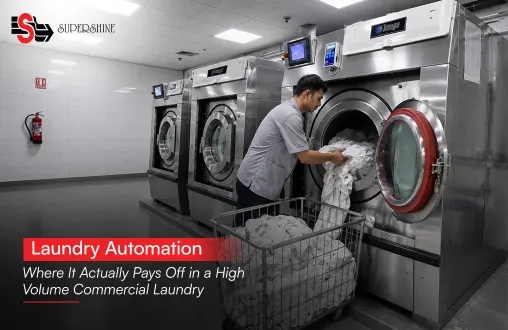
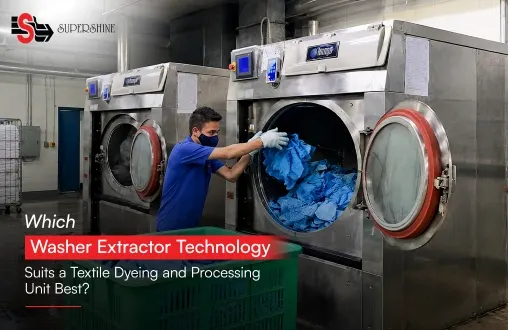
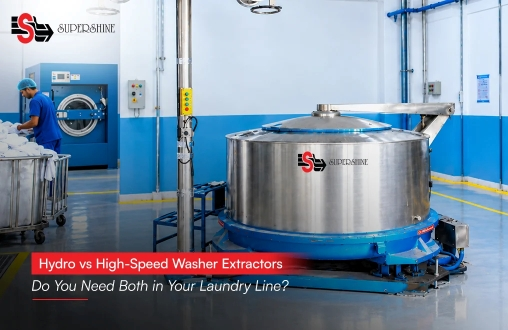
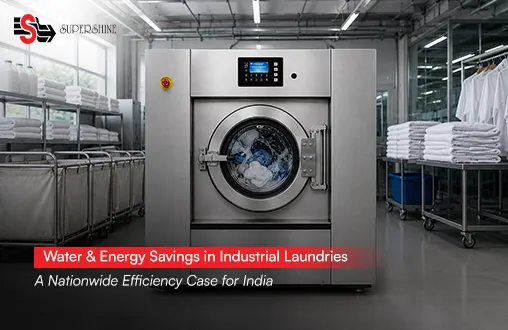
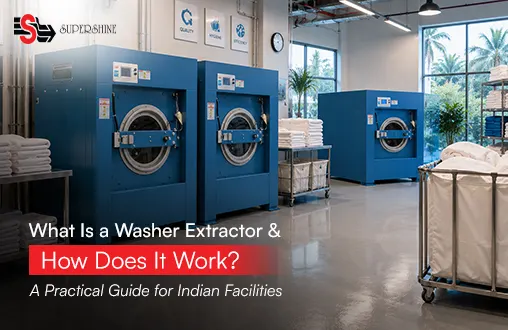
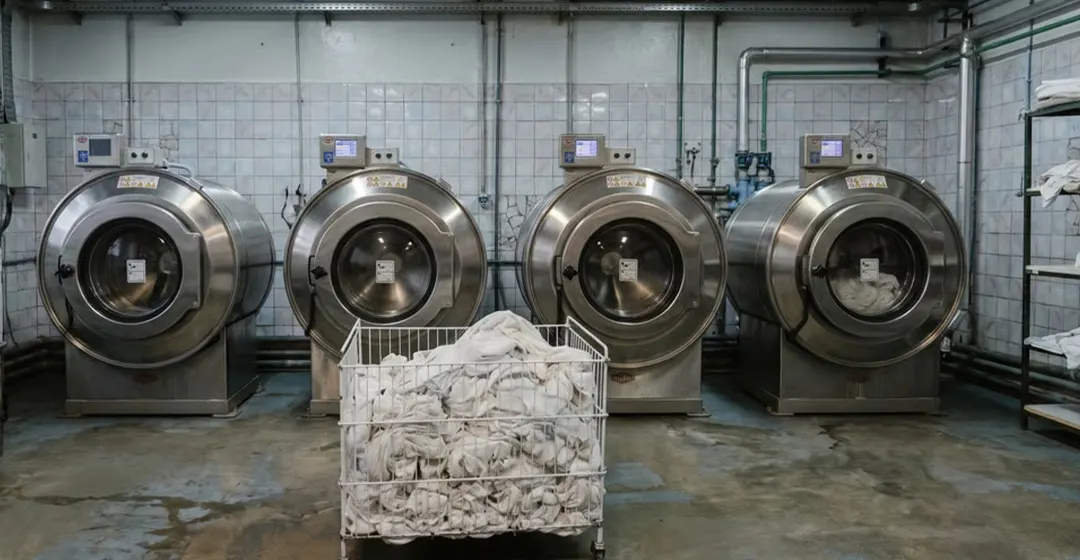
A washer extractor is the standard machine in both categories. It washes and spins in the same drum. The drum turns slowly during washing so linen lifts and drops in the water. At the end of the cycle, it speeds up and spins fast, throwing water out through perforations. That final extraction step removes most of the moisture, which cuts drying time later.
Because one machine does both jobs, a commercial laundry washing machine of this type saves space and handling compared with separate washing and spinning units.
How the types differ in practice
Commercial washer extractors
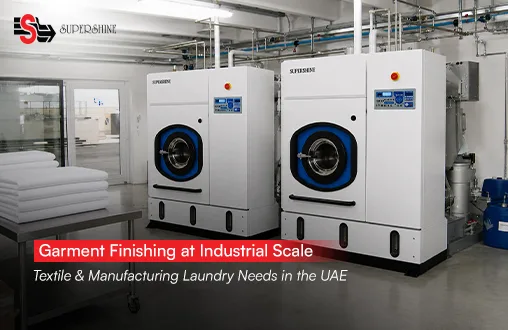
These suit lower volume sites. Think of a 30 room hotel, a gym, a restaurant or a clinic. They usually run a few cycles a day, are easy to operate and fit in a small room.
Industrial washer extractors
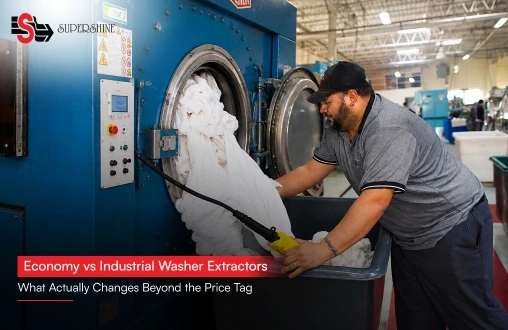
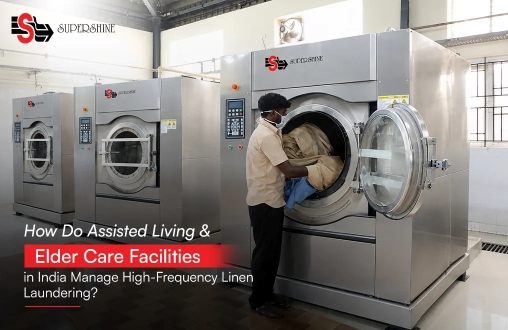
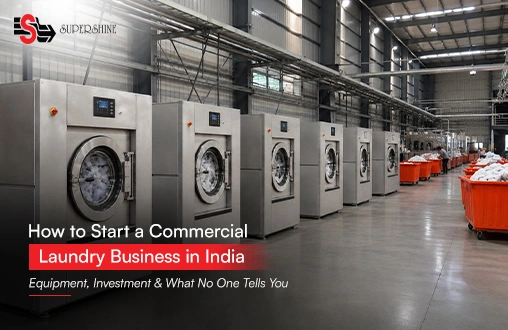
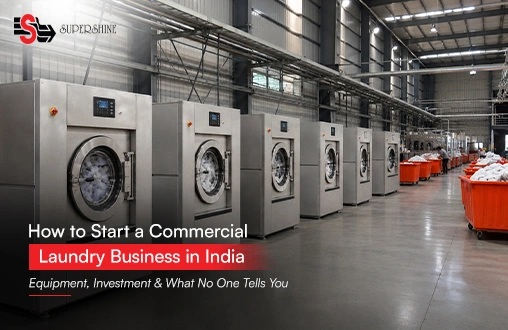
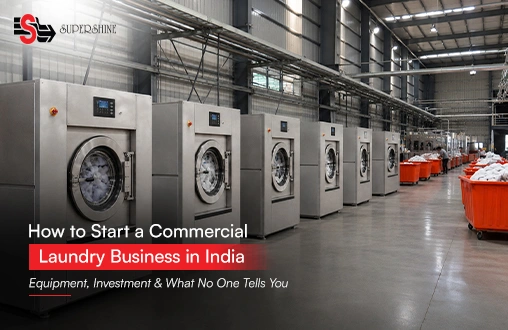
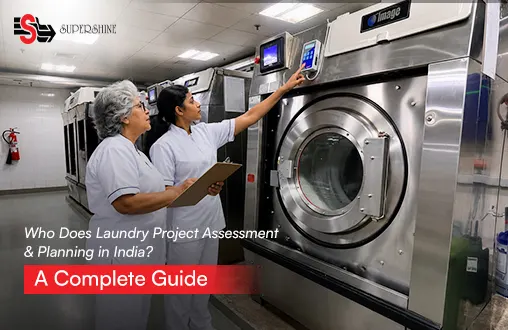
An industrial laundry washing machine serves heavy volumes. Hospitals, 200 room hotels, defence units and railway laundries rely on them. Features often include:
- High G force extraction for drier linen
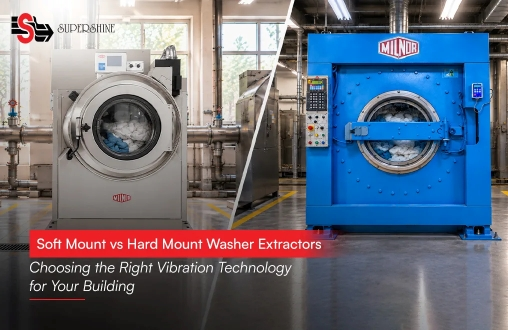
- Soft mount designs that can sit on a standard floor
- Hard mount models for the highest spin speeds, with a reinforced foundation
- Large door openings for loading with trolleys
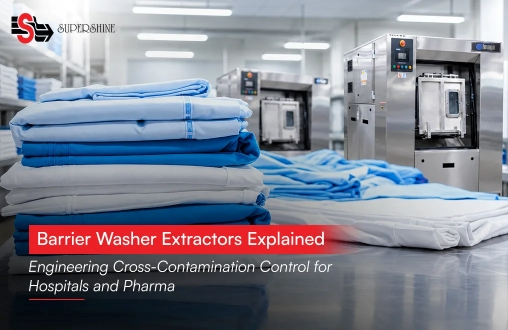
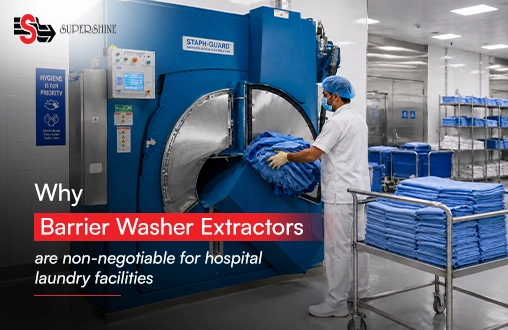
- Barrier designs for hospitals that separate soiled and clean sides
Tunnel washers
For the very largest laundries, tunnel systems wash linen continuously through connected compartments. They are a separate category from batch machines.
Which one do you need?
Ask these questions:
- How many kilograms do you wash per day? Under about 100 kg a day often suits commercial machines. Above a few hundred, industrial machines make sense.
- How many hours does the laundry run? Long hours call for industrial duty.
- What linen do you wash? Heavy items like blankets or towels need strong extraction.
- What are your hygiene needs? Healthcare may need barrier or high temperature capability.
- What is your floor like? Hard mount machines need a proper foundation.
If you are close to the line, it is often smarter to buy the heavier machine. Underbuying means replacing it early. Not sure? Send us your kilograms per day and hours of operation, and we will tell you honestly which class fits.
Common misconceptions
- "Commercial means it can run all day." Not always. Some light commercial units are designed for limited cycles.
- "Bigger is always better." An oversized machine running half loads wastes water and energy.
- "All stainless steel drums are the same." Grade and thickness differ.
A practical sizing check
Before choosing a class, weigh one typical day of linen and note the busiest two hours. Divide the daily weight by your working hours and compare it with the rated output of the machine you like, remembering that a cycle takes around an hour. If one machine would need to run flat out to cope, move up a class or add a second unit. Running at about two thirds of capacity gives you room to breathe and keeps parts wearing slowly.
If you are unsure, ask the supplier to show a reference site of similar size. Seeing a machine run a full shift tells you more than a specification sheet can. It also helps to speak to the operators there about noise, ease of loading and service response.
How Supershine Laundry helps
Supershine Laundry has supplied laundry equipment since 1990, with 4,200+ clients and 5,600+ installations across hospitality, healthcare, defence and railways. Our range includes economy, soft mount, hard mount and barrier washer extractors from partners like Milnor and Image. We start with your linen volume, then recommend the machine class that fits, along with installation, training and after sales service.