+91-124-4807600
 contact@supershine.in
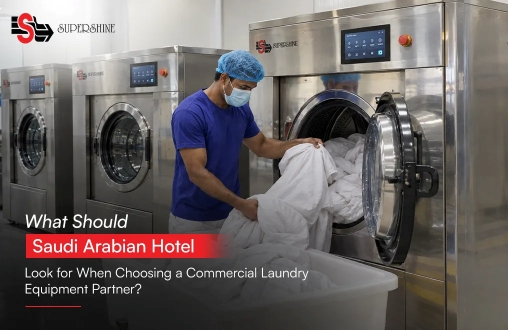
What Should a Saudi Arabian Hotel Look for When Choosing a Commercial Laundry Equipment Partner?

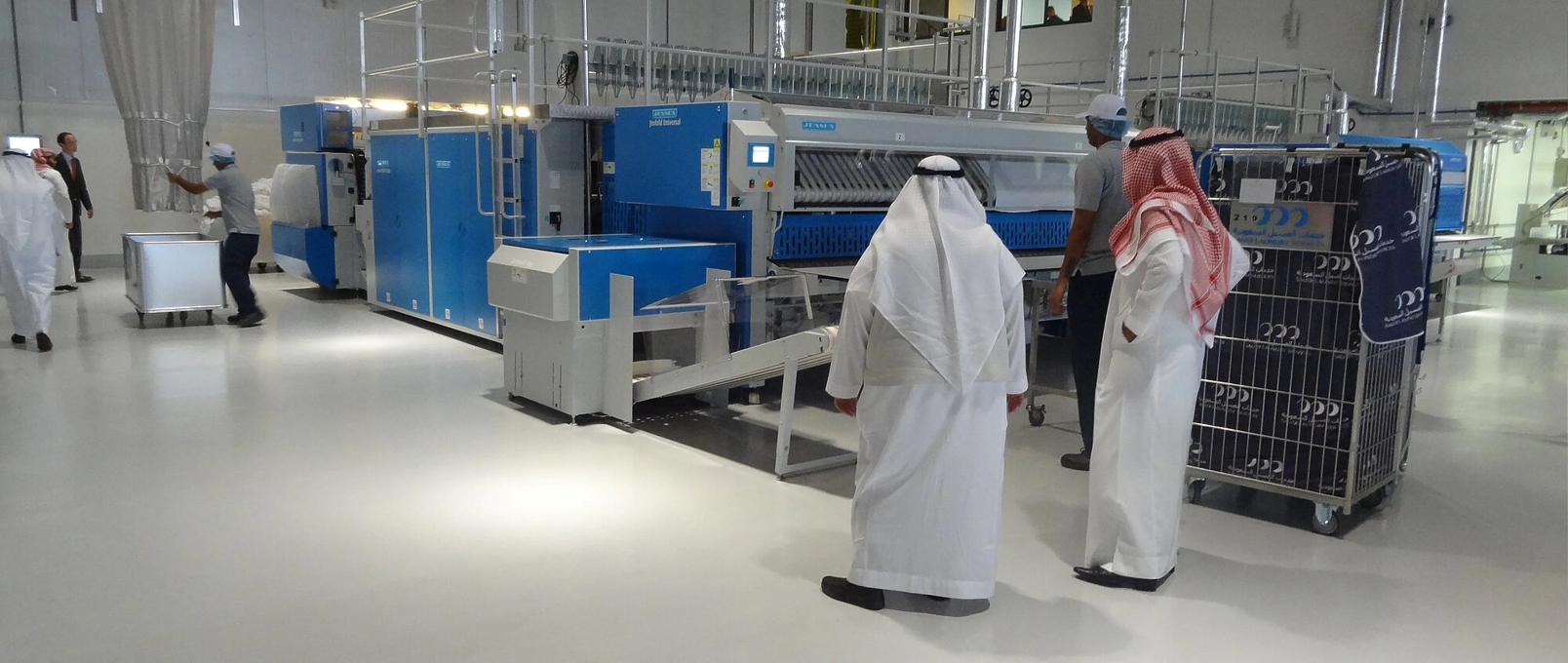
A Saudi hotel choosing a commercial laundry equipment partner should prioritise a supplier who can size machines for extreme occupancy swings (Hajj and Umrah season versus off-peak), source parts and service without weeks of delay, and specify equipment built for the Kingdom's water quality and high ambient heat. Vision 2030's hospitality expansion means many properties are opening new laundry infrastructure for the first time, so the right partner also needs to guide capacity planning, not just sell machines. Reliability, fast local service, and realistic total cost of ownership matter more here than brand prestige alone. That evaluation starts with getting the core hotel commercial washing machine specification right for your occupancy pattern, before anything else on the checklist. Peak-season planning only works if the rest of the laundry fleet is sized to match. That means choosing hotel laundry machines built for extreme occupancy swings, not just average demand, and confirming your supplier can support laundry machines for hotels across the full property lifecycle. A property comparing a commercial washing machine for hotels against a full line of commercial washing machines for hotels should weigh water and energy use as carefully as capacity, and a genuine partner sources commercial laundry equipment for hotels with Saudi conditions, not generic assumptions, built into the specification.
Why Saudi Arabia's Hotel Market Is a Different Kind of Challenge
Saudi Arabia has become the largest hospitality growth story in the Gulf, and it isn't close. Industry pipeline data points to well over 300,000 new hotel rooms planned through 2030, backed by tens of billions of dollars in hospitality investment tied to Vision 2030. Riyadh, Jeddah, the Red Sea giga-projects, and NEOM are adding branded inventory at a pace few markets globally can match.
Then there's religious tourism, which behaves nothing like typical leisure hospitality demand. Mecca and Medina host pilgrim volumes that dwarf occupancy patterns anywhere else in the region, with the Kingdom targeting tens of millions of Umrah visitors annually as part of its Vision 2030 tourism goals. A hotel in Mecca can run near 100% occupancy for weeks during peak Umrah and Hajj periods, then see demand drop sharply outside those windows. That's an unusual load profile for a laundry operation to plan around, and it's exactly where a lot of hotels get their equipment sizing wrong.
Peak-season laundry demand is the real design problem
Most hotel laundry planning defaults to "average daily occupancy," which works fine in a stable leisure or business-travel market. It doesn't work in Mecca, Medina, or increasingly in Riyadh and Jeddah as major events and conferences cluster demand into short, intense windows.
A property that sizes its washer extractor capacity for average occupancy will find itself outsourcing linen to third-party laundries during peak season, at a cost, and with quality control it can't fully oversee. A property that oversizes for peak alone wastes capital and burns water and energy the rest of the year running underloaded machines. The right laundry equipment partner should model both scenarios and propose a mix, in-house capacity for baseline demand, with a clear plan (modular capacity or dependable outsourcing) for peak surges.
What to Actually Evaluate in a Laundry Equipment Partner
Engineering fit for Saudi conditions
Saudi Arabia's climate and water profile aren't incidental details, they directly affect equipment selection:
- High ambient temperatures mean laundry rooms often run hotter than equipment specifications assume, so ventilation and cooling around dryers and ironers need real planning, not an afterthought.
- Water hardness and mineral content vary significantly by region and source (desalinated versus groundwater), which affects detergent dosing, scale buildup, and machine longevity if water treatment isn't part of the specification.
- Energy costs, while historically subsidised, are shifting under broader Saudi economic reform, making energy-efficient washer extractors and heat-recovery systems a smarter long-term bet than they were a decade ago.
Service network and response time
A five-star property in Riyadh cannot afford three days of downtime on its main washer extractor during a conference week. Ask any prospective supplier directly:
- Where is the nearest service technician based, and what's the realistic response time?
- What's typically kept in local spare parts stock versus what has to be ordered?
- Is there a documented AMC (annual maintenance contract) with defined response SLAs?
- Can they provide references from other GCC hotels, ideally in Saudi Arabia specifically, not just the wider region?
Total cost of ownership, not just purchase price
Hotels comparing quotes side by side often anchor on the sticker price of the machine and miss the bigger financial picture. A commercial laundry equipment decision should weigh:
- Water consumption per cycle, which compounds fast at hotel-scale linen volumes.
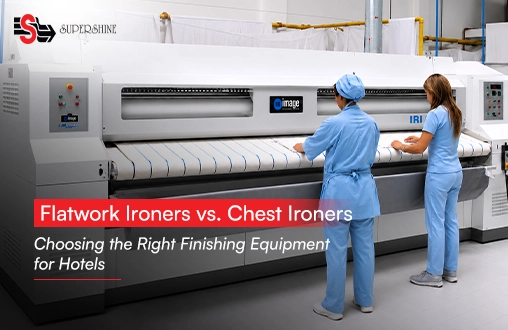
- Energy consumption, particularly for dryers and flatwork ironers running continuously during peak season.
- Expected machine lifespan under heavy-duty hotel use, not light residential-equivalent cycles.
- Cost and availability of consumable parts (bearings, seals, door gaskets) over a 10-15 year equipment life.
A soft mount washer extractor, for instance, typically costs more upfront than a hard mount unit but reduces vibration and installation complexity, which matters in multi-story hotel buildings where the laundry sits above occupied floors. That's the kind of trade-off a genuine engineering partner walks a hotel through rather than upselling blindly.
How Supershine Approaches Saudi Hospitality Projects
Supershine Laundry works with Gulf hospitality clients on exactly this kind of capacity and equipment planning, drawing on experience already built across UAE, Qatar, Kuwait, and Bahrain hotel projects. That regional GCC track record matters in Saudi Arabia specifically, because the operational patterns (occupancy swings, water quality variation, extreme heat) are broadly similar across the Gulf even as each market has its own regulatory and logistical specifics.
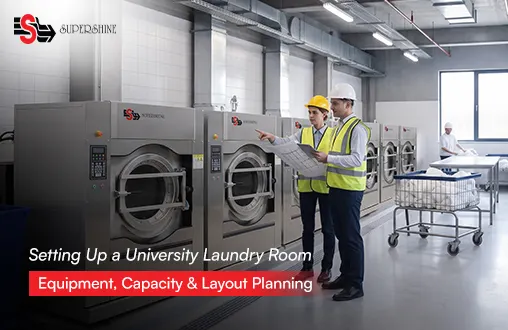
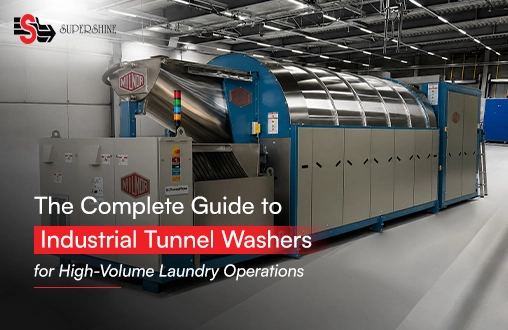
For a hotel opening its own on-premises laundry (OPL) for the first time, rather than continuing to outsource, the process typically starts with a facility walkthrough: bed count, expected occupancy curve including religious tourism seasonality, available utility capacity (water, steam, electrical load), and floor space. From there, equipment sizing, brand selection (Supershine represents globally recognised names including Milnor and Image Laundry Systems), and installation planning follow as a sequence, not a single transaction.
Signs a laundry partner is thinking long-term, not just closing a sale
- They ask about your occupancy curve before quoting equipment capacity.
- They discuss water and energy costs as part of the proposal, not as a footnote.
- They offer AMC and spare parts commitments in writing, with defined timelines.
- They're willing to recommend a smaller, right-sized solution over an oversold one.
- They can speak specifically to hospitality laundry, not just generic industrial equipment.