+91-124-4807600
 contact@supershine.in
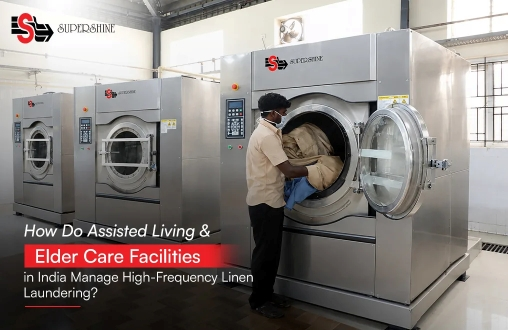
How Do Assisted Living and Elder Care Facilities in India Manage High-Frequency Linen Laundering?

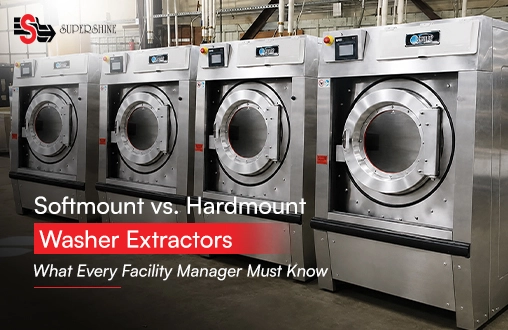
Assisted living and elder care facilities in India manage high-frequency linen laundering by running multiple wash cycles a day rather than the one or two typical of a hotel, using smaller-capacity washer extractors sized for frequent loads instead of large batch machines, and building strict soiled-to-clean workflow separation to control infection risk among residents with weaker immunity. Incontinence-related linen changes alone can push daily laundry volume well above what facility planners initially budget for. Getting the equipment and process right early avoids the two most common failure points: bottlenecked laundry rooms and cross-contamination risk. Getting the right commercial washing machine sized for frequent, smaller loads is where that planning has to start. None of this works well with mismatched equipment. A facility running a single oversized industrial washing machine built for hotel-scale batches will struggle with the high-frequency pattern elder care actually needs, whereas a properly sized commercial laundry machine fits the rhythm of frequent, smaller changes far better. Pairing that with a matched commercial washer and dryer setup, or a dedicated commercial laundry washing machine for soiled and incontinence-related loads, keeps throughput steady without forcing staff to batch loads inefficiently.
Why Elder Care Laundry Is Its Own Category, Not Just Small-Scale Hospital Laundry
India's senior living sector is expanding fast. Industry estimates from real estate and consulting firms put the market on track to grow several times over by 2030, driven by rising life expectancy, smaller family sizes, and growing acceptance of professional elder care as an alternative to solely home-based care. That growth is showing up in cities like Bengaluru, Pune, Chennai, and increasingly tier-2 cities, where new assisted living and memory care communities are opening every year.
But a lot of these facilities get built with laundry as an afterthought, sized more like a large residential setup than an operational healthcare facility. That's a mistake. Assisted living laundry sits somewhere between a hotel's laundry (high volume, lower infection risk) and a hospital's (lower volume, high infection risk), and it needs to be planned as its own category.
The incontinence factor most facilities underestimate
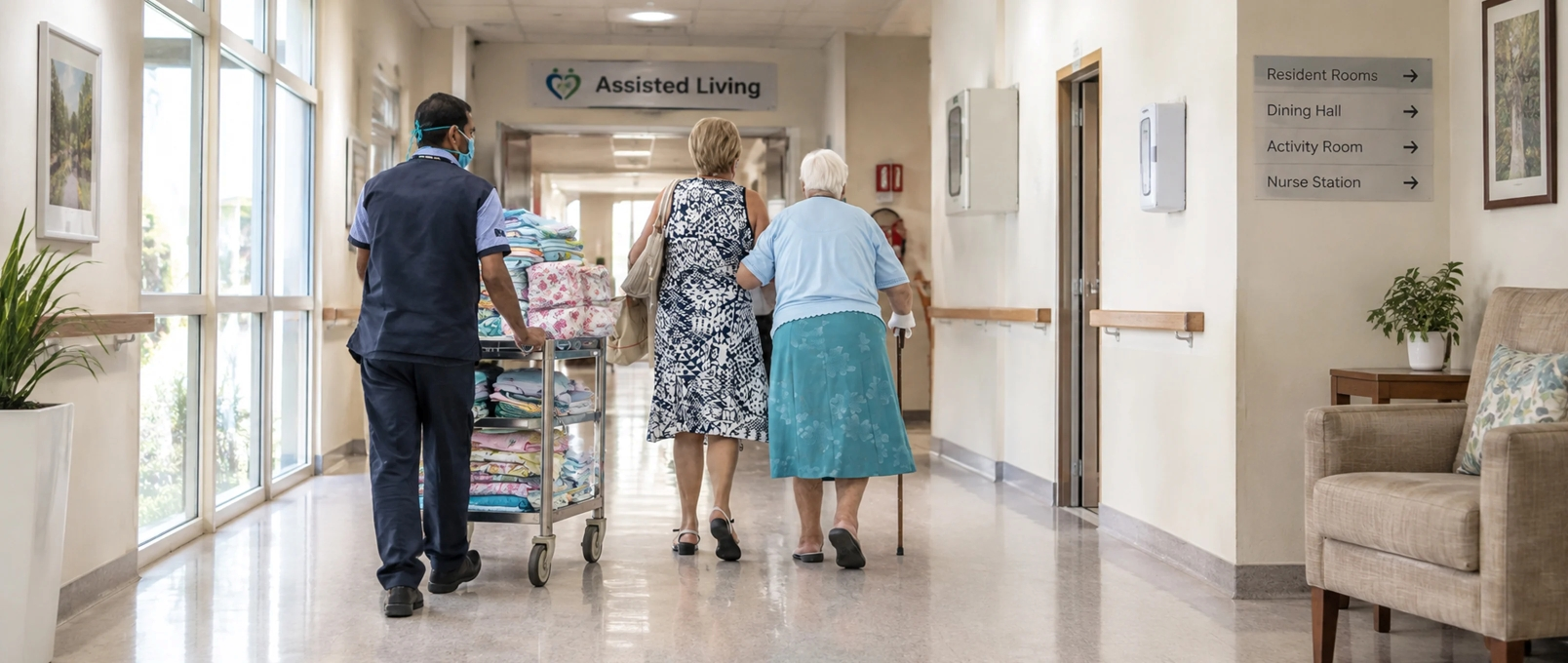
Incontinence is common among elderly residents, particularly those with dementia, mobility limitations, or post-stroke conditions, and it directly drives laundry frequency. A resident dealing with incontinence may need bedding and clothing changes multiple times a day, not once. Multiply that across a 60 or 100-bed facility and daily linen volume climbs fast, often two to three times what a facility with fully mobile, continent residents would generate.
This isn't a comfortable topic to discuss in a marketing brochure, but it's exactly the kind of operational reality that determines whether a facility's laundry room works or becomes a daily bottleneck. Facilities that don't plan for this end up with staff hand-washing overflow linen in utility sinks, which is neither efficient nor hygienic.
In-House Laundry vs Outsourcing: What Indian Facilities Are Actually Choosing
There's no single right answer here, but a clear pattern has emerged as India's senior living sector has matured.
- Smaller facilities (under 50 beds) often start by outsourcing to a commercial laundry, mainly because the upfront capital cost of dedicated equipment feels hard to justify at low volume.
- Mid-size and larger facilities (50-150+ beds), especially those positioning themselves as premium or specialising in memory care and high-dependency residents, increasingly bring laundry in-house.
- Multi-property operators running several facilities in one city sometimes centralise laundry at one location and transport linen between sites, balancing capital efficiency against transport time and infection control complexity.
The shift toward in-house laundry among larger operators comes down to control. Outsourced laundry means handing infection control, a core part of resident safety, to a third party whose processes you can't directly audit day to day. For facilities caring for medically vulnerable residents, that's an increasingly hard trade-off to justify as the sector professionalises and families start asking harder questions about hygiene protocols.
What in-house infrastructure typically looks like
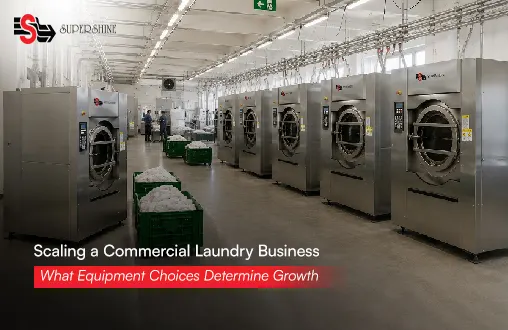
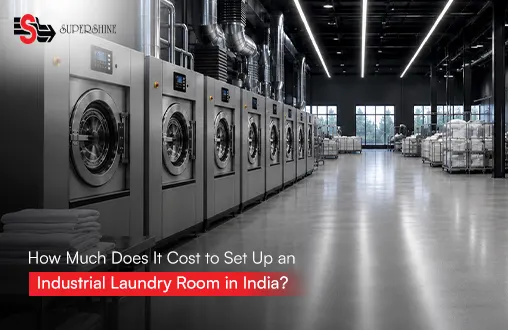
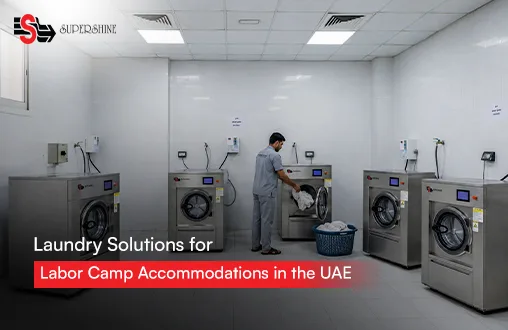
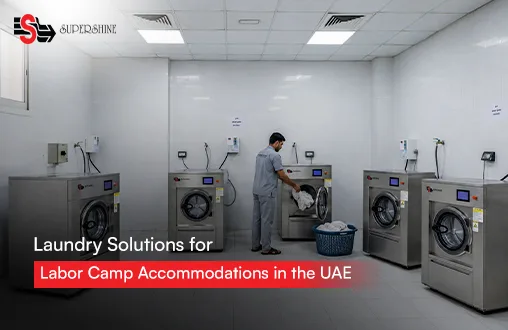
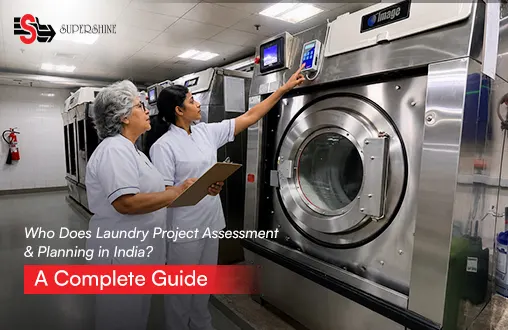
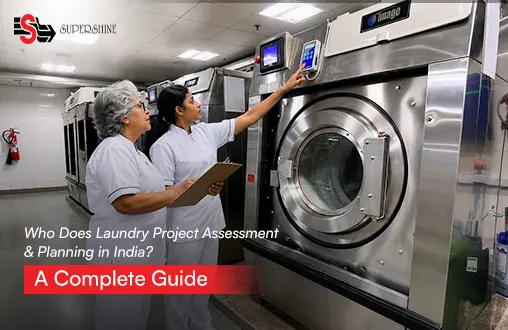
- Smaller-capacity, higher-frequency washer extractors (often in the 15-30 kg range per load) rather than large single machines, since running several smaller loads throughout the day fits residential-style linen generation patterns better than one big daily batch.
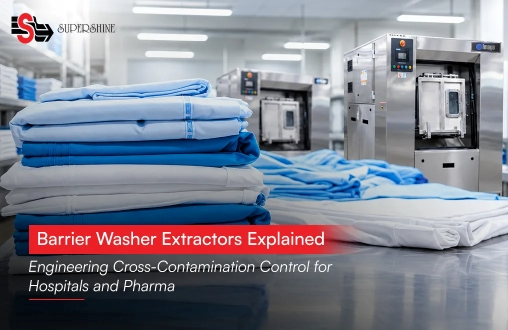
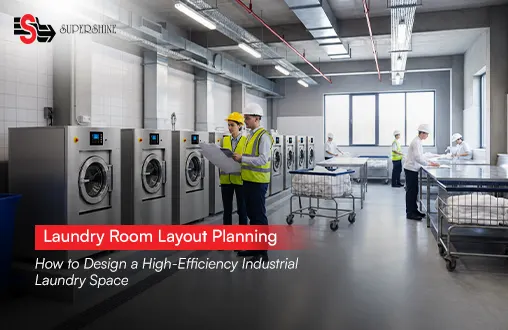
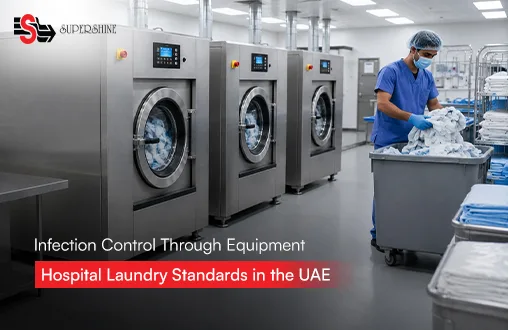
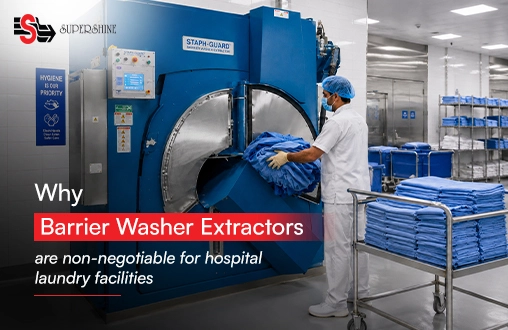
- Barrier-style or workflow-separated layouts where soiled linen enters from one side and clean linen exits from another, reducing the chance of contaminated linen crossing paths with clean stock.
- Dedicated cycles for incontinence and soiled linen, typically involving a pre-rinse or sluice step before the main wash, with adequate thermal or chemical disinfection.
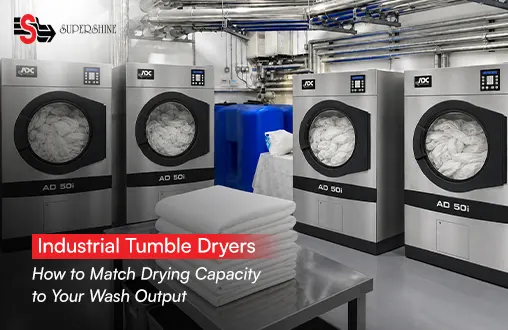
- Industrial tumble dryers sized to keep pace with wash frequency, since bottlenecking at the drying stage defeats the purpose of frequent smaller wash loads.
Infection Control Considerations Specific to Elderly Residents
Elderly residents, particularly those in assisted living or memory care settings, often have weaker immune response and higher rates of chronic conditions, which makes infection control in laundering a genuine safety issue, not just a hygiene nicety.
Key practices facilities should have in place:
- Clear separation of soiled and clean linen handling areas, ideally physical, not just procedural.
- Documented wash temperatures and cycle times that meet recognised disinfection thresholds.
- Staff training on handling contaminated linen (gloves, proper bagging, no shaking out soiled items).
- Regular equipment maintenance to ensure heating elements and dosing systems perform consistently, since a machine that silently underperforms on temperature undermines the entire infection control plan.
- Separate handling protocols for residents in isolation due to illness.
Washer extractor selection plays directly into this. A machine with reliable, programmable cycle control removes the guesswork and human error that comes with staff trying to manually manage water temperature or wash duration.
How Supershine Supports Elder Care Facility Planning
Supershine Laundry works with healthcare and institutional clients to right-size laundry infrastructure rather than defaulting to oversized hospital-grade equipment or undersized residential-style machines that can't keep pace with real demand. For assisted living operators, that typically means:
- A load assessment based on actual bed count, resident mobility and continence profile, not generic industry averages.
- Equipment selection balancing capacity, energy and water efficiency, and footprint, since elder care facilities often have less dedicated back-of-house space than hospitals.
- Guidance on workflow layout to support soiled/clean separation even in facilities that weren't originally designed with a dedicated laundry infrastructure in mind.
- After-sales service and AMC support, since equipment downtime in an elder care facility isn't a minor inconvenience, it directly affects resident care.
This isn't a one-size-fits-all product sale. Getting the load calculation right at the planning stage saves an operator from either overpaying for capacity they don't need or, worse, discovering mid-operation that their laundry room can't keep up with actual resident needs.