+91-124-4807600
 sales@supershinelaundry.ae

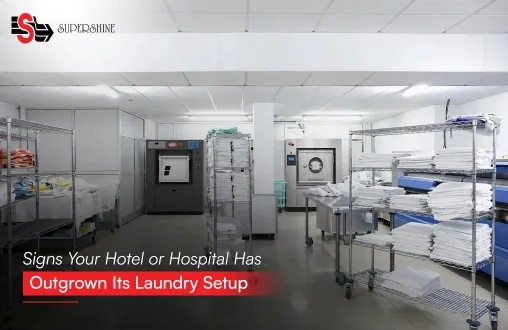
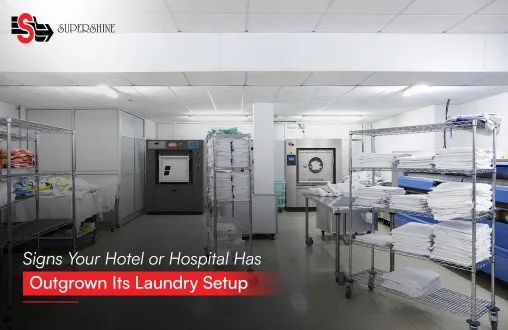
Signs Your Hotel or Hospital Has Outgrown Its Laundry Setup

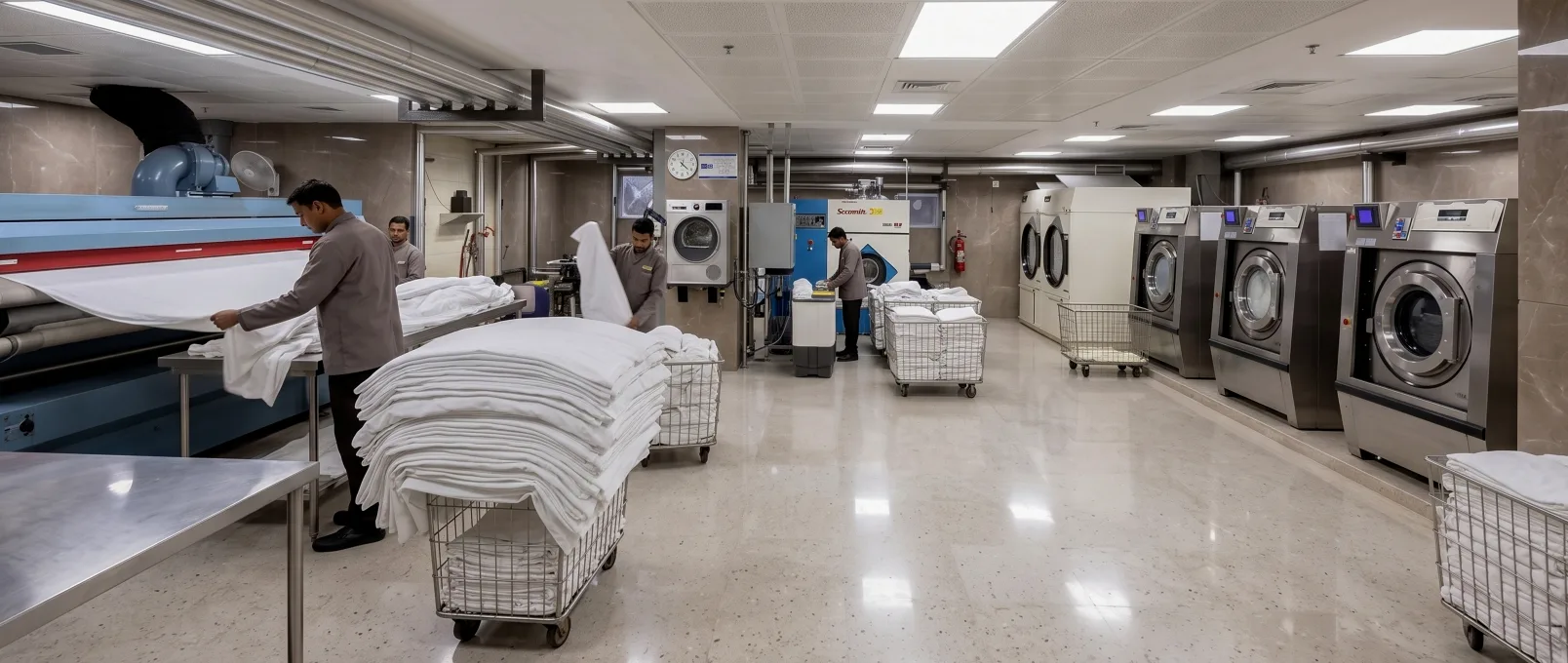
Nobody wakes up and decides their laundry is too small. It creeps up on you. Occupancy grows, a new wing opens, and one day the housekeeping head tells you clean towels are arriving at four in the afternoon. If that sounds familiar, your commercial laundry equipment for hotels might be working harder than it was ever designed to.
The same story plays out in healthcare. Beds get added, day care procedures increase, and the laundry stays exactly where it was ten years ago. At Supershine Laundry, we hear this from hospitality and healthcare teams all the time, and the signs are surprisingly consistent.
Sign 1: Turnaround keeps slipping
Linen that used to come back by noon now arrives by evening. Staff start hoarding sheets. Par levels quietly climb because nobody trusts the cycle.
When the laundry runs two or three shifts just to keep pace, the equipment is the bottleneck, not the people.
Sign 2: Breakdowns are no longer rare events
One breakdown a year is normal. One a month is a message.
Watch for these patterns:
- The same machine failing repeatedly with bearings, seals or drive issues
- Technicians asking for parts that take weeks to arrive
- Spare machines being cannibalised to keep others running
Reliable hotel laundry machines should not need a monthly rescue mission.
Sign 3: Utility bills are drifting up
Water, steam, gas and power per kilogram tell the truth faster than any audit. Old machines tend to use more of all four. If your cost per kilogram has crept up while volumes stay flat, the machines are probably losing efficiency.
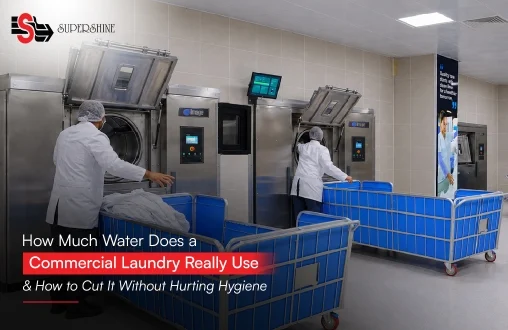
Industry sources suggest older washer extractor plants can use around 20 litres of water per kilogram of linen, while modern designs and tunnel systems are far lower. That gap shows up on the bill every month.
Sign 4: Quality complaints are rising
Greying whites, lingering odour, damp linen on arrival and torn sheets are not just housekeeping problems. In a hotel they land in guest reviews. In a hospital they touch infection control.
Poor extraction leaves linen wet, which stretches drying time and shortens fabric life. Weak wash programming does the rest.
Sign 5: Your layout no longer fits your workflow
Sometimes the machines are fine and the plant is not. Look for:
- Soiled and clean linen crossing paths
- Trolleys queuing at dryers
- Staff walking long distances between washers and finishing
- No room to add another machine
For commercial laundry equipment for hospital use, a clean one way flow from soiled to clean is not a luxury. It is part of how hospitals control infection.
Sign 6: You are outsourcing the overflow
Sending peak load to an outside vendor is a perfectly sensible stopgap. When it becomes permanent, you are paying a premium for capacity you could own. Add up a year of outside bills and compare it with the cost of upgrading.
How to size the problem properly
Guessing is how laundry gets undersized twice. Start with the numbers:
- Estimate daily linen weight. Planners often use roughly 3 to 5 kg per bed per day for Indian hospitals, and a few kilograms per occupied room for hotels, rising for five star properties with spa, banquets and F&B.
- Plan for peak, not average. Festival weekends, conference season and outbreak periods set the real load.
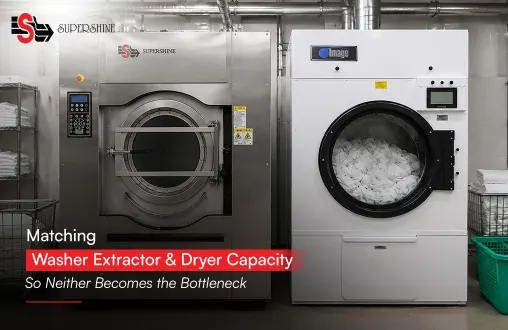
- Match washers and dryers. A strong washer feeding a weak dryer just moves the queue.
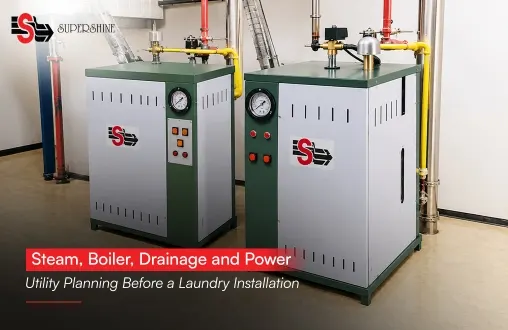
- Check the support side. Boiler, drainage, power and ventilation often cap capacity before the machines do.
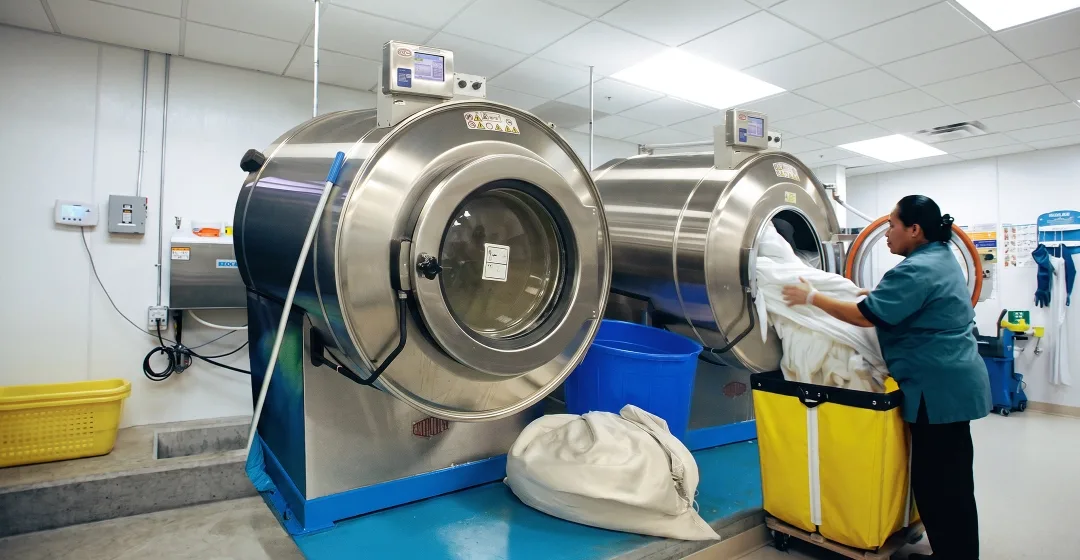
A site assessment makes all of this concrete. Supershine Laundry's team surveys the premises, studies the workflow and recommends machines around real volumes, not brochure numbers. We have done this for sites like Holiday Inn Aerocity and Medanta in Gurugram, among 4,200+ clients over 35 years.
A quick self-audit you can do this week
You do not need a consultant to see the early warning signs. Pull three numbers from the last quarter: average turnaround time, number of breakdown calls, and cost per kilogram. Then compare them with the same figures from a year ago. If two of the three have moved in the wrong direction while volume grows, the laundry is already under strain. Walk the floor at peak hour and note where trolleys wait. That single walk often shows whether the problem is machines, layout or manpower.
Write the findings down and share them with management. Numbers carry more weight than complaints, and they make the case for investment much easier to approve.
Upgrade or expand?
You do not always need to rip everything out. Sometimes adding a higher capacity commercial washing machines for hotels line, upgrading extraction, or fixing the dryer side relieves the pressure at a fraction of the cost. Supershine Laundry can help assess which option best suits your requirements.
Whichever route you take, specify commercial laundry equipment for hotels that fits peak demand, not today's average.