+91-124-4807600
 contact@supershine.in
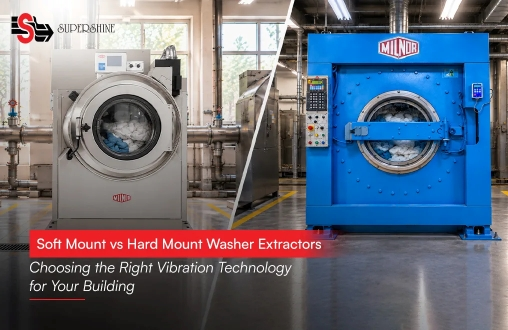
Soft Mount vs Hard Mount Washer Extractors: Choosing the Right Vibration Technology for Your Building

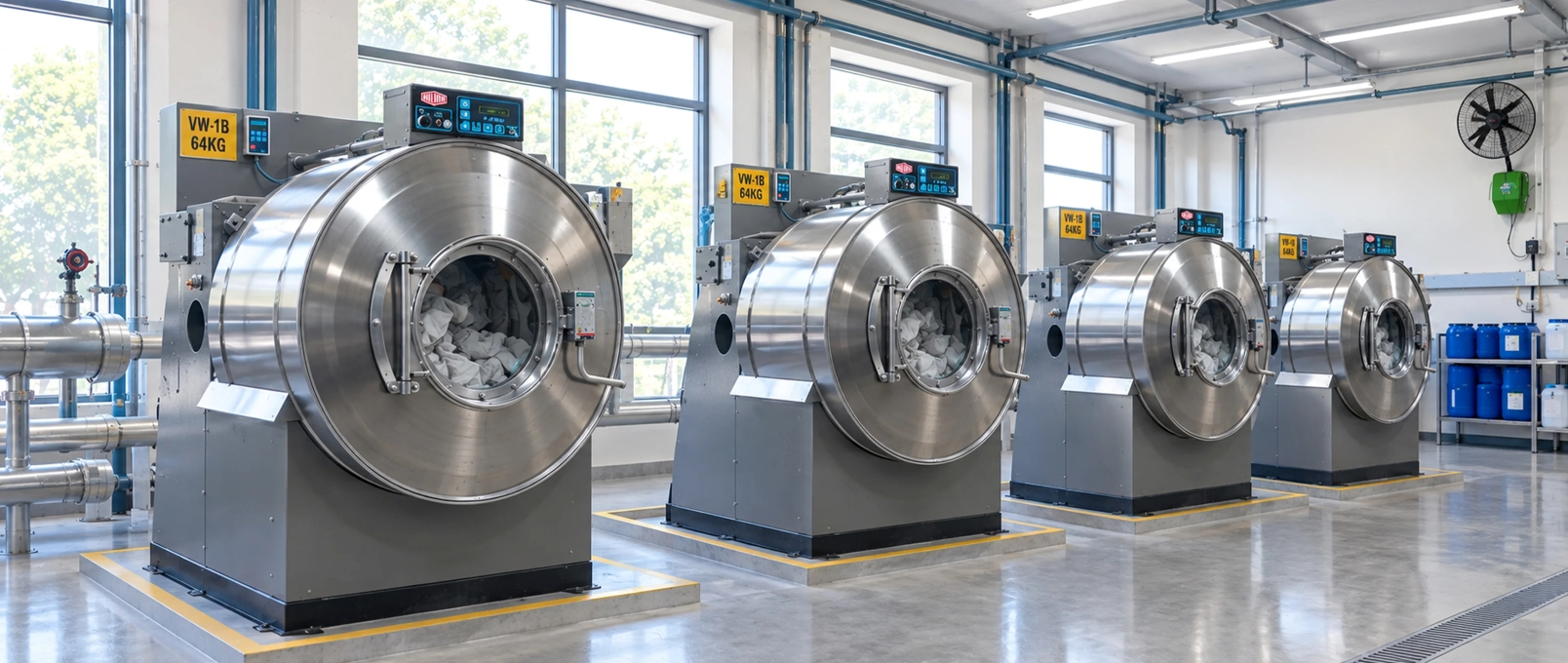
If you're an architect or MEP consultant working on a hotel, hospital, or institutional laundry room, the washer extractor decision usually shows up late in the drawings and causes problems early in construction. Whether you're specifying a compact commercial laundry washer for a boutique property or a full bank of machines for a large facility, this vibration decision comes first. Getting this right also protects the rest of your equipment plan. Facilities comparing a soft mount industrial laundry washer against a rigid-frame extractor washing machine should evaluate both against actual throughput needs, not just upfront price. A well-specified commercial washing machine or heavier industrial washing machine still depends on disciplined commercial extractor maintenance to hit its rated service life, so factor AMC support into the same planning conversation as the mounting decision itself. That's because soft mount vs hard mount washer extractors isn't just a procurement question. It's a structural one, and it affects your slab design, your floor plan, and sometimes your civil budget.
Get this decision wrong and you end up with either an underbuilt foundation that vibrates the whole floor above, or an overbuilt one that wastes money and floor space you didn't need to give up. Neither is a great look at handover.
What "Mounting" Actually Means on a Washer Extractor
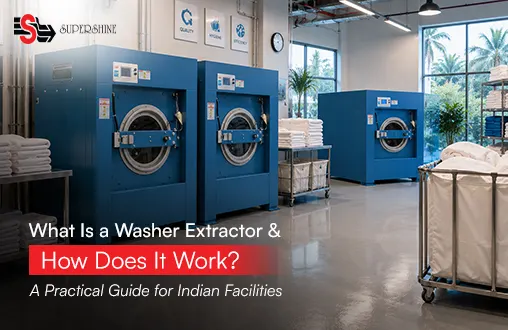
Every high-speed washer extractor has to deal with the same physics problem: an unbalanced, wet load spinning at several hundred RPM wants to shake the machine apart. How the machine handles that shaking is what "mounting" refers to. A commercial laundry washer can use either hard mount or soft mount technology depending on the installation requirements.
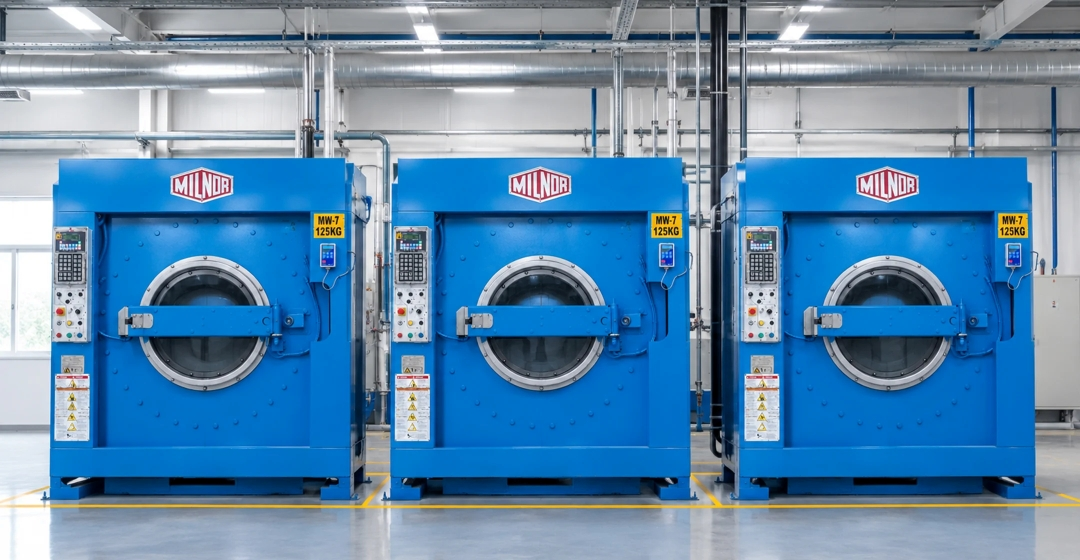
Hard mount (also called rigid mount) machines transfer that vibration into the building. The drum is bolted rigidly to a heavy steel frame, and the frame relies on a substantial, engineered concrete foundation, often a dedicated pit or reinforced slab, to absorb the forces. Extract speeds are lower, generally producing somewhere in the 60 to 100 G-force range, because the structure itself is doing part of the vibration control.
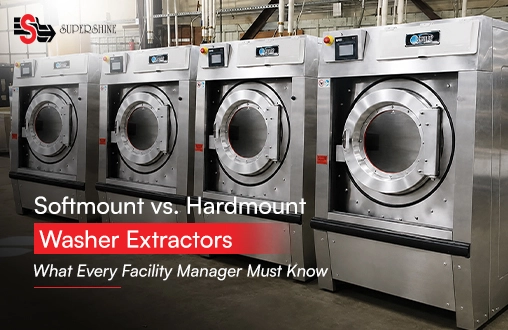
Soft mount washer extractors isolate the vibration inside the machine instead. Springs, dampers, and in many designs an electronic out-of-balance correction system let the drum float independently of the outer cabinet. Because the machine handles its own dynamics, it can spin much faster, commonly 300 to 450 G-force in industrial models, and it can usually sit on a standard, level concrete floor without a special foundation.
That single design difference cascades into almost every other decision on your drawings.
Extraction Performance: Why G-Force Matters to More Than Just the Laundry Manager
Higher extract G-force pulls more residual moisture out of the linen before it ever reaches the dryer. A soft mount machine running at 380G might leave linen at 45-55% residual moisture, while a hard mount unit at 80G could leave it closer to 65-75%, depending on fabric type and load composition.
That gap matters structurally too, not just operationally: a laundry room with heavier drying loads needs more thermal capacity and ventilation, which is an HVAC and utilities conversation you want settled before the tender, not after.
The Structural Question: What Your Slab and Floor Plate Need to Handle
This is the part that belongs on your desk, not the equipment vendor's.
- Hard mount machines typically need a dedicated reinforced concrete foundation, often 300-450mm deep depending on machine capacity, isolated from the surrounding slab with an expansion joint so vibration doesn't telegraph into adjacent structure. On upper floors, this is frequently a non-starter without significant structural reinforcement, which is why hard mount machines are almost always specified for ground-floor or basement laundry rooms with direct soil bearing.
- Soft mount machines distribute load more evenly and vibrate far less at the base, so they can often go on a standard structural slab rated for typical mechanical room loading, roughly 500-750 kg/sqm depending on machine size and local code, without a special pit. This makes them the practical, sometimes only, choice for laundry rooms on upper floors of hotels or hospital towers.
If your project has the laundry above ground level, which is common in urban hotel builds where basement space goes to parking or back-of-house services, soft mount is often not a preference. It's a structural requirement.
A Quick Planning Checklist for the Design Stage
Before you finalize the laundry room location on your drawings, confirm:
- Floor level of the laundry room (ground/basement vs upper floor).
- Live load capacity of the existing or proposed slab.
- Vibration sensitivity of adjacent spaces (guest rooms, patient wards, and operating theatres above or beside the laundry are a hard no for unmitigated hard mount vibration).
- Available footprint since hard mount pits typically add depth and clearance requirements that soft mount installs skip.
- Expected extract speed requirements based on downstream drying capacity and daily throughput targets.
Cost Isn't Just the Machine Price
Hard mount washer extractors are usually cheaper to purchase. But the total installed cost tells a different story once you add civil work: excavation, formwork, reinforcement steel, isolation detailing, and the construction time that adds to the project schedule. On a mid-size hotel laundry with two or three large-capacity machines, that civil scope can add a meaningful percentage to the total project cost, and it adds schedule risk that a general contractor rarely appreciates discovering mid-build.
Soft mount machines cost more upfront per unit, sometimes 20-35% more depending on capacity and brand, but they typically install directly onto a finished floor with anchor bolts and a leveling check. For renovation projects, retrofits into existing buildings, or any laundry room that isn't on grade, that installation simplicity often outweighs the higher machine cost by the time you total the project.
Where This Shows Up in Real Projects
Hospitals are a good example of why this decision needs to happen at the planning table. A central sterile linen processing unit often sits within or near the main hospital block, frequently on an upper floor for logistics reasons, near the operating theatre complex or in-patient wards. Vibration and noise transmission through the structure isn't just an annoyance there. It can affect sensitive equipment and patient comfort. Soft mount technology is almost always the right specification in that scenario, regardless of budget pressure.
Hotels present a similar pattern. Laundries tucked into basement back-of-house areas with direct ground bearing have more flexibility to consider hard mount for cost reasons, particularly for economy and mid-market properties running smaller loads. But any laundry positioned on an upper service floor, which is increasingly common in space-constrained urban hotel developments, needs soft mount evaluated from day one.
Supershine Laundry works with architects, MEP consultants, and facility teams at exactly this planning stage, not after the concrete is poured. Because Supershine represents established global manufacturers and understands both the mechanical and structural sides of the specification, the conversation can happen early enough to actually influence the drawings, matching machine selection to the building rather than forcing the building to accommodate the wrong machine. That's a very different conversation than the one that happens when a laundry manager calls six weeks before opening asking why the vendor says the floor won't work.