+91-124-4807600
 sales@supershinelaundry.ae

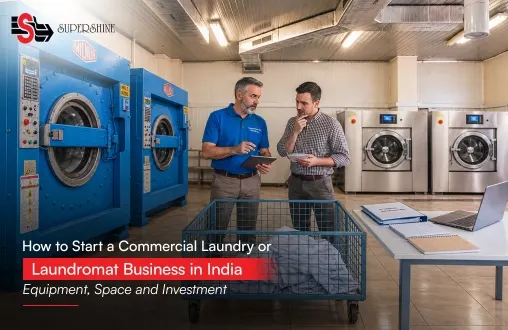
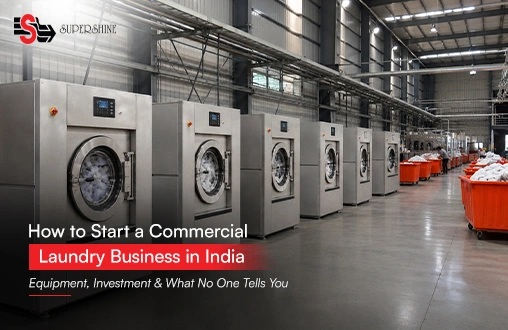
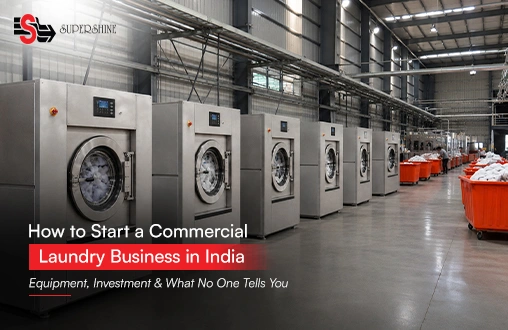
How to Start a Commercial Laundry or Laundromat Business in India: Equipment, Space and Investment

India's laundry sector is growing steadily. One market estimate values the laundry service market at around USD 2.6 billion in 2024, with growth of roughly 4.6 percent a year through 2033. Organised players are gaining ground as hotels, hospitals, hostels and offices outsource. If you have been thinking about starting a laundry, the timing is reasonable.
But the business punishes bad planning. The wrong industrial laundromat machines, too little space or weak utilities can sink it in the first year. Here is a practical way to think it through, based on what we see at Supershine Laundry.
Pick your model first
Everything else depends on this choice.
- Self service laundromat: coin or app operated machines for walk in customers
- Wash and fold or pickup delivery: serves households and small businesses
- B2B commercial laundry: processes linen for hotels, hospitals, restaurants and institutions
- Dry cleaning and garment care: specialised, higher value work
- Mixed model: combines the above
B2B contracts bring steady volume, while consumer models bring higher price per kilogram but more marketing effort.
Understand your volume
Before you buy anything, estimate daily kilograms.
- Identify target customers. A 100 room hotel, a 200 bed hospital and a hostel have very different needs.
- Estimate linen per customer. Planners often use a few kilograms per occupied room and about 3 to 5 kg per hospital bed per day, then confirm with the customer.
- Add growth. Plan capacity for the next two or three years, not just the first month.
- Check peak days. Weekends and festival seasons spike demand.
Equipment you will need
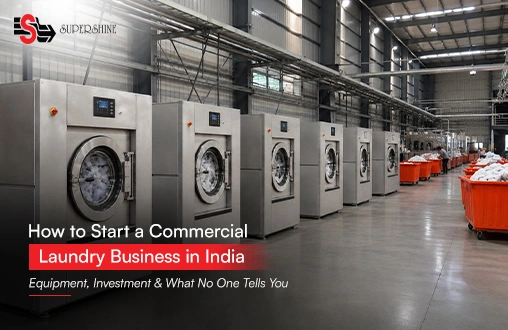
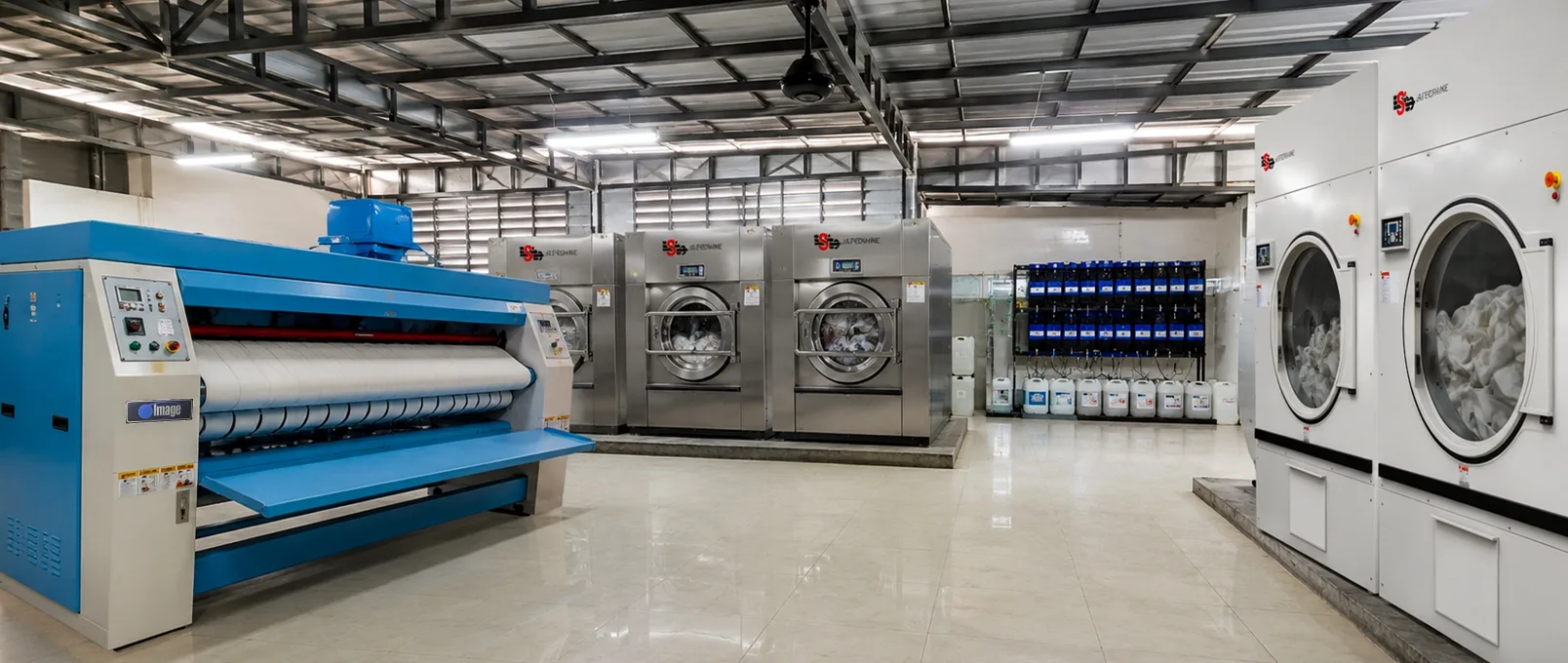
The core line up depends on your model, but most plants include:
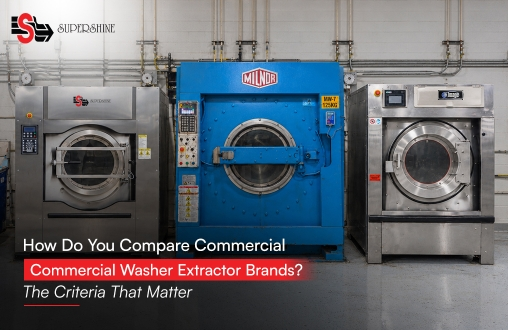
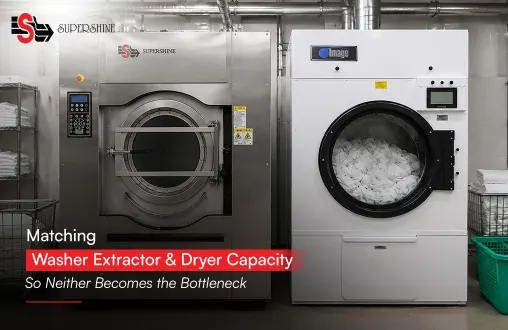
- Washer extractors in a mix of sizes
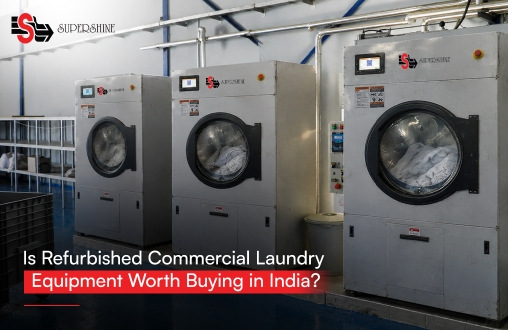
- Tumble dryers sized to match the washers
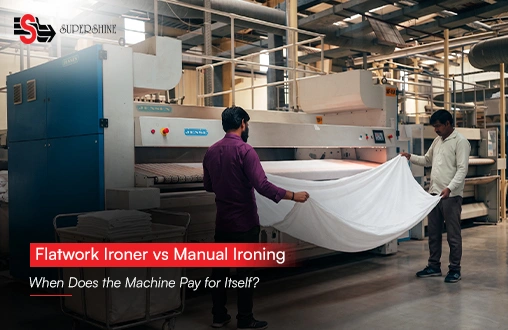
- Flatwork ironers and folders for sheets and table linen
- Presses and finishing tables for garments
- Sorting, weighing and trolley systems
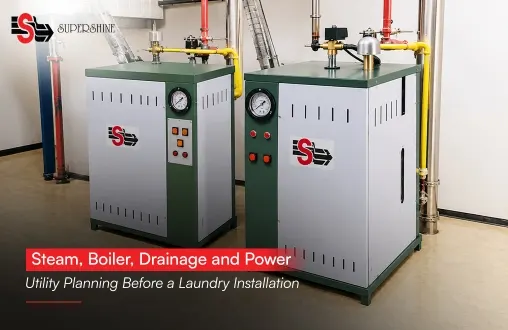
- Boiler or heating source, if steam is used
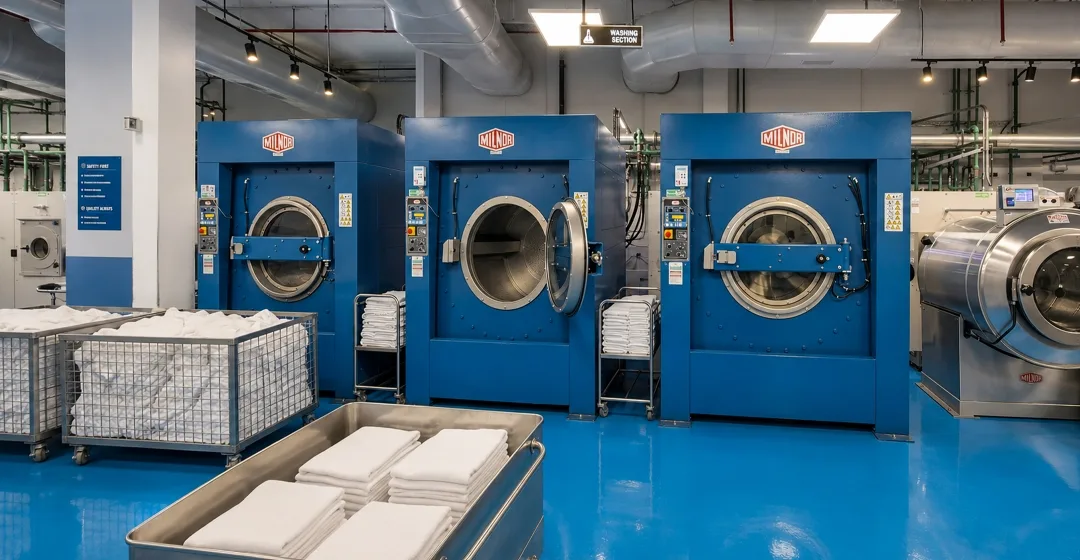
For a laundromat, laundromat washing machine choices lean toward coin or card operated models with simple controls and strong reliability. For B2B, heavier duty commercial laundry equipment with programmable controls is the right call.
Space and layout
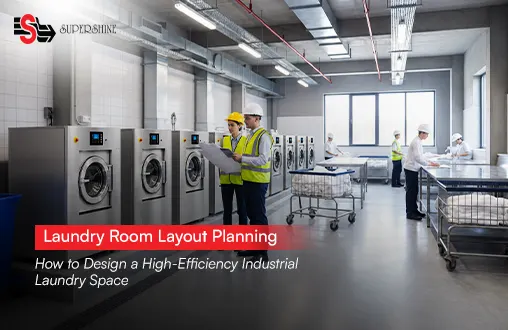
A common mistake is choosing a shop that is too small. You need room for:
- Soiled linen receiving and sorting
- Washing and drying zones
- Finishing and folding
- Clean linen storage
- Office and staff area
- Truck loading
Aim for a clear one way flow from dirty to clean, which also helps hygiene. Check floor strength, ceiling height and ventilation.
Utilities and approvals
Do not sign a lease before checking:
- Water supply and quality
- Drainage capacity
- Electrical load and power quality
- Gas or boiler permissions
- Local trade, pollution and fire approvals
- Effluent norms in your area
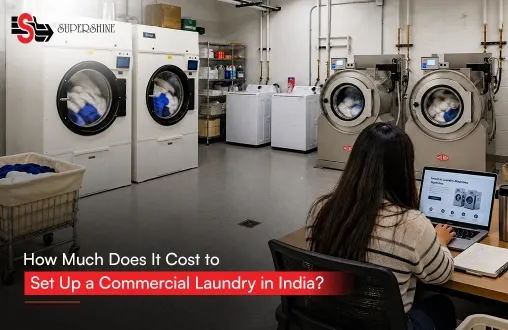
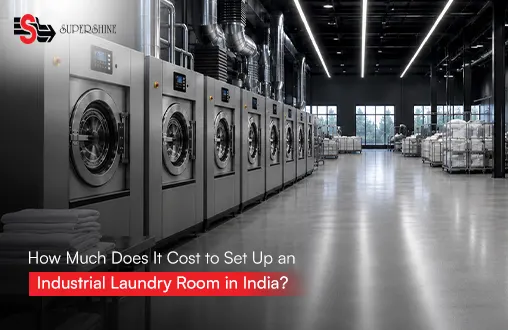
Understanding investment
Your total investment usually includes:
- Machines and accessories
- Installation and commissioning
- Utilities and civil work
- Interiors, racks and trolleys
- Vehicles for pickup and delivery
- Licences and working capital for the first months
Costs vary widely by city, model and equipment brand, so avoid trusting a generic number. The right way is to get detailed quotes based on your own kilogram targets. Supershine Laundry can prepare a project plan with equipment, utilities and installation scope so you can build a realistic budget.
Running economics
Profit comes down to cost per kilogram against selling price. Track:
- Labour per kilogram
- Water and energy use
- Chemical cost
- Machine uptime
- Pickup and delivery cost
- Customer retention
Efficient machines save more than people expect. A laundry processing a few thousand kilograms a month can lose real money to poor extraction and long drying cycles.
Customers fill the machines
Equipment fills the floor, but customers fill the machines. Walk the neighbourhood and count hostels, PGs, clinics and small hotels, then meet the owners. A single hotel contract can keep a commercial laundry machine line busy for years, while a laundromat lives or dies on location, safety and bright, clean interiors. Offer trial runs and keep pricing simple. And pick industrial laundromat machines with solid service backup, because downtime hurts a walk in business immediately.
Start small, plan to grow
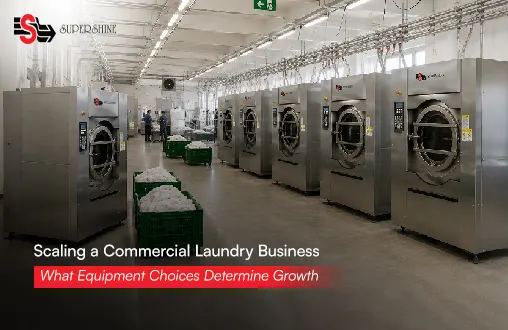
Many successful owners begin with one or two locations and a core set of machines, then expand once demand is proven. Leave space and utilities ready for extra washers. It is far cheaper to pipe and wire for growth on day one than to open the floor again later.
Talk to two or three existing laundromat owners in other neighbourhoods. Most are generous with advice about footfall, peak hours and the mistakes they made in year one.
After sales matters
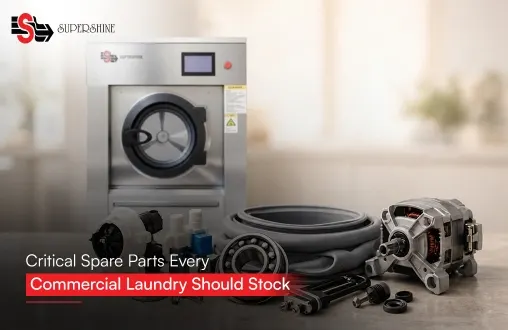
New owners often underrate service. When a machine stops, customers do not wait. Choose a supplier with trained technicians, genuine spares and a service network near you. Supershine Laundry provides installation, operator training and after sales service across India, backed by 35+ years of experience.