+91-124-4807600
 contact@supershine.in
Hostel & Campus Laundry at Scale: Solutions for Indian Educational Institutions

Picture a hostel warden on a Monday morning, staring at a corridor lined with buckets, mugs, and half wrung-out bedsheets, while three hundred students wait their turn at two working washing machines. Sound familiar? If you have ever managed a hostel block, a campus facilities office, or even just lived through college life in India, you know this scene is not an exaggeration. It happens on almost every residential campus, from small engineering colleges in tier two towns to sprawling university townships with ten thousand students.
Laundry is one of those things nobody thinks about until it breaks down. And in a hostel, when it breaks down, it breaks down loudly. Wet clothes pile up, hygiene complaints reach the dean's office, and parents start calling. That is exactly why more institutions are now looking seriously at the best laundry machines for college campus use, not just any washing machine bought off a retail showroom floor.
Why Campus Laundry Is a Different Problem Altogether
A household washing machine is built for maybe one or two loads a day. A hostel with five hundred residents generates anywhere between 150 and 300 kilograms of laundry daily, sometimes more during exam season when everyone seems to do their washing on the same weekend. That is not a domestic problem, it is an industrial one. Trying to solve it with ten small front-load machines lined up in a room is a false economy. They break down under constant use, they are slow, and the electricity and water bills add up fast because none of them are designed for continuous cycling.
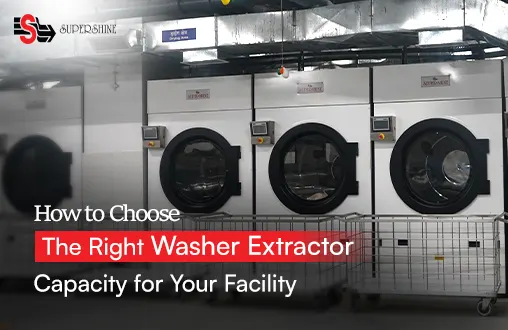
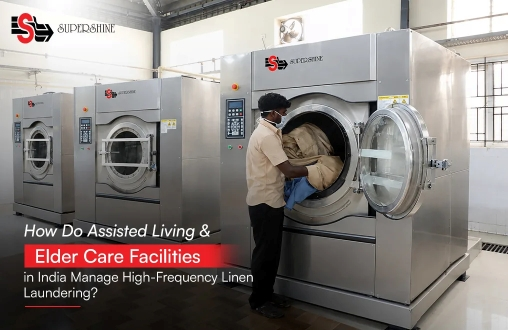
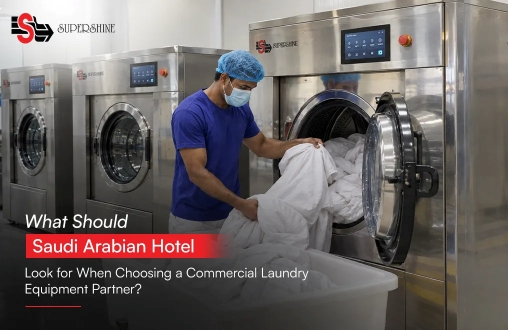
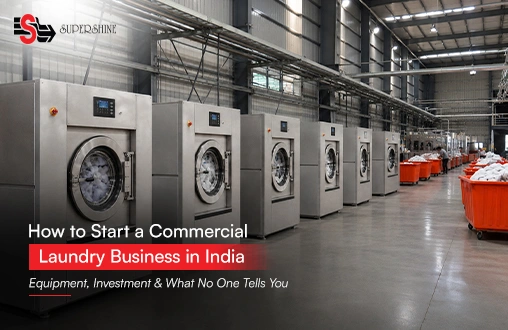
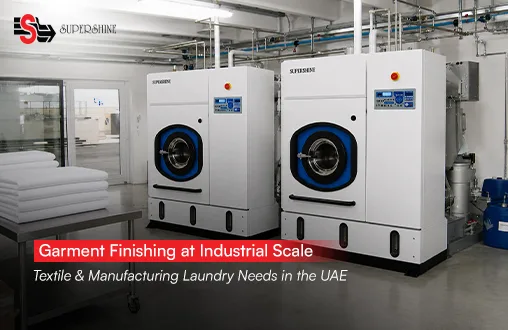
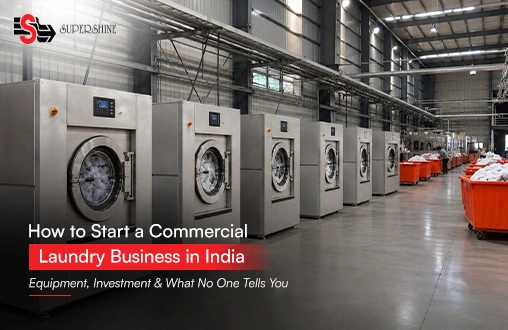
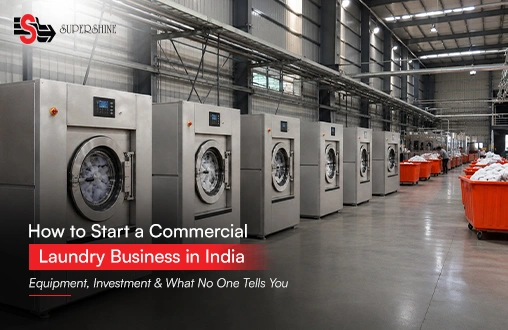
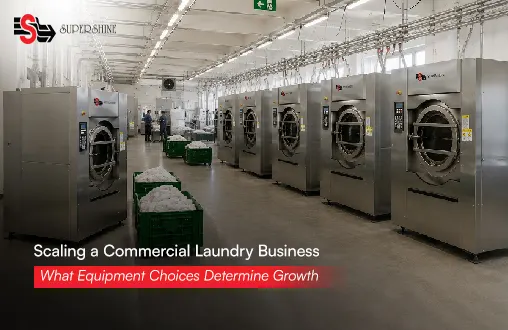
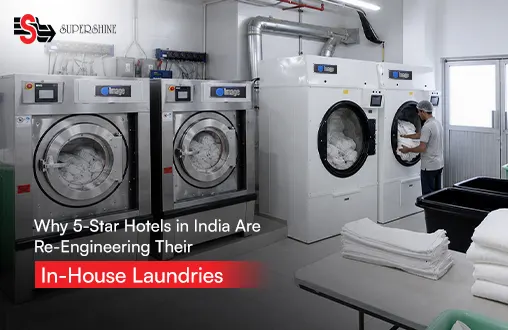
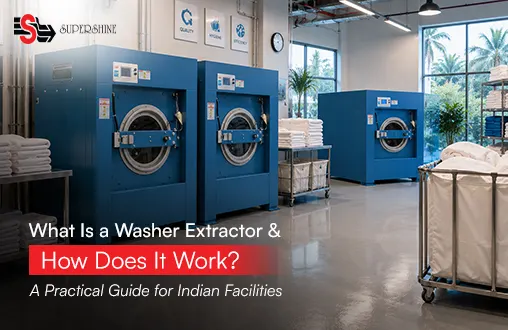
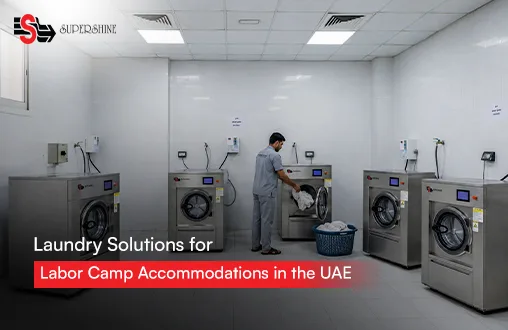
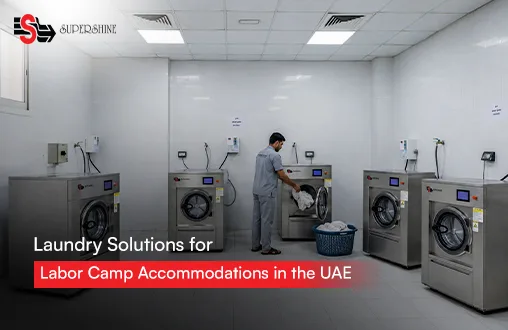
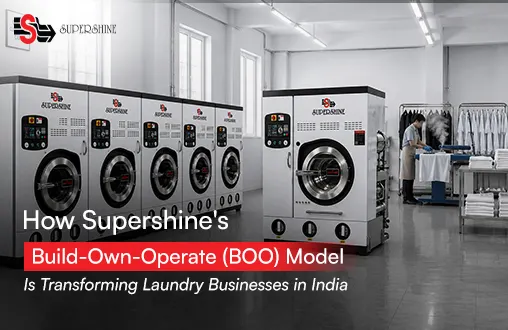
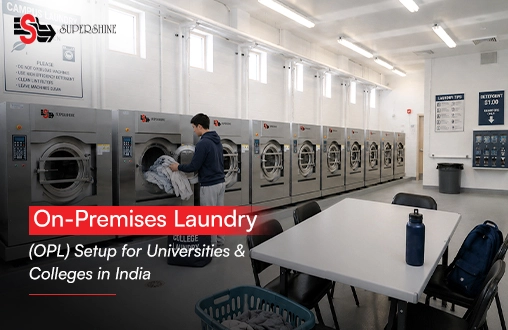
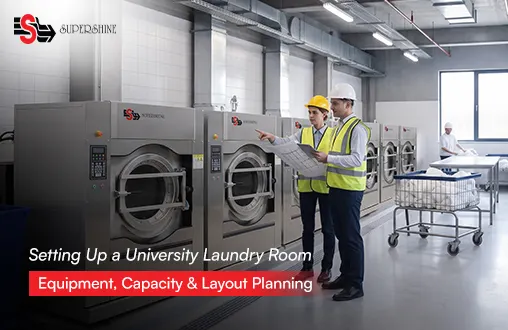
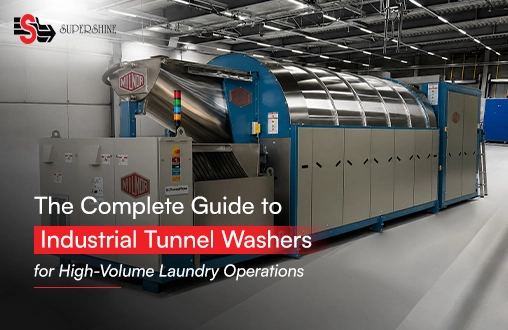
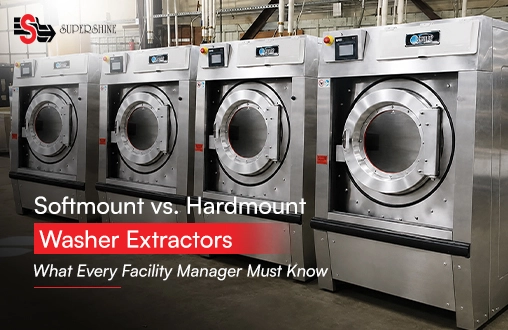
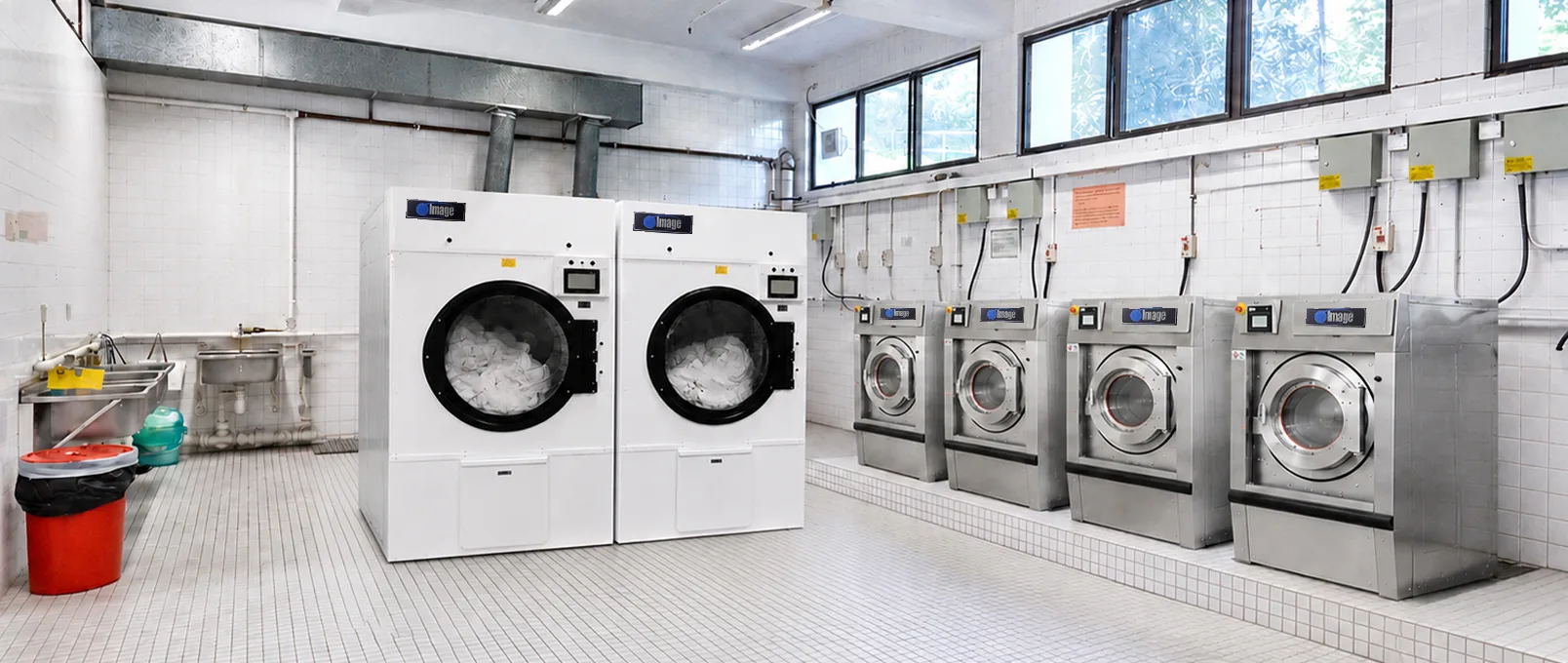
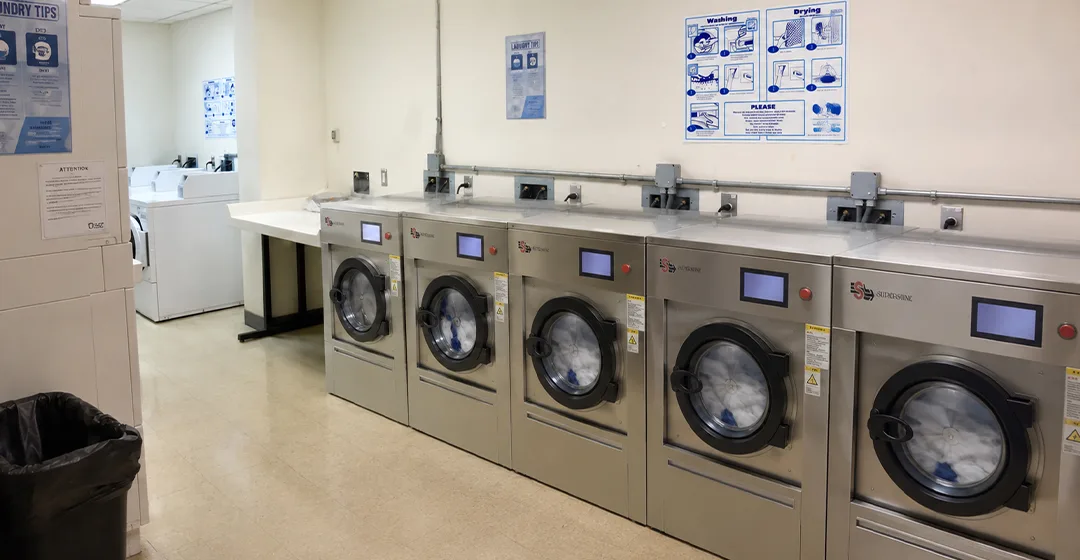
This is where a proper university laundry setup in India looks completely different from a retail solution. Think heavy duty washer extractors that can handle 25 kg, 50 kg, or even 120 kg per load, paired with high speed dryers, and sometimes a flatwork ironer for bedsheets and pillow covers if the hostel also runs its own linen service. Supershine has been designing exactly this kind of setup for over three decades, and the pattern we see across IITs, NITs, private universities, and even defense training academies is remarkably consistent. Volume is the enemy of small machines, and only commercial grade equipment survives the daily grind of a few hundred students.
Coin-Operated vs Centralized Laundry: Which Model Actually Works?
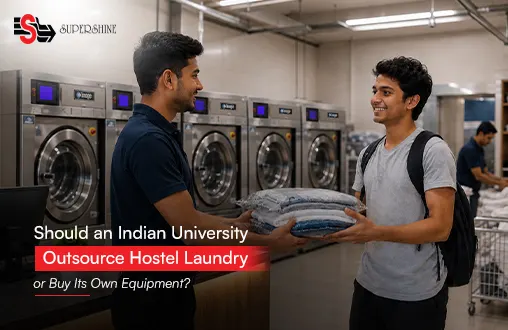
Most campuses eventually have to choose between two models. The first is coin-operated or card-based self-service laundry, where students walk up to a machine, pay per wash, and do their own laundry much like at a laundromat. The second is a centralized laundry model, where the institution collects, washes, dries, and returns clothes and linen through a dedicated laundry room or outsourced service.
Coin-operated setups work well in postgraduate hostels, PG accommodations, and campuses where students prefer independence. They reduce staffing needs and give predictable revenue if the institution charges per cycle. But they need robust commercial washing machine for university installations that can survive rough handling, because nobody treats a shared appliance as gently as they treat their own. Coin slots, card readers, and app-based payment integrations are now fairly standard, and several campuses in Delhi NCR, Pune, and Bangalore have shifted this way in the last few years.
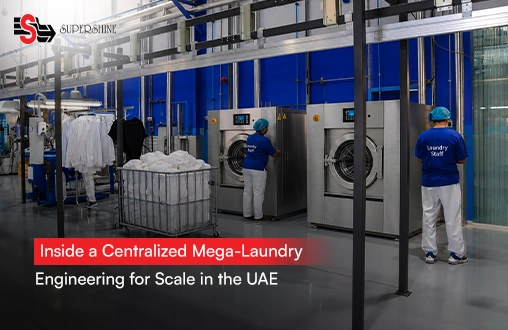
Centralized laundries, on the other hand, suit larger residential universities, medical colleges, and institutions where hygiene standards are non-negotiable, think hostels attached to teaching hospitals, or defense academies with uniform laundering needs. Here the focus shifts to throughput, thermal disinfection, and consistent turnaround rather than convenience. Supershine has executed both models for clients, and honestly there is no one-size-fits-all answer. It depends on hostel size, budget, staffing availability, and whether the institution wants to treat laundry as a self-service utility or a managed hospitality function.
What Real Numbers Look Like
Let's talk numbers, because vague claims don't help a facilities manager planning a budget. A mid-sized hostel of 400 students typically generates close to 200 kg of laundry a day if you count bedsheets, uniforms, sportswear, and personal clothing together. That translates to roughly four to six cycles a day on a 50 kg washer extractor, or two to three cycles on a 100 kg machine. Water consumption matters too. Older top-load machines can use 15 to 20 litres per kg of fabric, while modern commercial washer extractors with programmable controls bring that down to 7 to 9 litres per kg, which matters a lot when campuses are trying to meet sustainability targets or simply manage water bills in water-stressed cities like Chennai or Bangalore.
Energy use is the other big factor. A steam-heated or heat-pump dryer cuts drying time roughly in half compared to standard electric dryers, and for a campus running multiple shifts a day, that difference adds up to real electricity savings over a year. These are the kind of calculations Supershine walks through with every institutional client before recommending a machine, because buying the wrong capacity either wastes money on idle equipment or overworks a machine that was never meant for that load.
Hygiene Expectations Have Gone Up
Since the pandemic, hostel wardens and parents alike expect a lot more from laundry hygiene than they did a decade ago. Thermal disinfection, where wash water is heated to 60 to 71 degrees Celsius for a sustained period, is now considered standard practice for hospital-linked hostels, defense training centers, and increasingly for regular university hostels too. Ozone-based washing systems, which disinfect using ozone gas dissolved in cold water, are also gaining traction because they cut both water and energy use while still meeting hygiene benchmarks.
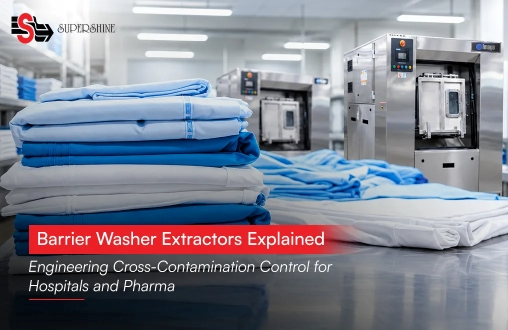
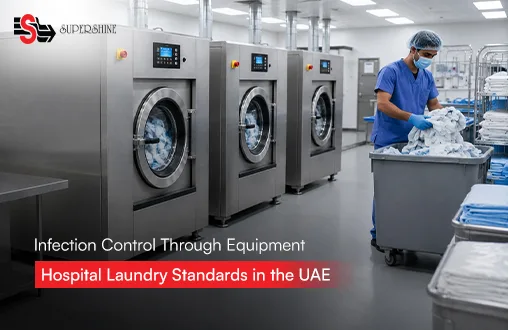
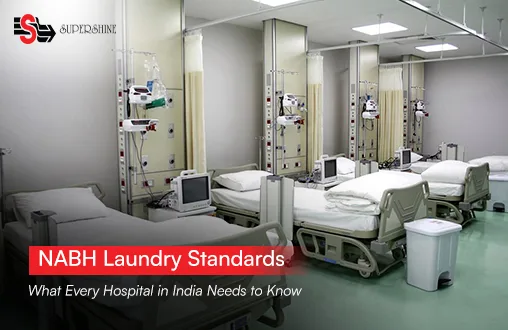
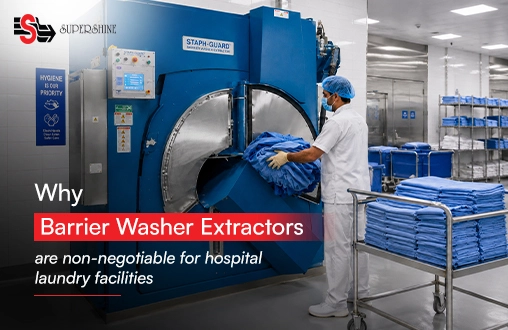
Institutions handling medical college hostels or nursing college laundry often need to follow protocols closer to what hospitals use, separating infected linen streams and using barrier washers that load on one side and unload disinfected linen on the other, so cross-contamination never happens. Supershine has installed exactly this kind of barrier washing system for healthcare-linked campuses, alongside standard hostel laundry for the rest of the student population.
Who Else Is in This Market
It would be dishonest to pretend Supershine is the only name institutions consider. Girbau, a Spanish brand with a strong Indian distribution network, is popular for its rugged industrial washers. Electrolux Professional has a long history in institutional laundry and is often seen in five-star hotel chains as well as some large university hostels. IFB and Godrej have pushed into the commercial and semi-commercial laundry space too, especially for smaller hostels and PG operators who want a recognizable Indian brand with easier local servicing. Whirlpool's commercial line shows up occasionally in smaller campus deployments as well.
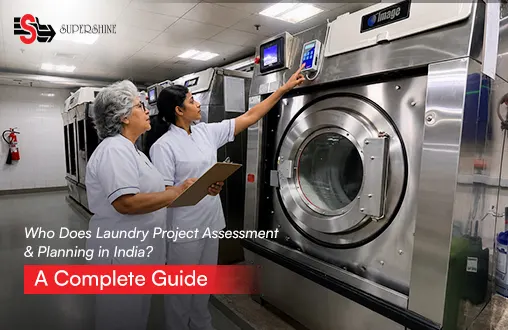
What differentiates Supershine is not just the machines themselves but the fact that we partner directly with global manufacturers like Milnor, ADC, Jensen, Forenta, Italclean, and Image, and we handle the entire journey, from assessing hostel laundry volume and water infrastructure, to installation, staff training, and ongoing AMC support. A commercial laundry equipment for university project is rarely just about dropping off machines and walking away. Someone has to train the hostel staff on load balancing, someone has to service the machine when a bearing wears out during peak exam season, and someone has to be reachable when a 100 kg washer extractor suddenly throws an error code at 11pm.
Planning a Setup That Actually Lasts
Before buying university laundry machines, it helps to walk through a short checklist rather than guessing capacity from gut feel.
Start with actual student headcount and average laundry weight per student per week, not textbook estimates. Check your water pressure and drainage capacity, because industrial washers need consistent supply, and many older campus buildings were never plumbed for it. Look at your electrical load too, three-phase power is usually required for anything above a 25 kg machine. Factor in space for drying and folding, not just washing, since bottlenecks often happen after the wash cycle, not during it. And finally, budget for an annual maintenance contract from day one rather than treating it as an afterthought, because a machine running twelve hours a day needs preventive servicing, not emergency repairs.
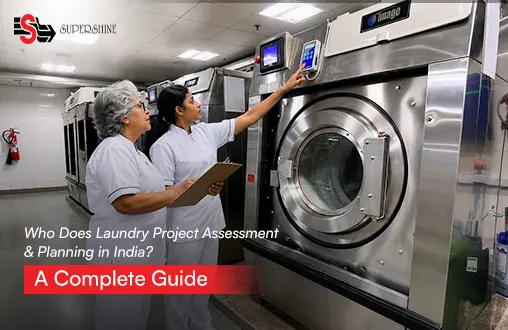
This is precisely the kind of assessment Supershine conducts before recommending any laundry machines for university deployment. We have walked hostel corridors in Gurugram, Chennai, Hyderabad, and even in the Middle East where Indian-run educational institutions operate, and the math rarely lies. Undersized equipment fails within eighteen months. Rightsized equipment, properly maintained, runs for a decade or more.
The Bigger Picture
Campus laundry is not glamorous. Nobody puts it in a prospectus or a college brochure. But ask any student who has waited forty minutes for a broken machine to free up, or any hostel warden fielding complaints about musty sheets, and you will realize it directly affects student satisfaction and institutional reputation. A well-planned university commercial washing machine setup quietly prevents a hundred small headaches every week.
With over 4200 clients across India and the Middle East and 35 years of experience in commercial and industrial laundry, Supershine Laundry has seen almost every version of this problem, from a 200-student engineering college hostel to a sprawling university with multiple residential blocks. The solution is rarely just about buying a bigger machine. It's about matching capacity to real demand, choosing the right hygiene protocol, and having a partner who shows up when something goes wrong, not just when the invoice is due.