+91-124-4807600
 sales@supershinelaundry.ae

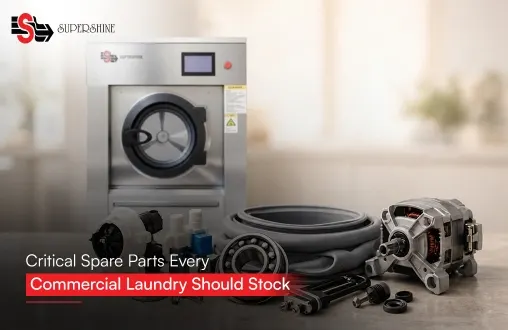
Critical Spare Parts Every Commercial Laundry Should Stock

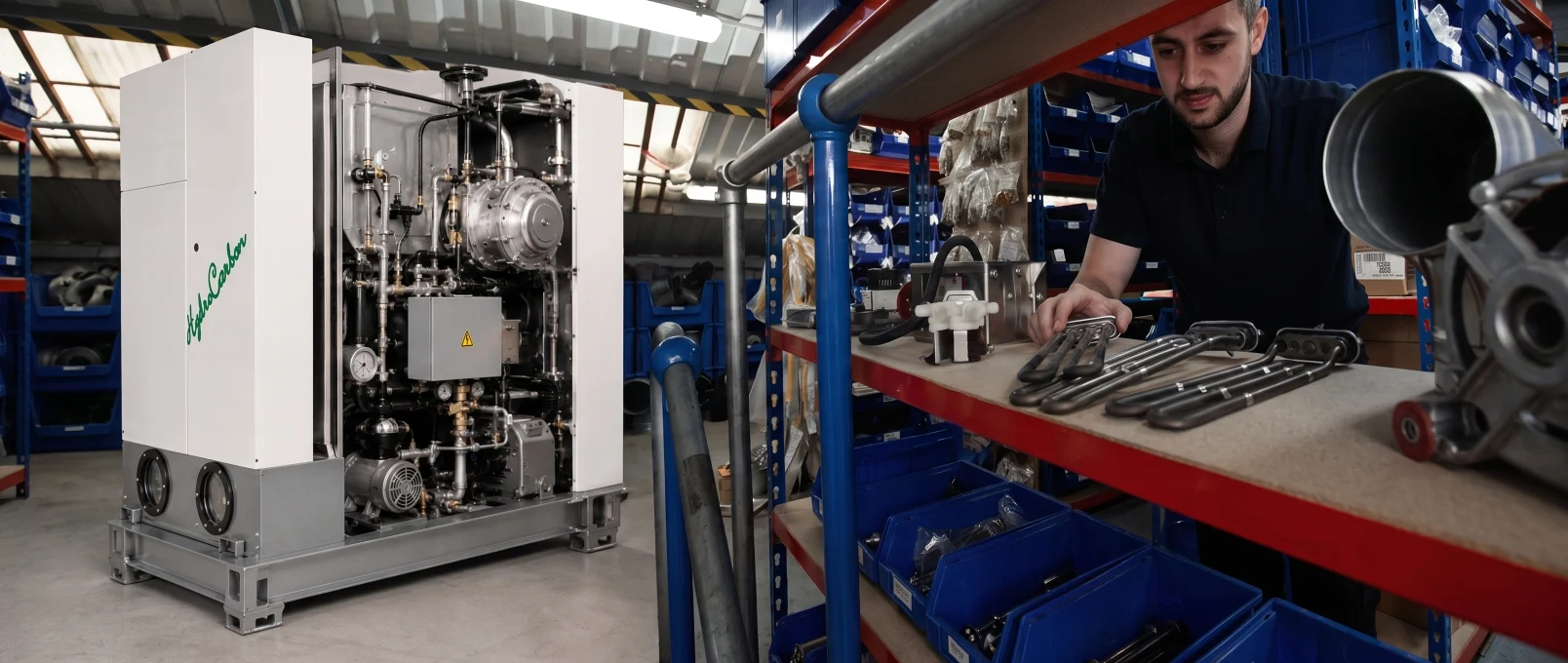
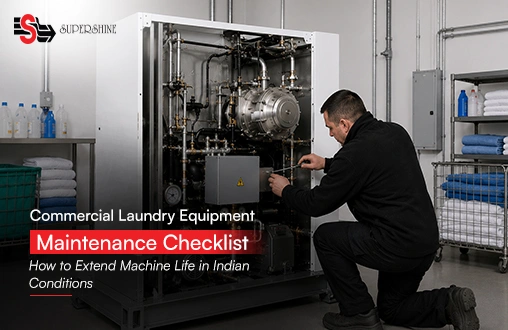
It is always the same story. A machine stops on a Saturday, the part is not in the store, and linen piles up while someone calls three vendors. Good commercial extractor maintenance is mostly about not being in that position. And the simplest way to avoid it is to stock the right spares before you need them.
We see this regularly at Supershine Laundry. The laundries that recover fastest are not the ones with the most expensive machines. They are the ones with a sensible spares shelf and a service partner on call.
Why a spares list matters
Whether you run a small line of commercial laundry equipment or a large plant of industrial laundry machines, the logic is the same: know what wears out, and stock it.
Every commercial laundry machine has a handful of parts that wear out predictably. If you know them, you can plan for them. Stocking everything is wasteful, and stocking nothing is risky. The trick is to hold the fast moving, low cost, high impact items.
Think in three groups:
- Wear items: replace on a schedule
- Failure prone parts: fail without much warning
- Long lead items: expensive and slow to arrive, so plan ahead
Wear items to keep on the shelf
These go first, and most are inexpensive.
- Door gaskets and seals. A leaking door means wet floors and wasted water.
- Drive belts. Cracked or stretched belts reduce extraction speed.
- Drain and inlet valve coils and diaphragms. Slow drains and weak fills often start here.
- Door locks and interlock switches. Safety systems stop the machine if they misread.
- Lint filters and burner igniters for dryers.
Parts that fail without warning
- Contactors and relays. Heavy cycling wears them out.
- Sensors: temperature probes, level sensors and pressure switches.
- Inverter or drive fuses. Cheap, but the machine is dead without them.
- Control board connectors and keypads.
A spare set of these can turn a day of downtime into a thirty minute fix.
Long lead items to plan for
Some parts cannot be stored in quantity, but you should know the lead time.
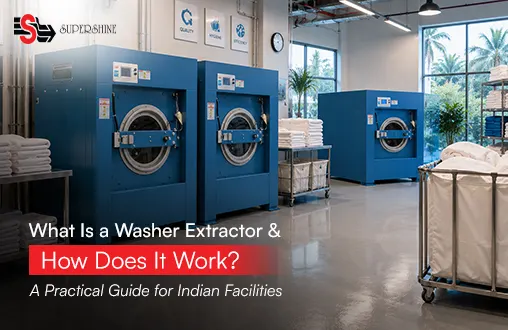
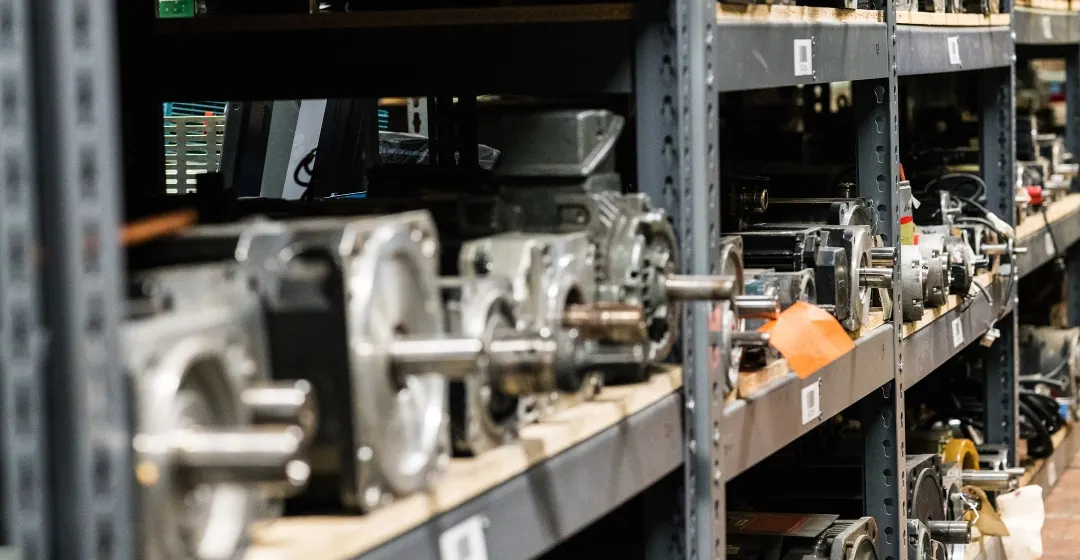
- Main drum bearings and shaft assemblies on a washer extractor
- Inverter drives and main controllers
- Motors and gearboxes for dryers and ironers
- Ironer chest components and padding
For these, agree a response time with your service provider. Ask directly: if the bearing fails, how many days until we are running again?
Build your list in five steps
- List every machine. Note brand, model and serial number.
- Read the manufacturer's parts catalogue. Mark wear items and recommended spares.
- Check your breakdown history. What failed in the last two years?
- Set minimum stock levels. One or two of each fast moving item is usually enough.
- Review quarterly. Remove what you never used, add what you ran out of.
Genuine parts versus lookalikes
Cheaper lookalike parts are tempting. But a wrong fit gasket can leak, and a wrong rated relay can burn out. Genuine parts are matched to the machine's tolerance and keep the warranty intact. That is one reason Supershine Laundry sells authentic spares tied to the original equipment brands we represent, including Milnor, Image and ADC. Our nationwide service team can tell you which parts are worth holding for each model.
Maintenance habits that cut spares usage
Spares are only half of the story. Simple daily routines extend part life:
- Clean lint filters and dryer exhaust ducts every shift
- Check door seals and drain screens daily
- Listen for new noises during extraction
- Log every fault, even small ones
- Train operators to report early, not after a failure
Trained operators matter more than people think. A well trained team spots a loose belt long before it snaps.
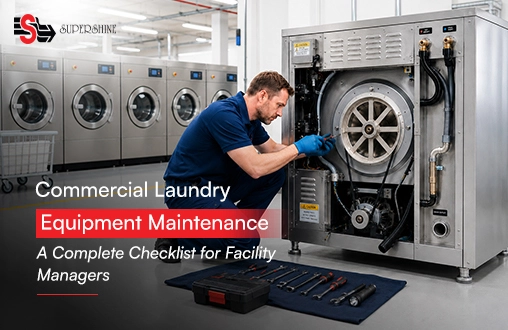
Good commercial extractor maintenance also means keeping a simple logbook with the date, fault, part used and hours run. Patterns show up within a few months, and those patterns tell you exactly which spares deserve a permanent place on the shelf.
A quick shelf audit
Once a quarter, walk to the spares shelf with the breakdown log in your hand. Tick off every part that was used and every part that was missing when a machine stopped. Anything used twice should be restocked to a higher level. Anything untouched for a year can move to a smaller bin. Label each part with the machine it fits, so a new technician can find it in a minute rather than an hour.
Keep spares in a labelled, dry cabinet away from the washroom steam, and note dates on rubber parts, because gaskets and seals age on the shelf too.
Should you have an AMC?
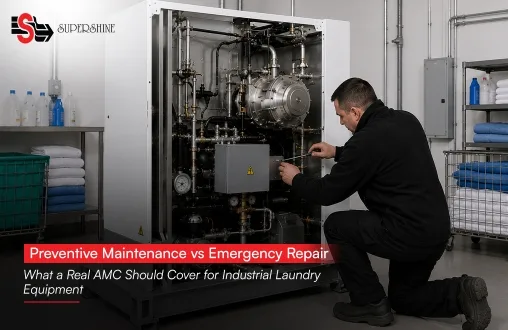
Many laundries pair a basic spares shelf with an AMC. Scheduled visits catch wear early, and the service partner often keeps critical parts for your model in regional stock. For hotels and hospitals running every day, that arrangement is usually cheaper than emergency repairs. Supershine Laundry offers AMC plans with scheduled visits and genuine spares support.