+91-124-4807600
 contact@supershine.in
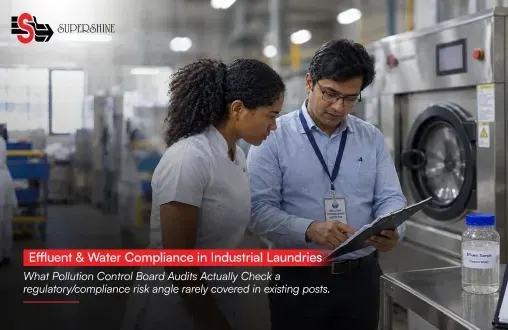
Effluent and Water Compliance for Industrial Laundries: What Pollution Control Board Audits Actually Check

The inspection that decides whether your plant keeps running
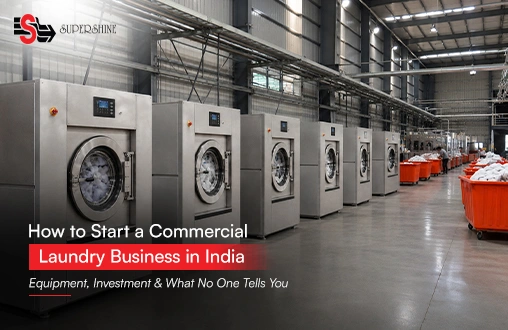
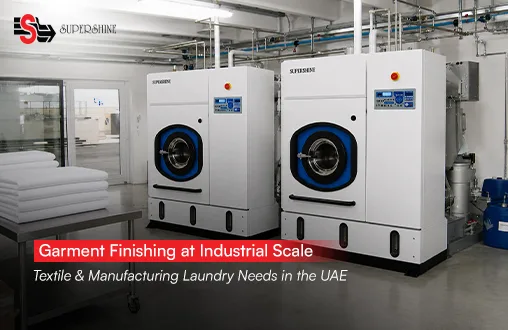
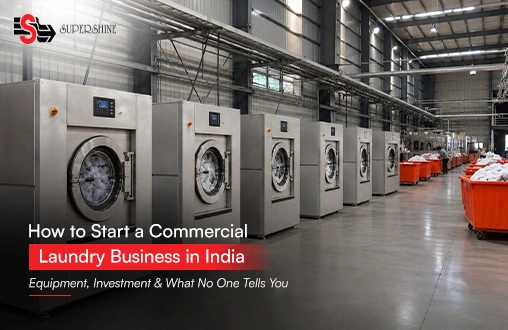
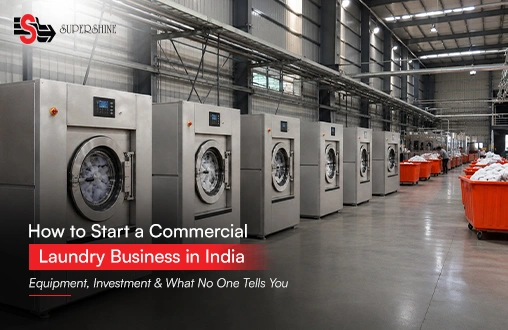
An industrial laundry or garment finishing unit doesn't get shut down because production slipped. It got shut down because an SPCB (State Pollution Control Board) inspector pulled an effluent sample, sent it to a NABL-accredited lab, and the report came back over limit on BOD or TSS. That's the risk that actually threatens continuity of operations for garment exporters and large-scale laundries in India, not machine downtime. Getting ahead of that risk starts with choosing commercial laundry solutions that are specified with compliance in mind from day one, not retrofitted after an audit finding. Compliance and equipment selection are the same conversation, not two separate ones. The wash and rinse volume generated by your industrial laundry equipment is exactly what your ETP has to treat, so a poorly chosen commercial laundry equipment lineup makes every downstream compliance target harder to hit. Whether you're running a single industrial laundry washing machine or a full bank of commercial laundry washing machine capacity, and whether you process in-house or through outsourced commercial laundry services, water efficiency at the wash floor is the cheapest lever you have for staying inside your discharge limits.
Effluent compliance for industrial laundries isn't a paperwork exercise you complete once at setup and forget. It's a continuous operational discipline, because inspections happen on no notice, samples are lab-tested against hard numeric limits, and the penalties for failure range from daily fines to outright closure of the unit. This piece walks through exactly what an audit checks, the numbers you're actually being measured against, and what a properly specified ETP needs to keep you inside them, drawing on the kind of compliance-linked planning Supershine works through with garment export and industrial laundry clients before equipment is even selected.
What generates the effluent load in a laundry in the first place
Washing linen and garments at industrial scale produces wastewater loaded with detergent residue, softener chemicals, dissolved and suspended solids from soil and lint, and, in dyeing or garment-processing operations, dye residues and heavy metal traces from certain finishing chemicals. The wash and rinse water from a single large washer extractor cycle can carry a BOD (biochemical oxygen demand) load many times higher than domestic sewage.
This matters because every litre of that water eventually has to go somewhere: an inland surface water body, a municipal sewer, or land for irrigation, and each of those routes has its own discharge standard under the Environment (Protection) Rules, 1986.
The actual numbers an audit checks
This is where a lot of operators get caught out, because the limits are specific and they vary by discharge destination, not just by industry type.
For discharge into inland surface water (rivers, lakes, water bodies), the commonly applied limits under the general effluent standards are:
- BOD: 30 mg/L maximum
- COD (chemical oxygen demand): 250 mg/L maximum
- TSS (total suspended solids): 100 mg/L maximum
- pH: 5.5 to 9.0
- Oil and grease: 10 mg/L maximum
- Temperature: not more than 5°C above the receiving water's ambient temperature
For discharge into a public sewer feeding a municipal or common treatment plant, limits are noticeably more lenient because the downstream CETP (Common Effluent Treatment Plant) or STP will do further treatment:
- BOD: up to 350 mg/L
- TSS: up to 600 mg/L
- Oil and grease: up to 20 mg/L
- pH: 5.5 to 9.0
For land disposal (irrigation use), the limits sit in between, generally around 100 mg/L BOD and 200 mg/L TSS.
Textile-specific standards, which many garment finishing and laundry units fall under, add further requirements around color (the treated effluent should be visually colorless or near-colorless before discharge) and specific caps on phenolic compounds, sulfides, and heavy metals like chromium, arsenic, and mercury where dyeing or specialty finishing chemicals are used.
An auditor isn't estimating any of this. They're pulling a physical sample, sending it to an accredited lab, and comparing the report line by line against whichever standard applies to your discharge route. If your unit is classified under the Red category (which many textile processing and dyeing-adjacent units are), you may also be required to run a Continuous Online Effluent Monitoring System (OCEMS) that feeds real-time data directly to the SPCB, meaning there's no window between a process upset and the regulator knowing about it.
What "consent" actually means in practice
Two separate approvals govern legal operation:
- Consent to Establish (CTE): obtained before you build or expand treatment infrastructure, confirming your planned ETP design meets the applicable standards.
- Consent to Operate (CTO): the actual operating permit, renewed periodically, that legally allows discharge. This is what gets suspended or cancelled on repeated non-compliance.
Losing your CTO doesn't just mean a fine. It can mean an outright closure order until compliance is demonstrated and re-verified, which for a garment export unit with shipment deadlines is a far bigger commercial risk than the fine itself.
What a Properly Sized ETP Actually Needs to Do
A laundry ETP isn't a single tank, it's a treatment train, and skipping stages is exactly what causes audit failures. For facilities using a commercial laundry washing machine and providing commercial laundry services, a functional system for laundry and garment-processing effluent typically includes:
- Screening and equalization: Removing lint, fibre, and solid debris, and buffering flow so the treatment stages aren't overwhelmed by a sudden batch discharge from multiple machines finishing cycles at once.
- Primary treatment: Coagulation and flocculation to settle out suspended solids and break detergent-stabilized emulsions, since raw laundry wastewater resists settling on its own.
- Biological treatment: Aerobic or anaerobic processes to bring BOD and COD down to dischargeable levels. This is the stage most responsible for meeting the 30 mg/L BOD threshold for surface water discharge.
- Tertiary treatment and disinfection: Where higher-quality discharge or reuse is required, including colour removal for dye-adjacent processes.
- Sludge management: Dewatering and safe disposal of the solid waste generated by the above stages, which itself may be subject to applicable hazardous-waste handling requirements when dyeing chemicals are involved.
Under sizing any one of these stages for your actual daily effluent volume is a common reason plants fail audits months or years after commissioning, rather than at commissioning itself. A facility that grows production without revisiting ETP capacity is quietly building toward a non-compliance event.
What non-compliance actually costs
The regulatory exposure under the Water (Prevention and Control of Pollution) Act, 1974 is not trivial:
- Imprisonment provisions up to 5 years for serious violations
- Fines that can extend to lakhs of rupees
- Daily continuing penalties, commonly cited around ₹5,000 per day, for ongoing non-compliance
- CTO suspension or cancellation, effectively a forced shutdown
- Additional liability under the Polluter Pays Principle through the National Green Tribunal, which in water contamination cases has resulted in penalties running into crores for larger industrial violators
For a garment export operation, there's a second layer of risk beyond the regulator: many international buyers now require environmental compliance documentation as part of vendor audits. A pollution control violation doesn't just risk a government penalty, it can cost you the export order itself.
Practical Steps to Stay Ahead of an Audit
- Get your effluent tested regularly: Supershine Laundry recommends testing your effluent through an accredited laboratory on a regular internal schedule, rather than waiting for the SPCB to conduct an inspection. Catching a drift toward the BOD limit early is far cheaper than explaining a compliance issue after the fact.
- Track your compliance deadlines: Keep Form V submissions and CTO renewal dates on a clearly tracked calendar. A lapsed consent can lead to serious enforcement consequences and should never be allowed to happen due to a missed renewal date.
- Size your ETP for actual peak loads: Make sure your Effluent Treatment Plant is designed for your actual peak effluent volume, including seasonal variations and contract-related surges not just your average daily flow.
- Train laundry floor staff: Ensure your team knows what should and should not be discharged into floor drains. Chemical spills or undiluted detergent concentrates can cause sudden spikes in effluent parameters that may exceed what your ETP is designed to handle.
- Reduce water and effluent at the source: Work with your equipment and plant consultant on water-efficiency measures from the beginning. Supershine Laundry's approach to industrial laundry planning includes water-efficient machine selection and cycle programming because reducing the effluent load at the wash floor makes downstream ETP compliance significantly easier and more cost-effective to maintain not simply an add-on after the fact.