+91-124-4807600
 contact@supershine.in
Inside a Centralized Mega-Laundry: Engineering for Scale in the UAE

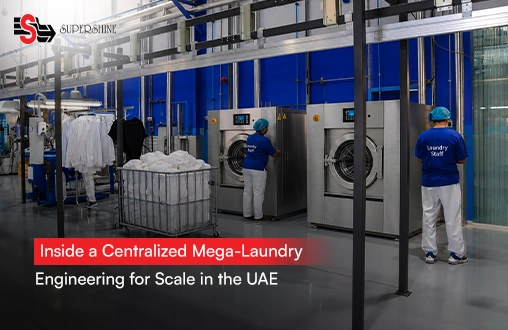
Picture a 700-room hotel on Sheikh Zayed Road on a Friday night. Every bed needs fresh sheets by morning, every towel in the spa needs to be washed, dried, and folded within hours, and the banquet hall downstairs just wrapped a 900-cover wedding that used another two tonnes of linen. Where does all of that go? Not to a back room with a couple of washing machines, that's for sure. It goes to a facility built the way a small factory is built, with tunnel washers running around the clock, conveyor systems moving linen from one station to the next, and engineers watching water and gas meters like a hawk. That is what a centralized mega-laundry actually looks like, and it is worth understanding if you run a hotel group, a hospital network, or a catering operation in Dubai.
Let's talk numbers first, because they tell the real story. Dubai is set to add more than 11,300 new hotel rooms by 2027, with luxury properties making up roughly 61 percent of that new supply. Occupancy has been sitting above 80 percent for much of the past year, which means laundry demand isn't a seasonal spike anymore, it's a constant load. Emirates Flight Catering recently broke ground on an AED 160 million laundry facility in Dubai Investment Park through its Linencraft arm, adding 150 tonnes of daily capacity on top of the 280 tonnes it already processes across four sites. That single project alone tells you how serious the scale question has become for hospitality laundry in this city.
What Makes a Mega-Laundry Different From a Regular Laundry Room
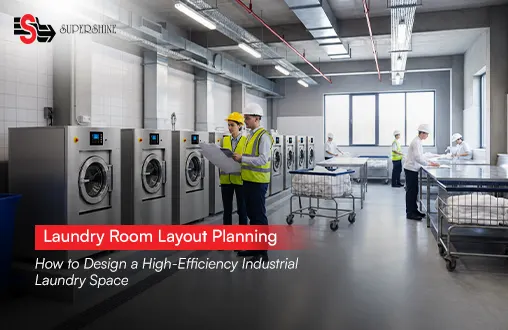
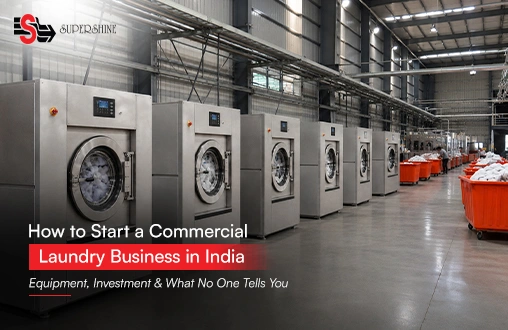
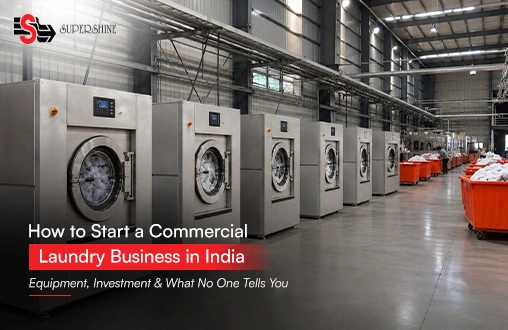
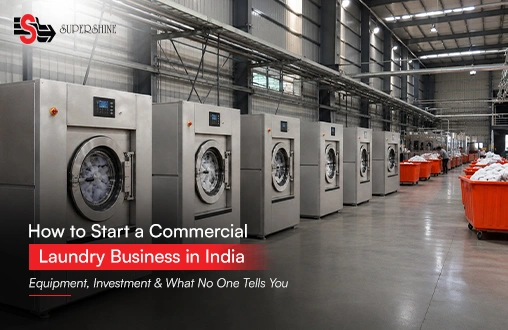
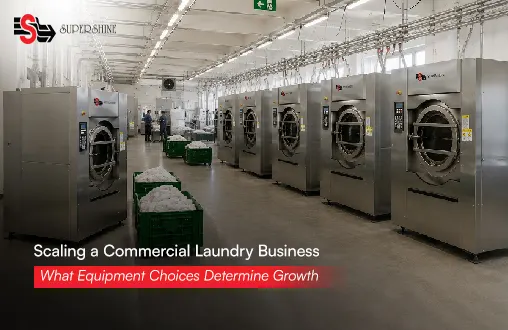
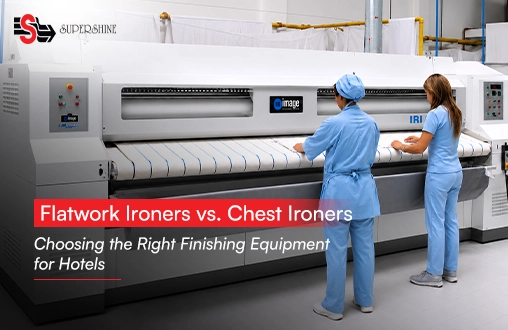
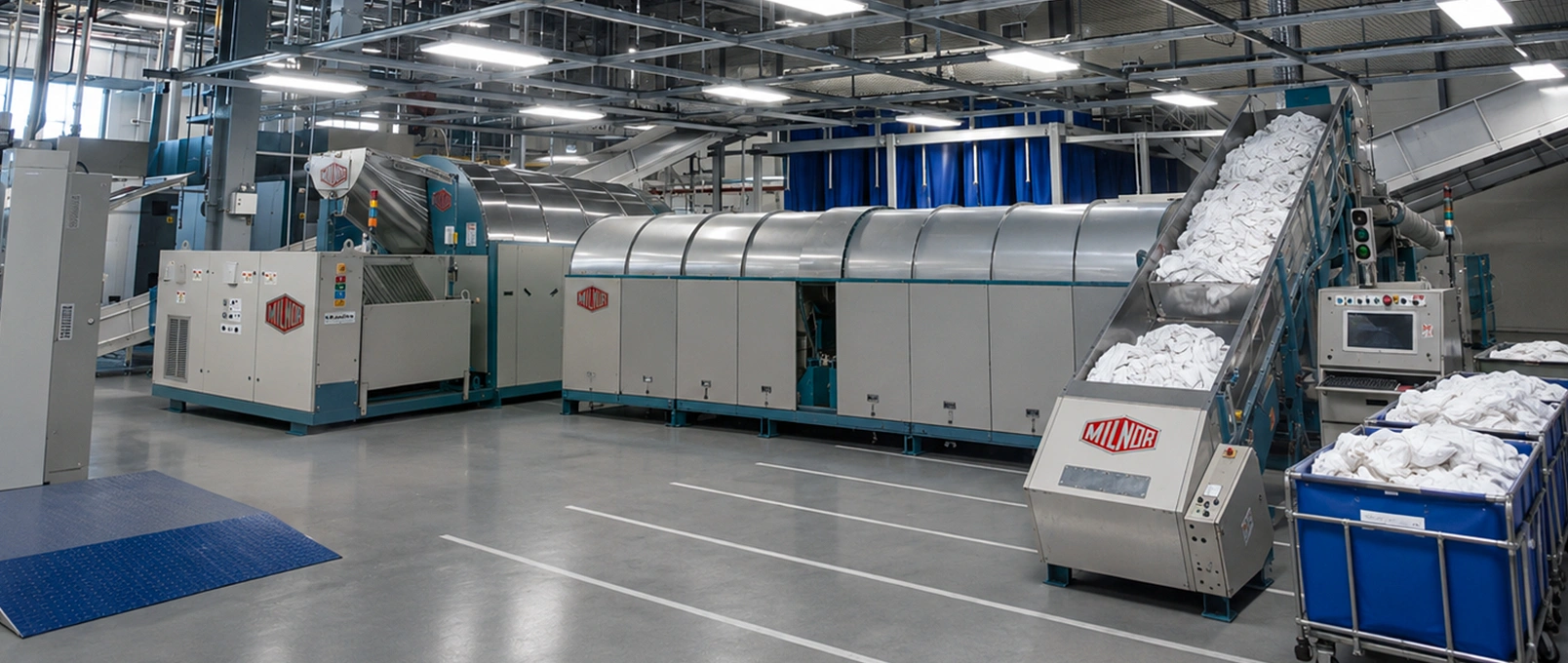
A hotel laundry room handles maybe 500 kilograms a day. A centralized facility serving multiple hotels, a hospital campus, or a catering group can process 10, 20, even 40 tonnes in the same period. That jump changes everything about how the plant is engineered. You are no longer buying a washing machine, you are designing a production line. Linen gets sorted by soil level and fabric type, fed into a tunnel washer, pressed to remove excess water, dried in a bank of dryers, then ironed and folded on automated finishing lines before it goes back out the door. Every stage has to be sized correctly or the whole line backs up.
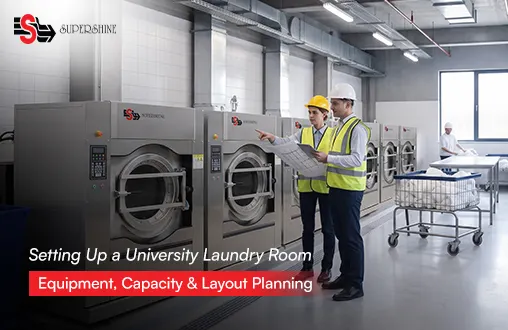
This is exactly the kind of project Supershine gets called in for. As an industrial laundry equipment partner with more than 35 years in the business and a track record with 4,200-plus clients across India and the Middle East, Supershine doesn't just drop off machines and leave. The team does a full capacity assessment first, looking at peak linen volume, turnaround time targets, and utility availability, before recommending equipment. That's a very different approach from just selling a box that washes clothes.
Tunnel Washers: The Heart of the Operation
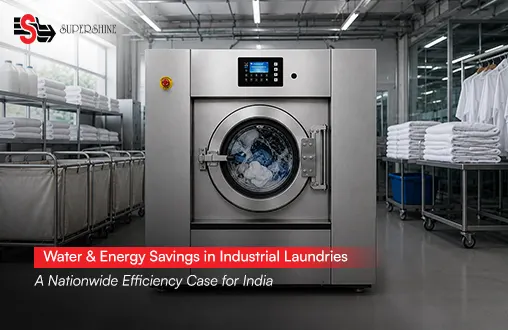
If there's one piece of equipment that defines a mega-laundry, it's the tunnel washer, sometimes called a tunnel batch system. Instead of washing one load at a time like a conventional machine, a tunnel washer moves linen through a series of connected chambers, each doing a different job, prewash, main wash, bleach, rinse, softening. Water flows in the opposite direction to the linen, so the cleanest rinse water from the final chamber gets reused in an earlier, dirtier stage. This counterflow principle is why tunnel systems can cut water use by up to 80 percent compared to older batch washers, and it's a big reason global brands like Milnor and Jensen built their reputations around this technology.
Heat recovery is the other half of the equation. Hot wastewater leaving the tunnel still carries a lot of usable energy. A drain heat exchanger captures that warmth and uses it to preheat incoming fresh water, which can trim energy consumption for water heating by as much as 50 to 70 percent depending on how the system is set up. In a market like the UAE, where gas and electricity costs matter a lot at industrial scale, that's not a nice-to-have feature. It's often the difference between a facility that's profitable and one that isn't.
Water and Energy Recovery in Practice
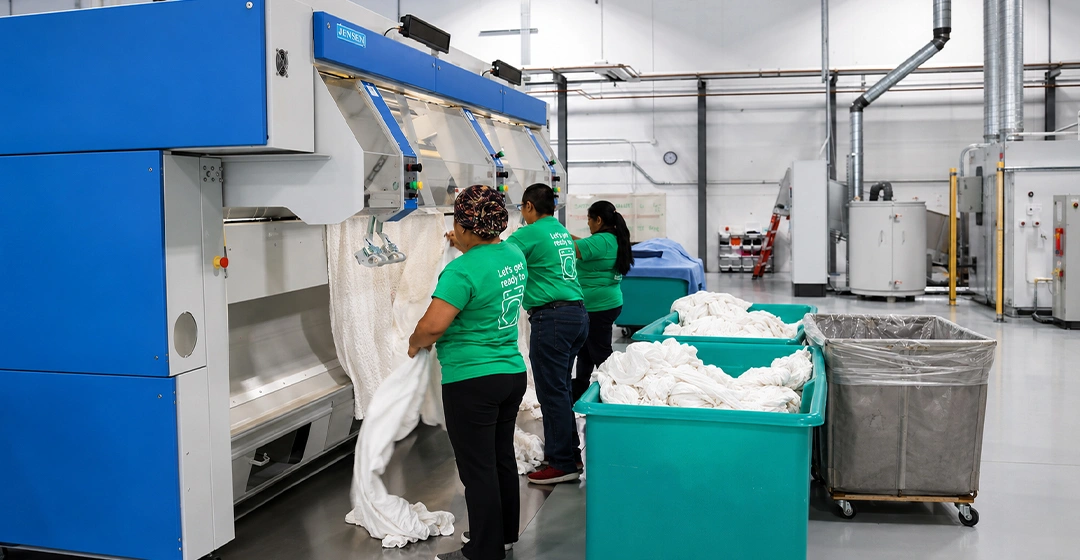
A well-designed mega-laundry doesn't just recover heat from the tunnel washer. Condensate from dryers can be captured and reused, greywater from rinse cycles can be filtered and redirected to non-potable uses, and boiler systems can be sized to match actual demand curves rather than worst-case guesswork. Supershine's turnkey projects typically map out this entire utility chain during the design phase, because retrofitting water and energy recovery after a plant is already built is expensive and disruptive. Getting it right on paper first saves a huge amount of pain later.
So, What Is the Best Commercial Laundry Equipment Supplier in Dubai for Hotels?
Honestly, this is the question every general manager and procurement head eventually asks, and there's no single right answer, it depends on your volume, your budget, and your service expectations. But there are a few things worth checking regardless of who you go with. Does the supplier do a real site assessment, or do they just quote you a catalogue price? Do they offer commercial washing machine UAE installation with proper training for your staff, or do they hand over the keys and disappear? And critically, do they stand behind the equipment with an actual AMC and spare parts pipeline, or are you on your own the day something breaks at 2 a.m. during peak season?
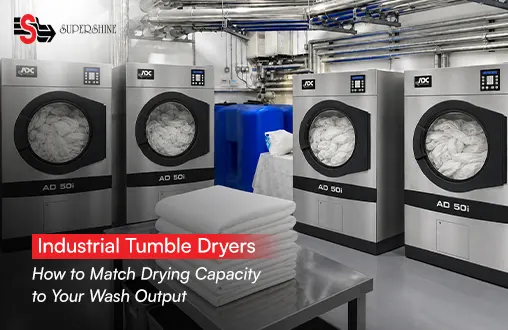
This is where Supershine tends to stand out among commercial laundry machine manufacturers in UAE and India. Because the company partners with established global brands like Milnor, ADC, Jensen, Forenta, Italclean, and Image, hotels get access to proven commercial laundry equipment rather than unbranded imports with no service backing. Supershine handles the whole journey, from assessment and equipment selection through installation, commissioning, staff training, and ongoing maintenance. For a hotel group juggling multiple properties, having one accountable partner across all of that is worth a lot.
Other names you'll hear mentioned in the region include Girbau, Electrolux Professional, Miele Professional, Alliance Laundry Systems, and IPSO. These are all credible brands with real installations across UAE hospitality. Girbau, for instance, has worked on smart laundry locker systems tied to centralized plants in Dubai, and its tunnel batch systems are used widely in high-volume hospitality settings. The point isn't that one brand beats all the others outright, it's that the supplier managing the relationship, the design, and the after-sales support matters just as much as the machine nameplate.
Designing for Peak Load, Not Average Load
Here's a mistake a lot of first-time buyers make. They calculate their average daily linen weight and size the plant to match. But hotels don't run on averages, they run on peaks. A wedding season weekend, a conference with 2,000 delegates, Ramadan iftar buffets that go through table linen fast, these events push volume well above the daily norm. A properly engineered industrial laundry washing machine setup needs headroom, usually 20 to 30 percent above average demand, so the plant doesn't choke exactly when the hotel needs it most.
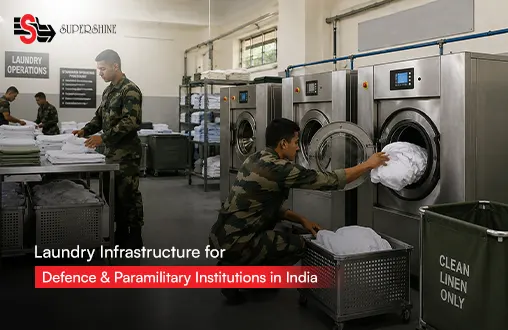
Redundancy matters too. Emirates Flight Catering's new facility was specifically designed with built-in redundancies across key processes so operations don't stop even during peak demand or equipment downtime. That's the kind of thinking Supershine brings to its turnkey projects for hospitals, defense establishments, and garment manufacturers as well, not just hotels. When you're washing linen for a hospital, there's zero tolerance for a plant going down mid-shift.
Hygiene, Compliance, and Traceability
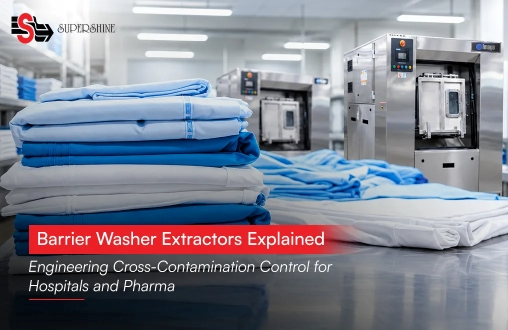
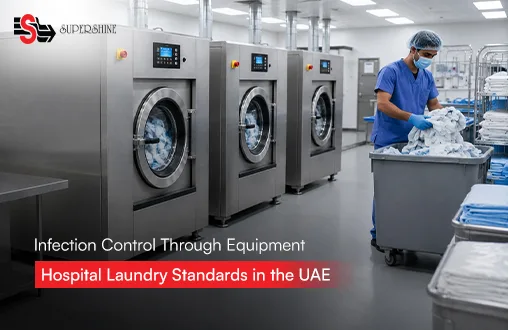
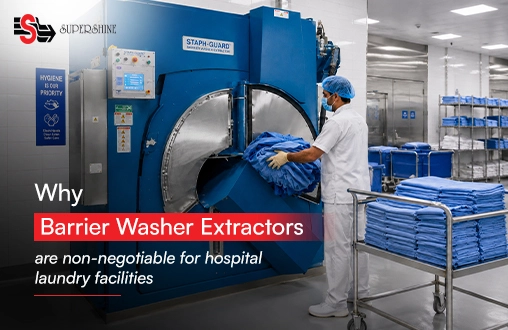
For hotels and hospitals alike, hygiene standards aren't optional extras, they're the whole point of the operation. Thermal disinfection cycles, proper chemical dosing, and barrier separation between soiled and clean linen zones all need to be built into the plant layout from day one. Pharmaceutical companies and hospitals that Supershine works with often need documented, repeatable wash cycles that meet specific compliance standards, and that level of traceability has to be engineered into the control systems, not bolted on afterward.
Why This Matters for Dubai's Hospitality Boom
With RevPAR up more than 7 percent year over year and occupancy holding near 80 percent, hotels in Dubai simply cannot afford laundry bottlenecks. A guest doesn't care why the towels are late, they just notice they're late. As more commercial washing machine providers UAE businesses rely on continuing expanding capacity, the facilities that win are the ones engineered properly from the start, with the right tunnel systems, the right recovery technology, and a supplier who sticks around after installation. That's really the whole philosophy behind how Supershine Laundry approaches every project, big or small.