+91-124-4807600
 contact@supershine.in
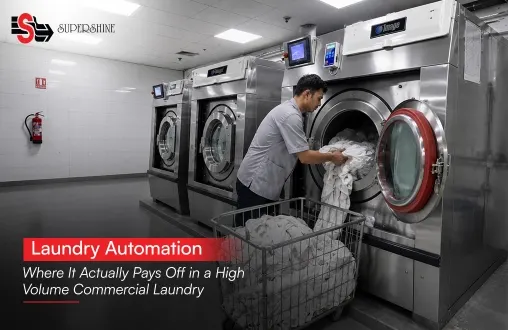
Laundry Automation: Where It Actually Pays Off in a High-Volume Commercial Laundry

Automation isn't one decision, it's five separate ones
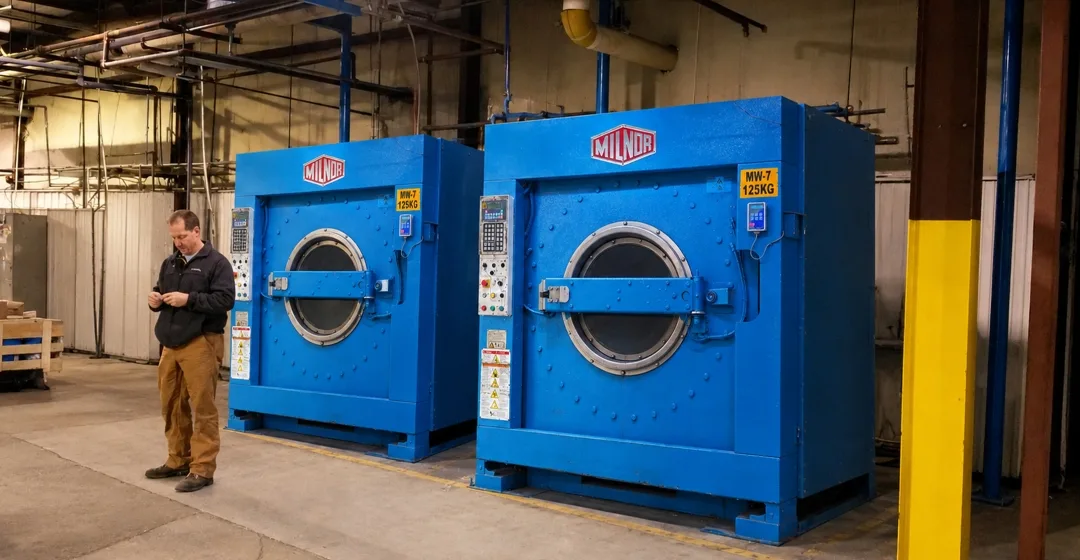
Ask a laundry owner if they want "smart automation" and most will say yes, in the abstract. Ask them which specific process to automate first, with what payback period, and the conversation gets a lot more honest. That's the right conversation to have, because automation in a commercial laundry isn't a single upgrade. It's five or six distinct decisions, each with its own cost, its own labor impact, and its own payback timeline. Getting this right depends on treating automation as one part of a wider set of commercial laundry solutions, not a single standalone purchase. Automation also doesn't replace the fundamentals of a well-specified plant. Whether you're running compact industrial laundry equipment or a full-scale commercial laundry equipment lineup, the automation layer only pays off if the underlying industrial laundry machines and commercial laundry machine fleet are sized correctly to begin with. Pairing a properly specified commercial washing machine and dryer setup, or an industrial washing machine and dryer combination, with genuinely energy efficient laundry machines is what actually compounds the labor savings automation delivers into a lower total cost per kilogram processed.
Laundry automation ROI varies enormously depending on where you apply it. Sorting automation can pay for itself in under two years. A full tunnel washer conversion might take three to five. This piece breaks down where automation genuinely earns its keep in a high-volume operation, and where it's an expensive way to chase a buzzword, drawing on the kind of volume and labor mapping Supershine does with laundry operators before recommending any specific system.
Start with where the labor actually goes
Labor typically eats 35 to 55 percent of total operating cost in a commercial laundry, and it's often higher in hotel in-house operations where volumes don't justify a fully staffed production line. That single fact is why almost every serious automation decision is really a labor decision first, and a throughput decision second.
Before automating anything, map where your labor hours actually go: sorting incoming soiled linen, loading and unloading washers, transferring wet linen to dryers or ironers, folding and finishing, and final sorting for delivery. Most laundries find that sorting and finishing, not washing itself, consume the largest share of manual labor hours. That's usually where automation pays off first.
Sorting automation: often the fastest payback
Manual sorting is slow, inconsistent, and labor-heavy. An automated sorting system can process 3,500 to 3,800 garments per hour with just 2 to 3 operators, compared to 10 to 13 operators needed to hit equivalent volume manually. That's a labor reduction in the range of 70 to 75 percent for that specific task.
Combined with a 30 to 40 percent throughput increase from more consistent flow into downstream washing and finishing, automated sorting tends to show payback in 18 to 24 months for operations with enough consistent volume to keep the system fed.
The catch: sorting automation only makes sense once you have enough volume and enough SKU variety (different linen types, garment categories) to justify the capital cost. A small hotel laundry doing one or two linen categories rarely needs this. A large commercial or institutional laundry processing mixed linen from multiple client properties usually does.
Finishing automation: where the multiplier is biggest
Folding is where automation shows the most dramatic productivity jump, because manual folding is genuinely slow work.
- Manual towel folding runs around 120 pieces per hour per worker. An automated towel folder does 800 to 1,000 pieces per hour, a 6 to 8x productivity increase.
- Manual sheet folding runs around 60 pieces per hour. Automated flatwork folding delivers 180 to 300 pieces per hour.
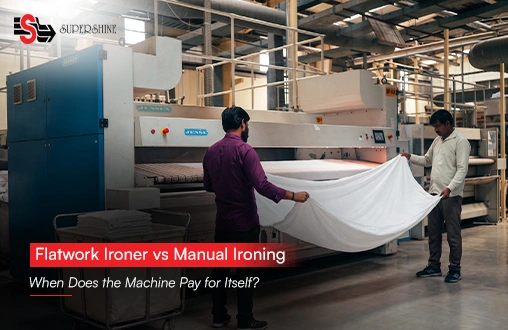
That translates into real, countable labor hours saved daily, often 5 to 8 hours per machine per shift, which for a laundry running two or three shifts adds up fast. Flatwork ironers paired with automated feeding and folding lines are one of the more reliably fast-payback investments in a high-volume operation, because the labor-to-output ratio in manual finishing is so lopsided to begin with.
Where automation doesn't move the needle much
Not every stage benefits equally. Automating a low-volume, highly variable process, say, garment finishing for a boutique operation with constantly changing item types, often costs more in system flexibility and changeover time than it saves in labor. If your finishing mix changes daily and includes odd-shaped or delicate items, a skilled manual finishing team may genuinely outperform a rigid automated line on both speed and quality.
Material handling: the quiet labor drain
Rail systems and automated cart or sling transport between wash, dry, and finishing stages don't get discussed as often as sorting or folding, but they eliminate a genuinely large hidden labor cost: walking and manual transport.
Facilities without automated transport can see staff covering the equivalent of 5+ kilometres of cart-pushing per employee per day in a large plant. Automated rail and sling systems remove that entirely, and the labor savings show up less in headcount reduction and more in redeployed hours going toward actual production work instead of logistics inside the building.
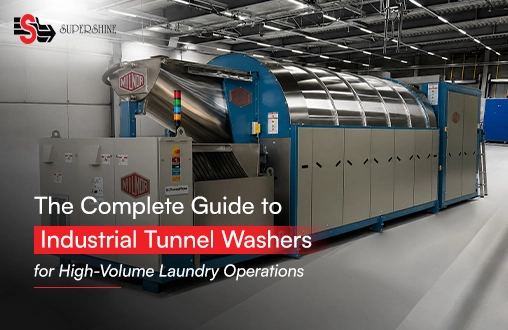
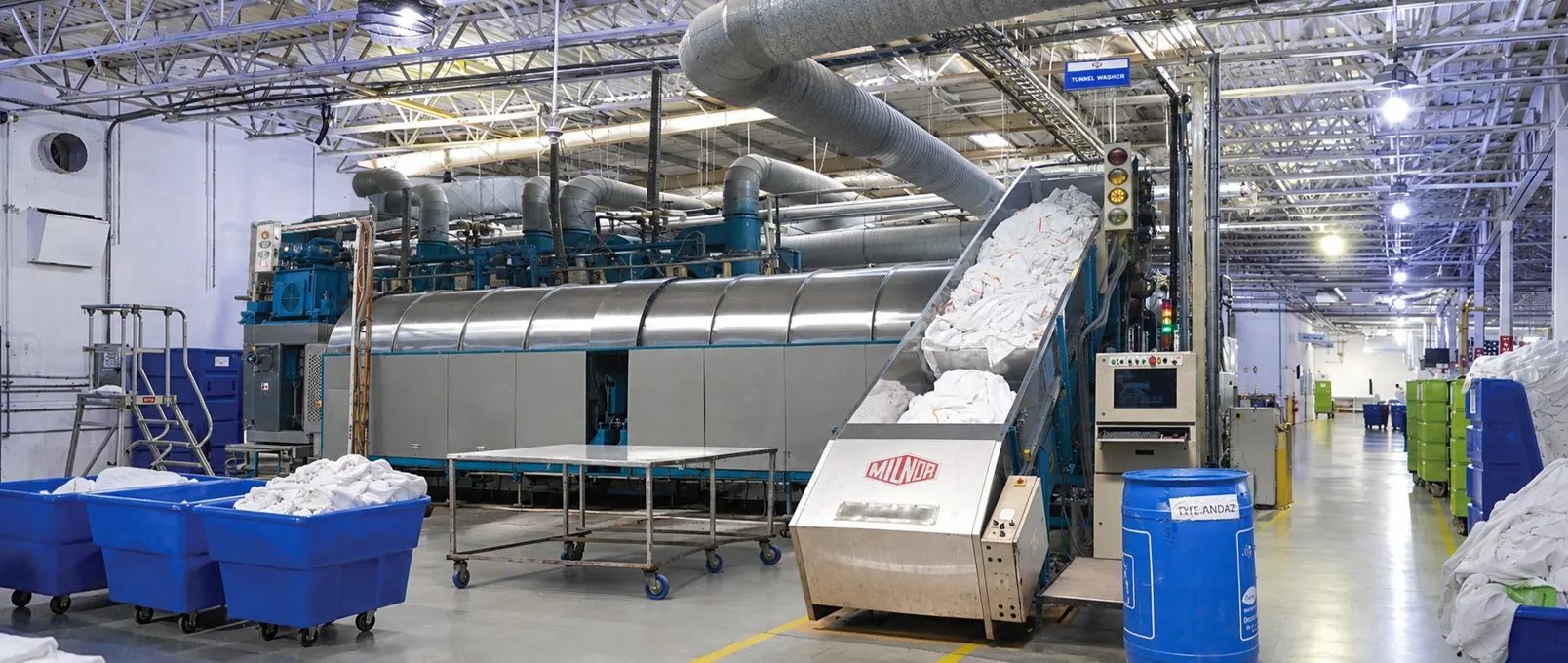
Tunnel washers: automation at the process level, not just material handling
This is the biggest, most capital-intensive automation decision a high-volume laundry makes, and it deserves its own honest breakeven analysis rather than a sales pitch.
A rough industry rule of thumb: above roughly 4,500 to 5,000 kg (10,000 lbs) per day of consistent, steady-flow volume, a tunnel washer system starts to out-economize a bank of individual washer extractors. Below that, washer extractors remain the more sensible, flexible, and lower-risk choice.
Here's the tradeoff in concrete numbers:
- Capital cost: washer extractors typically run far lower per unit of installed capacity than a tunnel system, which requires significant civil work, utility infrastructure, and a much larger capital outlay upfront.
- Water use: washer extractors typically use 2 to 4 gallons per pound of linen. Tunnel systems, using counterflow water reuse across compartments, can bring that down to roughly 0.5 to 1 gallon per pound, a 50 to 75 percent reduction.
- Labor: a tunnel system can cut wash-aisle staffing from around three operators to one for equivalent throughput, a saving that can run into tens of thousands of dollars annually depending on local wage rates and shift structure.
- Payback: typically 2 to 5 years at volumes that genuinely justify the investment, meaning consistent high-volume flow, not seasonal or highly variable demand.
The honest caveat: a tunnel system is a poor fit for a laundry with inconsistent volume, frequent linen type changes, or seasonal demand swings, since it's optimized for steady, high-volume, relatively uniform loads. Get this wrong and you've committed serious capital to a system that spends half the year underutilized.
Software and tracking: the automation nobody thinks to budget for
RFID linen tracking and plant management software are less visible than a physical automation line, but they consistently show fast, measurable payback. Facilities implementing plant management software have reported productivity gains around 12 percent within four months, largely by eliminating manual data gathering that used to consume dozens of manager-hours weekly.
RFID-based inventory tracking, similarly, has been shown to cut inventory counting time by over 80 percent and meaningfully reduce linen replacement costs from loss and shrinkage, since you actually know where linen is and how many cycles it's been through, rather than estimating.
How to actually decide what to automate first
- Measure your current labor allocation by task, not just total headcount. You can't prioritize automation without knowing where the hours currently go.
- Match your daily volume to the process where automation shows fastest payback. Under 4,500 kg/day steady volume, focus on sorting and finishing automation before considering tunnel washing.
- Model payback conservatively, using your actual local wage rates and utility costs, not a vendor's generic case study numbers.
- Prioritize flexibility if your volume or linen mix is inconsistent. Rigid automation on variable demand often underperforms a well-run manual or semi-automated line.
- Don't automate a broken process. If sorting is slow because of poor workflow layout, fix the layout first, automation on top of a bad process just makes the bad process faster.
Supershine Laundry works through this exact prioritization with laundry operators, mapping actual volume, labor allocation, and growth plans against the automation options available, rather than defaulting every client toward the highest-capital solution. The right automation roadmap for a 3,000 kg/day operation looks nothing like the right roadmap for a 15,000 kg/day plant, and treating them the same is how automation budgets get wasted.