+91-124-4807600
 contact@supershine.in
Is a Commercial Laundry Business Actually Profitable in India? A Real Margin Breakdown

Everyone’s cousin, it seems, has a friend who “made a killing” opening a laundry business. Some did. Plenty didn’t. So is running commercial laundry services in India genuinely profitable, or is it one of those businesses that looks good on Instagram and bleeds cash quietly in the back office? Let’s actually look at the numbers instead of the hype.
The Real Margin Range for Commercial Laundry Companies
Industry data on organised laundry outlets in India puts operating margins somewhere between 20% and 35% for well-run franchise or branded outlets, with net profit margins in the 25% to 40% range once you strip out one-time setup costs. That’s genuinely strong for a service business, better than most retail formats. But (and this matters) those numbers assume decent volume, controlled overheads, and equipment that isn’t eating into uptime with constant breakdowns. Plenty of smaller, unbranded commercial laundry companies operate at much thinner margins, sometimes single digits, because they underestimated running costs or bought underpowered machines for the volume they actually process.
What Actually Eats Into the Margin
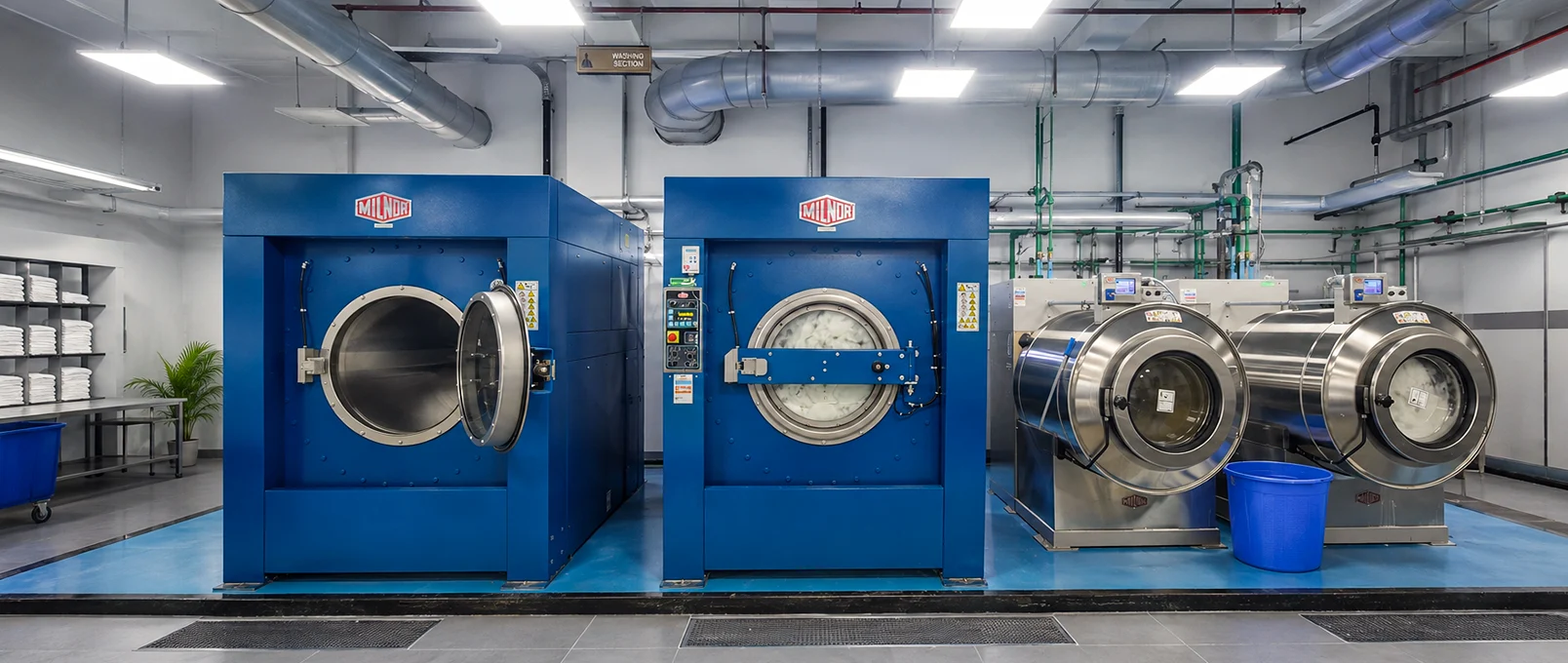
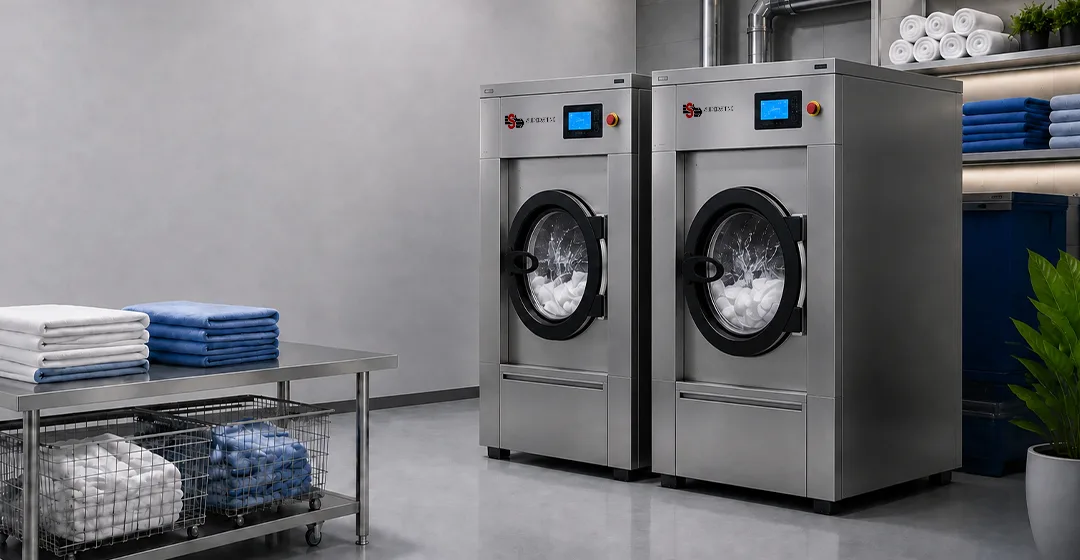
Four cost buckets decide whether a laundry business is profitable or just busy: detergents and consumables, electricity and water, staff wages, and rent. In a typical Tier-2 city outlet, staff wages and rent together account for roughly 45% to 55% of total operating costs. That leaves consumables and utilities as the other major lever, and this is exactly where equipment choice matters more than most first-time operators realise. An inefficient washer that guzzles water and power on every load quietly erodes your margin, cycle after cycle, for years. A well-specified industrial laundry washer-extractor with good water extraction (high G-force spin) reduces drying time and energy load downstream, which adds up fast at commercial volumes.
Setup Costs You Should Actually Budget For
Here’s where expectations often go sideways. A very basic laundry setup, small footprint, a couple of machines, can be started for roughly Rs. 3 to 6 lakh including equipment and rent deposit. A proper small commercial operation typically needs Rs. 2 to 5 lakh just to get moving, while a medium-scale commercial laundry with better machine capacity and a wider service mix can run Rs. 8 to 20 lakh depending on location and equipment quality. Fully tech-enabled, self-service laundromat formats sit considerably higher, often Rs. 22 to 45 lakh, once you factor in premium locations, app-based systems, and higher-capacity laundromat washing machine units built for constant public use rather than occasional household loads.
Revenue Reality Check
A modest retail laundry processing 30 to 50 kg of clothes daily can realistically bring in Rs. 60,000 to Rs 1,20,000 in monthly revenue. Scale that up with commercial contracts (hotels, hospitals, garment units) and revenue climbs, but so does the equipment demand, you can’t run hotel linen volumes through machines designed for retail walk-ins. Monthly net profit for franchise-format outlets has been reported anywhere between Rs. 20,000 and Rs. 1.75 lakh, a wide range that mostly comes down to city, footfall, and how tightly the operator manages the four cost buckets above.
Why Equipment Choice Is the Hidden Profitability Lever
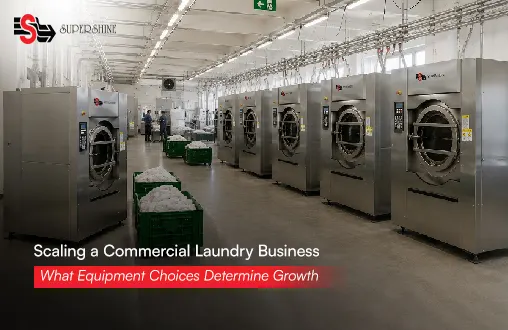
Here’s the thing nobody tells new operators clearly enough: the machine you buy determines your margin more than your pricing does. Underpowered or poorly built equipment breaks down more, costs more per cycle in water and power, and creates downtime that directly kills revenue on your busiest days. This is where commercial laundry solutions built for actual duty cycles, not retrofitted home appliances marketed as commercial, make the real difference over a five or ten year horizon.
Supershine Laundry has spent over three decades supplying washer-extractors, dryers, and finishing equipment specifically engineered for continuous commercial use across hotels, hospitals, and standalone laundry businesses in India. The value isn’t just the machine, it’s the full picture: correct machine sizing for your actual volume, water and energy efficiency that protects your margin daily, and after-sales support that keeps uptime high. Supershine’s team routinely helps first-time laundry business owners map out equipment budgets against realistic revenue projections rather than optimistic ones, which, frankly, is the conversation that prevents most early failures in this business.
Seasonal Swings and Staffing: The Part Nobody Budgets For
One thing that catches new operators off guard is how seasonal this business actually is. Wedding season, festival months, and college move-in periods can spike volume dramatically for a few weeks, while other stretches of the year run quiet. A laundry business planned around average monthly demand often finds itself short-staffed and short on machine capacity during peak weeks, which is exactly when losing a customer to a slow turnaround hurts the most. Building a little headroom into both your equipment capacity and your staffing plan for these predictable spikes tends to pay for itself within the first year, even if it looks like overcapacity on a quiet Tuesday in February.
Labour is the other underappreciated variable. Skilled machine operators who understand load balancing, detergent dosing, and basic troubleshooting reduce wear and tear on equipment considerably compared to untrained staff running machines by guesswork. It’s worth budgeting for a bit of operator training upfront rather than treating it as optional, since a well-run machine and a poorly run one of the exact same spec can have very different five-year cost profiles.