+91-124-4807600
 contact@supershine.in
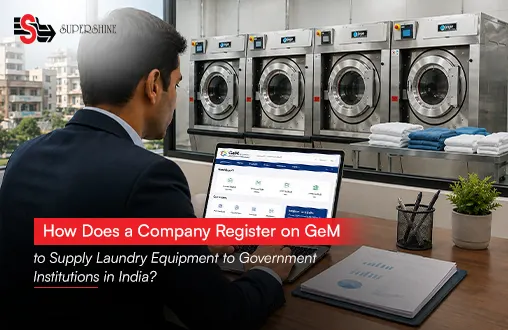
How Does a Company Register on GeM to Supply Laundry Equipment to Government Institutions in India?

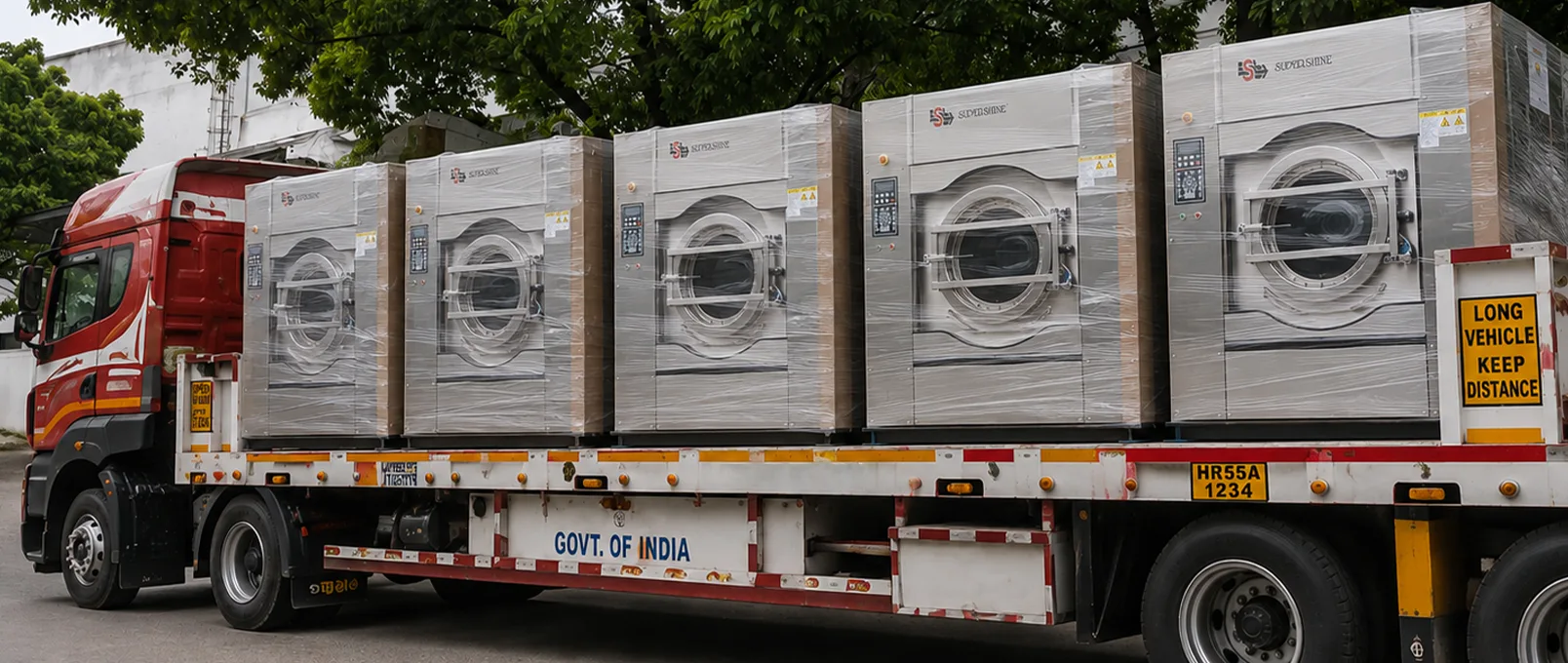
A company registers on GeM (Government e-Marketplace) by creating a seller account with GST and PAN details, completing document verification, listing products with detailed technical specifications, and then, critically, passing a Vendor Assessment (VA) before those listings go live for government buyers. That's the short version. The longer version involves a fair bit of paperwork and a few misconceptions that trip up first-time sellers, so let's walk through it properly.
If you're trying to figure out which company supplies laundry equipment to government institutions in India, the answer usually comes back to whoever's actually done the legwork of getting listed and approved on GeM, because that's the portal through which virtually all government procurement, railways, defence establishments, universities, hospitals, runs today. Being a great manufacturer doesn't matter much if you're not properly set up on the platform buyers are actually using.
What GeM Is and Why It Matters for Laundry Equipment Suppliers
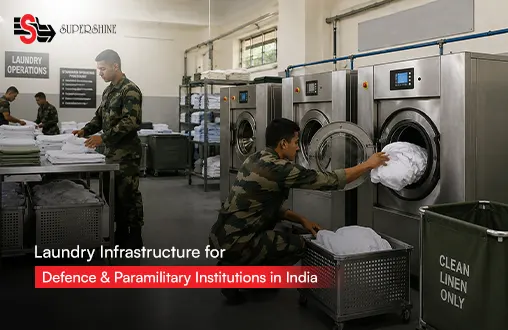
GeM is the government's official online procurement platform, built to bring transparency and efficiency to how public institutions buy everything from office furniture to industrial machinery. For commercial laundry equipment, this is the primary channel through which railways, government hospitals, defence establishments, and public universities source their washers, dryers, ironers, and finishing equipment.
If you're one of the many laundry equipment suppliers trying to break into institutional and government contracts, GeM registration isn't optional anymore, it's basically the front door. Buyers browse catalogs, compare technical specs, and place orders or run reverse auctions directly through the platform. No listing, no visibility, no orders. Simple as that.
Step 1: Basic Seller Registration
The process starts with creating a seller account on the GeM portal using your organization's PAN and GST registration details. You'll also need to link your bank account for payment processing. This part is fairly standard, similar to setting up on most B2B marketplaces, and most companies get through it without much trouble.
Step 2: Document Submission
Next comes the document stage. You'll typically need to submit GST registration certificates, PAN details, bank account proof, and if applicable, your Udyam or MSME registration certificate. Here's where it's worth pausing, because there's a common misconception worth clearing up.
A lot of companies assume that having Udyam or MSME registration automatically exempts them from further scrutiny. It doesn't. Udyam or MSME status alone no longer automatically waives the OEM Vendor Assessment requirement. That's changed in recent years, and sellers who assume otherwise often get stuck when their listings don't go live as expected. Plan for the full assessment process regardless of your MSME status.
Step 3: Product Cataloging with Technical Specifications
Once your seller profile is verified, you list your products under the relevant category, in this case, industrial washer extractors, tumble dryers, flatwork ironers, and related laundry machinery. Each listing needs detailed technical specifications: capacity, dimensions, power requirements, water consumption, and compliance certifications.
This is actually where good laundry equipment manufacturers tend to separate themselves from the pack. Buyers on GeM, especially institutional procurement officers evaluating tenders for hospitals or defence facilities, are looking closely at spec sheets. Vague or incomplete listings get passed over. Detailed, accurate technical documentation builds buyer confidence, and frankly, it should, because government tender evaluators are often comparing multiple vendors side by side on paper alone.
Step 4: The OEM Vendor Assessment (VA)
This is the step that genuinely matters most and gets underestimated most often. The Vendor Assessment is GeM's process for verifying that you are a legitimate original equipment manufacturer (or authorized supplier) capable of delivering what you claim in your catalog. It typically involves document review and verification of your manufacturing or supply credentials.
Without passing VA, your product listings remain restricted or invisible to buyers, no matter how good your GST and PAN paperwork looks. This is precisely the misconception mentioned earlier: some sellers think registering as an MSME shortcuts this requirement. It doesn't. Budget real time for this step, and make sure your documentation genuinely supports your manufacturing or supply claims.
Step 5: Bidding and Order Fulfillment
Once you're fully verified and listed, government buyers can find your products through search, category browsing, or direct tender postings. Orders come through either direct purchase (for smaller value items under certain thresholds) or reverse auctions and bids for larger institutional contracts, like a hospital's laundry department or a university's hostel facility upgrade.
Common Mistakes First-Time Sellers Make on GeM
A few patterns show up repeatedly among companies new to government procurement. Underestimating the time the Vendor Assessment takes is a big one, some sellers assume it's a rubber stamp and plan their sales calendar around a listing going live within days, only to find it takes weeks. Incomplete technical specifications are another common issue, since institutional buyers comparing multiple vendors will simply skip past a listing that's missing key details like water consumption figures or compliance certifications. And finally, treating GeM registration as a one-time task rather than an ongoing relationship, keeping catalog listings updated, responding promptly to buyer queries, and maintaining your VA status, tends to separate suppliers who win repeat institutional business from those who get one order and disappear from view.
Why Supershine's Experience Matters Here
Supershine Laundry has spent 35 years building relationships with institutional and government buyers, hotels, hospitals, defence establishments, and educational institutions among them, and understands what these buyers are actually evaluating when they compare vendors on a platform like GeM. It's not just the price. It's technical reliability, after-sales support availability, spare parts logistics, and a track record that holds up under scrutiny (over 1,500 installations tends to speak for itself).
For companies navigating GeM registration for the first time, or trying to understand what government tender evaluators actually prioritize in a laundry equipment listing, Supershine Laundry's experience with institutional contracts, including tender support work, offers a useful reference point. It's less about copying a template and more about understanding the buyer's actual concerns.
Getting It Right From the Start
GeM registration isn't complicated, exactly, but it does reward companies that take the documentation and Vendor Assessment stages seriously rather than rushing through them. If you're a laundry equipment manufacturer trying to navigate this process, or an institutional buyer trying to understand what a properly verified vendor looks like, it's worth having a conversation with Supershine Laundry about what solid institutional procurement actually requires.