+91-124-4807600
 contact@supershine.in
What Does NABH Accreditation Renewal Require From a Hospital's Laundry and Linen Department?

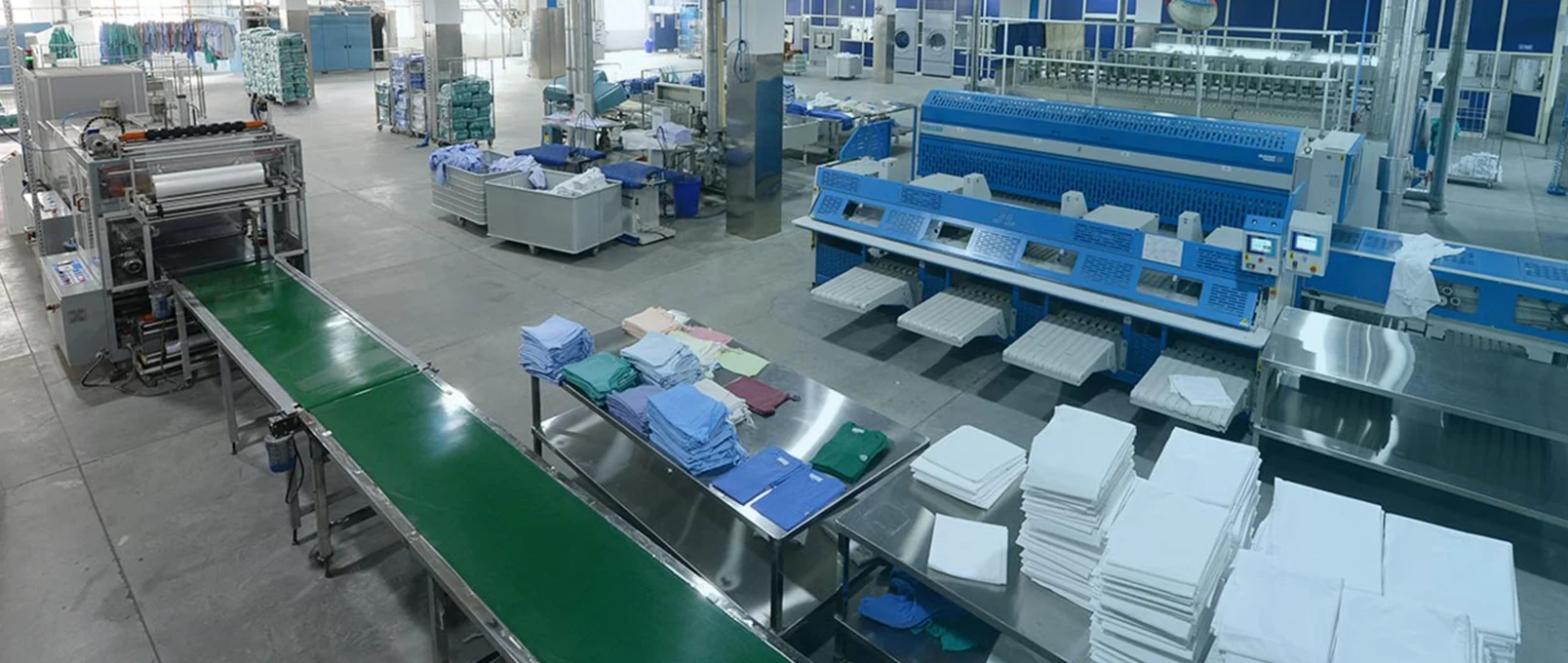
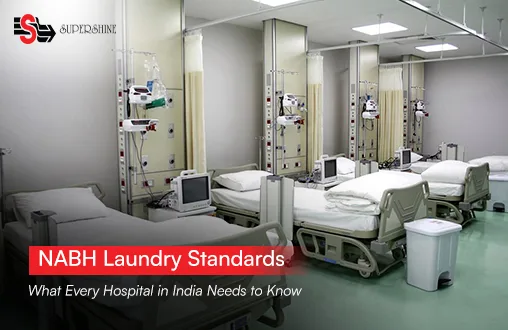
NABH accreditation renewal requires a hospital's laundry and linen department to show documented, ongoing compliance in five areas: linen segregation and color coding, validated washing parameters for infection control (thermal or chemical disinfection), barrier washing for contaminated or infected linen, PAR stock and inventory records, and up-to-date staff training documentation. Unlike the initial accreditation, renewal assessors specifically look for evidence that these practices have been maintained continuously between surveys, not just set up correctly once. Gaps in documentation trails are one of the most common reasons hospitals get flagged during renewal, even when day-to-day linen handling practice is genuinely sound. A lot of that documentation gap traces back to how the underlying hospital laundry system was specified in the first place. Equipment choice and documentation readiness are connected more than most facilities realise. A validated hospital washing machine with automated cycle logging removes an entire category of paperwork gaps that manual hospital laundry machines create. Hospitals sourcing new laundry machines for hospital use, or upgrading an ageing commercial washing machine for hospital duty fleet, should treat renewal-readiness as part of the equipment specification itself, not a separate exercise handled after installation.
If you're the administrator or infection control officer prepping for a renewal survey, you already know the frustrating part: the actual laundry operation might be running fine, but if the paperwork trail has gaps, that's what shows up as a non-conformance on the assessor's report.
Why Renewal Is a Different Exercise From First Accreditation
First-time NABH accreditation is largely about proving a system exists. Renewal is about proving that system has been running consistently, month over month, since the last survey. NABH accreditation for hospitals typically runs on a multi-year cycle, and assessors at renewal expect to see records spanning that entire period, not just current-state compliance on the day of the visit.
This distinction matters enormously for the laundry and linen department specifically, because it's one of the areas where day-to-day operational discipline (a technician remembering to log wash temperature every cycle, a supervisor filing the monthly PAR stock reconciliation) is easy to let slip once the initial accreditation excitement fades.
The Five Areas Assessors Actually Check
1. Linen Segregation and Color Coding
NABH's hospital infection control standards require clear, documented segregation of linen categories at the point of collection, not just at the laundry. That typically means:
- General/soiled linen from routine patient care, collected separately from
- Infected or contaminated linen (isolation wards, infectious disease cases, linen with visible blood or body fluid), which requires its own color-coded bags, usually a distinct color from general linen, and separate transport
- Linen from operation theatres, often handled as its own category given the higher contamination risk and sterility requirements downstream
At renewal, assessors look for the segregation policy document, evidence that ward staff are actually following it (not just a policy sitting in a file), and incident logs if segregation breaches occurred and how they were handled.
2. Barrier Washing for High-Risk Linen
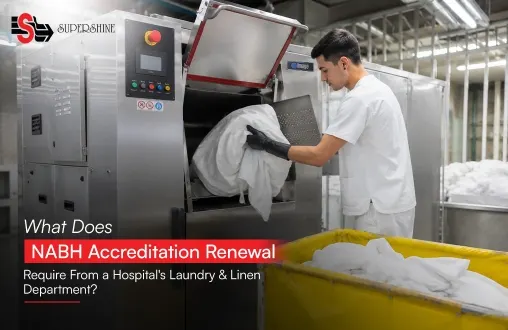
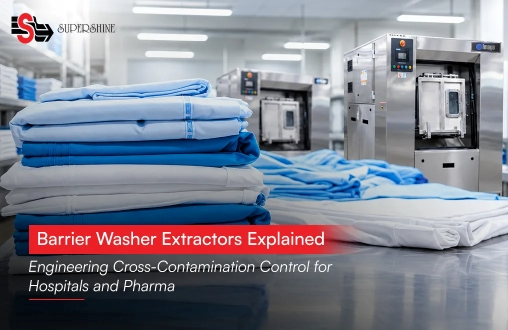
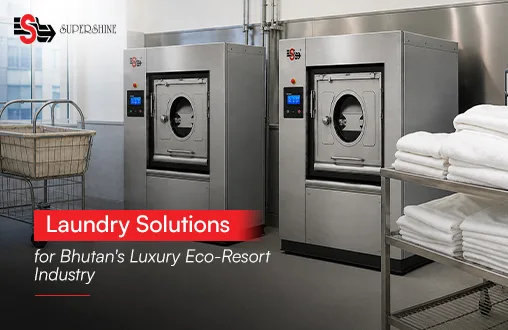
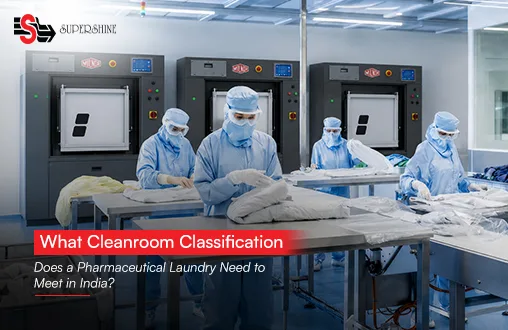
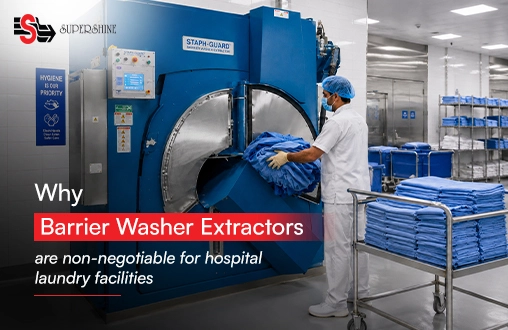
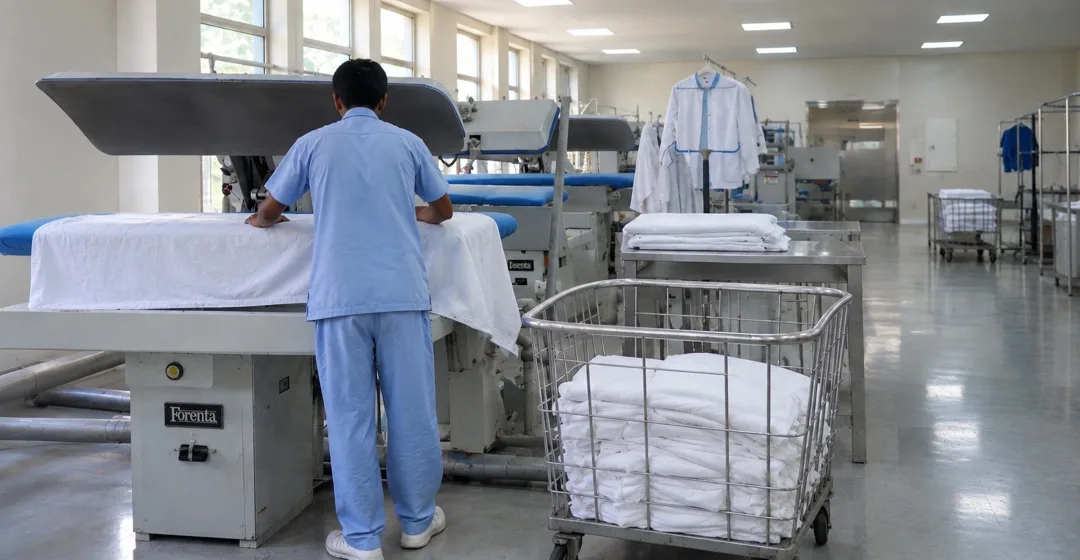
A barrier washer extractor, a machine physically split between a "soiled side" loading door and a "clean side" unloading door on opposite walls, is the standard equipment answer for preventing cross-contamination between dirty and processed linen. For infected or high-risk linen categories, NABH assessors typically expect this physical barrier system to be in place and documented as part of the facility's infection control infrastructure.
Hospitals that process all linen through a single-access washer, regardless of contamination risk, are a common finding at renewal surveys, particularly at hospitals that scaled up bed count after their initial accreditation without correspondingly upgrading laundry infrastructure.
3. Validated Thermal or Chemical Disinfection Parameters
This is the technical heart of laundry infection control, and it's where documentation gaps show up most often. Hospital laundry disinfection generally follows one of two validated approaches:
- Thermal disinfection, using hot water wash cycles at a sustained high temperature for a defined hold time, which is the more commonly referenced method for effective microbial kill on hospital linen.
- Chemical disinfection, using approved disinfectant chemicals (often chlorine-based or equivalent) at lower wash temperatures, used where thermal disinfection isn't practical for certain fabric types or energy constraints.
Whichever method a hospital uses, NABH renewal assessors want to see that the parameters (temperature, cycle time, chemical concentration and dwell time) are actually validated for the equipment in use, documented per cycle or per batch, and periodically re-verified rather than assumed to be correct because "that's how the machine's always been set."
4. PAR Stock and Inventory Documentation
PAR stock (periodic automatic replenishment level) for linen is the minimum inventory a department needs on hand to avoid shortages between laundry cycles. NABH looks for documented PAR levels set for each linen category, ward-wise or department-wise, along with records showing actual stock is tracked against those levels.
This might seem like an operations detail rather than an infection control one, but chronic linen shortages are a known driver of poor practice, staff reusing linen longer than they should, or skipping proper handling steps under pressure to turn around beds faster. Assessors treat inventory discipline as connected to infection control outcomes, not separate from them.
5. Staff Training Records
Every person handling soiled or contaminated linen, from ward housekeeping staff to laundry department technicians, needs documented, periodically refreshed training covering PPE use, safe handling of contaminated linen, needle-stick and sharps awareness for linen collected from clinical areas, and the segregation policy itself.
At renewal, assessors typically ask for training attendance records, refresher schedules (commonly annual), and evidence that new staff joining the department receive induction training before handling linen independently, not after.
Common Renewal Gaps Hospitals Should Address Early
Based on how laundry departments typically get flagged, a few patterns show up repeatedly:
- Wash cycle logs exist but are inconsistent, filled in for some shifts and missing for others
- Barrier washer equipment is in place but the physical separation between dirty and clean sides has been compromised over time (a door propped open, staff crossing between zones)
- Training records exist for staff at the time of hiring but no refresher documentation for existing staff
- PAR stock policy exists on paper but isn't tracked against actual usage data
None of these are equipment failures. They're process discipline failures that compound quietly between survey cycles.
Where Equipment Choices Support Renewal Readiness
This is where the laundry equipment itself matters beyond just washing linen effectively. Barrier washer extractors with automated cycle logging, rather than manual temperature checks a technician has to remember to write down, remove a major source of documentation gaps. Supershine Laundry supplies and services barrier washer systems specifically for healthcare facilities where this kind of automated, auditable cycle data supports exactly the documentation trail NABH renewal assessors expect to see.
Hospitals planning a laundry equipment upgrade ahead of a renewal cycle, or expanding bed capacity and needing to scale linen processing without compromising segregation, benefit from equipment selected with the renewal documentation requirement in mind from the start, rather than retrofitting logging and reporting onto older manual-cycle machines later.
Supershine's healthcare projects, including work with facilities like Medanta and Lady Hardinge Hospital, typically start with an assessment of exactly this gap, mapping current linen workflow and documentation practice against what a renewal survey will actually ask for, before recommending any equipment change.