+91-124-4807600
 contact@supershine.in
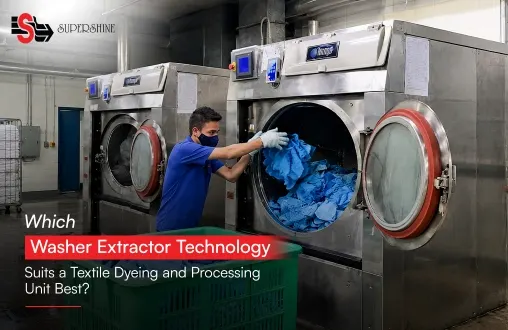
Which Washer Extractor Technology Suits a Textile Dyeing and Processing Unit Best?

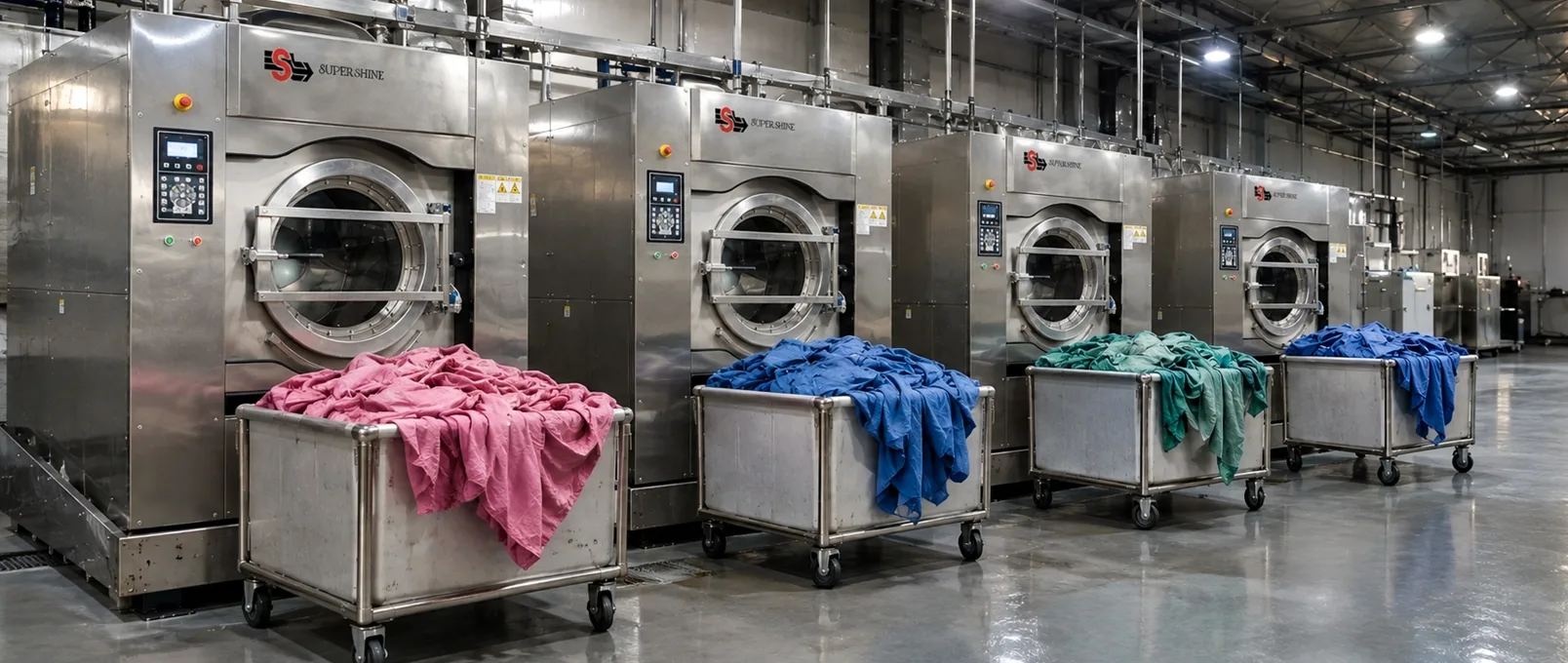
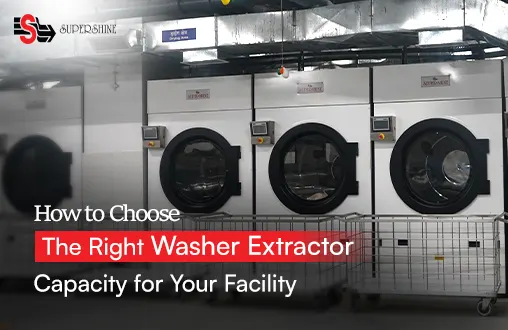
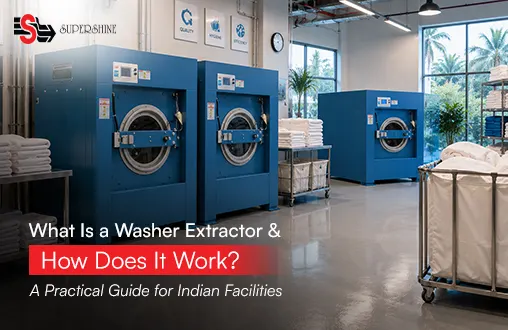
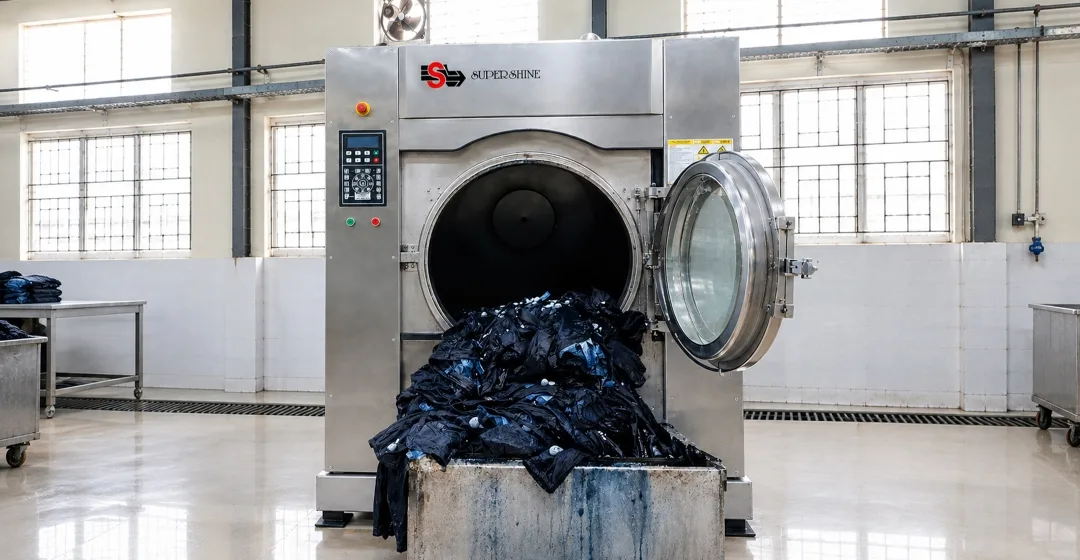
For a textile dyeing and processing unit, heavy-duty hard mount washer extractors built with corrosion-resistant stainless steel drums, high-temperature capability, and strong chemical dosing compatibility are generally the better fit over standard hospitality-grade or soft mount machines. Dye houses need equipment that can run repeated high-heat cycles with acids, alkalis, and dyeing auxiliaries without degrading, and that can extract at high G-force to reduce moisture before drying, cutting energy costs downstream. The right choice depends on fabric type, batch size, and whether the unit is doing washing, dyeing, or both on the same equipment. Getting the core extractor washing machine specification right for your chemical process is the decision everything else in this article builds on. This is also where the hospitality-versus-industrial distinction matters most. A standard commercial laundry washer built for hotel linen simply isn't engineered for dye-house chemistry, and even a general industrial laundry washer may fall short of what sustained high-temperature dyeing demands. Facilities running continuous, heavy-load cycles need a genuinely industrial washing machine, and in many dye houses specifically a heavy duty industrial washing machine rated for aggressive chemical exposure and high sustained temperature, not equipment repurposed from a lighter-duty application.
Why Textile Processing Laundry Equipment Is a Different Engineering Problem
Hotel and hospital laundries wash linen. A dyeing and processing unit is often doing something closer to industrial chemical processing that happens to use a washing machine format. That distinction matters enormously when specifying equipment.
A typical dye house cycle might involve scouring fabric to remove sizing agents and natural oils, then dyeing at elevated temperature with reactive, acid, or vat dyes depending on the fiber, followed by rinsing, neutralising, and sometimes a softening or finishing treatment. Each of those stages puts different stress on a machine than a standard wash-rinse-extract hotel linen cycle ever will.
The chemical exposure problem
Dyeing and pre-treatment chemicals, including caustic soda, hydrogen peroxide for bleaching, acetic acid for pH adjustment, and various dye classes, are considerably more aggressive than hotel-grade detergents. Standard washer extractor components, seals, gaskets, and even certain grades of stainless steel, can degrade faster under this kind of repeated chemical exposure if the equipment wasn't specified for it.
This is why chemical-resistant construction matters as a genuine spec point, not a marketing phrase:
- Higher-grade stainless steel (commonly 316-grade rather than 304 in aggressive chemical environments) resists pitting and corrosion from acids and chlorine-based agents.
- Reinforced door seals and gaskets rated for chemical exposure, not just water and standard detergent.
- Dosing systems built to handle a wider range of chemical viscosities and concentrations than a hospitality detergent dispenser.
High-temperature cycle demands
Many dye processes need sustained high temperatures, often well above the 60-70°C range typical of hospital thermal disinfection, particularly for polyester dyeing with disperse dyes, which frequently requires temperatures around 130°C under pressure in specialised equipment, or 95-98°C+ in atmospheric dyeing machines for cotton with reactive dyes.
Standard commercial washer extractors aren't built for this. Textile processing units typically need equipment (or dedicated dyeing machines alongside washer extractors) engineered specifically for sustained high-heat operation, with heating systems, insulation, and drum bearing tolerances built for that continuous thermal load rather than occasional disinfection cycles.
Hard Mount vs Soft Mount: Which Actually Fits a Dye House?
This is one of the most common specification questions, and the answer for textile processing leans differently than it does for hospitality.
Hard mount washer extractors:
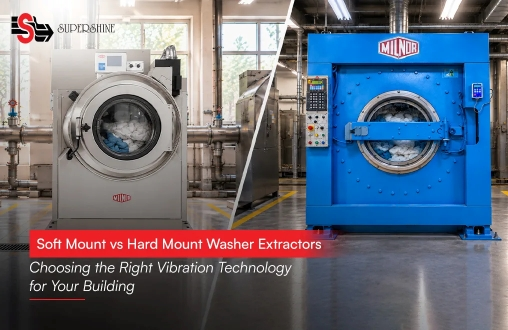
- Bolted directly to a reinforced concrete foundation, offering excellent stability for heavy, repeated high-speed extraction cycles.
- Generally more tolerant of the vibration and mechanical stress that comes with processing heavier, wetter fabric loads common in textile mills.
- Lower upfront cost and simpler mechanical design, which matters for facilities running multiple units.
- Requires a proper foundation and typically a ground-floor or reinforced installation.
Soft mount washer extractors:
- Use a suspension system that reduces vibration transmission, useful where floor loading or building structure is a constraint.
- Often preferred in hospitality or multi-story settings, less commonly the default choice for heavy industrial textile processing.
- Higher upfront cost, though often justified when floor space or structural limitations rule out hard mount installation.
For most standalone textile dyeing and processing units with ground-floor installation and high-volume, heavy-load cycles, hard mount washer extractors tend to be the more practical and cost-effective choice, provided the facility has appropriate foundation work done during installation.
Extraction Efficiency and Its Downstream Energy Impact
This is a detail that gets underweighted in a lot of purchasing decisions, but it has real financial consequences. Extraction efficiency, essentially how much residual moisture remains in fabric after the spin cycle, directly determines how much energy the drying stage consumes afterward.
A washer extractor capable of higher G-force extraction (commonly in the 300-400+ G range for industrial units, versus lower ranges in economy machines) can pull significantly more water out mechanically before the fabric ever reaches a dryer. Since mechanical extraction is far cheaper per unit of water removed than thermal drying, even a modest improvement in extraction efficiency compounds into meaningful energy savings across thousands of cycles a year.
For a textile processing unit running multiple shifts, this isn't a marginal consideration, it's often one of the larger controllable line items in the plant's overall energy cost.
Effluent and Water Considerations Specific to Dye Houses
Textile dyeing generates wastewater with dye residue, chemical byproducts, and elevated temperature, all of which fall under environmental compliance requirements that hospitality and healthcare laundries simply don't deal with in the same way. This affects equipment selection indirectly but meaningfully:
- Water usage per cycle matters more here since effluent treatment costs scale with volume, making water-efficient washer extractors a direct cost lever, not just a sustainability talking point.
- Drain compatibility with the facility's effluent treatment plant (ETP) needs to be confirmed at the specification stage, particularly for high-temperature discharge.
- Programmable cycle control helps standardise water and chemical usage per batch, which supports more predictable effluent load and easier compliance reporting.
Facilities operating under India's Central Pollution Control Board (CPCB) and state pollution control board norms for textile effluent discharge should factor equipment water efficiency into procurement decisions from day one rather than treating it as a downstream problem for the ETP to solve alone.
How Supershine Approaches Textile Processing Equipment Selection
Supershine Laundry works with garment manufacturing and textile processing clients to specify equipment based on actual fabric type, chemical process, and batch volume rather than defaulting to standard commercial machines repurposed for industrial use. That typically involves:
- Reviewing the specific dyeing and finishing processes the unit runs, since a facility doing simple washing and rinsing has very different needs than one running full reactive or disperse dyeing cycles.
- Recommending appropriate stainless steel grade and seal specifications based on the chemical profile involved.
- Sizing extraction capability to reduce downstream drying energy costs.
- Coordinating water and drain requirements with the facility's ETP setup.
Getting this specification right upfront avoids the expensive mistake of installing standard-grade equipment that corrodes prematurely or can't sustain the temperatures a dyeing process actually requires.