+91-124-4807600
 sales@supershinelaundry.ae

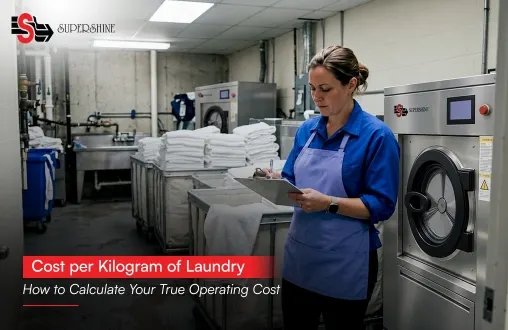
Cost per Kilogram of Laundry: How to Calculate Your True Operating Cost

If you run a laundry and cannot tell me your cost per kilogram, you are flying blind. It is the single most useful number in the business. It tells you whether your plant is efficient, whether outsourcing makes sense, and whether new commercial laundry equipment will pay for itself.
The good news is that it is not hard to work out. The bad news is that most people forget half the costs. Let's fix that, the way we do it with customers at Supershine Laundry.
Why this number matters
Cost per kilogram turns a messy operation into one clear figure. With it you can:
- Compare in house laundry with an outside vendor
- Judge whether a new machine is worth buying
- Spot waste in water, energy or labour
- Set targets for your team
Without it, decisions run on gut feel.
The seven cost buckets
Everything that costs money in the laundry belongs in one of these.
- Labour. Wages, overtime, benefits and supervision, including sorting, loading and finishing.
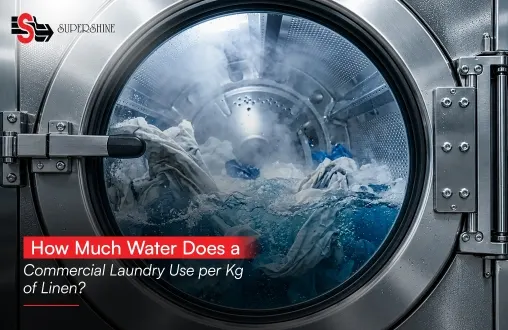
- Water. Supply, treatment, softening and effluent costs.
- Energy. Steam, gas, electricity and diesel for the generator.
- Chemicals. Detergents, alkalis, sours, softeners and disinfectants.
- Maintenance. Spares, AMC, repairs and downtime.
- Equipment depreciation. The purchase cost spread across its useful life.
- Linen replacement and overheads. Worn out linen, rent, insurance, software and transport.
Most plants count the first four and forget the last three. That is why their figure looks too good to be true.
The formula
Keep it simple:
Cost per kg = total monthly laundry cost divided by total dry kilograms processed in that month
Take a real month, not an average of guesses. Weigh the linen. Many hospitals and hotels do not, and estimates tend to be wrong.
A worked example
Take a made up plant processing 30,000 kg a month. Add up all seven buckets and say the total is the number on your sheet. Divide by 30,000. Now break it down by bucket. You will often find labour is the largest slice, with energy and water next. Supershine Laundry uses the same method in its laundry assessments.
The point is not the example numbers. It is the breakdown. Once you see that, say, energy is a third of the cost, you know where an efficiency project will pay off.
What moves the number
- Throughput per labour hour. More automation and better layout raise it.
- Water use per kilogram. Efficient energy efficient laundry machines with recovery lower it.
- Extraction quality. Drier linen cuts drying time and fuel.
- Machine uptime. Breakdowns waste labour and often mean outsourcing.
- Linen life. Gentle wash programmes reduce replacement spend.
- Load factor. Running full loads is the cheapest improvement available.
Common mistakes
- Using invoices without checking the month they apply to
- Forgetting depreciation and capital cost
- Not counting rewash rate
- Mixing wet and dry weight
- Ignoring downtime and outside processing costs
Rewash is a sneaky one. If five percent of loads get redone, you are paying for five percent of your work twice.
Using the figure to make decisions
Once you have your number, ask three questions:
- How does it compare with outside vendor rates?
- Which bucket is largest, and why?
- What would a better commercial laundry machine change?
For a new purchase, calculate the saving per kilogram, multiply by yearly volume, and compare with the extra investment. That gives you a payback period you can defend to a finance team.
Whatever you decide, judge any commercial laundry equipment quote on kilograms per hour, litres per kilogram and energy per kilogram, because those three numbers feed straight into your cost sheet. A glossy brochure rarely mentions them. Ask for them in writing, then plug them into your own formula before you compare prices. Yes, it takes an afternoon. It is worth it.
Make it a monthly habit
Do not calculate your cost per kilogram once and forget it. Set a fixed day each month, collect the bills, weigh the linen and update the sheet. Show it to the supervisor and the owner. After three or four months, trends appear. You will notice the effect of a new detergent, a repaired machine or a seasonal rush. That habit is what turns a spreadsheet into a management tool.
Add one more column for rewash and outside processing, so the sheet reflects what the laundry truly costs. Honest numbers lead to better decisions.
Where Supershine Laundry fits
Our assessment service looks at the same buckets. We study your volumes, utilities and workflow, then recommend equipment from Milnor, Image, ADC and other partners based on lifetime cost rather than the purchase price alone. Supershine Laundry has done this across 4,200+ clients, and the pattern holds: the cheapest machine to buy is rarely the cheapest to run. If you are comparing a commercial washing machine quote, ask for the energy and water data per kilogram before anything else.