+91-124-4807600
 sales@supershinelaundry.ae

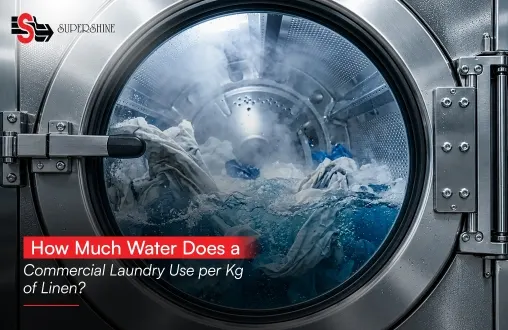
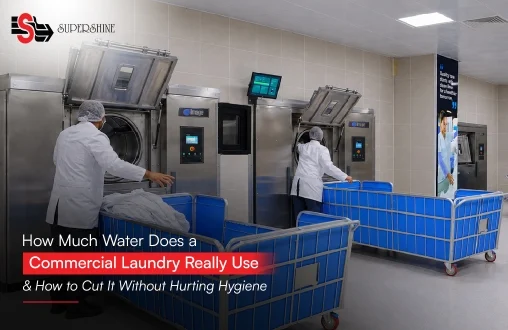
How Much Water Does a Commercial Laundry Use per Kilogram of Linen?

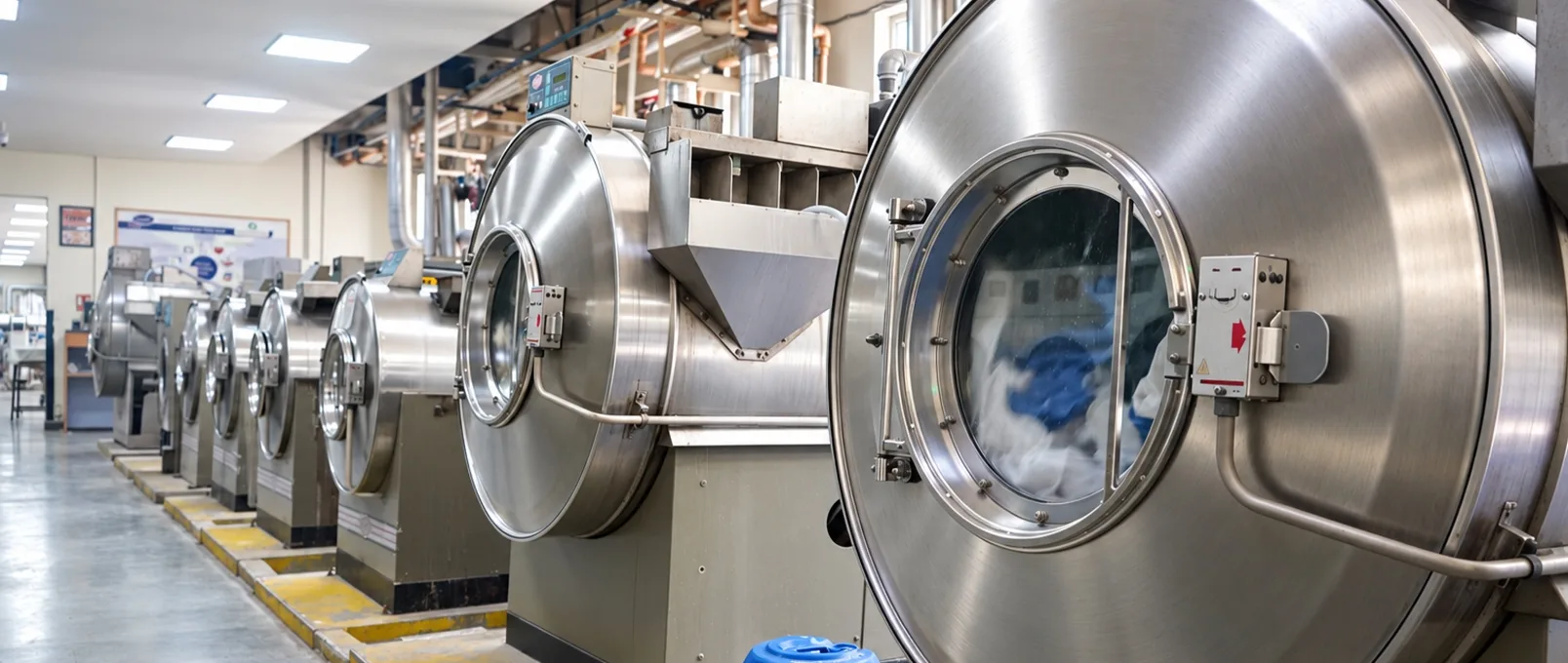
Short answer: Commercial laundry water use ranges from about 2 litres to over 30 litres per kilogram of linen. Older washer extractor plants have historically used around 20 litres per kilogram, while modern tunnel washers with water recovery can operate at a fraction of that. Hotels in India are often reported at 15 to 20 litres per kilogram, so there is usually room to improve. Planning a hotel laundry? Skip to how to plan a commercial laundry setup for a 300-room hotel in India below. At Supershine Laundry, we start every laundry assessment with this number, so it is worth understanding before you plan anything else.
Typical figures by equipment type
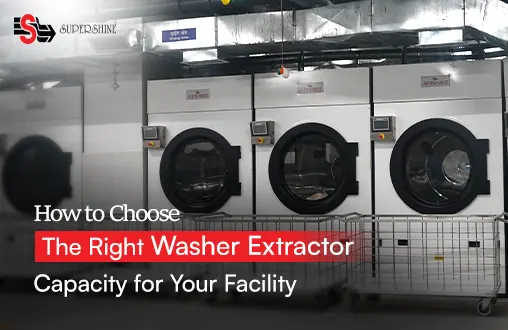
- Conventional washer extractors: often around 15 to 20 litres per kilogram, depending on programmes and rinse settings
- Well tuned washer extractors with last rinse reuse: roughly 30 percent lower
- Tunnel washers: around 5 litres per kilogram or less for many flatwork loads, with advanced systems going lower
- Manufacturer claims for the most advanced tunnels: as low as 2 to 3 litres per kilogram for cotton, though these should be checked against your own water and linen
Treat these as ranges. Commercial laundry water usage changes with linen type, soil level, water quality and how well the machine is loaded.
Why the numbers differ so much
Commercial laundry water consumption comes down to three places in a wash cycle: soaking the linen, carrying away dirt and rinsing out chemicals. Rinsing usually takes the largest share.
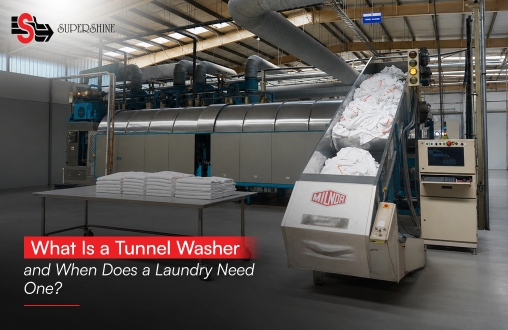
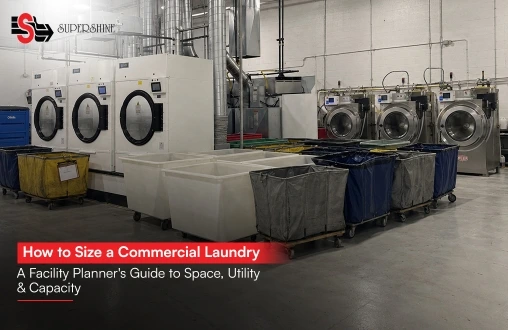
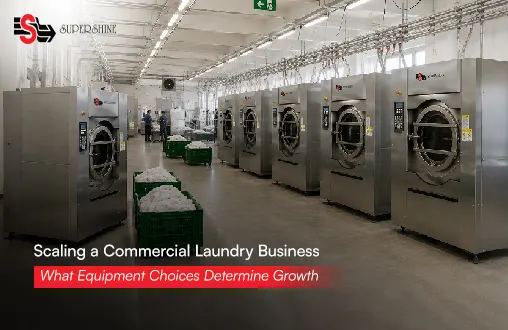
Washer extractors work in batches, so each load uses fresh water in each stage. A tunnel washer moves linen through compartments in a counter current flow. Clean water enters at the end and flows backward, so the same water rinses several loads before it leaves
How to plan a commercial laundry setup for a 300-room hotel in India
If you are working out how to plan a commercial laundry setup for a 300-room hotel in India, water is a good place to begin.
- Estimate daily linen. A 300 room hotel at 70 percent occupancy may process roughly 850 to 1,050 kg a day with F&B and spa included.
- Choose a water use assumption. At 15 to 20 litres per kilogram, that is about 13,000 to 21,000 litres a day. At 5 litres per kilogram, it falls to around 4,000 to 5,000.
- Plan supply and storage. Include a tank, booster pump and softener.
- Plan drainage and effluent. Hot discharge needs the right drains and compliance.
- Consider recovery. Reusing last rinse water or heat can cut both water and energy.
How to measure your own figure
- Install a water meter on the laundry supply line
- Weigh dry linen for a week
- Divide litres used by kilograms processed
- Record it monthly and watch for drift
If the number rises without a change in linen type, something is leaking or a programme has changed. Supershine Laundry can help install metering and review the results with your team.
Ways to build a water efficient commercial laundry
A water-efficient commercial laundry is a combination of equipment, programming and habits.
- Load to capacity. Half empty drums waste water.
- Optimise rinses. Test rinse water and reduce unnecessary dips.
- Reuse last rinse. Use it for pre wash in the next load.
- Match chemistry to water. Softened water allows lower chemical and rinse needs.
- Use programmable controls. Different linen needs different water levels.
- Fix leaks. A dripping valve wastes thousands of litres.
- Consider tunnel washing. At higher volumes it is more efficient.
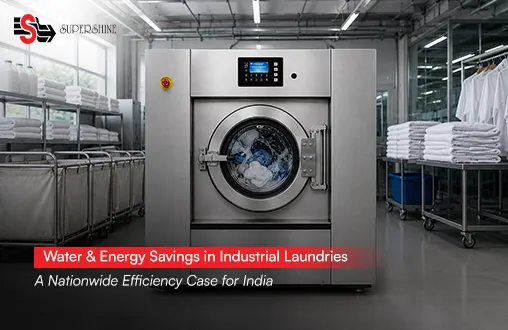
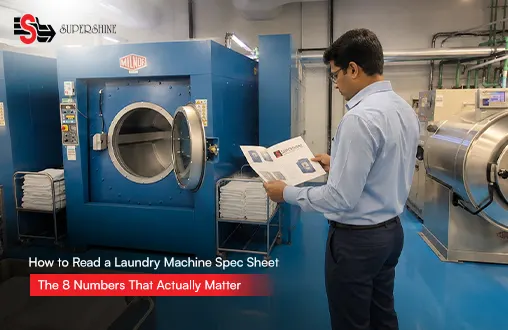
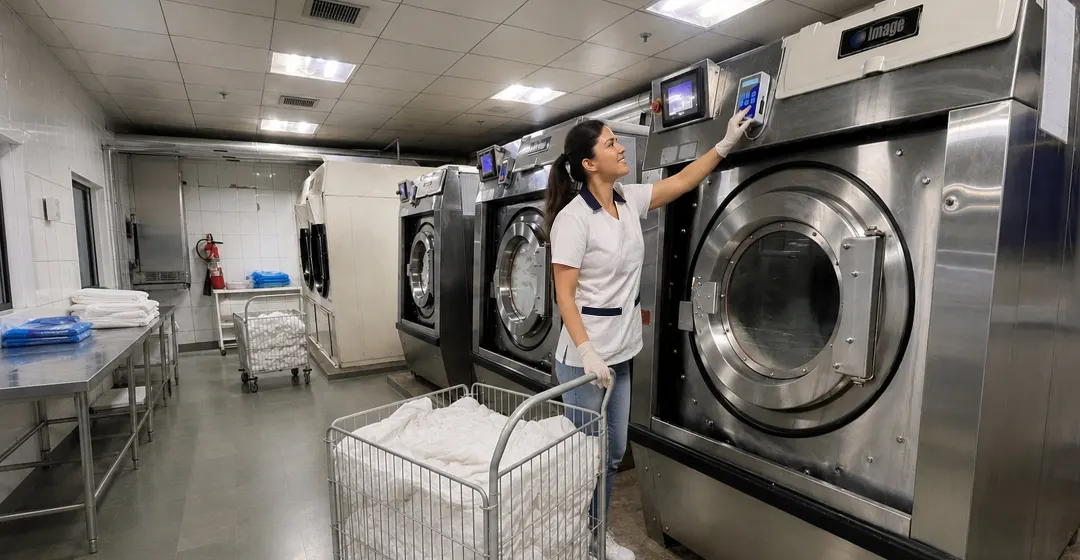
Machines matter too. Commercial washing machine water consumption is a spec you should ask about before buying. Ask suppliers for litres per kilogram for your linen type, not a generic claim. Equally, industrial washing machine water usage at the programme level, rather than only at the machine level, tells you what you will really pay.
Hygiene still comes first
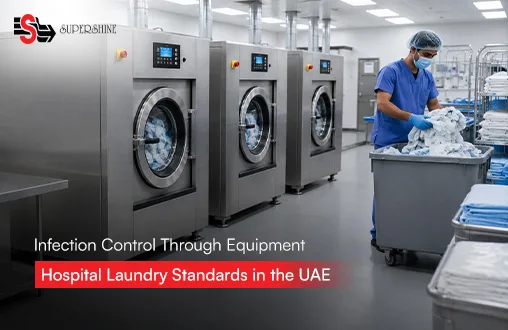
Cutting water does not mean cutting cleanliness. Temperature, time, mechanical action and chemistry still control hygiene. For hospital linen, standards such as HTM 01-04 specify thermal disinfection at 71 degrees Celsius for 3 minutes or 65 degrees for 10 minutes. Good laundries can meet this while using less water.
Set a target and review it
Once you know your litres per kilogram, set a realistic target, for example a ten percent cut over six months. Share it with the team and review progress monthly. Small gains from full loads, shorter rinses and leak repair usually come first. Larger gains from water recovery or new equipment can follow once the basics are in place.
Celebrate each milestone with the team. A shared goal makes saving water a habit instead of a campaign.
How Supershine Laundry helps
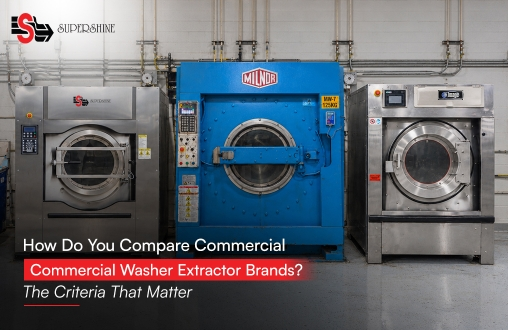
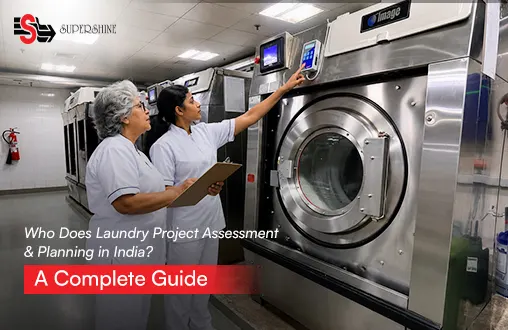
Supershine Laundry assessment and project planning service reviews water, electricity and labour together. We help hotels and hospitals compare washer extractors from Milnor, Image and other partners, then choose a configuration that fits their volumes. With 35+ years in industrial laundry engineering, we know that the best water saving is the one your operators can sustain every day.