+91-124-4807600
 sales@supershinelaundry.ae

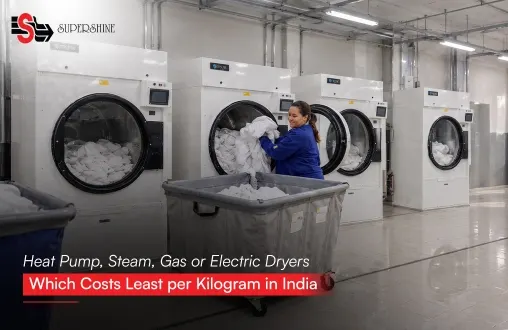
Heat Pump, Steam, Gas or Electric Dryers: Which Costs Least per Kilogram in India

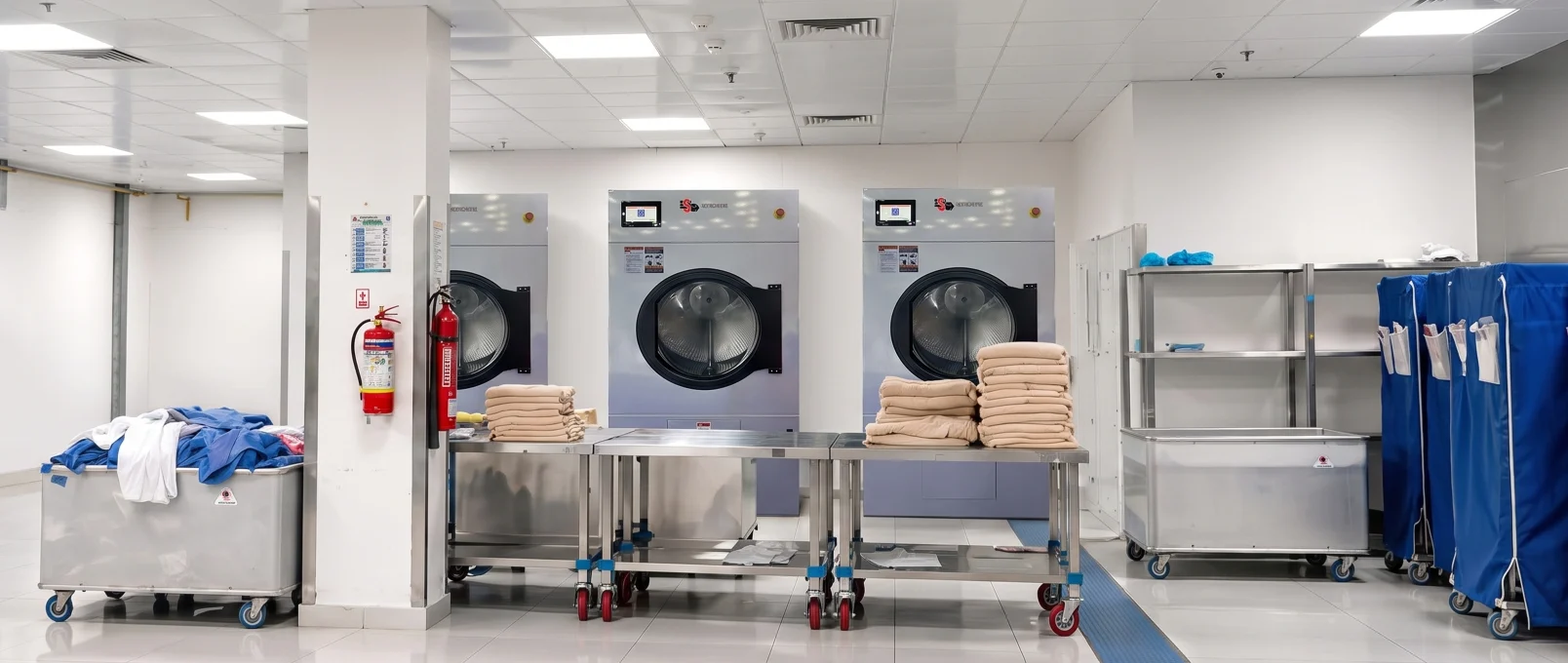
Washing gets all the attention, but drying is where the money quietly disappears. A commercial dryer evaporates a lot of water, and every kilogram of water costs you energy. So when someone asks which dryer is cheapest to run, the answer is rarely the one with the lowest price tag. If you care about energy efficient laundry machines, the dryer is the first place to look.
Let's break it down the way we do with customers at Supershine Laundry, using a simple cost per kilogram view.
Start with the water, not the dryer
After a good spin, cotton linen usually holds somewhere around half its dry weight in moisture. That is the water your dryer has to remove. So there are two levers:
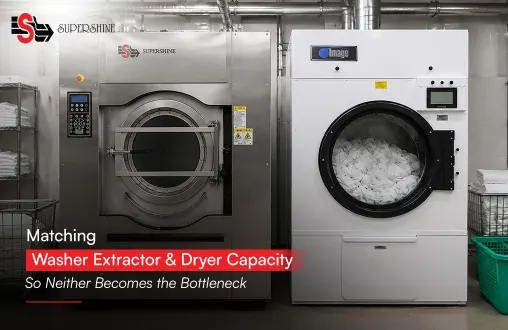
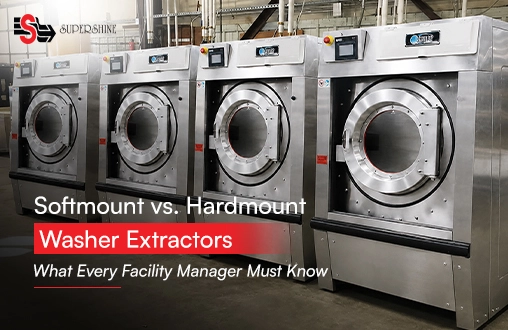
- Extract harder. A high speed washer extractor sends drier linen to the dryer, which cuts drying time and cost.
- Pick the right heat source. Steam, gas, electric and heat pump each convert energy into drying differently.
Get the first one right and every dryer type looks better.
The four options, plainly
Steam dryers
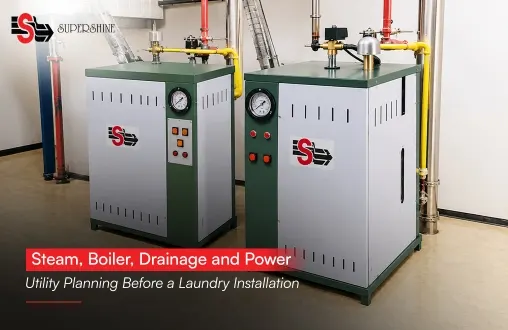
Steam works well if you already run a boiler for the whole plant, such as in a hospital or large hotel. The heat is almost "free" when boiler capacity is spare. If you have to add a boiler just for drying, the math changes quickly.
Gas dryers
Gas heating is fast and powerful, which suits high volume work. The running cost depends on local LPG or PNG pricing, so check the tariff for your city. Gas also needs proper ventilation, piping and safety checks.
Electric dryers
Electric models are simple to install and handy where gas or steam is not available. The catch is the tariff. Resistance heating converts electricity to heat directly, which is expensive when power is costly.
Heat pump dryers
A heat pump recycles heat from the exhaust air instead of venting it. Published figures from manufacturers and energy agencies put savings at roughly 40 to 65 percent compared with conventional electric or vented dryers, depending on the model. They are gentle on fabric, but cycle times can be longer and the upfront price is higher.
How to calculate cost per kilogram
Here is a rough framework you can use with your own numbers:
- Energy used per kilogram of linen. Ask the manufacturer for kWh, cubic metres of gas or kilograms of steam per kg of dried load.
- Your local tariff. Use your actual electricity, gas or steam cost.
- Add the extras. Include fan power, maintenance and the cost of lint and exhaust handling.
- Divide by dry kilograms processed. That is your running cost per kilogram.
Then add the capital cost spread over the machine's life. Sometimes the cheaper machine to buy is more expensive to own.
So which one costs least in India?
There is no single winner, and anyone who names one without seeing your site is guessing.
- Existing boiler with spare capacity: steam is often the lowest running cost.
- High volume, piped gas available: gas is usually competitive.
- No gas or steam, high electricity tariffs: a heat pump deserves a serious look.
- Small sites with low usage: electric can be fine, because the running hours are limited.
India's heat also matters. Hot, humid summers can reduce heat pump efficiency if the laundry room is poorly ventilated, so room design counts.
What else affects running cost
A few things people forget:
- Lint blockage and dirty exhaust ducts slow drying and waste fuel
- Overloading or underloading a commercial laundry dryer hurts efficiency
- Poor washer extraction hands the dryer a bigger job
Regular industrial dryer machine maintenance, clean lint filters and correctly sized exhaust ducting often save more than switching fuel.
A simple test before you decide
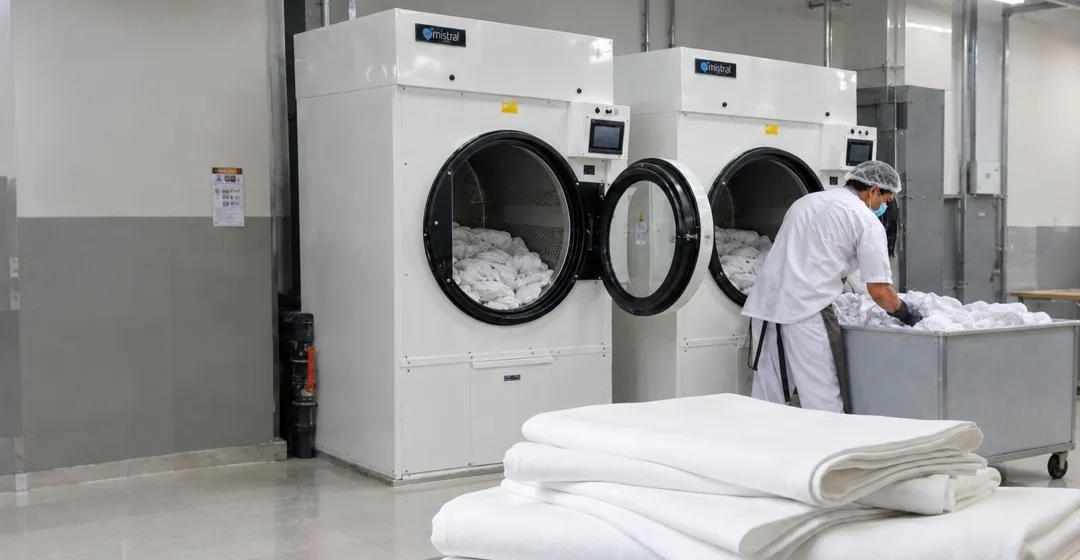
Run a trial. Weigh a typical load of dry towels, dry it on your current dryer, and record the time and the fuel or power used. Repeat with a load of sheets. Now divide by the dry weight. This gives you a real cost per kilogram for your own linen, and it becomes the benchmark any supplier must beat. Ask each vendor to show their figures for the same linen on a comparable machine. Numbers from your own plant are always more honest than brochure data.
Repeat the trial in a different season if you can. Ambient temperature and humidity change drying times, and your yearly average matters more than a single day.
Choosing with Supershine Laundry
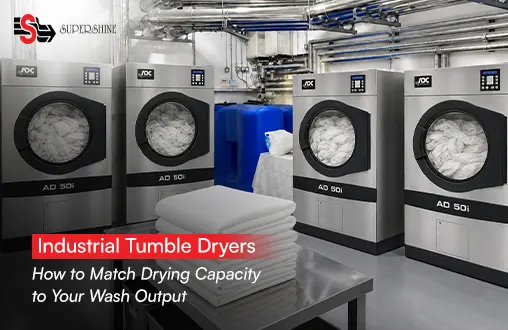
We supply ADC and other proven industrial clothes dryer brands, and Supershine Laundry engineers look at your utilities, load profile and city tariffs before recommending anything. After installation, training and AMC support keep the numbers where they should be.
Whatever you choose, treat energy efficient laundry machines as a package. A high spin washer, a right sized dryer and clean ducts will beat any single clever feature.