+91-124-4807600
 contact@supershine.in
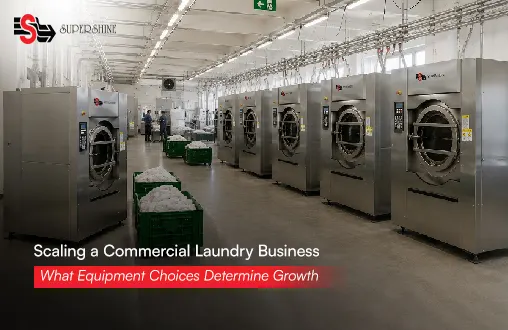
Scaling a Commercial Laundry Business in India: What Equipment Choices Determine Growth

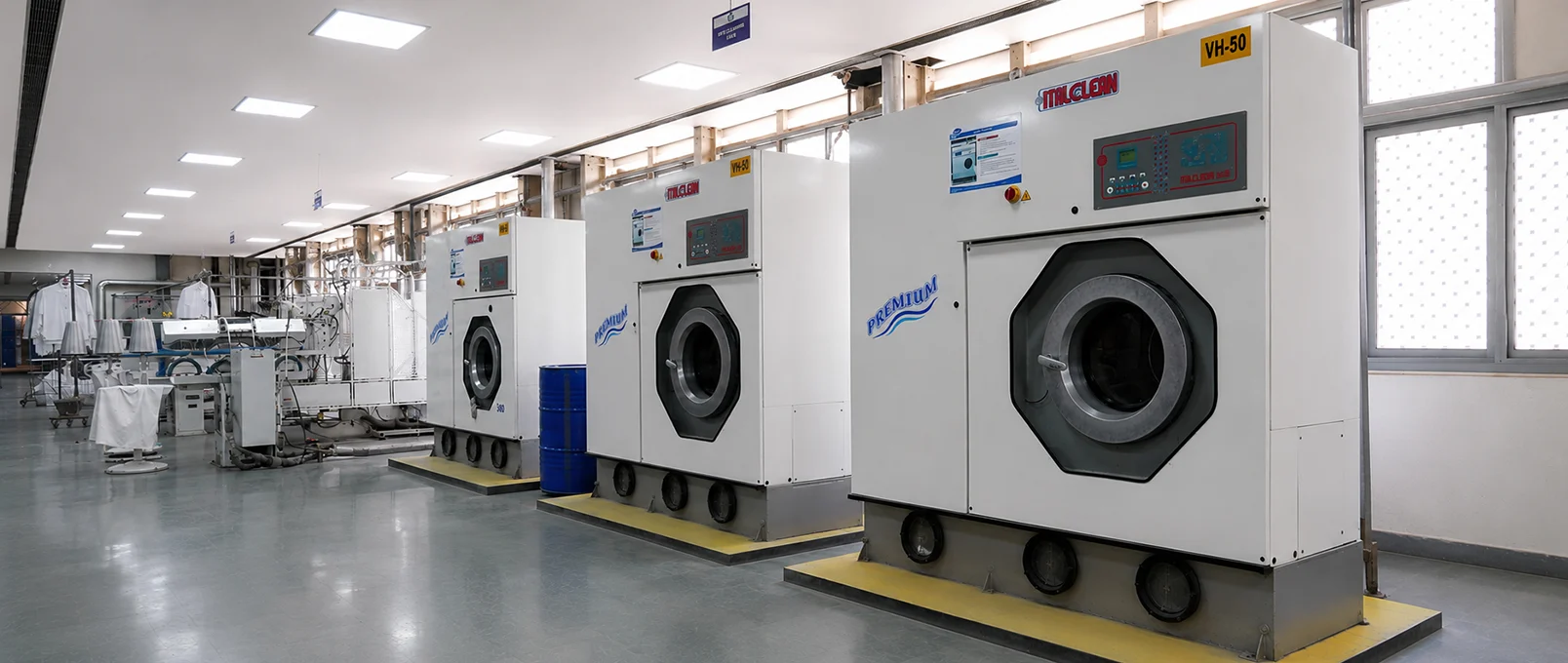
Picture this. A 200 room hotel in Gurugram just signed a deal to add another wing, and the laundry manager is suddenly staring at double the linen volume with the same three washers he had last year. Does he buy more of the same machines, or does he rethink the whole setup? This is the exact moment where a lot of businesses either scale smoothly or get stuck in a mess of overtime shifts, breakdowns, and unhappy housekeeping staff. And it all comes down to one thing that people underestimate: equipment choice.
India's laundry and textile care segment has been quietly growing for years, pushed by hotel chains expanding into tier 2 cities, hospitals adding bed capacity, and garment exporters needing industrial scale finishing. But growth on paper doesn't mean much if the machines on the floor can't keep up. Anyone who has run a laundry operation for more than a few years will tell you that the real bottleneck is rarely demand. It's throughput, uptime, and whether the equipment was set up correctly in the first place.
Why Equipment Decisions Make or Break Scaling
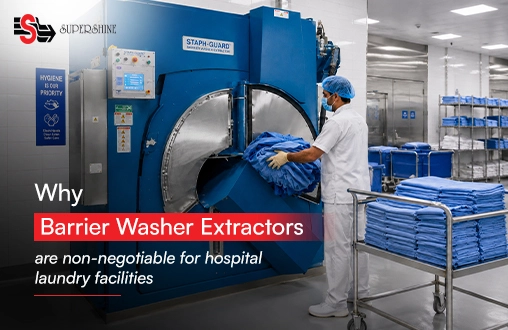
A lot of business owners assume that scaling a laundry operation is just about buying bigger machines. It's not that simple. The right mix of washer extractors, tunnel systems, dryers, and finishing equipment depends on fabric type, turnaround time expectations, and utility availability at the site. A hospital needs infection control grade washing with barrier systems. A hotel needs speed and finish quality on bedsheets and towels. A garment manufacturer cares about consistent moisture content before pressing. One washer type does not fit all three.
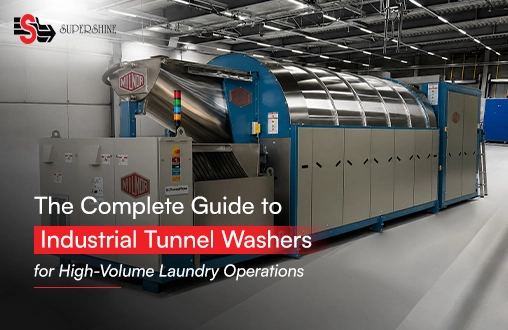
This is where working with established commercial laundry equipment manufacturers matters. Global brands like Milnor, Jensen, ADC, Forenta, Italclean, and Image have each built their reputation around specific strengths, tunnel washing systems for high volume continuous batch processing, finishing lines for flatwork, and rugged extractors that can run multiple shifts without failing. Supershine has spent over three decades partnering with these commercial laundry machine manufacturers, and honestly, that relationship is what lets a project team recommend the right combination instead of just selling whatever is in stock.
What Actually Happens During Installation and Commissioning
Here's a question worth asking before signing any equipment order: what is included in industrial laundry machine installation and commissioning? Most buyers think it starts and ends with delivering the machine and plugging it in. It doesn't. A proper installation is a multi week process, sometimes multi month for a large hospital or hotel project, and it involves several distinct phases.
Site Assessment and Utility Planning
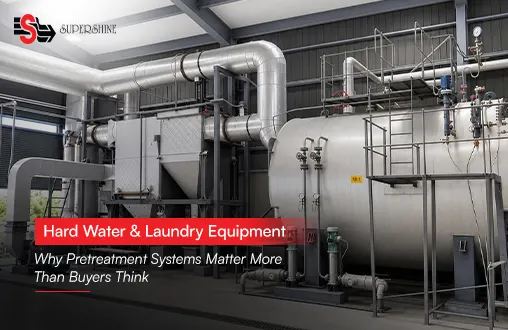
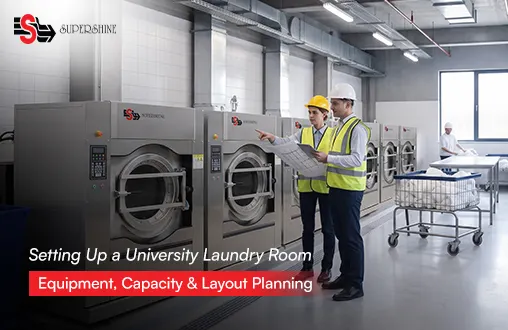
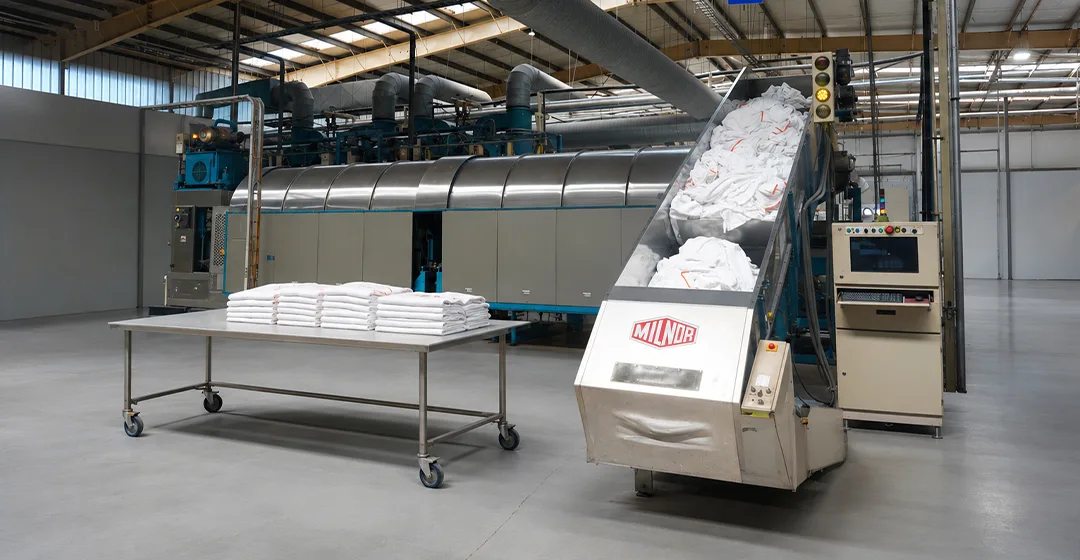
Before a single machine arrives, the site needs a proper assessment. This means checking floor load capacity (a large tunnel washer can weigh several tonnes when loaded), ceiling height for tunnel systems, drainage capacity, and access routes for moving heavy equipment indoors. Utility planning covers three big things: electrical supply (three phase power, correct voltage and amperage for each machine), steam supply if the plant uses steam heated dryers or ironers, and water supply with adequate pressure and, in many cases, water softening or treatment systems since hard water damages both fabric and machine internals over time.
Electrical, Steam, and Water Requirements
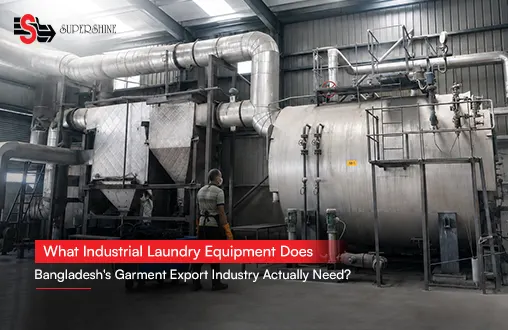
Industrial washers typically draw significant current, and undersized wiring is one of the most common causes of tripped breakers and motor damage in poorly planned installations. Steam boilers need to be sized correctly against the BTU or kilocalorie demand of the ironers and dryers on site, not just guessed at. Water requirements go beyond volume too, pH levels and hardness affect detergent performance and machine longevity, which is why a competent installer tests water quality before finalizing the plumbing layout. Skipping this step is a classic mistake that shows up six months later as scale buildup or corrosion.
Foundation, Levelling, and Vibration Control
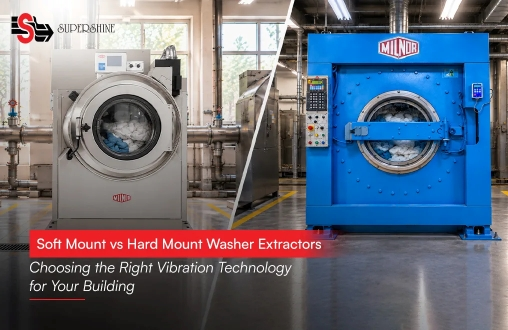
High speed extractors spin at G-forces that can exceed 300G during the final extraction cycle. If the machine isn't bolted to a properly levelled and reinforced foundation, that vibration transfers into the building structure. Anti vibration mounts, correct anchor bolting, and sometimes a dedicated concrete plinth are part of a real commissioning job, not an afterthought.
Testing, Calibration, and Trial Runs
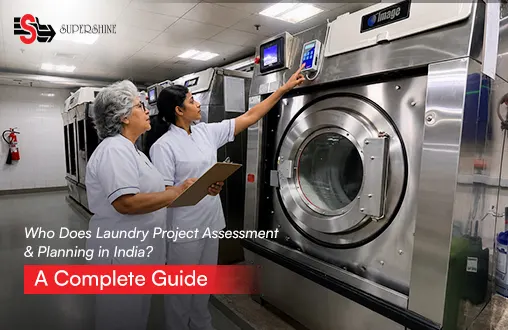
Once the machines are physically in place and connected, commissioning engineers run empty cycles first, then loaded trial runs, checking temperature accuracy, cycle timing, water extraction levels, and safety interlocks. Every washer, dryer, and ironer has to be calibrated against the actual fabric mix the client will be processing, since a hospital's cotton linens behave differently under heat than a hotel's blended polycotton sheets.
Operator Training and Handover
This part gets skipped far too often by smaller vendors, and it's a mistake. Machines are only as good as the people running them. Training covers loading limits, chemical dosing, error code troubleshooting, and basic preventive maintenance checks. Supershine typically spends dedicated time with the client's staff on site, walking through real production cycles rather than just handing over a manual nobody reads.
The Role of AMC and Ongoing Maintenance
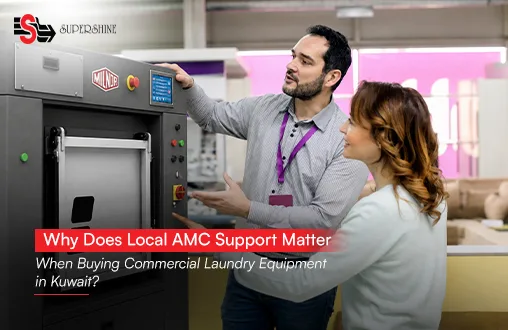
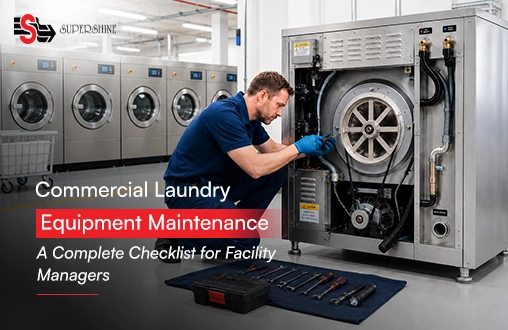
Growth doesn't stop at installation day. A laundry running three shifts a day puts enormous wear on bearings, seals, and heating elements. This is why an annual maintenance contract, AMC, is not optional if you're serious about uptime. Preventive checks catch a worn bearing before it seizes mid cycle and shuts down an entire tunnel line during peak hotel season. Supershine's AMC model, built over 35 years of servicing more than 4200 clients across India and the Middle East, focuses on scheduled inspections plus rapid response for breakdowns, because in this business, a machine down for three days can mean thousands of unwashed sheets piling up in a hospital corridor.
Choosing the Right Partner as You Scale
There's no shortage of commercial laundry companies in the market today, but not all of them handle turnkey projects the same way. Some just sell machines. A genuine laundry company in india that can support scaling needs to handle assessment, sourcing from the right global brands, installation, commissioning, training, and long term service, all under one roof. That continuity matters because when something goes wrong at 2 AM before a hotel's morning checkout rush, you don't want to be juggling three different vendors trying to figure out whose responsibility it is.
Supershine's approach, working out of Gurugram and serving clients from five star hotels to defense establishments and pharmaceutical companies, has been built around this exact idea. Whether it's a 20 machine hospital laundry or a 200 machine industrial plant for a garment exporter, the equipment mix has to match the actual production reality, not a catalogue assumption.
What This Means for Your Growth Plan
If you're planning to scale a laundry operation in the next two or three years, start with a real capacity study instead of just ordering bigger machines. Talk to your equipment partner about utility upgrades early, since electrical and steam infrastructure changes can take months to approve and install, especially in older buildings. Ask hard questions about commissioning timelines and what training is actually included. And don't treat AMC as a line item to cut when budgets get tight, because the cost of downtime almost always exceeds the cost of maintenance.
Scaling isn't just about volume. It's about choosing machines that match your fabric mix, your utility capacity, and your growth timeline, then making sure the installation is done right the first time. That's the difference between a laundry operation that grows smoothly and one that's constantly firefighting.