+91-124-4807600
 contact@supershine.in
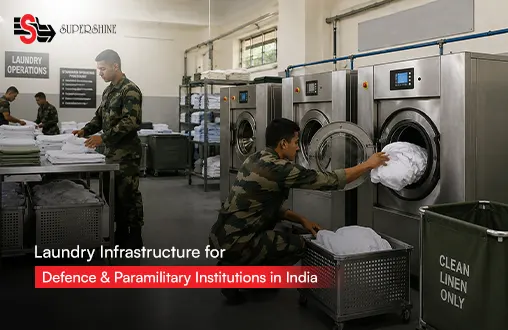
Laundry Infrastructure for Defence & Paramilitary Institutions in India

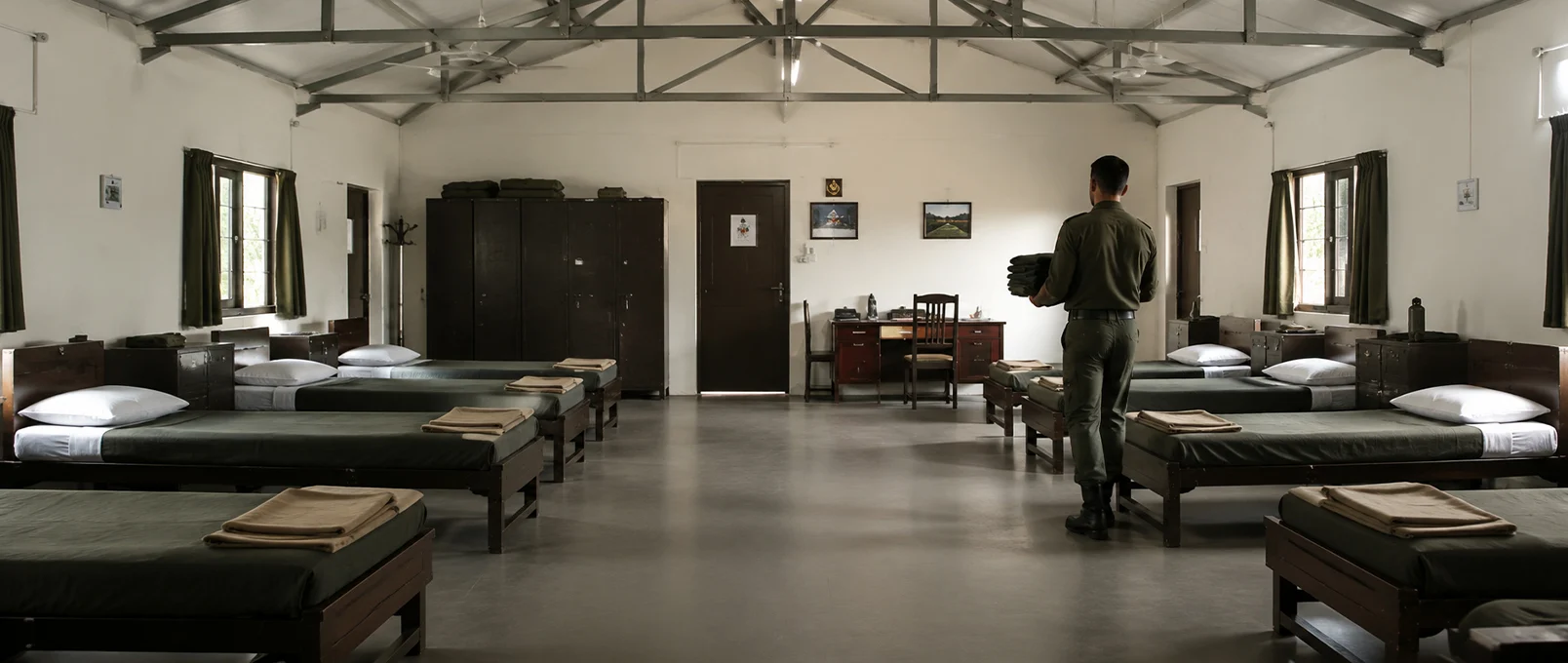
Picture a training academy with three thousand cadets, all of them needing fresh uniforms every single day, plus bed linen, mess towels, PT kits, and the odd batch of tents that come in caked with mud after a field exercise. Who handles that load, and what happens if the machine breaks down on a Monday morning right before the parade? That is not a hypothetical for most defence and paramilitary establishments in India. It is Tuesday. It is every day.
Cantonments, regimental centres, CRPF and BSF training campuses, naval bases, and even defence hospitals run laundry operations that look nothing like a hotel's back room. The volume is relentless, the fabric is tougher (think ripstop cotton, wool blankets, canvas), and the hygiene bar is non negotiable. A domestic style machine, or even a light commercial one, simply cannot survive this environment for long. This is exactly why procurement officers keep asking the same question: what is the best heavy duty commercial washing machine for institutional laundry in India, and which vendor actually understands defence sector needs rather than just selling a bigger box with a fancier control panel.
Why Defence Laundry Is a Different Animal
A regular commercial laundromat washes clothes from the public, mixed loads, moderate soiling. Defence laundry is different in three ways. First, the sheer scale. A single training centre can process anywhere from 500 to several thousand kilograms of linen and uniforms a day, depending on strength. Second, the soil load is heavier. Field training means mud, grease, engine oil residue from vehicle maintenance duty, and sometimes blood in the case of medical or veterinary units. Third, there is a strict hygiene and disinfection requirement, particularly in hospital wings and paramilitary medical units, where cross contamination between infected and clean linen has to be prevented through what the industry calls barrier washing.
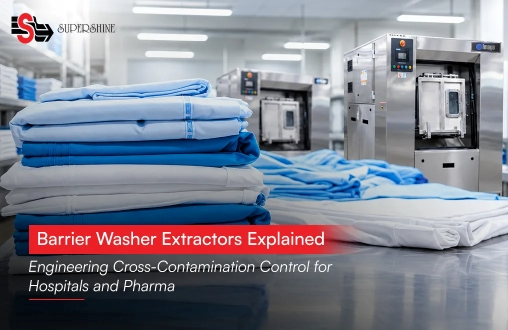
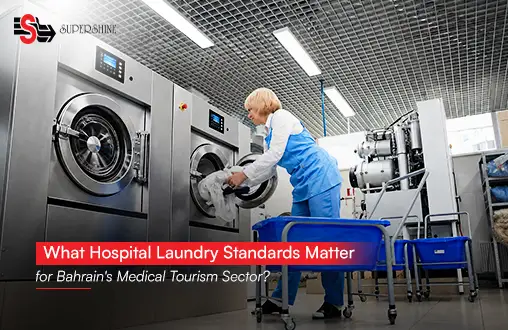
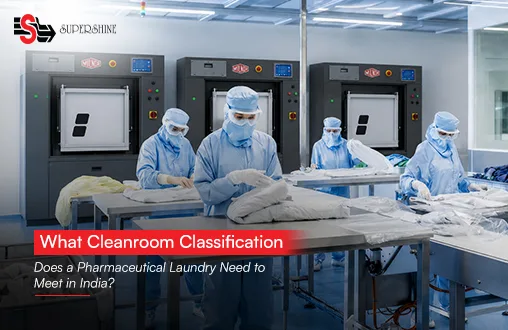
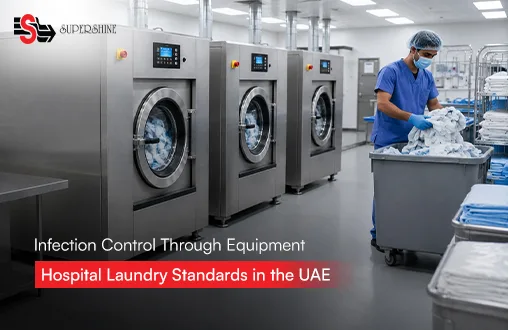
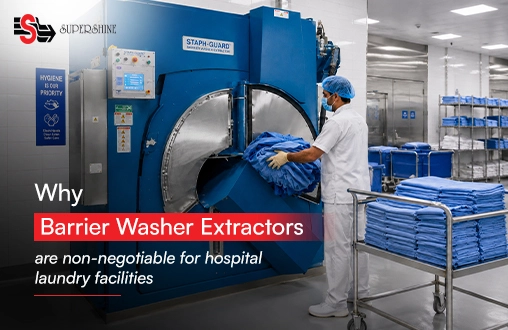
Barrier washer extractors have two doors, one on the soiled side and one on the clean side, so the two never meet in the same room. This is standard practice in hospitals across the world and increasingly demanded in defence hospital laundries in India too. Supershine has supplied barrier machines for exactly this kind of setup, where a cantonment hospital needed to separate soiled ward linen from finished, folded stock physically, not just procedurally.
The Real Numbers Behind the Load
Take a mid sized cantonment with roughly 5,000 personnel. Uniforms alone, assuming a conservative two changes a week per soldier, add up to well over 40,000 pieces monthly, before you count bedsheets, pillow covers, mess linen, mosquito nets, and PT gear. Add a defence hospital wing with 200 beds and you are looking at another 400 to 600 kilograms of linen daily, because hospital protocol usually demands a full change per bed per day, sometimes twice.
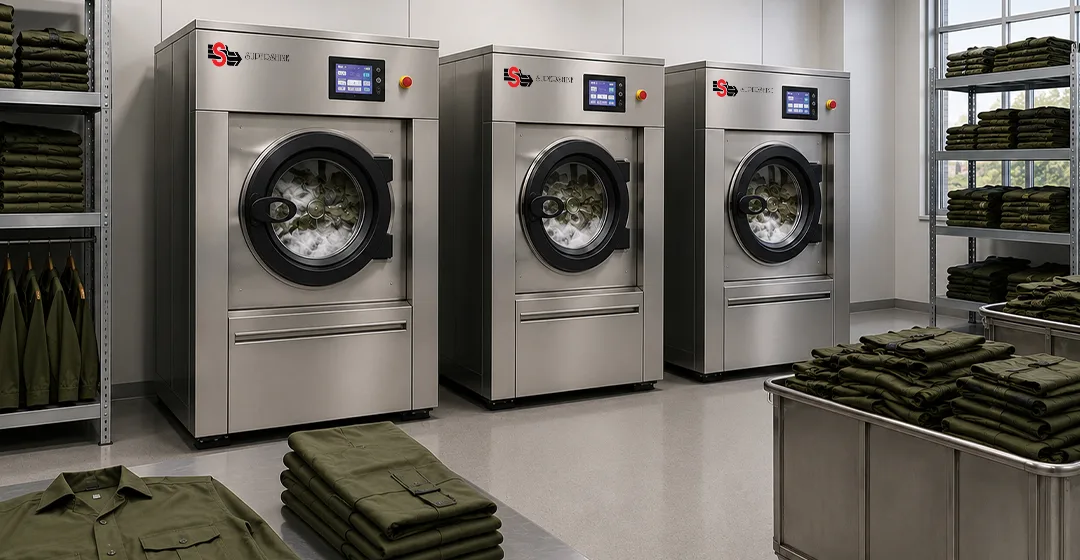
This is why a 10 kg or 15 kg front load washer, the kind you might find in a small guest house, is simply the wrong tool. Establishments need machines rated from 25 kg all the way up to 120 kg or more per load, run in multiple shifts, with programmable wash cycles that can be locked by the quartermaster so operators cannot skip a rinse step to save time. An industrial washing machine built for this scale has to run 12 to 16 hours a day, six or seven days a week, for years, without the drum bearing giving up or the door seal cracking.
Durability Is Not a Buzzword Here
Ask any quartermaster who has dealt with a cheap machine and they will tell you the same story. It works fine for the first year, then the bearings start groaning, the heating element fails, and suddenly there is a backlog of soiled uniforms with nowhere to go. That is a genuine operational risk in a defence setting, not just an inconvenience.
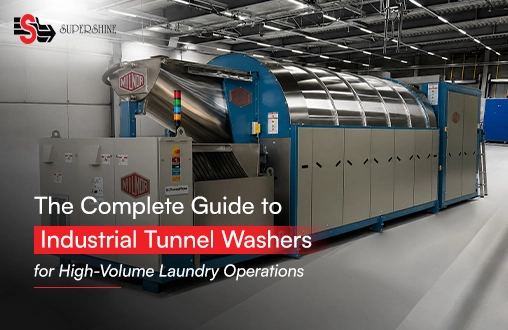
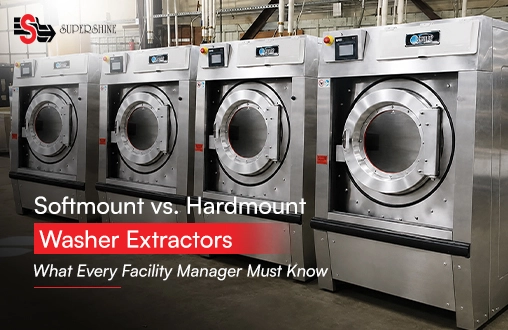
This is where heavy duty commercial washing machines from established global brands earn their price tag. Stainless steel drums (usually 316 grade in washer extractors that handle harsh detergents), reinforced suspension systems to absorb the vibration of a fully loaded 100 kg drum spinning at extraction speed, and programmable logic controllers that can run 20 or more stored wash programs. Brands like Milnor, Jensen, and Girbau built their reputation on exactly this kind of continuous duty performance, and that is a big part of why Supershine has partnered with Milnor and Jensen for large scale institutional projects in India. Electrolux Professional and a handful of strong domestic Indian manufacturers also compete in this space, but the differentiator usually comes down to after sales support, not just the machine on day one.
Hygiene Standards That Actually Matter
For defence hospitals and paramilitary medical units, thermal disinfection is often the deciding factor in equipment selection. The commonly followed benchmark, borrowed from healthcare laundry guidelines used internationally and adapted by Indian institutions, is a wash temperature of at least 71 degrees Celsius held for a minimum of three minutes, or lower temperatures held for longer with a validated chemical disinfectant added to the cycle. Machines need accurate temperature sensors and controllers that log this data, because in an audit, "we think it got hot enough" does not cut it.
Sluice cycles for heavily soiled or biohazard linen, separate extraction settings for delicate versus rugged fabric, and ozone or UV based finishing options are increasingly requested too. This is where genuine commercial laundry equipment expertise separates a serious vendor from someone just reselling a catalogue. Supershine's turnkey approach, doing the site assessment, recommending the right mix of washers, dryers, and finishing equipment, then handling installation and staff training, tends to matter more here than in a regular hotel laundry, simply because the stakes around infection control are higher.
What Should Be on the Checklist
Before signing off on equipment for a defence or paramilitary institution, a few things are worth checking. Capacity matched to peak daily load, not average load, because parade days and inspection weeks spike volume. Programmable and lockable wash cycles so operators cannot bypass hygiene steps under time pressure. Barrier washer configuration for any hospital or medical unit. Energy and water efficiency, since institutional laundries run near constant and utility costs add up fast over a five or ten year lifecycle. And finally, a service contract with guaranteed response time, because a laundry down for a week in a cantonment is not a minor issue.
Why the Right Laundry Company in India Matters
Choosing a laundry company in India for a defence or paramilitary contract is not the same as picking a vendor for a five star hotel, even though the underlying machines might look similar on a spec sheet. Government and defence procurement usually comes with its own approval processes, AMC requirements, and a strong preference for vendors who have already delivered similar scale projects and can show references.
Supershine has been in this business since 1990, which means the company has watched laundry technology evolve from basic mechanical timers to today's IoT enabled, remotely monitored systems. With over 4,200 clients across India and the Middle East, including hospitals, defence and paramilitary establishments, garment units, and pharmaceutical companies, Supershine brings a working knowledge of what actually breaks down in the field, not just what looks good in a brochure. Being based out of Gurugram also puts the company within reach of Delhi NCR's dense cluster of defence and paramilitary institutions, which helps with both installation timelines and after sales visits.
Turnkey Projects: From Assessment to AMC
A defence laundry project rarely starts with "just send us a washing machine." It usually starts with a site visit. How much space is available? What is the water pressure and quality? Is there a boiler or should the equipment be electrically heated? What is the daily and peak load? These questions shape the eventual recommendation far more than brand preference does.
Supershine's turnkey model covers this full journey. Assessment of the site and load requirements, sourcing the right mix of washers, dryers, flatwork ironers, and finishing equipment from partner brands like Milnor, ADC, Jensen, Forenta, Italclean, and Image, installation and commissioning, operator training so staff actually use the programmed cycles correctly, and then an AMC that keeps the machines running for the long haul. For an institution running laundry operations round the clock, that AMC piece is arguably as important as the initial purchase, because downtime is not really an option when uniforms need to be ready for the next day's duty roster.
Choosing Between Domestic and Global Brands
There is a genuine debate in procurement circles about whether to go with an established global brand or a domestic manufacturer. Domestic commercial laundry machine manufacturers in India have improved a lot over the last decade, and for smaller units, a locally made machine with good service backup can be perfectly adequate.
But for very large scale, continuous duty applications like a major cantonment or a big paramilitary training centre, global brands still tend to have an edge in drum engineering, bearing life, and control system sophistication, largely because they have decades of data from similarly demanding customers worldwide (hospitals, cruise ships, big hotel chains). The smart move for most institutions is a blended approach, matching machine tier to the specific application rather than assuming one brand fits every laundry room on a base. This is exactly the kind of consultative recommendation that separates good commercial laundry solutions providers from equipment sellers who just push whatever is in stock.
Looking Ahead
As Indian defence and paramilitary institutions modernise their support infrastructure, laundry is quietly becoming a more visible line item. It affects hygiene audits, it affects morale (nobody likes a scratchy, half clean uniform), and it affects operational readiness during high tempo periods. Investing in the right equipment upfront, backed by a vendor who understands both the technical and the procedural side of institutional laundry, saves a lot of headaches down the road. Supershine three and a half decades in this field, and its track record with sensitive, high volume clients, is why so many defence linked projects eventually land on its desk.