+91-124-4807600
 contact@supershine.in
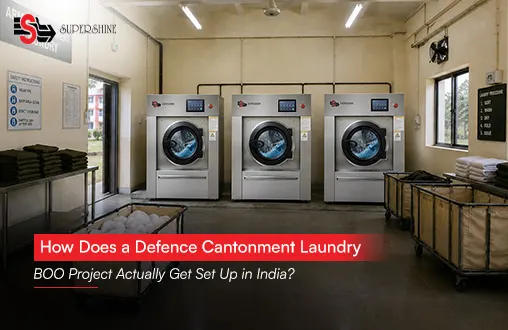
How Does a Defence Cantonment Laundry BOO Project Actually Get Set Up in India?

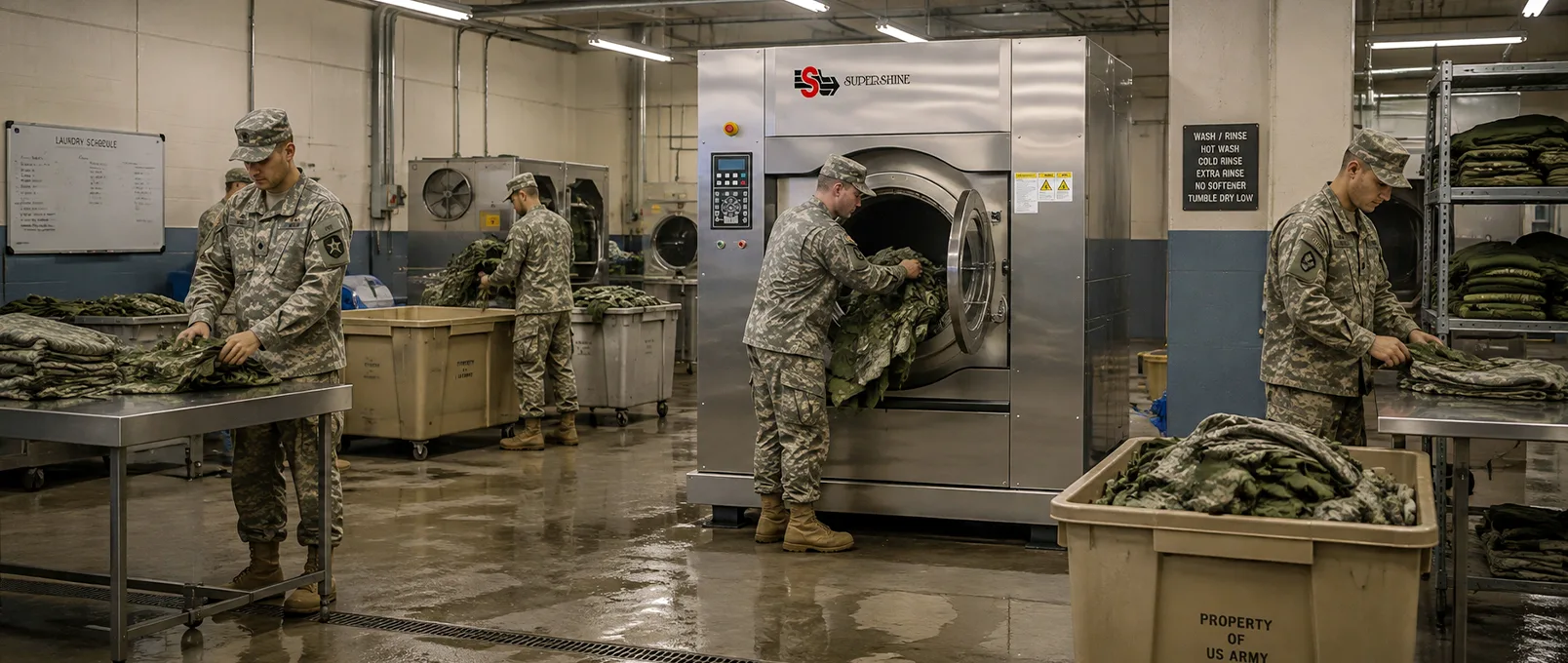
A defence cantonment laundry BOO (Build-Own-Operate) project gets set up through a tendering process typically channeled via Military Engineer Services (MES), where a private company builds and owns a mechanized laundry facility on cantonment land indefinitely, without ever transferring it back to the defence establishment. That last part is the key distinction people often miss. Unlike the BOOT model used elsewhere (Build-Own-Operate-Transfer), BOO has no transfer clause. The private operator owns the facility for good.
If you're looking into this space, one of the smartest early moves is to hire a laundry consultant for turnkey defence projects, because these facilities involve strict operational standards, cantonment access protocols, and equipment requirements that differ meaningfully from a typical commercial laundry setup. Getting it wrong at the planning stage is expensive to fix later.
Understanding the BOO Structure (And Why It's Different From BOOT)
India has 61 cantonment boards under the Directorate General of Defence Estates (DGDE), each managing infrastructure and services for defence establishments in their jurisdiction. When it comes to laundry facilities specifically, Military Engineer Services typically handles the tendering channel for these infrastructure projects on cantonment and defence establishment land.
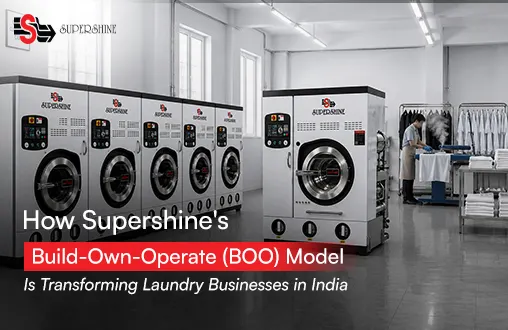
The BOO structure means the private company that wins the tender builds the facility with its own capital, owns the machinery and infrastructure, and operates it for the contract's duration, and there's no eventual handover back to the defence authorities built into the agreement. This is a meaningfully different commitment than a BOOT contract. You're not building something you'll eventually give away. You're building something you'll own and operate indefinitely, which changes how you think about long-term equipment durability and service planning.
Why the Tendering Process Requires Careful Navigation
Getting through an MES tender for a cantonment laundry project involves working through defence establishment protocols, which are understandably more rigorous than typical government tenders. Security clearances, site access arrangements, and adherence to cantonment-specific operational timelines all factor in. It's not the kind of process you want to walk into without a clear understanding of what's expected at each stage.
This is precisely why so many companies choose to hire a laundry consultant for turnkey defence projects rather than trying to manage the technical and logistical planning alone. A good consultant helps navigate the tender documentation, ensures the proposed facility layout and equipment specifications actually meet the defence establishment's operational needs, and flags issues before they become expensive problems during construction or commissioning.
What Equipment Planning Actually Looks Like for a Cantonment Laundry
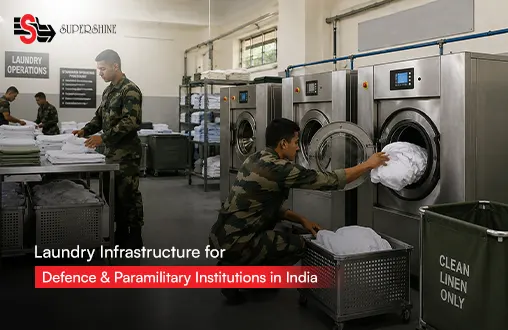
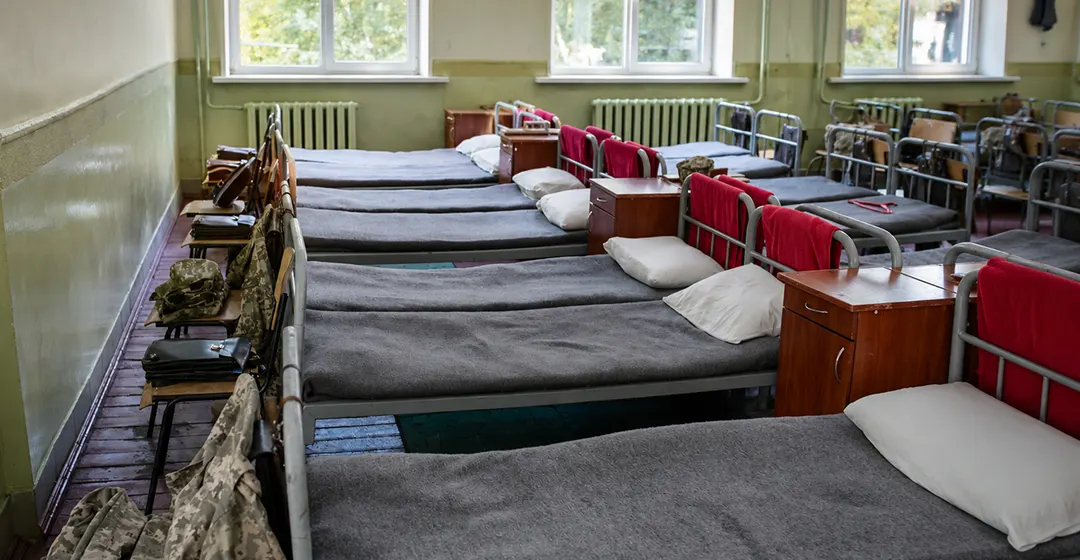
Defence cantonment laundries process significant volumes of uniforms, bedding, and linen, often with specific hygiene and turnaround requirements tied to military operational schedules. This means the equipment selection needs serious thought, not just picking machines off a general catalog.
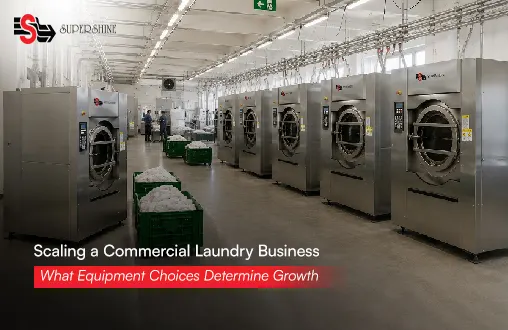
You need properly sized industrial laundry equipment that can handle the volume without constant strain, reliable industrial laundry machines built for continuous daily operation rather than intermittent commercial use, and a correctly specified industrial washing machine line for the heaviest soil loads (military uniforms and field gear can be seriously demanding on wash equipment, more so than typical institutional linen). Getting the capacity planning right at the outset matters enormously here, because unlike a BOOT contract with a defined end date, a BOO facility is a long-term asset you're committing to operate for years, potentially decades.
The Turnkey Approach: Why It Matters for Defence Projects
A turnkey approach, where one partner handles consultation, planning, machine selection, installation, commissioning, and after-sales support, tends to work better for defence cantonment projects than piecing together equipment from multiple vendors. Why? Because coordination matters enormously in a facility that has to hit specific operational readiness dates and can't afford prolonged downtime once it's serving an active defence establishment.
This is really where the "hire a consultant" advice pays off. A fragmented approach, one vendor for washers, another for dryers, a separate installer, often leads to compatibility issues, delayed commissioning, and finger-pointing when something breaks down. A single accountable partner managing the full scope reduces that risk considerably.
Security, Access, and Compliance Considerations Worth Planning For
Given that these facilities sit on active defence establishments, any consultant or equipment partner involved needs to be prepared for the additional layer of security clearance and access documentation that comes with working on cantonment land. This isn't a bureaucratic inconvenience so much as a genuine part of the project timeline, background checks for installation crews, restricted access windows, and coordination with cantonment authorities all take longer than a comparable civilian installation. Building this into the project schedule from day one, rather than treating it as a surprise delay midway through, tends to keep a BOO project on track.
Where Supershine Laundry Fits Into Cantonment Projects
Supershine Laundry brings 35 years of experience in exactly this kind of turnkey planning, having completed over 1,500 installations across demanding institutional environments including defence and paramilitary facilities. For a BOO cantonment project, Supershine can support the full journey: consultation on facility layout and capacity requirements, machine selection matched to actual operational demand, installation and commissioning, and ongoing AMC and spare parts support for the long haul (which matters a lot more here than in a fixed-term contract, given there's no transfer date to plan around).
Given the indefinite ownership horizon of a BOO structure, choosing equipment and a service partner built for decades of reliable operation, not just the initial installation, is arguably the single most important decision in the entire project.
Bringing It All Together
A defence cantonment BOO laundry project is a serious long-term commitment, and it rewards careful upfront planning far more than it punishes a slightly slower start. If you're evaluating a tender or already navigating one, it's worth having an experienced partner in your corner. Supershine Laundry has spent decades helping institutional clients get this kind of planning right, and a conversation early on tends to save a lot of trouble later.