+91-124-4807600
 sales@supershinelaundry.ae

What Are the Key Performance Indicators of a Commercial Laundry, and How Are They Measured?

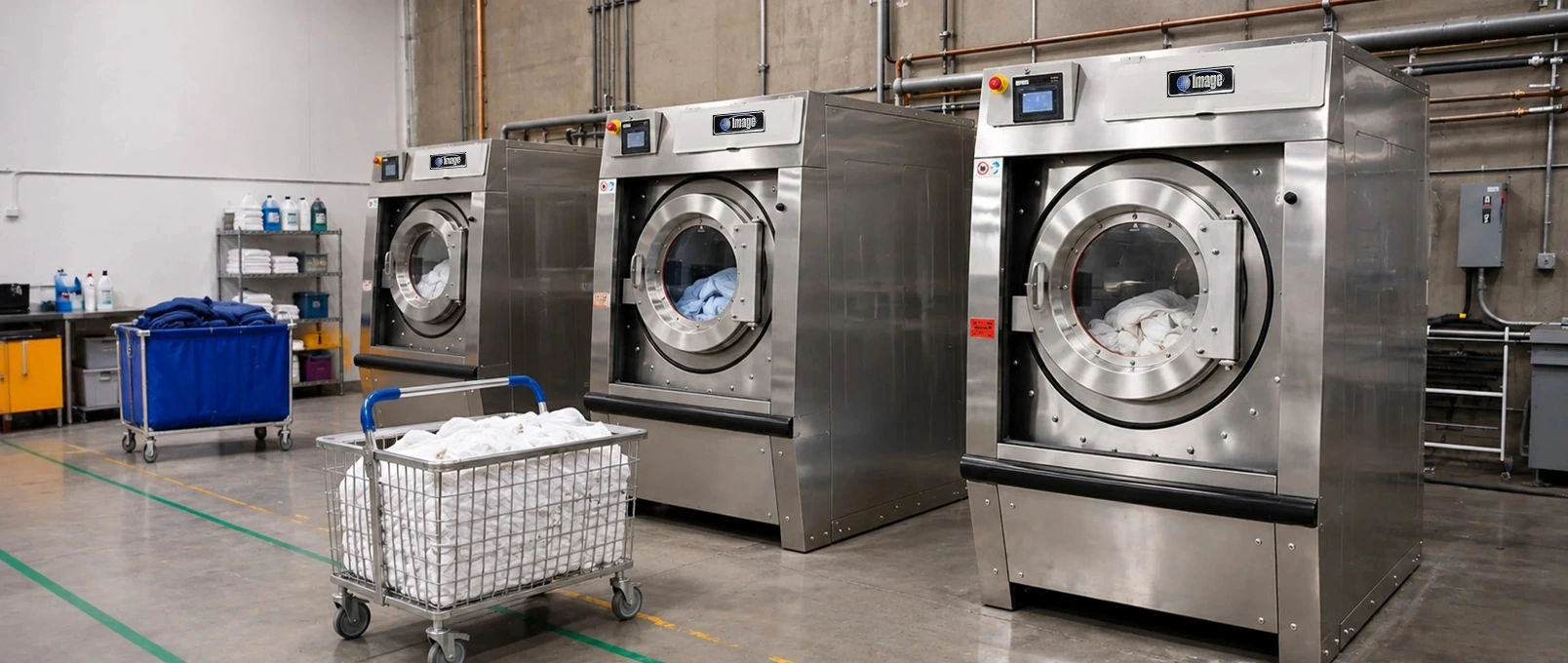
The key performance indicators (KPIs) of a commercial laundry are productivity (kilograms per man-hour), quality (rewash and rejection rate), speed (turnaround time), resource use (litres of water and kilowatt-hours or fuel per kilogram), linen loss, machine uptime and customer complaints. Each is measured with a simple calculation from records most plants already keep. Together they tell you whether the laundry is making or losing money, long before the monthly accounts do.
This guide explains each KPI, how to measure it and how to use it.
Why does a laundry need KPIs at all?
A laundry is a production line that sells kilograms of clean linen. Without numbers, managers rely on impressions: the plant feels busy, the dryers seem slow, customers sound unhappy. Impressions are not enough to decide whether to add a shift, replace a machine or change a detergent. KPIs turn impressions into evidence, and make it possible to compare one month with the next, one shift with another or your plant with a target.
What is productivity, and how is it measured?
Productivity shows how much work each person does. The common measure is kilograms processed per man-hour.
Kilograms per man-hour = total kilograms processed divided by total paid labour hours
Track it for the whole plant, and for sections such as sorting, washing, finishing and folding. A drop in one section points to the bottleneck. Output varies widely with automation and linen type, so compare your plant against its own history before comparing with others.
How do you measure quality?
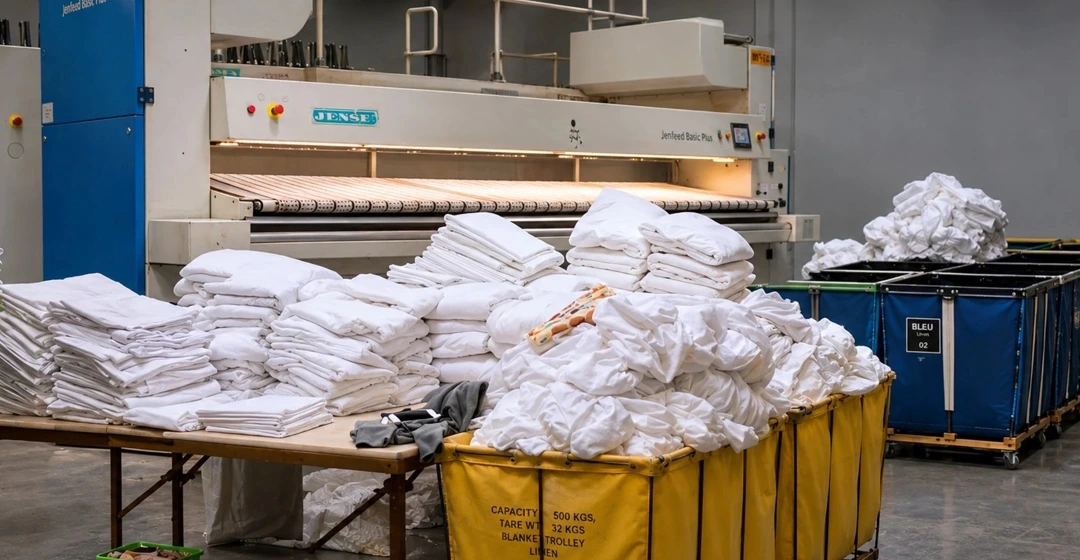
Quality is about whether the customer accepts the linen the first time.
- Rewash rate. Kilograms or pieces sent back through the wash divided by total processed. Every rewash wastes labour, water, energy and chemicals.
- Rejection rate. Items that cannot be returned because of stains, tears or damage.
- Customer complaint rate. Complaints per thousand pieces or per delivery, with reasons recorded.
Record the cause of each rewash: stain, grey linen, odour, wrinkles, wrong fold. Patterns show whether the problem lies with chemistry, programmes, water or people.
How is turnaround time measured?
Turnaround is the time between linen arriving soiled and leaving clean. Measure it from receipt to dispatch, using timestamps on each batch. Track the average and the worst case, and compare to the promise you made the customer. If turnaround stretches, the cause is usually a bottleneck: a dryer bank that cannot keep up, an ironer that is understaffed, or breakdowns.
Which utility KPIs matter most?
Utilities are the second-largest cost after labour in many plants, and they respond well to measurement.
- Water per kilogram. Total water used divided by kilograms processed. Meter the incoming supply, ideally by section.
- Energy per kilogram. Electricity, gas, steam or fuel used divided by kilograms. Track dryers and boilers separately, since they use the most.
- Chemical cost per kilogram. Detergent, alkali, bleach and softener consumption, which automatic dosing makes easy to log.
When utility per kilogram rises while volume is steady, look for leaks, blocked ducts, failing steam traps, scale on heaters or overloaded and underloaded machines.
How do you track machine uptime?
Uptime measures how often machines are available when needed.
Availability = (scheduled hours minus breakdown hours) divided by scheduled hours
Log every stoppage with its cause and duration. A pattern of repeat failures on the same part is a signal to change the part, the maintenance schedule or the operating practice. Also track planned maintenance completion, since missed services are an early warning of future breakdowns.
What about linen loss and linen life?
- Linen loss rate. Items missing divided by items processed, tracked by customer or ward.
- Wash cycles per item before retirement. Shows whether your process is protecting the linen.
- Replacement spend per month. A direct cost measure.
Where volumes justify it, barcode or RFID tracking improves the accuracy of these figures.
How should a plant use KPIs day to day?
- Pick five to seven KPIs, not twenty. Start with productivity, rewash rate, turnaround, utilities per kilogram and uptime.
- Collect data simply. A daily sheet or a shared spreadsheet is enough to begin with.
- Review weekly. Look at trends, not single days.
- Set targets from your own history, then raise them gradually.
- Act on the causes. A KPI that drops should trigger a specific check, not a general reminder to staff.
- Share results with the team, so people see the effect of their work.
Key takeaways
- Core laundry KPIs are kilograms per man-hour, rewash rate, turnaround, water and energy per kilogram, uptime and linen loss.
- Most can be calculated from records you already keep.
- Trend matters more than a single reading.
- Every KPI should lead to a specific corrective check.
How can equipment help with measurement?
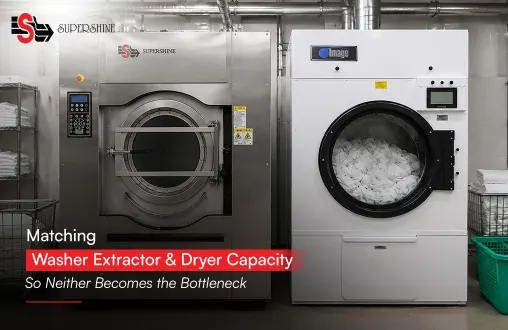
Modern washer extractors record cycle data, temperature, water use and dosing, and some connect to monitoring software. Water and energy meters complete the picture. Supershine Laundry has 35 years of engineering experience and more than 1,500 installations across hotels, hospitals, defence and paramilitary units, garment manufacturers, railways and institutions. The turnkey service covers consultation, capacity planning, machine selection, installation, commissioning, staff training, AMC and spare parts, and the team can plan metering and controls so that KPIs are easy to collect.