+91-124-4807600
 sales@supershinelaundry.ae

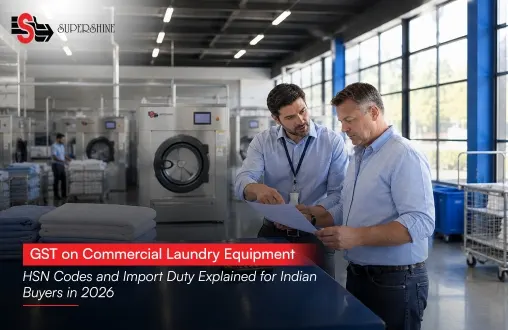
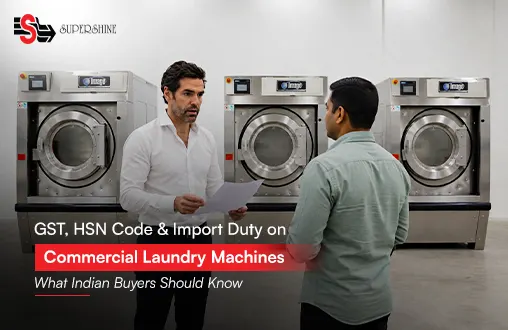
GST on Commercial Laundry Equipment: HSN Codes and Import Duty Explained for Indian Buyers in 2026

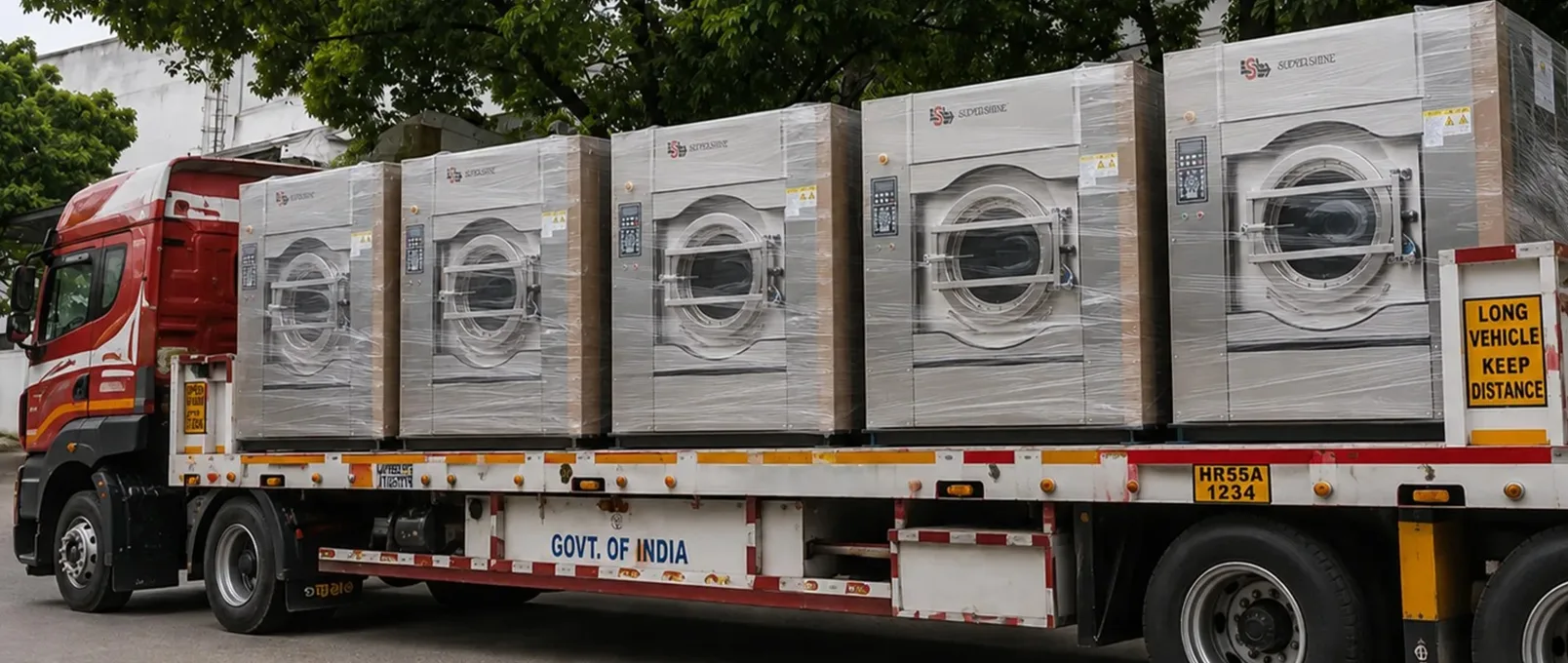
Ask a hotel general manager or a hospital procurement head what slows down a laundry equipment purchase, and the answer is rarely the machine specification. It is the tax paperwork that nobody explained at the quotation stage. GST on commercial laundry equipment depends on how the machine is classified, and if you import, customs duties are added on top. Get the classification wrong and you either overpay or face an uncomfortable query from your GST consultant months later. This guide sets out the rules plainly, so that you can read a quotation with confidence.
A note before we begin. Tax rates and notifications change. Treat the figures below as a starting point, and confirm the exact sub-heading and rate for your machine with your chartered accountant or customs broker.
Why Classification Matters More Than Buyers Assume
Most facility managers treat GST as a fixed line on the invoice. In practice, a commercial laundry machine can fall under more than one HSN heading, depending on its design and function. The heading decides the GST rate and, for imports, the customs duty. If a vendor invoices under the wrong code, you may pay more tax than necessary, or create a mismatch that shows up in a GST audit. Neither is a surprise a busy hotel or hospital wants in the middle of a financial year.
HSN 8450 and HSN 8451: Which One Applies?
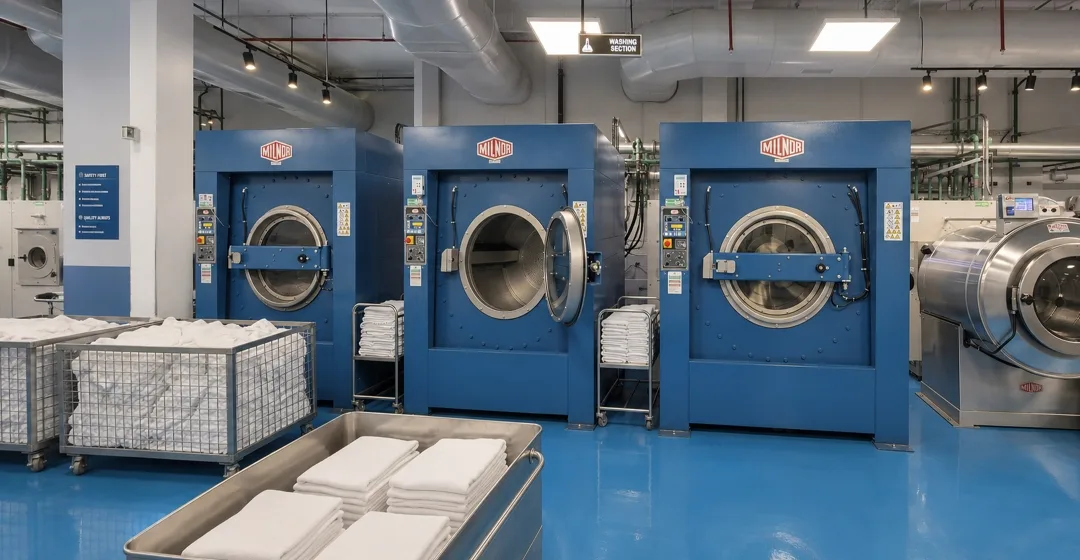
HSN heading 8450 covers household or laundry-type washing machines, including machines that both wash and dry, along with their parts. Most commercial washing machines fall here, including the larger units used in hotels, hospitals and laundromats, because the classification follows the machine's design and not the room it sits in.
Heading 8451 covers machinery, other than the 8450 types, used for washing, cleaning, wringing, drying, ironing, pressing, bleaching, dyeing and finishing of textile yarns, fabrics and made-up articles. Much true industrial laundry equipment sits here:
- flatwork ironers,
- industrial tumble dryers,
- garment finishing presses,
- hydro extractors, and
- dry-cleaning machines.
So the honest answer is that it depends on the specific machine. A good supplier states the exact code on the quotation, not a vague "8450 something".
What Is the GST Rate in 2026?
Following the GST rate rationalisation that took effect on 22 September 2025, washing machines under HSN 8450, including most commercial and industrial units, attract 18 percent GST, down from the earlier 28 percent slab. That is a meaningful reduction and one reason equipment budgets look healthier than they did a year ago.
- Intra-state purchase: 18 percent splits into 9 percent CGST and 9 percent SGST.
- Inter-state purchase or import: 18 percent IGST.
Machinery under 8451, such as dryers, ironers and finishing equipment, generally sits in the standard 18 percent machinery slab under the simplified GST structure. Notifications sometimes carve out exceptions, so have your CA confirm the sub-heading for the exact model.
One practical reporting point: GSTR-1 filings require HSN reporting in Table 12. Businesses with annual turnover up to Rs. 5 crore report a four-digit code, and larger businesses report six digits. If you claim input tax credit on a laundry machine, make sure the invoice carries the correct HSN digits and not a rounded placeholder.
Import Duty: What Changes When You Source From Abroad
Many Indian laundries still import particular machine types, such as a specific tunnel washer configuration or dry-cleaning technology that is not made locally. In that case GST is only one of the taxes in play. Machinery in Chapter 84 generally attracts:
- Basic Customs Duty, typically in the range of 0 to 7.5 percent depending on the tariff sub-heading,
- a Social Welfare Surcharge of 10 percent on the basic duty, and
- IGST at 18 percent, calculated on the assessable value plus the duties already added.
Stack these up and an imported machine can cost noticeably more than its landed price suggests, before freight, installation and documentation such as the bill of lading and certificate of origin. Duty rates are revised from time to time, so ask your customs broker for the current figure at the time of import.
A Worked Illustration
Take an illustrative imported machine with an assessable value of Rs. 20 lakh and a basic duty of 7.5 percent. Basic duty is Rs. 1.5 lakh and the surcharge on it is Rs. 15,000. IGST at 18 percent is charged on Rs. 21.65 lakh, which comes to about Rs. 3.9 lakh. The tax on top of the machine value is therefore well over Rs. 5 lakh. The numbers are for illustration only, but they show why the full duty stack matters when comparing an imported unit with a domestic one.
Domestic or Imported: How to Compare
When comparing quotations, line up the following on both sides:
- machine price and the correct HSN code,
- GST and, for imports, every duty in the stack,
- freight, insurance, clearing and transport to your site,
- installation and commissioning,
- spare parts availability and service response time, and
- warranty terms and who honours them locally.
Locally manufactured or assembled equipment, where the quality is comparable, avoids the duty stack and often brings faster spare parts and service. That is a good reason to compare on landed cost and lifecycle cost, not on the headline price.
How Supershine Laundry Helps
Supershine Laundry brings 35 years of experience in commercial and industrial laundry equipment across hospitality, healthcare and industrial segments, with more than 1,500 installations. Quotations set out the HSN classification and the GST breakup upfront, so buyers are not left with misclassified invoices at audit time or during input tax credit claims. The team can walk you through the heading your machine falls under and what the landed cost looks like, tax included, whether you are evaluating a soft mount washer extractor or a complete turnkey finishing line. Turnkey service covers consultation, capacity planning, machine selection, installation, commissioning, training, AMC and spare parts.