+91-124-4807600
 sales@supershinelaundry.ae

Finishing Press vs Steam Tunnel Finisher: Choosing the Right Garment Finishing Line for Your Indian Factory

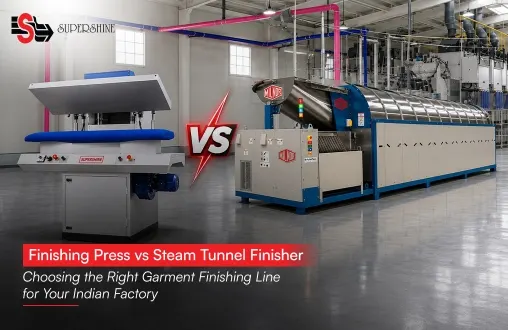
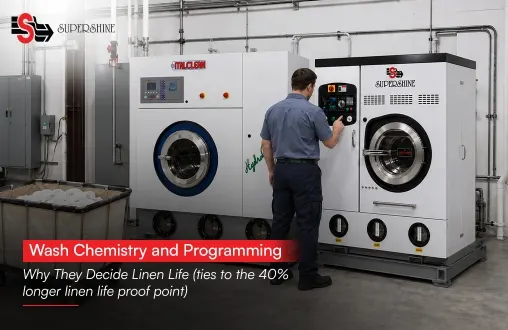
Walk through two garment factories in India and you may see very different setups doing the same job: taking wrinkles out of finished garments before they ship. Both facilities may use an industrial washing machine as part of their garment care process, but their finishing setups can differ. One runs a finishing press that works on one garment at a time. The other passes garments through a continuous steam tunnel. Which one suits your factory depends on what you make and how much of it. This guide compares the two, so that you can plan a garment finishing line around your product mix, your volume and your people.
What a Finishing Press Does
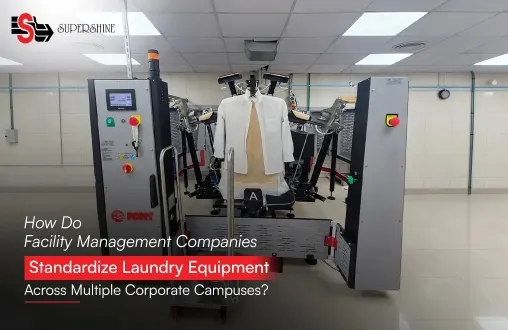
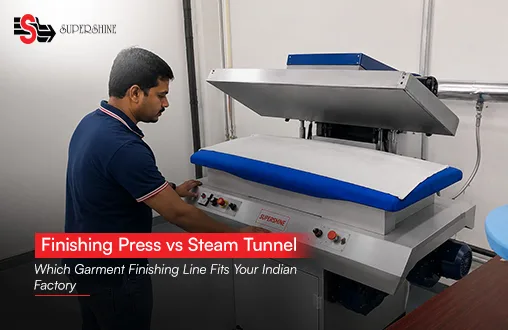
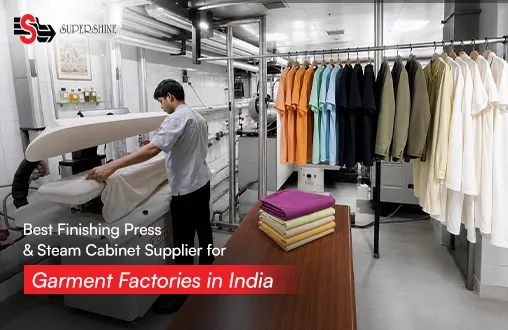
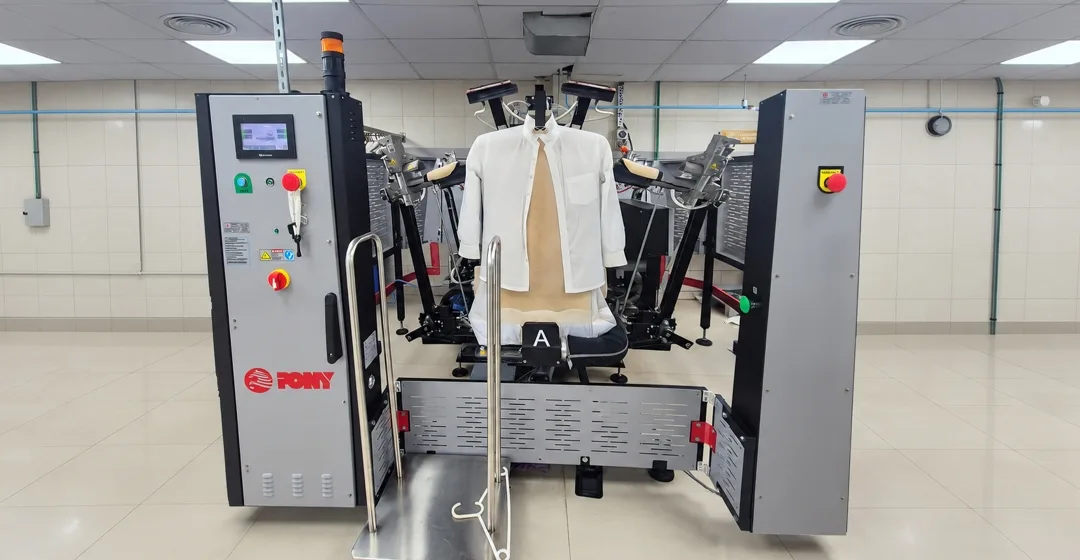
A finishing press, often called a form press or dolly press, uses a canvas-covered form shaped roughly like the garment, together with steam and compressed air, to finish the whole garment in one go. It applies relatively low pressure and mainly removes accidental creases, instead of setting new ones. That suits fabrics where you want a clean, wrinkle-free finish without a sharp crease line.
The trade-off is throughput. A press handles one or two garments at a time, so it is a batch process.
What a Steam Tunnel Finisher Does
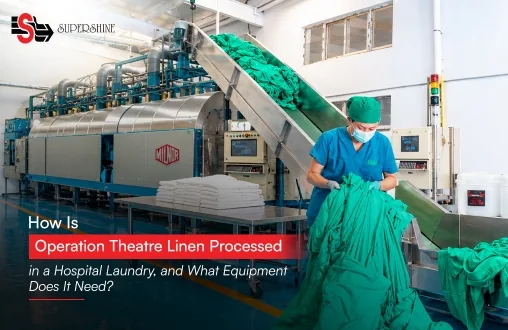
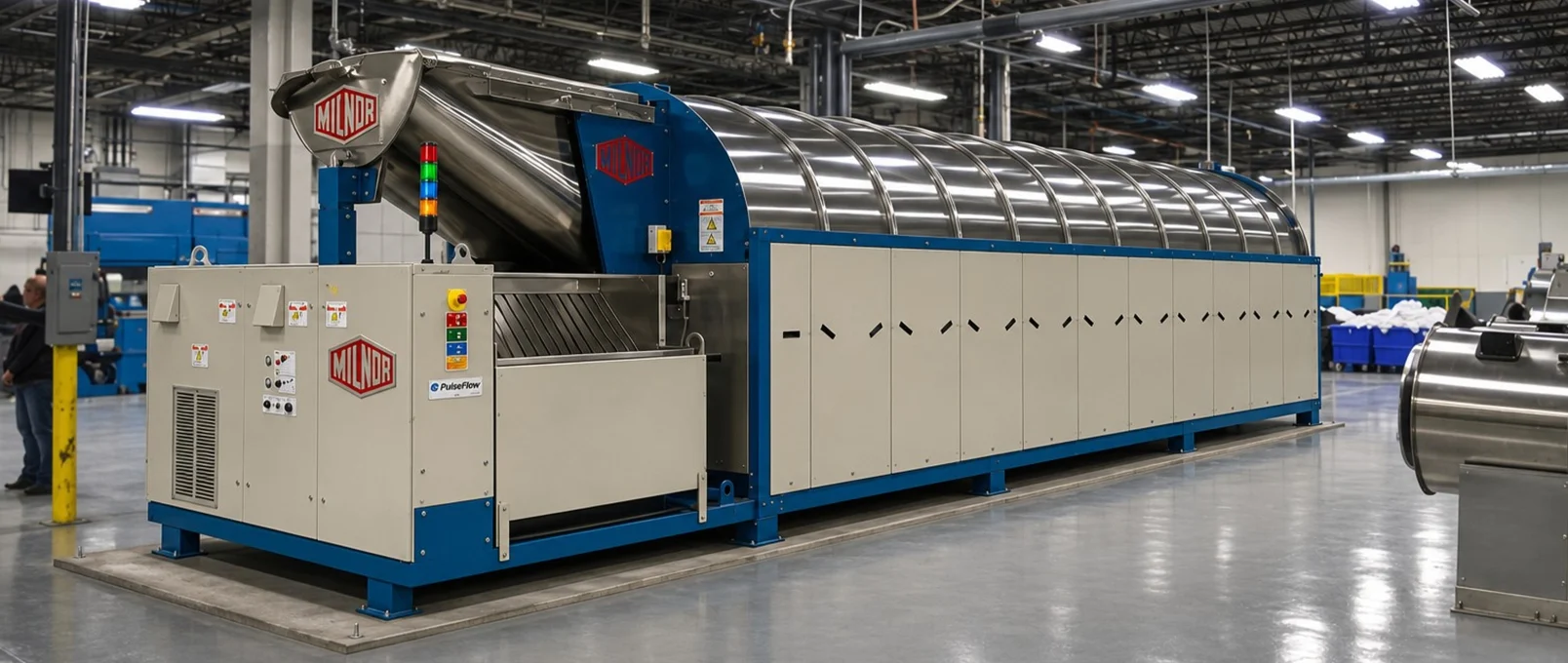
A steam tunnel finisher works on continuous flow. Garments hang from a conveyor and pass through three stages:
- a steam chamber, which relaxes the fibres,
- a strong hot air flow, which removes wrinkles without physical pressure, and
- a cool air stage, which sets the fabric before it exits.
There is no pressing and no contact, and one operator can handle hundreds of garments in the time a press handles a few. For high-volume runs of similar styles, such as uniforms, workwear and standard hotel garments, the difference in throughput is large.
Side-by-Side Comparison
- Process: press is batch, tunnel is continuous.
- Throughput: press suits low to medium volume, tunnel suits high volume.
- Style variety: press handles many shapes and delicate items better, tunnel works best on standardised garments.
- Upfront cost: press is typically lower, tunnel is higher.
- Operator skill: press needs skilled positioning, tunnel needs consistent loading and monitoring.
- Utilities: tunnel needs a steam supply sized for continuous operation.
How to Decide for Your Factory
Three questions settle most decisions.
- What is your daily volume? High volumes of similar garments favour a tunnel, because cost per garment falls as throughput rises.
- How varied is your product mix? Many shapes, delicate fabrics and small batches favour a press, which gives control over each piece.
- What is your budget, over five years and not only on day one? Include maintenance, steam, labour and space.
Many mid-sized Indian garment units run both: a tunnel for bulk standard runs and presses for detail work and specialty orders. It is not always an either-or choice
Where Finishing Fits in the Whole Line
Finishing sits downstream of washing and drying. The moisture content leaving your industrial washing machine and dryer directly affects how efficiently the finishing stage works. Over-dried and under-dried garments both create extra work, whichever machine you use. A mismatch between wash-dry capacity and finishing capacity creates a bottleneck that costs money every day, so plan the line as a whole and not as separate purchases.
Operator Skill and Training
The two machines ask for different skills. A finishing press needs operators who can position each garment correctly on the form, which takes training and a learning curve for new hires. A steam tunnel is largely automated once garments are hung correctly, so the skill moves toward loading consistency and machine monitoring. In a factory with high staff turnover, that difference alone can tip the decision toward a tunnel.
Maintenance and Running Costs
Tunnels are mechanically more complex, with conveyors, several chambers and a higher steam demand. They tend to cost more to maintain and need a boiler or steam supply sized for continuous use. Presses are simpler and cheaper to maintain, though canvas covers and steam valves still need regular attention. Over a five-year horizon, maintenance and steam cost can change how the two options compare on paper. If you plan steam, also check whether your boiler falls under the Boilers Act, 2025 and plan registration and inspection accordingly.
Getting the Configuration Right
The right answer changes with every factory's product mix. Supershine Laundry has 35 years of experience advising garment manufacturing and textile processing units across India, with more than 1,500 installations. The team looks at daily volume, garment type, existing wash and dry capacity and floor space before recommending a press, a tunnel or a combination. Turnkey service covers consultation, capacity planning, machine selection, installation, commissioning, training, AMC and spare parts, so the finishing line is sized against your actual washer and dryer throughput.