+91-124-4807600
 sales@supershinelaundry.ae


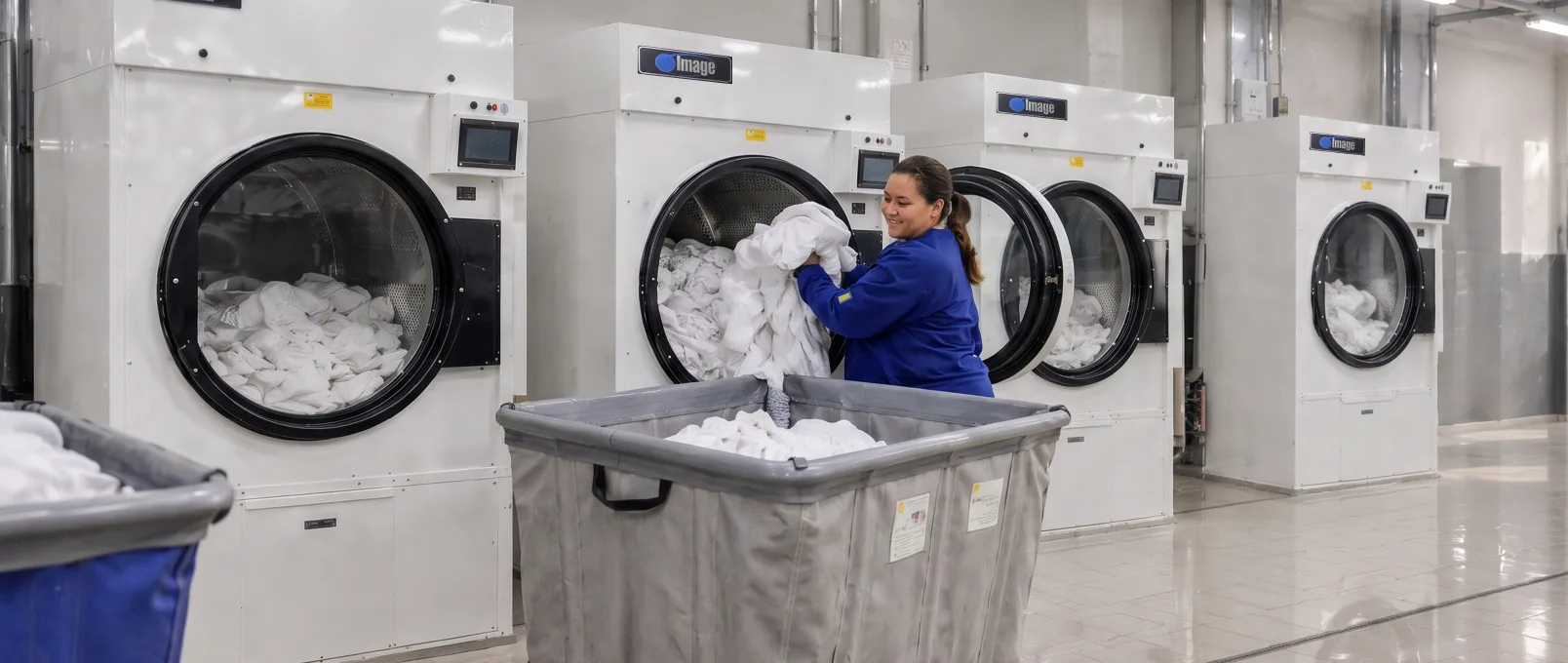
Monsoon humidity slows drying because air that is already full of moisture cannot absorb much more from the linen. An industrial clothes dryer then runs longer, uses more energy and strains its exhaust system, while damp linen waiting for its turn can develop mould and odour. A plant prepares by checking exhaust and make-up air, cleaning lint paths, extracting more water before drying and protecting stored linen from damp.
Why Does Humidity Slow Down Drying?
A dryer works by heating air and passing it through wet linen. The hot air picks up moisture and carries it out through the exhaust. During the monsoon the intake air already holds a lot of water vapour, so each pass removes less moisture from the load. The result is longer cycles for the same linen, even though the machine itself has not changed.
What Problems Does It Cause in a Laundry?
- Longer drying times. Cycles run past their usual length, and the queue builds up behind the dryers.
- Higher energy use. More gas, steam or electricity is spent on each kilogram of linen.
- Mould and mildew. Damp linen left in baskets or stores can turn musty within hours.
- Lint build-up. Moist lint sticks to filters and ducts, which restricts airflow even further.
- Corrosion. Humid air speeds rust on exposed metal, fasteners and electrical contacts.
How Should a Plant Prepare Before the Monsoon?
A pre-monsoon audit, done a few weeks before the rains, prevents most of these problems.
| Area | What to check |
| Exhaust ducts | Clean lint, check for bends or leaks, confirm exhaust flow at each dryer |
| Make-up air | Make sure the laundry can draw in enough air, since starved dryers run slow |
| Heating system | Inspect burners, steam coils and traps, and clear any scale or blockage |
| Lint filters | Clean them every shift during the monsoon |
| Sensors and controls | Calibrate moisture and temperature sensors so cycles end at the right time |
| Storage areas | Fix leaks, raise shelves off the floor and improve ventilation |
Does Better Extraction Help?
Yes, and it is the cheapest gain available. Water removed in the washer extractor does not have to be evaporated in the dryer. A higher extraction speed, within the limits of the fabric, can shorten drying noticeably. Check that extractors are balanced, that loads are not too small or too large and that the extraction step is not being cut short.
How Do Industrial Tumble Dryers Cope With Humid Conditions?
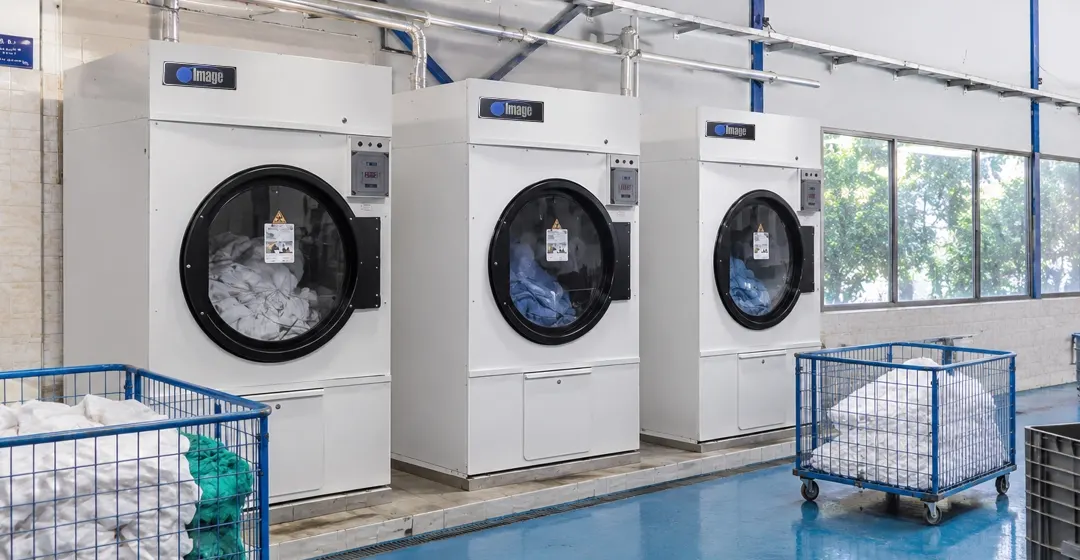
Well-designed industrial tumble dryers move a large volume of air through the drum, and good exhaust design keeps that airflow steady. Moisture-sensing controls help, because they stop the cycle when the linen is dry and not when a timer runs out, which avoids both over-drying and returning damp linen to the rack. A heavy duty clothes dryer with strong airflow and a well-maintained heating system is less affected by humid air than an undersized or neglected one.
How Do You Protect Linen From Mould?
- Dry linen completely before folding and storing.
- Do not stack warm linen in closed containers.
- Rotate stock so that older pieces are used first.
- Keep storage rooms ventilated, and use dehumidifiers where needed.
- Re-wash any piece that smells musty before it goes to a customer.
What Should Operators Do During the Monsoon Itself?
Once the rains arrive, small daily habits keep the plant on schedule. Clean lint filters at the start of every shift, and again at mid-shift if volumes are high. Stagger loads so that the dryers are never starved of air by all running at once.
If a dryer is running much longer than usual, check its exhaust before assuming the heating has failed. Keep a log of cycle times for each machine. A steady rise tells you something is wrong before the queue builds up.
Where linen waits for drying, hold it in clean, ventilated bins and keep the wait as short as you can. Avoid sorting or dry-folding in damp corners of the room.
Getting Dryers Ready
Supershine Laundry has supplied and serviced laundry equipment across India for 35 years, with more than 1,500 installations. Our team can audit your dryers and exhaust before the rains and recommend an industrial dryer machine setup suited to your climate. Talk to us before the monsoon arrives.
Key Takeaways
- Humid air slows drying, so cycles run longer and energy use rises.
- Clean lint paths and check exhaust flow before the rains begin.
- Extract as much water as possible in the washer, since every litre removed there is a litre the dryer does not have to evaporate.
- Dry linen completely, and store it in a ventilated, dry room.